
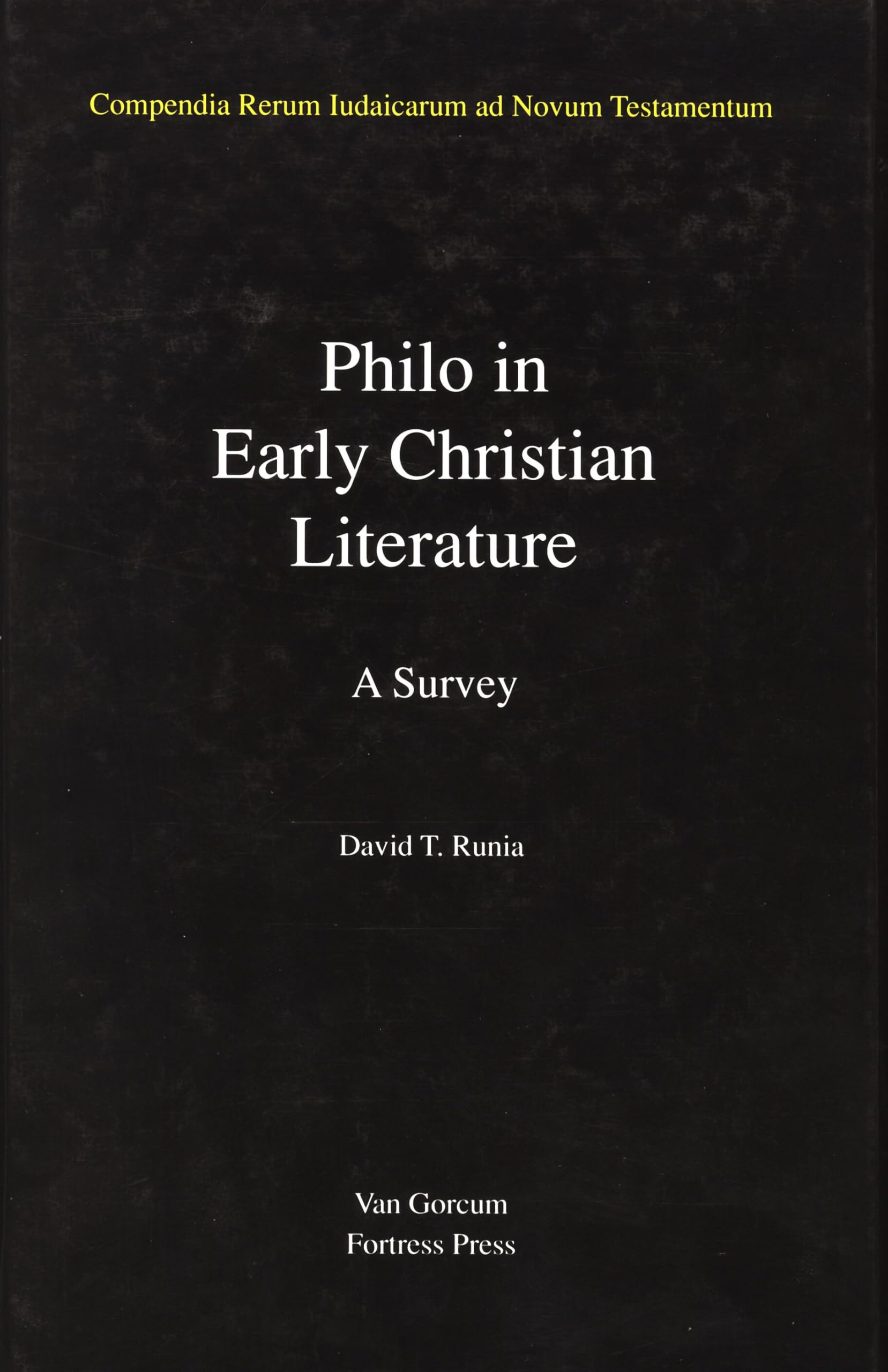
Jewish Traditions in Early Christian Literature: A Survey by Runia – A Scholarly Study of Philo of Alexandria and Patris
Inclusive of all applicable taxes. FREE shipping on all orders.
Available Offers
- 🚚Free Delivery — Free shipping on all orders
- 💵Cash on Delivery — Pay when your order arrives
- ↩️15-Day Easy Returns — Hassle-free return policy
- 🔒Cash on Delivery — Pay safely when your order arrives
Check Delivery
Product Description
Introduction
In the vast and intricate tapestry of early Christian thought, the threads of Jewish tradition are both foundational and transformative. For Indian readers, students of theology, and scholars of comparative religion, understanding this interweaving is essential. David T. Runia’s Jewish Traditions in Early Christian Literature: A Survey offers a masterful exploration of how the writings of Philo of Alexandria, a first-century Jewish philosopher, were not merely preserved but actively appropriated by early Christian thinkers. This hardcover volume from Brill is an indispensable guide for anyone seeking to trace the intellectual lineage that shaped the New Testament and the works of the Church Fathers.
Book Overview
This scholarly work is a comprehensive survey that delves into the complex relationship between Jewish exegetical traditions and the burgeoning Christian literary corpus. Runia meticulously examines how Philo’s philosophical and allegorical interpretations of the Hebrew Scriptures were received, adapted, and transmitted by Greek and Latin Church Fathers up to the end of the fourth century. The book is not a simple catalogue but a critical analysis of a dynamic cultural and theological exchange. It bridges the gap between the world of Second Temple Judaism and the formative centuries of Christianity, providing a clear roadmap for understanding how a Jewish thinker from Alexandria became a pivotal figure in Christian intellectual history.
Key Highlights
- Comprehensive Chronological Scope: The survey spans from the New Testament era through to the late fourth century, covering key figures like Clement of Alexandria, Origen, and Ambrose.
- Focus on Philo of Alexandria: A deep dive into how Philo’s works, particularly his allegorical method and cosmology, were utilized by Christian writers.
- Critical Analysis of Appropriation: Examines the selective and transformative process by which Christian authors adopted Jewish traditions to serve their theological agendas.
- Bridging Two Worlds: Offers a unique perspective on the continuity and rupture between Judaism and Christianity in the ancient Mediterranean world.
Story Themes
While this is a work of historical and literary analysis, its narrative is driven by profound themes: the tension between tradition and innovation, the politics of textual interpretation, and the search for a unified theological identity. The central theme is intellectual inheritance—how one generation’s wisdom is reshaped by the next. Another key theme is cultural translation, as Philo’s Greek-speaking Judaism was interpreted for a Latin-speaking Christian audience. The book also explores the theme of authority: how early Christian writers legitimized their own doctrines by linking them to a revered Jewish predecessor, even as they distanced themselves from contemporary Judaism.
Reader Benefits
For Indian students and academics, this book offers a rigorous yet accessible entry point into a specialized field. It provides a clear framework for understanding the Jewish roots of Christian theology, which is invaluable for courses in religious studies, philosophy, and ancient history. The survey format allows readers to grasp the big picture without getting lost in minutiae. By the end, readers will be able to identify key Philonic motifs in early Christian texts and understand the mechanisms of inter-religious dialogue in antiquity. This knowledge enriches one’s appreciation of how religious ideas travel and transform across cultures—a lesson deeply relevant in India’s own pluralistic landscape.
Who Should Read
This book is ideal for postgraduate students and researchers in theology, patristics, and ancient philosophy. It is also highly recommended for seminary students and clergy interested in the historical development of Christian doctrine. Indian readers with a background in comparative religion or Hellenistic studies will find it particularly rewarding. Additionally, anyone fascinated by the intellectual history of the Mediterranean world—from Alexandria to Rome—will appreciate Runia’s clear, scholarly prose. This is not a casual read but a serious study tool for those committed to understanding the foundations of Western religious thought.
About the Author
David T. Runia is a distinguished scholar of ancient and medieval philosophy, having held professorships at the University of Leiden and the University of Utrecht in the Netherlands. He is internationally recognized for his expertise on Philo of Alexandria and the reception of Hellenistic Judaism in early Christianity. Runia’s meticulous scholarship and ability to synthesize complex material have made him a leading voice in patristic studies. His works are standard references for anyone studying the intersection of Greek philosophy, Jewish thought, and Christian theology.
About the Publisher
Brill, based in Leiden, Netherlands, is one of the world’s oldest and most prestigious academic publishers, with a history dating back to 1683. Renowned for its high-quality publications in the humanities and social sciences, Brill is particularly celebrated for its contributions to biblical studies, religious history, and classical philology. This hardcover edition upholds Brill’s tradition of durable binding and clear typography, ensuring it remains a lasting resource for libraries and personal collections.
Conclusion
Jewish Traditions in Early Christian Literature: A Survey is more than a book; it is a scholarly companion for navigating the formative dialogues of the early Christian era. Runia’s work illuminates the profound debt Christianity owes to Jewish interpretive traditions, while also revealing the creative and sometimes contentious process of cultural appropriation. For the serious Indian student or researcher, this volume from Brill is a vital addition to the bookshelf—a key that unlocks the door to a deeper understanding of how ancient texts shape enduring faiths. Order your copy from Bookshops.in today and embark on a journey through the intellectual crossroads of antiquity.
Quick Summary
Jewish Traditions in Early Christian Literature: A Survey by Runia is a scholarly exploration of how early Christianity engaged with and preserved Jewish heritage through the lens of Philo of Alexandria, a first-century Jewish philosopher. Published by Brill, this hardcover volume traces Philo's influence on the New Testament and the writings of Greek and Latin church fathers until the late fourth century. The book is designed for advanced students, researchers, and academics in theology, religious studies, and ancient philosophy. Readers will learn how Philo's allegorical exegesis and Hellenistic Jewish thought shaped early Christian doctrine and textual interpretation. The survey synthesizes primary sources and modern scholarship, offering a comprehensive reference for understanding Judeo-Christian continuity. By purchasing from Bookshops.in, Indian readers receive a genuine imported edition, ensuring quality and authenticity for their academic or personal library.
Book Highlights
Book Specifications
| ISBN-13 | 9789023227137 |
| ISBN-10 | 9023227131 |
| Publisher | Brill Academic Pub |
| Language | English |
| Dimensions | 15.75 x 3.05 x 24.13 cm |
| Weight | 839 g |
| Country | India |
| Category | Religious Studies › History of Religion |
| Genre | Literature & Fiction |
| Original Language | English |
Frequently Asked Questions
What is the main focus of this book?
Who is the author Runia?
Is this book suitable for beginners?
Does it cover the New Testament?
Which church fathers are discussed?
What time period does the book cover?
Is this a primary source or a commentary?
Why is Philo important for Christian studies?
Can I use this for my PhD thesis?
Does the book include an index?
Is the language technical?
What makes this book unique?
Is it available in paperback?
Why buy from Bookshops.in?
Readers Also Search For
Related Products
View All
Literature & Fiction
Literary Research and Canadian Literature: Strategies and Sources: 10 (Literary Research: Strategies and Sources, 10)

Literature & Fiction
Crime Fiction and National Identities in the Global Age | by Julie H. Kim | McFarland & Company | by Julie H. Kim | McFarland & Company | by Julie H. Kim | McFarland & Company | by Julie H. Kim | McFarland & Company | by Julie H. Kim | McFarland & Company | by Julie H. Kim | McFarland & Company | by Julie H. Kim | McFarland & Company | by Julie H. Kim | McFarland & Company | by Julie H. Kim | McFarland & Company | by Julie H. Kim | McFarland & Company | by

Literature & Fiction
The Irregular at Magic High School by Tsutomu Sato
Literature & Fiction
Greek Literature and Philosophy (Greek Literature, Volume 6)
Literature & Fiction
Greek Literature in the Classical Period: The Poetics of Drama in Athens: 4 (Greek Literature Vol. 4)
Literature & Fiction