
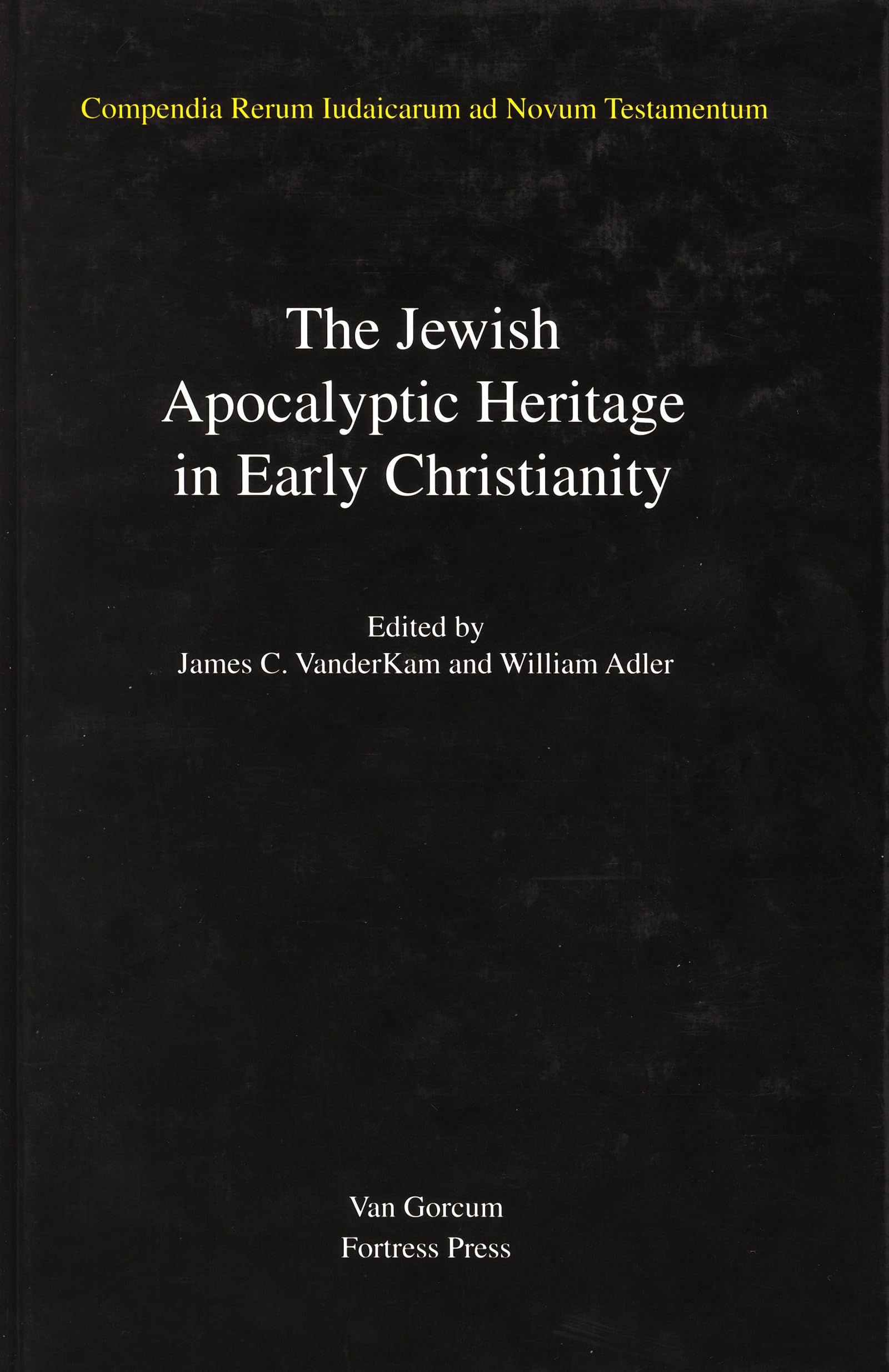
The Jewish Apocalyptic Heritage in Early Christianity by William Adler – A Scholarly Study of Early Christian Appropriat
Inclusive of all applicable taxes. FREE shipping on all orders.
Available Offers
- 🚚Free Delivery — Free shipping on all orders
- 💵Cash on Delivery — Pay when your order arrives
- ↩️15-Day Easy Returns — Hassle-free return policy
- 🔒Cash on Delivery — Pay safely when your order arrives
Check Delivery
Product Description
Introduction
In the vast landscape of early Christian thought, few influences are as profound and yet as elusive as the Jewish apocalyptic tradition. William Adler's The Jewish Apocalyptic Heritage in Early Christianity offers a masterful exploration of how early Christian communities inherited, transformed, and preserved Jewish apocalyptic writings. This scholarly work, published by Brill in a durable hardcover edition, is an essential resource for students, theologians, and historians seeking to understand the complex interplay between Judaism and Christianity during the formative centuries of the Common Era.
Book Overview
This volume presents five meticulously researched chapters that trace the journey of Jewish apocalyptic material into Christian hands. Adler begins by surveying how ancient readers understood apocalypses—their function, authority, and survival within the early Church. He then delves into specific traditions, examining the Enoch literature, the fallen-angel motif, and the identification of Enoch as an eschatological witness. The third chapter investigates the Christian transmission of Jewish texts, focusing on the copying and editing of 4, 5, and 6 Ezra. The fourth chapter analyzes the early Christian reinterpretation of Jewish apocalyptic chronologies, particularly Daniel's vision of seventy weeks. The final chapter explores the use of Jewish apocalyptic traditions among Christian sectarian groups in Asia Minor. Through these studies, Adler reveals how early Christians did not merely preserve these texts but actively reshaped them to serve their own theological and communal needs.
Key Highlights
- Comprehensive Analysis: Five distinct chapters cover the breadth of Jewish apocalyptic influence on early Christianity, from Enoch to Ezra to Daniel.
- Historical Depth: Explores the transmission history of key texts, showing how Christian scribes edited and adapted Jewish works.
- Scholarly Rigor: Based on primary sources and critical scholarship, offering a reliable foundation for advanced study.
- Focus on Sects: Unique attention to Christian sectarian groups in Asia Minor and their appropriation of apocalyptic traditions.
- Authoritative Publisher: Published by Brill, a renowned academic press known for high-quality theological and historical studies.
Story Themes
At its heart, this book explores the theme of transformation through transmission. Jewish apocalyptic texts, originally composed in a Jewish context, were not simply adopted by Christians but were reinterpreted to address new theological questions about the end times, the role of prophets, and the identity of the messiah. Another central theme is the authority of ancient revelation—how early Christians legitimized their beliefs by claiming continuity with Jewish apocalyptic traditions while also asserting their unique Christological interpretations. The book also examines the theme of eschatological witness, particularly through the figure of Enoch, who becomes a model for the Christian understanding of prophecy and martyrdom. Finally, the analysis of Daniel's seventy weeks reveals how Christians reworked Jewish chronologies to support their own historical and eschatological frameworks.
Reader Benefits
Readers will gain a deep understanding of one of the most critical yet understudied aspects of early Christian history. By tracing the Jewish roots of Christian apocalypticism, this book helps clarify many puzzling elements of the New Testament and early Christian literature. Students of theology will find their appreciation for the complexity of scriptural interpretation enriched. Historians will benefit from the detailed analysis of manuscript transmission and editorial practices. Moreover, the book challenges simplistic narratives of a clean break between Judaism and Christianity, showing instead a dynamic and often contested relationship. For Indian readers interested in comparative religion, this work offers valuable insights into how religious communities adapt and reimagine inherited traditions in new cultural and theological contexts.
Who Should Read
- Theology and Religious Studies Students: Essential for courses on early Christianity, apocalyptic literature, or Jewish-Christian relations.
- Seminary Scholars and Clergy: Provides a solid academic foundation for understanding the background of New Testament eschatology.
- Historians of Religion: Those studying the transmission of texts and ideas between Judaism and Christianity will find this work invaluable.
- Indian Academics: Scholars in India focusing on comparative religion, ancient history, or interfaith dialogue will discover fresh perspectives.
- Lay Readers with Serious Interest: Anyone fascinated by the origins of Christian beliefs about the end times and the role of ancient prophets will enjoy this accessible yet rigorous study.
About the Author
William Adler is a distinguished scholar of early Christianity and Jewish apocalyptic literature. With a career spanning decades, he has contributed significantly to the study of how early Christian communities received and reshaped Jewish traditions. His research is known for its careful attention to manuscript evidence and its nuanced understanding of religious identity formation. Adler's work has been widely cited in academic circles, and he brings both depth and clarity to complex historical questions.
About the Publisher
Brill is one of the world's oldest and most prestigious academic publishers, based in the Netherlands. Since its founding in 1683, Brill has been at the forefront of publishing high-quality scholarship in the humanities and social sciences, particularly in the fields of religious studies, biblical studies, and ancient history. This hardcover edition reflects Brill's commitment to durable, elegant production standards, making it a lasting addition to any library.
Conclusion
The Jewish Apocalyptic Heritage in Early Christianity is more than a scholarly monograph—it is a window into the dynamic and often surprising world of early Christian thought. William Adler's careful research and engaging prose make this book a rewarding read for anyone seeking to understand how ancient Jewish visions of the end of days shaped the beliefs and practices of the early Church. For Indian readers, this work offers a unique opportunity to explore the roots of Western religious traditions through a scholarly lens that values both historical accuracy and interpretive depth. Add this hardcover volume to your collection and discover the rich, complex heritage that lies at the intersection of Judaism and Christianity.
Quick Summary
The Jewish Apocalyptic Heritage in Early Christianity by William Adler is a scholarly work that delves into how early Christian communities adopted, adapted, and transmitted Jewish apocalyptic traditions. The book begins with an overview of how apocalypses were perceived and used in the early Church, then moves to specific case studies. It examines the Enoch literature, including the fallen angel motif and Enoch’s role as an eschatological witness, showing how Christians reinterpreted these elements. A significant chapter analyzes the Christian transmission and editing of the Ezra apocalypses (4, 5, and 6 Ezra), revealing how scribes modified these texts to align with Christian beliefs. The final chapter explores how early Christians used Jewish apocalyptic chronologies to frame their own history. This book is ideal for researchers, graduate students, and scholars of early Christianity, Second Temple Judaism, and apocalyptic literature. It offers original insights and meticulous analysis, making it a valuable addition to any theological library. By purchasing from Bookshops.in, Indian readers gain access to a premium physical edition of this important academic work.
Book Highlights
Book Specifications
| ISBN-13 | 9789023229131 |
| ISBN-10 | 9023229134 |
| Publisher | Brill Academic Pub |
| Language | English |
| Dimensions | 15.5 x 2.3 x 23.5 cm |
| Weight | 635 g |
| Country | USA |
| Category | Religious Studies › History of Religion |
| Genre | Academic |
| Original Language | English |
Frequently Asked Questions
What is the main focus of this book?
Who is the author William Adler?
Is this book suitable for undergraduate students?
Does the book cover the Book of Enoch?
What is the significance of the fallen angel motif discussed?
Are the Ezra apocalypses (4, 5, 6 Ezra) analyzed?
Is this book part of a series?
Can I use this book for my thesis?
What language is the book written in?
Does the book discuss apocalyptic chronology?
Is the book available in hardcover?
What is the price of the book?
Where can I buy this book in India?
Readers Also Search For
Related Products
View All
Literature & Fiction
Literary Research and Canadian Literature: Strategies and Sources: 10 (Literary Research: Strategies and Sources, 10)

Literature & Fiction
Crime Fiction and National Identities in the Global Age | by Julie H. Kim | McFarland & Company | by Julie H. Kim | McFarland & Company | by Julie H. Kim | McFarland & Company | by Julie H. Kim | McFarland & Company | by Julie H. Kim | McFarland & Company | by Julie H. Kim | McFarland & Company | by Julie H. Kim | McFarland & Company | by Julie H. Kim | McFarland & Company | by Julie H. Kim | McFarland & Company | by Julie H. Kim | McFarland & Company | by

Literature & Fiction
The Irregular at Magic High School by Tsutomu Sato
Literature & Fiction
Greek Literature and Philosophy (Greek Literature, Volume 6)
Literature & Fiction
Greek Literature in the Classical Period: The Poetics of Drama in Athens: 4 (Greek Literature Vol. 4)

Literature & Fiction