
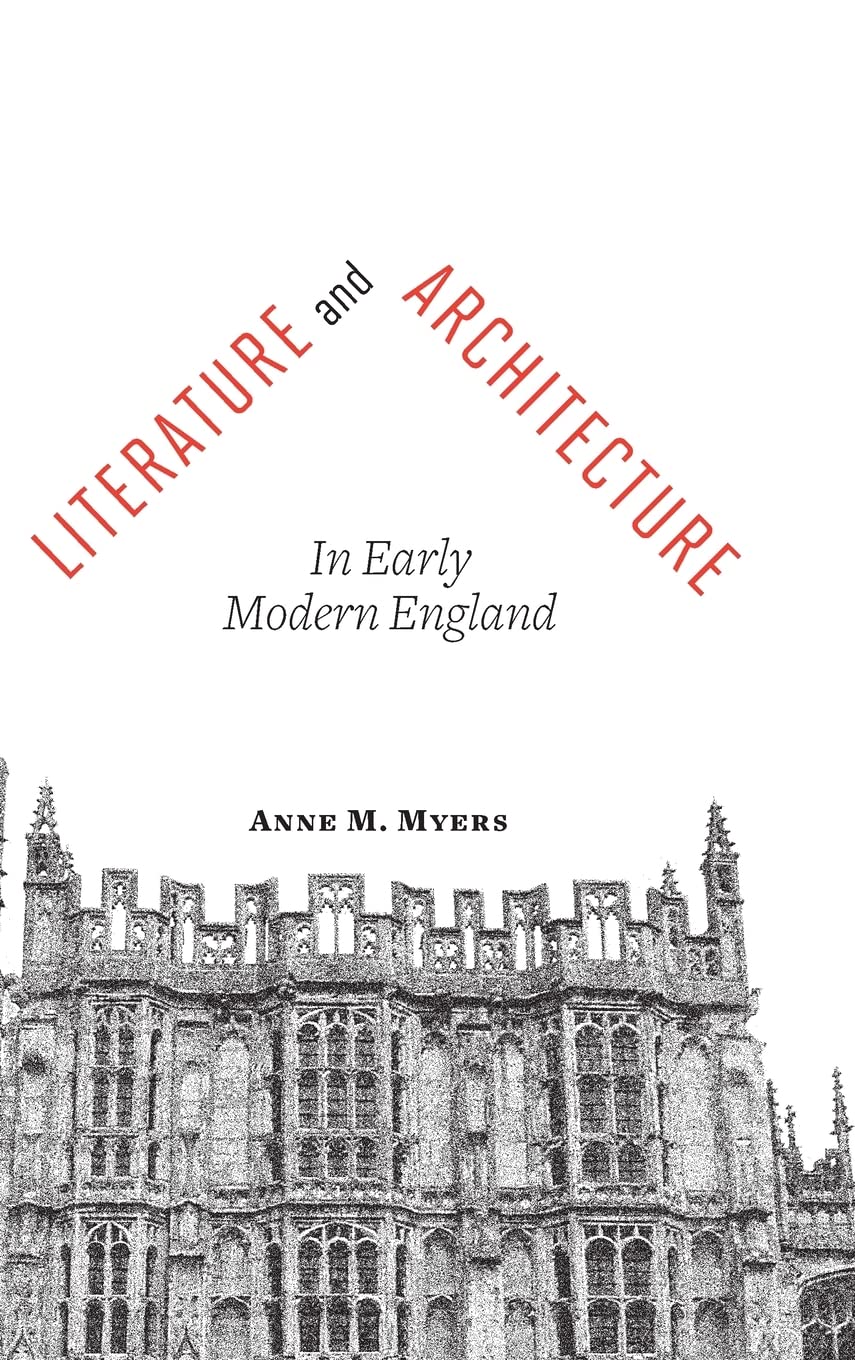
Literature and Architecture in Early Modern England by Anne M. Myers – Exploring the Narrative Power of Built Spaces in
Inclusive of all applicable taxes. FREE shipping on all orders.
Available Offers
- 🚚Free Delivery — Free shipping on all orders
- 💵Cash on Delivery — Pay when your order arrives
- ↩️15-Day Easy Returns — Hassle-free return policy
- 🔒Cash on Delivery — Pay safely when your order arrives
Check Delivery
Product Description
Introduction
In the vast landscape of literary criticism, few works dare to bridge the tangible world of stone and mortar with the ethereal realm of poetry and prose. Literature and Architecture in Early Modern England by Anne M. Myers offers a groundbreaking exploration of how the built environment—from crumbling monasteries to grand country houses—shaped the imagination of some of England’s most influential writers. For Indian readers and students of English literature, this book opens a fascinating window into a period when architecture was not merely a backdrop but an active participant in storytelling.
Book Overview
Published by the esteemed Johns Hopkins University Press, this hardcover volume delves into the symbiotic relationship between sixteenth- and seventeenth-century architectural spaces and the literary works they inspired. Myers argues that buildings in early modern England functioned as living documents—silent witnesses to history, power, faith, and human ambition. Through meticulous research and vivid prose, she demonstrates how writers like Ben Jonson, Andrew Marvell, and John Milton used architectural imagery to explore themes of memory, identity, and national heritage. The book challenges the long-held notion that England lagged behind Italy in visual arts, proposing instead that English architecture inspired a uniquely rich and complex literary response.
Key Highlights
- Interdisciplinary Approach: Seamlessly merges architectural history with literary analysis, offering fresh perspectives on canonical texts.
- Focus on Material Culture: Examines how actual buildings—castles, churches, country estates—became metaphors for social and political change.
- Original Scholarship: Challenges traditional narratives about the English Renaissance, repositioning architecture as a catalyst for literary innovation.
- Detailed Case Studies: In-depth readings of poems, plays, and prose works that engage with specific architectural sites.
- Accessible Yet Rigorous: Written for both scholars and serious students, with clear explanations of architectural terms and historical context.
Story Themes
At its heart, this book explores how the built environment becomes a repository of collective memory. Myers traces themes of ruination and preservation, showing how writers used decaying abbeys to reflect on religious upheaval or used stately homes to critique social hierarchies. The tension between permanence and decay runs through the narrative, echoing the human struggle to leave a lasting mark. Another central theme is the idea of architecture as a form of storytelling—every archway, window, and staircase carries the imprint of its makers and inhabitants. For Indian readers, this resonates with our own rich traditions of temple architecture, stepwells, and havelis that tell stories of dynasties and devotion.
Reader Benefits
This volume offers more than academic insight; it transforms the way you read and see the world. Students of English literature will gain a deeper understanding of early modern texts, discovering hidden layers of meaning in familiar works. Architecture enthusiasts will appreciate the detailed descriptions of buildings and their cultural significance. For writers and creatives, Myers’ analysis provides a masterclass in how physical spaces can be used as powerful literary devices. The book also equips readers with a new vocabulary for discussing the intersection of art, history, and society—a skill increasingly valuable in our visually saturated age.
Who Should Read
- Literature Students: Essential for those studying Renaissance or early modern English poetry, drama, and prose.
- History Buffs: Anyone fascinated by Tudor and Stuart England, the Reformation, or the social history of buildings.
- Architecture Enthusiasts: Readers interested in how design reflects and shapes cultural values.
- Comparative Literature Scholars: Those exploring cross-disciplinary methods in the humanities.
- Indian Academics: Particularly relevant for scholars working on postcolonial readings of English heritage or comparative studies of built environments.
About the Author
Anne M. Myers is a distinguished scholar of early modern English literature and culture. She has taught at several leading universities and published widely on the relationship between material culture and literary production. Her research combines archival work with close reading, bringing forgotten buildings and texts back into scholarly conversation. Myers’ passion for uncovering the stories embedded in stone and ink makes her the ideal guide through this fascinating terrain.
About the Publisher
Johns Hopkins University Press is one of the oldest and most respected academic publishers in the United States. Known for its rigorous editorial standards and commitment to scholarly excellence, the press has been a vital force in the humanities for over a century. This volume reflects their tradition of publishing works that push disciplinary boundaries while remaining accessible to a broad readership.
Conclusion
Literature and Architecture in Early Modern England is a rare achievement—a book that changes how you see both the page and the world around you. By revealing the hidden conversations between writers and the buildings they inhabited, Anne M. Myers invites us to reconsider the very foundations of literary creativity. Whether you are a student preparing for exams, a researcher seeking new frameworks, or a curious reader who loves discovering connections, this book will enrich your understanding of how stories are built—brick by brick, word by word. Order your copy from Bookshops.in today and step into a world where every structure has a story to tell.
Quick Summary
Literature and Architecture in Early Modern England by Anne M. Myers offers a groundbreaking exploration of how the built environment—castles, country homes, churches, and monasteries—functions as a narrative document in sixteenth- and seventeenth-century English writing. Myers argues that buildings tell stories of their builders, owners, and inheritors, and that early modern writers consciously used architectural spaces to reflect on history, human experience, and cultural memory. This interdisciplinary work bridges literary criticism and architectural history, providing readers with tools to interpret material spaces as integral to textual meaning. Ideal for students and scholars of early modern literature, cultural studies, and architectural history, the book enriches our understanding of how physical surroundings shaped literary production. By examining both canonical and lesser-known texts, Myers reveals the deep entanglement of space and story in the English Renaissance. Published by Johns Hopkins University Press in a durable hardcover edition, this volume is an essential addition to any academic library. Order your copy from Bookshops.in to delve into this unique synthesis of literature and architecture.
Book Highlights
Book Specifications
| ISBN-13 | 9781421407227 |
| ISBN-10 | 1421407221 |
| Publisher | Johns Hopkins Univ Pr |
| Language | English |
| Dimensions | 15.24 x 2.29 x 22.86 cm |
| Weight | 499 g |
| Country | India |
| Category | Literature › English Literature |
| Genre | Literary Criticism |
| Original Language | English |
Frequently Asked Questions
What is the main subject of Literature and Architecture in Early Modern England?
Who is the author of this book?
Which time period does the book cover?
Is this book suitable for undergraduate students?
What types of buildings are discussed?
Does the book include illustrations or photographs?
What is the binding of this edition?
Can I use this book for my research paper?
Does the book cover only English authors?
What is the ISBN-13 of this book?
Is this book part of a series?
What language is the book written in?
Where can I buy this book in India?
Readers Also Search For
Customers Also Bought
Contemporary Fiction
Stepladder Junction and Other Stories

Contemporary Fiction
Fabrications by Pamela Painter – Short Story Collection

Contemporary Fiction
The Double Life of an Alaskan Sled Dog (English, Andrea Finney Aufder Heyde)

Contemporary Fiction
The Alabaster Girl by Zan Perrion

Contemporary Fiction
Grimm and Grimmer: Classic Fairy Tales Rebooted by Mark Russell
Classic Literature
The Prose Works of Andrew Marvell: 1676-1678 by Andrew Marvell – Restoration Literature
Related Products
View All
Literature & Fiction
Shakespeare, Madness, and Music: Scoring Insanity in Cinematic Adaptations
Literature & Fiction
Literary Research and Canadian Literature: Strategies and Sources: 10 (Literary Research: Strategies and Sources, 10)

Literature & Fiction
Crime Fiction and National Identities in the Global Age | by Julie H. Kim | McFarland & Company | by Julie H. Kim | McFarland & Company | by Julie H. Kim | McFarland & Company | by Julie H. Kim | McFarland & Company | by Julie H. Kim | McFarland & Company | by Julie H. Kim | McFarland & Company | by Julie H. Kim | McFarland & Company | by Julie H. Kim | McFarland & Company | by Julie H. Kim | McFarland & Company | by Julie H. Kim | McFarland & Company | by
Literature & Fiction
Greek Literature in the Classical Period: The Poetics of Drama in Athens: 4 (Greek Literature Vol. 4)
Literature & Fiction
Greek Literature and Philosophy (Greek Literature, Volume 6)
Literature & Fiction