
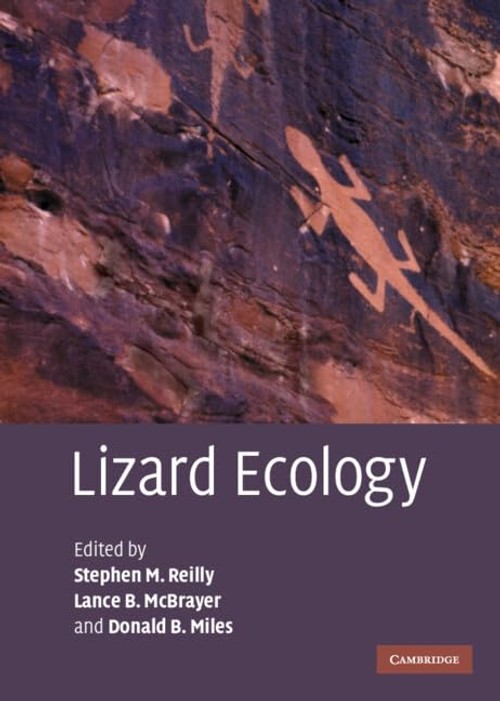
Lizard Ecology: The Evolutionary Consequences of Foraging Mode by Stephen M. Reilly – A Deep Dive into Lizard Foraging S
Inclusive of all applicable taxes. FREE shipping on all orders.
Available Offers
- 🚚Free Delivery — Free shipping on all orders
- 💵Cash on Delivery — Pay when your order arrives
- ↩️15-Day Easy Returns — Hassle-free return policy
- 🔒Cash on Delivery — Pay safely when your order arrives
Check Delivery
Product Description
Introduction
Lizards have long fascinated biologists and nature enthusiasts alike, but beyond their striking appearances and behaviours lies a deeper evolutionary story. Lizard Ecology: The Evolutionary Consequences of Foraging Mode by Stephen M. Reilly offers a comprehensive exploration of how the way lizards hunt for food has shaped nearly every aspect of their biology. This hardbound volume from Cambridge University Press is an essential resource for Indian students and researchers in ecology, evolutionary biology, and herpetology, providing a detailed yet accessible synthesis of three decades of research.
Book Overview
Published in 2007, this authoritative work examines the central role of foraging mode—whether lizards sit and wait for prey or actively search for it—as a driving force in evolution. The book systematically reviews how foraging behaviour influences diet, anatomy, biomechanics, life history, physiology, and even social interactions across a wide range of lizard and snake groups. By moving beyond simple dichotomies, the author reveals the continuous nature of foraging strategies and their profound consequences for organismal design and ecological interactions. This is not just a reference; it is a roadmap for understanding how behaviour drives evolutionary change.
Key Highlights
- Comprehensive synthesis of three decades of research on lizard foraging ecology
- Integrative approach linking behaviour, morphology, physiology, and life history
- Taxonomic breadth covering diverse lizard and snake lineages from around the world
- Conceptual framework that challenges the traditional sit-and-wait versus wide foraging paradigm
- Richly illustrated with diagrams, tables, and comparative data for easy understanding
Inside the Book
Readers will find a well-structured narrative that begins with foundational concepts of foraging mode and then delves into specific organismal systems. Chapters examine how foraging strategies affect diet composition, prey capture techniques, locomotor performance, metabolic rates, reproductive output, and even brain size. The book also explores the evolutionary trade-offs between different foraging modes, showing how they shape ecological niches and community dynamics. Detailed case studies from field and laboratory research bring the concepts to life, making complex ideas tangible for students and professionals alike.
Key Topics
- Evolutionary consequences of sit-and-wait versus active foraging
- Foraging mode and its impact on lizard anatomy and biomechanics
- Physiological adaptations related to energy expenditure and digestion
- Life history strategies influenced by hunting behaviour
- Comparative ecology of lizards and snakes
- Methodological approaches for studying foraging behaviour
- Future directions in lizard evolutionary ecology
Reader Benefits
Indian students preparing for competitive exams in life sciences will find this book invaluable for gaining a deep, conceptual understanding of evolutionary principles. Researchers in ecology and herpetology will appreciate the thorough literature review and the identification of gaps that inspire new studies. The clear writing style and structured presentation make it suitable for advanced undergraduate and postgraduate courses. Moreover, the book encourages critical thinking about how behaviour influences broader evolutionary patterns, a skill essential for any aspiring biologist.
Learning Outcomes
- Understand the central role of foraging mode in lizard evolution
- Analyse the interconnectedness of behaviour, morphology, and physiology
- Evaluate the evidence for continuous variation in foraging strategies
- Apply comparative methods to study ecological and evolutionary questions
- Develop research hypotheses based on the sit-and-wait versus active foraging framework
Who Should Read
This book is ideal for herpetologists, evolutionary biologists, ecologists, animal behaviourists, and advanced students in these fields. It is also highly relevant for wildlife biologists, conservationists, and anyone fascinated by the diversity of lizards and snakes. Indian readers with an interest in tropical ecology or vertebrate biology will find the concepts directly applicable to local species and ecosystems. Teachers and professors can use it as a textbook or supplementary reading for courses in evolutionary ecology and herpetology.
About the Author
Stephen M. Reilly is a respected evolutionary biologist and herpetologist with extensive experience in studying lizard ecology and functional morphology. He has contributed significantly to our understanding of how foraging behaviour shapes organismal design. His research combines field observations with laboratory experiments, and he has published numerous papers in leading scientific journals. This book reflects his deep expertise and passion for integrative biology.
About the Publisher
Cambridge University Press is one of the oldest and most prestigious academic publishers in the world, known for its rigorous editorial standards and commitment to advancing knowledge. Their science and mathematics catalogue includes seminal works that have shaped modern research. For Indian readers, a Cambridge University Press book represents reliability, depth, and scholarly excellence—qualities that make this volume a trusted resource for years to come.
Conclusion
Lizard Ecology: The Evolutionary Consequences of Foraging Mode is more than a reference book; it is an invitation to explore the hidden connections between behaviour and evolution. Whether you are a student beginning your journey in herpetology or a seasoned researcher seeking fresh perspectives, this hardcover edition offers enduring value. Add it to your library and gain a deeper appreciation for the lizards that share our world.
Quick Summary
Lizard Ecology: The Evolutionary Consequences of Foraging Mode by Stephen M. Reilly is a seminal reference volume that examines how foraging behavior has shaped lizard evolution over three decades. The book systematically reviews the effects of foraging mode on diet, ecology, behavior, anatomy, biomechanics, life history, and physiology across a wide range of lizard groups. It challenges the traditional sit-and-wait vs wide foraging dichotomy, revealing a continuum of strategies. This work is essential for herpetologists, evolutionary biologists, and advanced students seeking a comprehensive understanding of lizard adaptation. Readers will gain deep insights into how foraging strategies influence organismal systems and evolutionary trajectories. Published by Cambridge University Press, this hardcover edition is a durable resource for Indian researchers and institutions. By purchasing from Bookshops.in, you support a premium Indian bookstore that offers authentic, high-quality academic titles with reliable delivery across India.
Book Highlights
Book Specifications
| ISBN-13 | 9780521833585 |
| ISBN-10 | 0521833582 |
| Publisher | Cambridge University Press |
| Language | English |
| Dimensions | 18.08 x 3.07 x 24.59 cm |
| Weight | 1 kg 230 g |
| Category | Biology & Life Sciences › Ecology |
| Genre | Non-fiction |
| Original Language | English |
Frequently Asked Questions
What is the main theme of Lizard Ecology: The Evolutionary Consequences of Foraging Mode?
Who is the author of this book?
Is this book suitable for Indian students?
What is the ISBN-13 of this book?
What format is this book available in?
What is the price of this book?
Does this book cover snakes as well?
What are the key topics covered in this book?
Is this book a textbook or a reference?
Can I use this book for my research?
What is the reading level of this book?
How does this book help in understanding lizard evolution?
Readers Also Search For
Customers Also Bought
Mathematics
Stereotype Spaces and Algebras: 73 (De Gruyter Expositions in Mathematics, 73)

Mathematics
Semigroups in Algebra, Geometry and Analysis: 20 (De Gruyter Expositions in Mathematics, 20)

Mathematics
Geometry from the Pacific Rim: Proceedings of the Pacific Rim Geometry Conference held at National University of Singapore, Republic of Singapore, ... 1994 (De Gruyter Proceedings in Mathematics)

Mathematics
First International Tainan-Moscow Algebra Workshop: Proceedings of the International Conference held at National Cheng Kung University Tainan, Taiwan, ... 1994 (De Gruyter Proceedings in Mathematics)

Mathematics
Differential Geometry - Proceedings of the VIII International Colloquium (English, Jesus A. Alvarez Lopez | Eduardo Garcia-Rio)

Mathematics
Mathematical Theory of Optimal Processes (Classics of Soviet Mathematics)
Related Products
View All
Science & Mathematics
Elements of Pelagos Biology: With Focus on the Mediterranean Sea

Science & Mathematics
Squid - Superconducting Quantum Interference Devices and Their Applications: Proceedings of the International Conference on Superconducting Quantum Devices, Berlin-west, October 4-8, 1976
Science & Mathematics
Thermodynamics and Pattern Formation in Biology
Science & Mathematics
The Nature of Mathematics and the Mathematics of Nature by S. Andersson – Mathematics & Science

Science & Mathematics
Linear Algebra | by Stephen Friedberg | Arnold Insel | Lawrence Spence | Pearson | by Stephen Friedberg | Arnold Insel | Lawrence Spence | Pearson | by Stephen Friedberg | Arnold Insel | Lawrence Spence | Pearson | by Stephen Friedberg | Arnold Insel | Lawrence Spence | Pearson | by Stephen Friedberg | Arnold Insel | Lawrence Spence | Pearson | by Stephen Friedberg | Arnold Insel | Lawrence Spence | Pearson | by Stephen Friedberg | Arnold Insel | Lawrence Spence | Pearson | by Stephen Friedberg

Science & Mathematics