
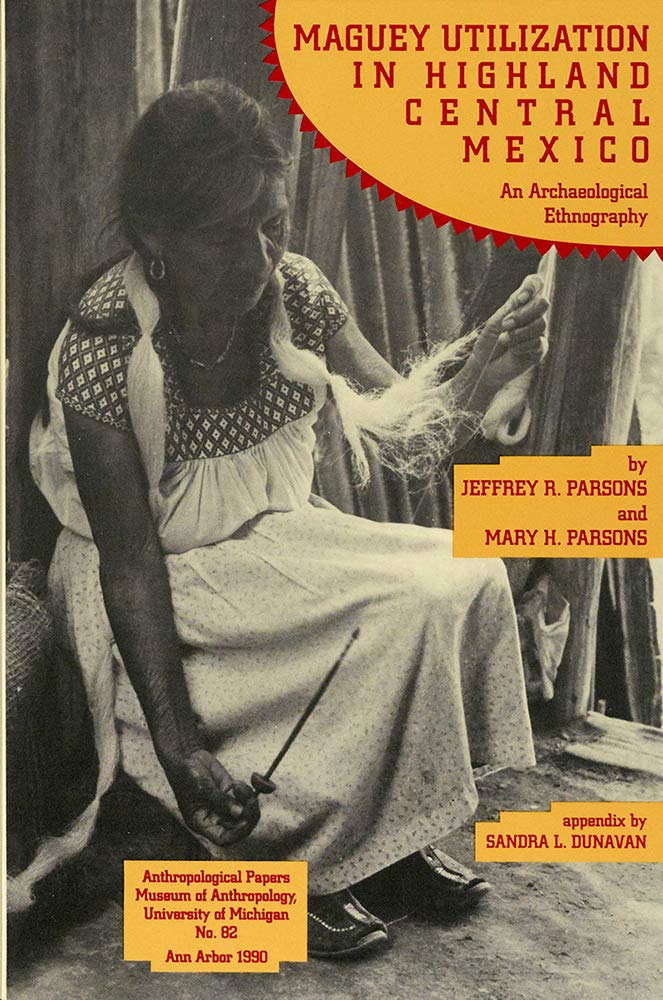
Maguey Utilization in Highland Central Mexico: An Archaeological Ethnography by Jeffrey R. Parsons – A Deep Dive into Me
Inclusive of all applicable taxes. FREE shipping on all orders.
Available Offers
- 🚚Free Delivery — Free shipping on all orders
- 💵Cash on Delivery — Pay when your order arrives
- ↩️15-Day Easy Returns — Hassle-free return policy
- 🔒Cash on Delivery — Pay safely when your order arrives
Check Delivery
Product Description
Introduction
In the highlands of central Mexico, the maguey plant—often called the 'tree of wonders'—has sustained civilizations for millennia. Maguey Utilization in Highland Central Mexico: An Archaeological Ethnography by Jeffrey R. Parsons offers an unparalleled deep dive into how this resilient succulent shaped the culture, economy, and daily life of ancient and modern Mesoamerican societies. For Indian readers interested in ethnobotany, archaeology, or sustainable agriculture, this hardcover volume is a treasure trove of cross-cultural insights.
Book Overview
Published by the University of Michigan Museum of Anthropological Archaeology, this comprehensive study bridges the gap between ethnographic observation and archaeological interpretation. Parsons, a leading authority on Mesoamerican archaeology, spent decades documenting the traditional uses of maguey—from the production of pulque (a fermented beverage) to the extraction of fibers for textiles and cordage. The book presents a holistic view of how a single plant can shape human adaptation, social organization, and technological innovation. It is essential reading for anyone exploring indigenous knowledge systems and their relevance today.
Key Highlights
- Ethnographic Depth: First-hand accounts of maguey cultivation, harvesting, and processing in rural Mexican communities.
- Archaeological Integration: Links present-day practices to pre-Hispanic artifacts and settlement patterns.
- Comprehensive Coverage: Detailed chapters on pulque production, fiber processing, spinning, and weaving techniques.
- Visual Documentation: Includes photographs, diagrams, and maps that bring the landscape and labor to life.
- Cross-Disciplinary Appeal: Relevant for archaeologists, ethnobotanists, anthropologists, and historians of technology.
Inside the Book
The narrative unfolds through a careful blend of fieldwork data and historical records. Parsons examines the maguey's life cycle, the tools used for extraction, and the social rituals surrounding pulque consumption. He also explores how maguey fiber—stronger than many synthetic alternatives—was used for clothing, ropes, and even paper. The book's final chapters draw powerful conclusions about the archaeological signatures of maguey utilization, offering new methods for identifying plant-based economies in ancient sites.
Key Topics
- Maguey cultivation and land management in highland environments
- Traditional pulque production and its ceremonial significance
- Fiber extraction, spinning, and weaving technologies
- Economic and social roles of maguey in pre-Hispanic and colonial periods
- Archaeological implications for understanding subsistence and craft specialization
Reader Benefits
This book empowers readers to appreciate the ingenuity of traditional agricultural systems. Indian students and scholars will find striking parallels with indigenous plant use in South Asia—such as the agave-like uses of sisal or the cultural centrality of the coconut palm. By understanding how maguey shaped Mesoamerican societies, readers gain a broader perspective on human-plant relationships, sustainable resource use, and the resilience of indigenous knowledge in the face of modernization.
Learning Outcomes
- Understand the ecological and cultural significance of the maguey plant in highland Mexico
- Learn traditional techniques for pulque fermentation and fiber processing
- Analyze how ethnographic data can inform archaeological interpretations
- Recognize the role of plants in shaping social hierarchies and trade networks
- Apply comparative perspectives to similar plant-based economies in India
Who Should Read
This book is ideal for postgraduate students and researchers in archaeology, anthropology, ethnobotany, and environmental history. It is also valuable for undergraduate courses on Mesoamerican civilizations, indigenous technologies, and sustainable development. General readers with a passion for cultural ecology and traditional crafts will find it equally rewarding.
About the Author
Jeffrey R. Parsons is a renowned American archaeologist and professor emeritus at the University of Michigan. With decades of fieldwork in the Basin of Mexico, his research focuses on pre-Hispanic settlement patterns, agricultural systems, and craft production. His meticulous ethnographic work on maguey utilization is considered foundational in the study of non-industrial plant economies.
About the Publisher
The University of Michigan Museum of Anthropological Archaeology publishes authoritative monographs that advance the understanding of human cultural and biological diversity. Their titles are known for rigorous scholarship and interdisciplinary approaches, making them essential resources for academic libraries and serious researchers worldwide.
Conclusion
Maguey Utilization in Highland Central Mexico: An Archaeological Ethnography is more than a book about a plant—it is a window into how human ingenuity transforms natural resources into the bedrock of civilization. For Indian readers, it offers a compelling case study in sustainable living and cultural adaptation. Add this hardcover to your collection and discover the enduring legacy of the 'tree of wonders.'
Quick Summary
Maguey Utilization in Highland Central Mexico: An Archaeological Ethnography by Jeffrey R. Parsons is a seminal academic work that explores the multifaceted role of the maguey plant in Mesoamerican culture. Based on extensive fieldwork, the book details maguey cultivation, the production of pulque (a traditional alcoholic beverage), and the processing of maguey fiber for cordage and textiles. Parsons bridges ethnographic observation with archaeological interpretation, showing how plant use shaped cultural adaptation and change in highland central Mexico. This book is ideal for Indian students and researchers in archaeology, anthropology, and ethnobotany who seek a rigorous case study of human-plant interactions. Readers will learn about traditional agricultural practices, material culture, and the symbolic significance of maguey. By purchasing from Bookshops.in, customers gain access to a high-quality hardcover edition of this niche academic title, delivered reliably across India.
Book Highlights
Book Specifications
| ISBN-13 | 9780915703203 |
| ISBN-10 | 0915703203 |
| Publisher | University of Michigan, Museum of Anthropology, Publications Department |
| Language | English |
| Dimensions | 15.24 x 2.34 x 22.86 cm |
| Weight | 544 g |
| Category | Americas › United States |
| Genre | Nonfiction |
| Reading Age | Adult |
| Original Language | English |
Frequently Asked Questions
What is the main focus of this book?
Who is the author?
Is this book suitable for Indian students?
Does the book include archaeological data?
What topics are covered in the chapters?
Is this book a hardcover edition?
What is the ISBN?
Can I use this book for my PhD research?
Does the book discuss pulque?
Is the book written in English?
What is the price?
Is this book rare or hard to find?
Readers Also Search For
Customers Also Bought
Related Products
View All
History
Human Nature and the French Revolution: From the Enlightenment to the Napoleonic Code: 3 (Polygons: Cultural Diversities and Intersections, 3)
History
The Unmaking of Home in Contemporary Art (Cultural Spaces)

History
Handbook to Life in Medieval and Early Modern Japan | by William E. Deal | Oxford University Press | by William E. Deal | Oxford University Press | by William E. Deal | Oxford University Press | by William E. Deal | Oxford University Press | by William E. Deal | Oxford University Press | by William E. Deal | Oxford University Press | by William E. Deal | Oxford University Press | by William E. Deal | Oxford University Press | by William E. Deal | Oxford University Press | by William E. Deal | Ox

History
The Narrators of Barbarian History (A.D. 550-800) | by Walter Goffart | University of Notre Dame Press | by Walter Goffart | University of Notre Dame Press | by Walter Goffart | University of Notre Dame Press | by Walter Goffart | University of Notre Dame Press | by Walter Goffart | University of Notre Dame Press | by Walter Goffart | University of Notre Dame Press | by Walter Goffart | University of Notre Dame Press | by Walter Goffart | University of Notre Dame Press | by Walter Goffart | Univ

History
The Collected Mathematical Papers of Arthur Cayley.Vol. 12

History