
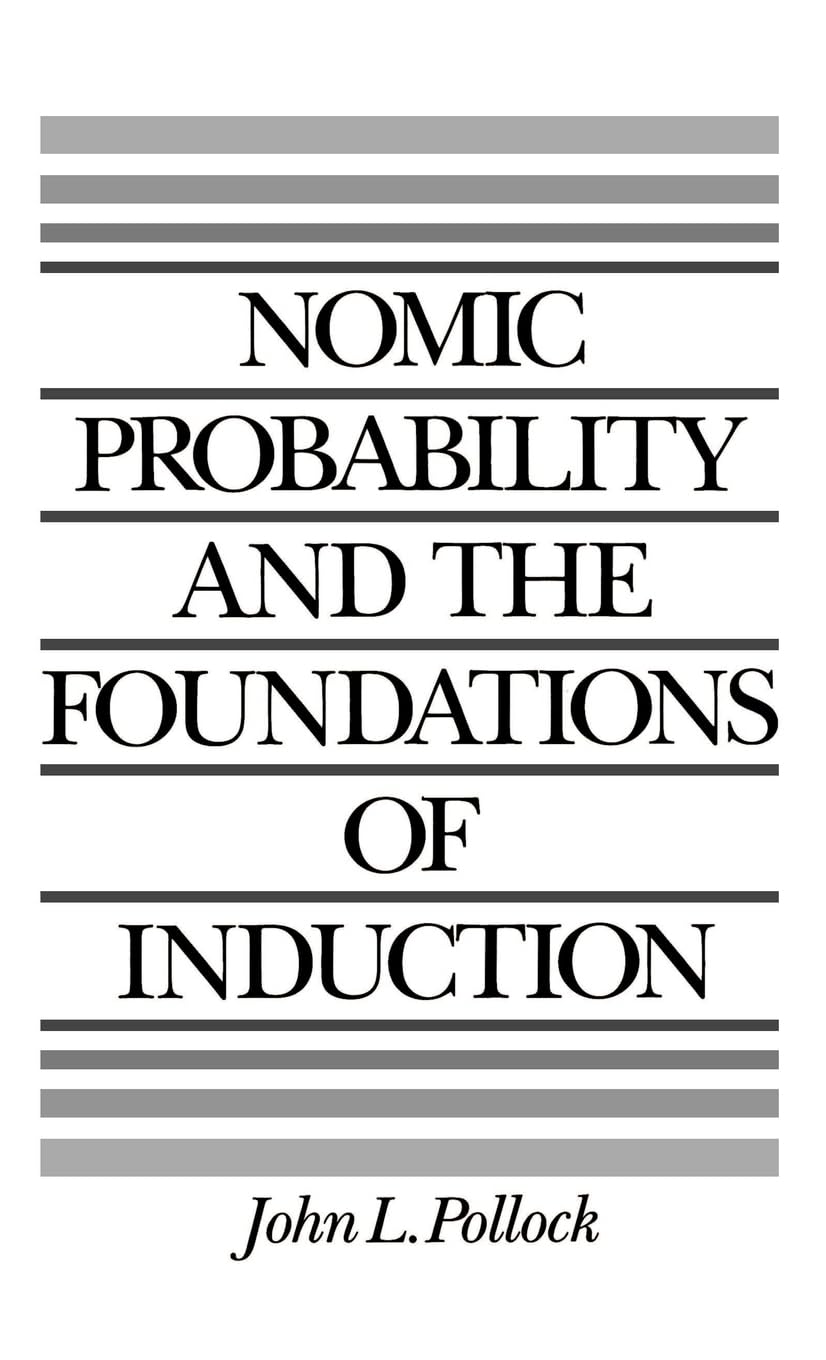
Nomic Probability and the Foundations of Induction by John L. Pollock – A Deep Philosophical Exploration of Probability,
Inclusive of all applicable taxes. FREE shipping on all orders.
Available Offers
- 🚚Free Delivery — Free shipping on all orders
- 💵Cash on Delivery — Pay when your order arrives
- ↩️15-Day Easy Returns — Hassle-free return policy
- 🔒Cash on Delivery — Pay safely when your order arrives
Check Delivery
Product Description
Introduction
In the vast landscape of philosophical inquiry, few questions are as persistent and challenging as the nature of probability and its role in inductive reasoning. John L. Pollock’s Nomic Probability and the Foundations of Induction stands as a monumental work that confronts these deep issues head-on. Published by Oxford University Press, this hardcover volume offers a rigorous yet accessible exploration of how objective probabilities underpin not just the physical sciences, but also epistemology, artificial intelligence, and everyday reasoning. For Indian students and scholars of philosophy, mathematics, and cognitive science, this book provides a foundational framework for understanding the logical structure of probability and its application to real-world problems.
Book Overview
Pollock’s central thesis is that the most fundamental notion of probability is nomic—that is, it is intrinsically tied to the concept of natural laws that hold across possible worlds. He argues that statistical and epistemic conceptions of probability are derived from this deeper nomic idea. The book systematically develops a theory of statistical induction, computational principles for deriving probabilities, acceptance rules, and a robust theory of direct inference. By weaving together formal logic, metaphysics, and practical reasoning, Pollock creates a comprehensive system that addresses the problem of induction—how we can justifiably move from observed instances to general laws. This is not merely a technical treatise; it is a philosophical journey that challenges readers to rethink the very foundations of rational belief.
Key Highlights
- Original Framework: Introduces the concept of nomic probability as the bedrock of all probabilistic reasoning, distinct from mere statistical frequency or subjective belief.
- Rigorous Logical Treatment: Employs formal methods to derive probabilities from natural laws, making the argument precise and testable.
- Integration with Induction: Offers a novel solution to the classic problem of induction by grounding it in objective, law-like probabilities.
- Interdisciplinary Relevance: Bridges philosophy, mathematics, artificial intelligence, and epistemology, making it valuable for diverse fields.
- Practical Computational Principles: Provides actionable rules for deriving probabilities from known data, useful for AI and machine learning applications.
Inside the Book
The book is structured to guide the reader from foundational concepts to advanced applications. The early chapters clarify the distinction between nomic probability and other interpretations, such as subjective Bayesianism or frequentism. Pollock then builds a formal calculus for nomic probability, showing how it relates to laws of nature. Later sections delve into statistical induction, where he explains how we can infer probabilities from observed frequencies using a principle of uniformity. The theory of direct inference—how to apply general probabilities to specific cases—is treated with exceptional clarity. Acceptance rules and the logic of belief revision are also covered, providing a complete toolkit for reasoning under uncertainty. Each chapter is dense with examples, formal derivations, and critical discussions of competing views.
Key Topics
- The nature of natural laws and their relationship to probability
- Nomic probability vs. epistemic and statistical probability
- Foundations of inductive reasoning and the problem of induction
- Computational principles for deriving probabilities from laws
- Theory of direct inference and its applications
- Acceptance rules for forming beliefs based on probabilities
- Implications for epistemology, philosophy of science, and artificial intelligence
Reader Benefits
Readers will gain a deep, systematic understanding of how objective probabilities function in both scientific and everyday contexts. The book equips you with formal tools to analyze inductive arguments, evaluate probabilistic claims, and construct rational belief systems. For students of philosophy, it clarifies long-standing debates about probability and induction. For researchers in AI and cognitive science, it offers a rigorous foundation for building reasoning systems that handle uncertainty. The logical precision of Pollock’s approach also sharpens critical thinking skills applicable to data analysis, decision theory, and legal reasoning. By the end, you will appreciate how nomic probability unifies disparate fields under a single, coherent framework.
Learning Outcomes
- Understand the concept of nomic probability and its primacy over other interpretations
- Analyze the relationship between natural laws and probabilistic statements
- Apply formal principles to derive probabilities from given laws and data
- Evaluate and construct inductive arguments using a rigorous logical basis
- Implement direct inference rules to move from general probabilities to specific cases
- Critically assess foundational issues in epistemology and philosophy of science
Who Should Read
This book is essential for advanced undergraduate and postgraduate students in philosophy, particularly those specializing in logic, epistemology, and philosophy of science. It is equally valuable for students and researchers in mathematics, statistics, and computer science who are interested in the foundations of probability and AI. Indian scholars working on inductive logic, Bayesian reasoning, or the philosophy of physics will find Pollock’s arguments thought-provoking and directly relevant. Professionals in data science, machine learning, and decision theory will also benefit from the conceptual clarity it provides. Anyone with a serious interest in how we justify beliefs about the world will find this book a rewarding intellectual challenge.
About the Author
John L. Pollock was a distinguished American philosopher and logician, known for his pioneering work in epistemology, artificial intelligence, and the philosophy of science. He was a professor at the University of Arizona, where he made significant contributions to formal epistemology and the theory of rational reasoning. Pollock authored several influential books, including Contemporary Theories of Knowledge and Knowledge and Justification, and he developed OSCAR, a sophisticated AI system for defeasible reasoning. His work on nomic probability remains a cornerstone of philosophical logic, influencing generations of scholars. Pollock’s ability to combine rigorous formal analysis with deep philosophical insight sets him apart as one of the most original thinkers of his time.
About the Publisher
Oxford University Press (OUP) is a globally respected academic publisher with a long history of producing authoritative works in philosophy, science, and the humanities. Founded in 1586, OUP is renowned for its commitment to scholarly excellence and rigorous editorial standards. This hardcover edition of Nomic Probability and the Foundations of Induction exemplifies OUP’s dedication to making complex ideas accessible to serious readers. For Indian students and academics, OUP titles are synonymous with quality and reliability, offering a trusted source for foundational texts across disciplines.
Conclusion
John L. Pollock’s Nomic Probability and the Foundations of Induction is a masterful synthesis of logic, metaphysics, and epistemology that redefines how we understand probability and induction. It is not a book for casual browsing but a deep, rewarding study that will transform your perspective on rational reasoning. Whether you are a philosopher seeking clarity on foundational issues, a computer scientist building intelligent systems, or a curious student eager to explore the logic of uncertainty, this volume offers enduring insights. Add this hardcover classic to your library and engage with one of the most profound treatments of probability ever written.
Quick Summary
Nomic Probability and the Foundations of Induction by John L. Pollock is a landmark philosophical work that redefines the concept of probability by grounding it in natural law—what Pollock calls 'nomic probability.' The book argues that objective probabilities are not merely statistical frequencies or subjective degrees of belief, but are rooted in the nomic structure of possible worlds. This foundation provides a robust basis for inductive reasoning, addressing the classic problem of induction that has puzzled philosophers since Hume. Pollock systematically shows how epistemic and statistical conceptions of probability derive from this nomic notion, and he explores the implications for epistemology, philosophy of science, and artificial intelligence. The book is written at an advanced level, making it ideal for graduate students, researchers, and professionals in philosophy, logic, and AI. Readers will gain a deep understanding of how probability and induction interconnect, and how these ideas can be applied to formal reasoning systems. By purchasing this hardcover edition from Bookshops.in, Indian readers gain access to a premium academic resource that is both intellectually rigorous and beautifully produced.
Book Highlights
Book Specifications
| ISBN-13 | 9780195060133 |
| ISBN-10 | 019506013X |
| Publisher | OUP USA |
| Language | English |
| Dimensions | 14.76 x 3.08 x 21.74 cm |
| Weight | 544 g |
| Category | Performing Arts › Film & Television |
| Genre | Non-fiction |
| Reading Age | Adult |
| Original Language | English |
Frequently Asked Questions
What is the main thesis of Nomic Probability and the Foundations of Induction?
Who is John L. Pollock?
Is this book suitable for beginners in philosophy?
How does this book relate to artificial intelligence?
What is nomic probability?
Does the book cover Bayesian probability?
Is this book used in Indian university courses?
What is the ISBN of this book?
Can I use this book for my PhD research?
Does the book address the problem of induction?
What is the price of this book on Bookshops.in?
Is this book available in paperback?
Why should I buy from Bookshops.in?
Readers Also Search For
Customers Also Bought
Mathematics
Stereotype Spaces and Algebras: 73 (De Gruyter Expositions in Mathematics, 73)
Mathematics
Semigroups in Algebra, Geometry and Analysis: 20 (De Gruyter Expositions in Mathematics, 20)
Mathematics
Geometry from the Pacific Rim: Proceedings of the Pacific Rim Geometry Conference held at National University of Singapore, Republic of Singapore, ... 1994 (De Gruyter Proceedings in Mathematics)
Mathematics
First International Tainan-Moscow Algebra Workshop: Proceedings of the International Conference held at National Cheng Kung University Tainan, Taiwan, ... 1994 (De Gruyter Proceedings in Mathematics)
Mathematics
Differential Geometry - Proceedings of the VIII International Colloquium (English, Jesus A. Alvarez Lopez | Eduardo Garcia-Rio)
Mathematics
Mathematical Theory of Optimal Processes (Classics of Soviet Mathematics)
Related Products
View All
Science & Mathematics
Elements of Pelagos Biology: With Focus on the Mediterranean Sea
Science & Mathematics
Squid - Superconducting Quantum Interference Devices and Their Applications: Proceedings of the International Conference on Superconducting Quantum Devices, Berlin-west, October 4-8, 1976
Science & Mathematics
Thermodynamics and Pattern Formation in Biology
Science & Mathematics
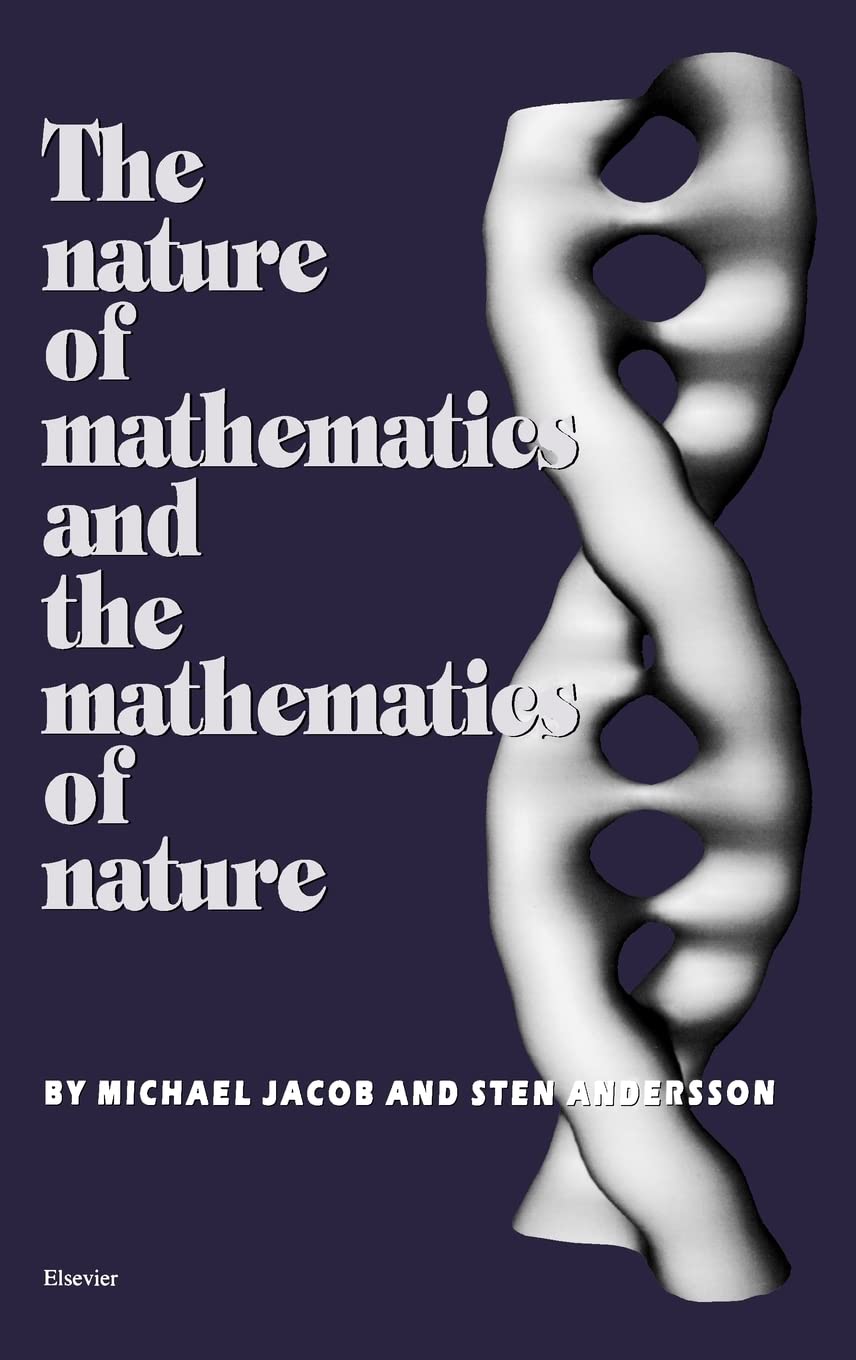
The Nature of Mathematics and the Mathematics of Nature by S. Andersson – Mathematics & Science

Science & Mathematics
Linear Algebra | by Stephen Friedberg | Arnold Insel | Lawrence Spence | Pearson | by Stephen Friedberg | Arnold Insel | Lawrence Spence | Pearson | by Stephen Friedberg | Arnold Insel | Lawrence Spence | Pearson | by Stephen Friedberg | Arnold Insel | Lawrence Spence | Pearson | by Stephen Friedberg | Arnold Insel | Lawrence Spence | Pearson | by Stephen Friedberg | Arnold Insel | Lawrence Spence | Pearson | by Stephen Friedberg | Arnold Insel | Lawrence Spence | Pearson | by Stephen Friedberg
Science & Mathematics