

Nutritional Biochemistry of the Vitamins: A Comprehensive Scientific Guide by David A. Bender – Cambridge University Pre
Inclusive of all applicable taxes. FREE shipping on all orders.
Available Offers
- 🚚Free Delivery — Free shipping on all orders
- 💵Cash on Delivery — Pay when your order arrives
- ↩️15-Day Easy Returns — Hassle-free return policy
- 🔒Cash on Delivery — Pay safely when your order arrives
Check Delivery
Product Description
Introduction
Vitamins are essential micronutrients that orchestrate a vast array of physiological processes, yet their biochemical pathways remain a subject of intense scientific inquiry. In Nutritional Biochemistry of the Vitamins, David A. Bender delivers a rigorous and comprehensive examination of how these organic compounds function at the molecular level. This hardbound volume from Cambridge University Press is an indispensable resource for Indian students, researchers, and healthcare professionals who seek to understand the science behind vitamin metabolism, deficiency, and optimal intake.
Book Overview
This authoritative reference work systematically explores the chemical diversity and metabolic roles of all known vitamins. Unlike superficial nutrition guides, Bender’s text delves into the mechanistic actions of vitamins as coenzymes, hormones, antioxidants, and signaling molecules. The book bridges the gap between basic biochemistry and clinical nutrition, offering a clear framework for understanding how vitamins influence gene expression, cellular differentiation, and tissue homeostasis. With a focus on evidence-based science, it provides the theoretical foundation needed to interpret dietary recommendations and deficiency syndromes.
Key Highlights
- Comprehensive coverage of all 13 vitamins, including their absorption, transport, storage, and metabolic functions
- Mechanistic insights into vitamin-dependent enzyme reactions and receptor-mediated signaling pathways
- Critical analysis of reference intakes for Indian and global populations, with emphasis on prevention of deficiency and promotion of health
- Integration of classic and contemporary research, highlighting unresolved questions and future directions
- Clear illustrations and tables that simplify complex metabolic networks
Inside the Book
Structured for both systematic study and quick reference, each chapter focuses on a single vitamin or group of related vitamins. Bender begins with the historical discovery and chemical structure, then progresses to dietary sources, bioavailability, and tissue distribution. The core of each chapter examines the vitamin’s biochemical functions—from electron transfer in energy metabolism to modulation of transcription factors. The final sections address deficiency symptoms, toxicity risks, and the scientific basis for recommended dietary allowances. The book also includes a dedicated chapter on vitamin-like compounds and emerging nutrients.
Key Topics
- Vitamin A: vision, immune function, and gene regulation
- Vitamin D: calcium homeostasis, bone health, and extra-skeletal actions
- Vitamin E: antioxidant defense and cell membrane integrity
- Vitamin K: blood coagulation and bone mineralization
- B-complex vitamins: energy metabolism, methylation, and neurotransmitter synthesis
- Vitamin C: collagen synthesis, iron absorption, and immunity
- Interactions between vitamins and other micronutrients
- Biochemical basis of vitamin deficiency diseases in the Indian context
Reader Benefits
This book empowers readers to move beyond rote memorisation of vitamin sources and deficiency symptoms. By understanding the underlying biochemistry, students can predict the consequences of metabolic disruptions and evaluate nutritional interventions critically. Researchers will appreciate the depth of mechanistic detail and the identification of knowledge gaps. Clinicians and dietitians gain a solid scientific foundation for advising patients on supplementation and dietary modifications. The Indian reader will find relevance in discussions of regional deficiency patterns, such as vitamin D insufficiency due to limited sun exposure and B12 deficiency in vegetarian populations.
Learning Outcomes
- Explain the chemical classification and metabolic roles of each vitamin
- Describe the molecular mechanisms by which vitamins regulate enzyme activity and gene expression
- Analyze the relationship between vitamin status and chronic disease risk
- Evaluate the scientific evidence behind dietary reference intakes for different life stages
- Identify biochemical markers of vitamin deficiency and toxicity
- Apply biochemical principles to design nutrition interventions for populations at risk
Who Should Read
Nutritional Biochemistry of the Vitamins is ideal for postgraduate and advanced undergraduate students in biochemistry, nutrition, food science, and medicine. It is equally valuable for PhD scholars and postdoctoral researchers working on micronutrient metabolism. Clinical nutritionists, dietitians, and public health professionals will find it a reliable reference for evidence-based practice. Pharmacy and life science educators can use it as a textbook for advanced courses on vitamins. The book is also suited for medical students preparing for competitive exams like USMLE, NEET PG, or Indian MSc entrance tests where nutritional biochemistry is a core subject.
About the Author
David A. Bender is a renowned biochemist and educator who has spent decades researching vitamin metabolism and nutritional science. He has authored numerous textbooks and research papers, and his work is widely cited in the field of human nutrition. Bender’s clear writing style and ability to synthesise complex information make him a trusted guide for students and professionals alike. His academic career includes teaching at University College London and contributing to international committees on dietary reference intakes.
About the Publisher
Cambridge University Press is one of the world’s oldest and most prestigious academic publishers. Known for its rigorous peer-review process and high editorial standards, Cambridge produces textbooks and reference works that are used in universities across India and globally. This hardcover edition is printed on quality paper with durable binding, making it suitable for years of intensive study.
Conclusion
In an era of increasing interest in personalised nutrition and functional foods, understanding the biochemical basis of vitamin action is more important than ever. Nutritional Biochemistry of the Vitamins by David A. Bender provides the depth and clarity needed to master this complex subject. Whether you are preparing for an examination, designing a research study, or counselling patients, this book will serve as an enduring companion. Order your copy from Bookshops.in today and add a definitive resource to your library.
Quick Summary
Nutritional Biochemistry of the Vitamins by David A. Bender is a comprehensive scientific reference that delves into the diverse biochemical roles of vitamins. Despite their chemical differences, vitamins are essential dietary components required in small amounts for normal metabolic function. The book systematically explores how vitamins act as coenzymes, hormones, antioxidants, mediators of cell signaling, and regulators of tissue growth and differentiation. It also examines the consequences of vitamin deficiency and excess, providing a clear scientific basis for dietary reference intakes aimed at preventing deficiency and promoting optimal health. Written for advanced students, researchers, and healthcare professionals, this volume highlights current knowledge while identifying gaps that warrant further investigation. Published by Cambridge University Press, it is a compact yet authoritative resource for anyone studying nutrition, biochemistry, or related life sciences. By purchasing from Bookshops.in, Indian readers gain access to a premium physical copy with reliable delivery and customer support.
Book Highlights
Book Specifications
| ISBN-13 | 9780521803885 |
| ISBN-10 | 0521803888 |
| Publisher | Cambridge University Press |
| Language | English |
| Dimensions | 15.88 x 3.81 x 22.86 cm |
| Weight | 920 g |
| Country | India |
| Category | Basic Sciences › Biochemistry |
| Genre | Science & Mathematics |
| Original Language | English |
Frequently Asked Questions
What is Nutritional Biochemistry of the Vitamins about?
Who is the author of this book?
Is this book suitable for Indian students?
What topics are covered in the book?
Does the book include both water-soluble and fat-soluble vitamins?
Is this book a textbook or a reference?
What is the price of this book?
Which publisher released this book?
Does the book discuss vitamin deficiency diseases?
Is there information on vitamin excess or toxicity?
What are dietary reference intakes?
Can this book help with research?
What is the language of the book?
Is the book available in hardcover?
Readers Also Search For
Customers Also Bought

Anatomy
Ultrastructure of the Digestive Tract: 4 (Electron Microscopy in Biology and Medicine)

Anatomy
Ultrastructure of the Connective Tissue Matrix: 3 (Electron Microscopy in Biology and Medicine)

Anatomy
Reproductive Genetics (Royal College of Obstetricians and Gynaecologists Study Group)

Anatomy
Human Gross Anatomy: An Outline Text by Robert J. Leonard – Medical Anatomy

Pharmacology
Mathematical Modeling and Simulation in Enteric Neurobiology

Anatomy
Nature’s Patterns and the Fractional Calculus: 2 (Fractional Calculus in Applied Sciences and Engineering, 2)
Related Products
View All
Medicine & Health Sciences
Handbook of Hospitality Strategic Management | by Olsen Michael | Taylor & Francis Ltd | by Olsen Michael | Taylor & Francis Ltd | by Olsen Michael | Taylor & Francis Ltd | by Olsen Michael | Taylor & Francis Ltd | by Olsen Michael | Taylor & Francis Ltd | by Olsen Michael | Taylor & Francis Ltd | by Olsen Michael | Taylor & Francis Ltd | by Olsen Michael | Taylor & Francis Ltd | by Olsen Michael | Taylor & Francis Ltd | by Olsen Michael | Taylor & Francis

Medicine & Health Sciences
Pediatrics on Call | by Charles A. Pohl | Kathleen Bradford | Clara Callahan | McGraw Hill / Medical | by Charles A. Pohl | Kathleen Bradford | Clara Callahan | McGraw Hill / Medical | by Charles A. Pohl | Kathleen Bradford | Clara Callahan | McGraw Hill / Medical | by Charles A. Pohl | Kathleen Bradford | Clara Callahan | McGraw Hill / Medical | by Charles A. Pohl | Kathleen Bradford | Clara Callahan | McGraw Hill / Medical | by Charles A. Pohl | Kathleen Bradford | Clara Callahan | McGraw Hill

Medicine & Health Sciences
The Physician's Guide to Depression and Bipolar Disorders | by Dwight L. Evans | Dennis S. Charney | Lydia Lewis | McGraw Hill / Medical | by Dwight L. Evans | Dennis S. Charney | Lydia Lewis | McGraw Hill / Medical | by Dwight L. Evans | Dennis S. Charney | Lydia Lewis | McGraw Hill / Medical | by Dwight L. Evans | Dennis S. Charney | Lydia Lewis | McGraw Hill / Medical | by Dwight L. Evans | Dennis S. Charney | Lydia Lewis | McGraw Hill / Medical | by Dwight L. Evans | Dennis S. Charney | Lydi
Medicine & Health Sciences
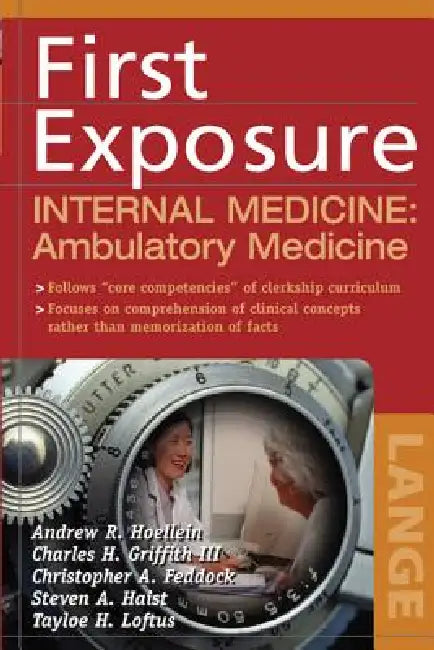
First Exposure to Internal Medicine | by Andrew R. Hoellein | Charles H. Griffith | McGraw Hill / Medical | by Andrew R. Hoellein | Charles H. Griffith | McGraw Hill / Medical | by Andrew R. Hoellein | Charles H. Griffith | McGraw Hill / Medical | by Andrew R. Hoellein | Charles H. Griffith | McGraw Hill / Medical | by Andrew R. Hoellein | Charles H. Griffith | McGraw Hill / Medical | by Andrew R. Hoellein | Charles H. Griffith | McGraw Hill / Medical | by Andrew R. Hoellein | Charles H. Griffit
Medicine & Health Sciences
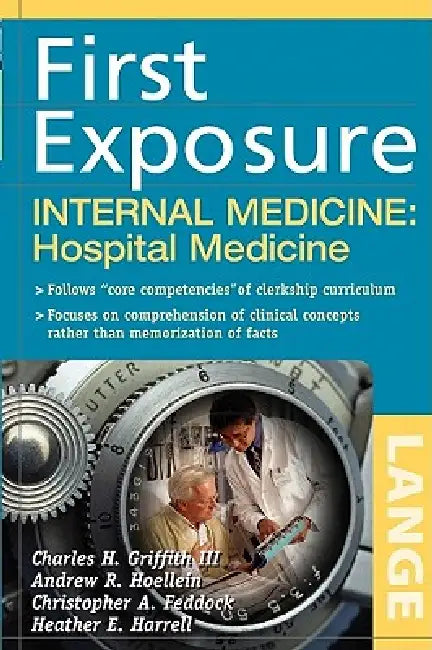
First Exposure to Internal Medicine | by Charles H. Griffith | Andrew R. Hoellein | McGraw Hill / Medical | by Charles H. Griffith | Andrew R. Hoellein | McGraw Hill / Medical | by Charles H. Griffith | Andrew R. Hoellein | McGraw Hill / Medical | by Charles H. Griffith | Andrew R. Hoellein | McGraw Hill / Medical | by Charles H. Griffith | Andrew R. Hoellein | McGraw Hill / Medical | by Charles H. Griffith | Andrew R. Hoellein | McGraw Hill / Medical | by Charles H. Griffith | Andrew R. Hoellei
Medicine & Health Sciences