
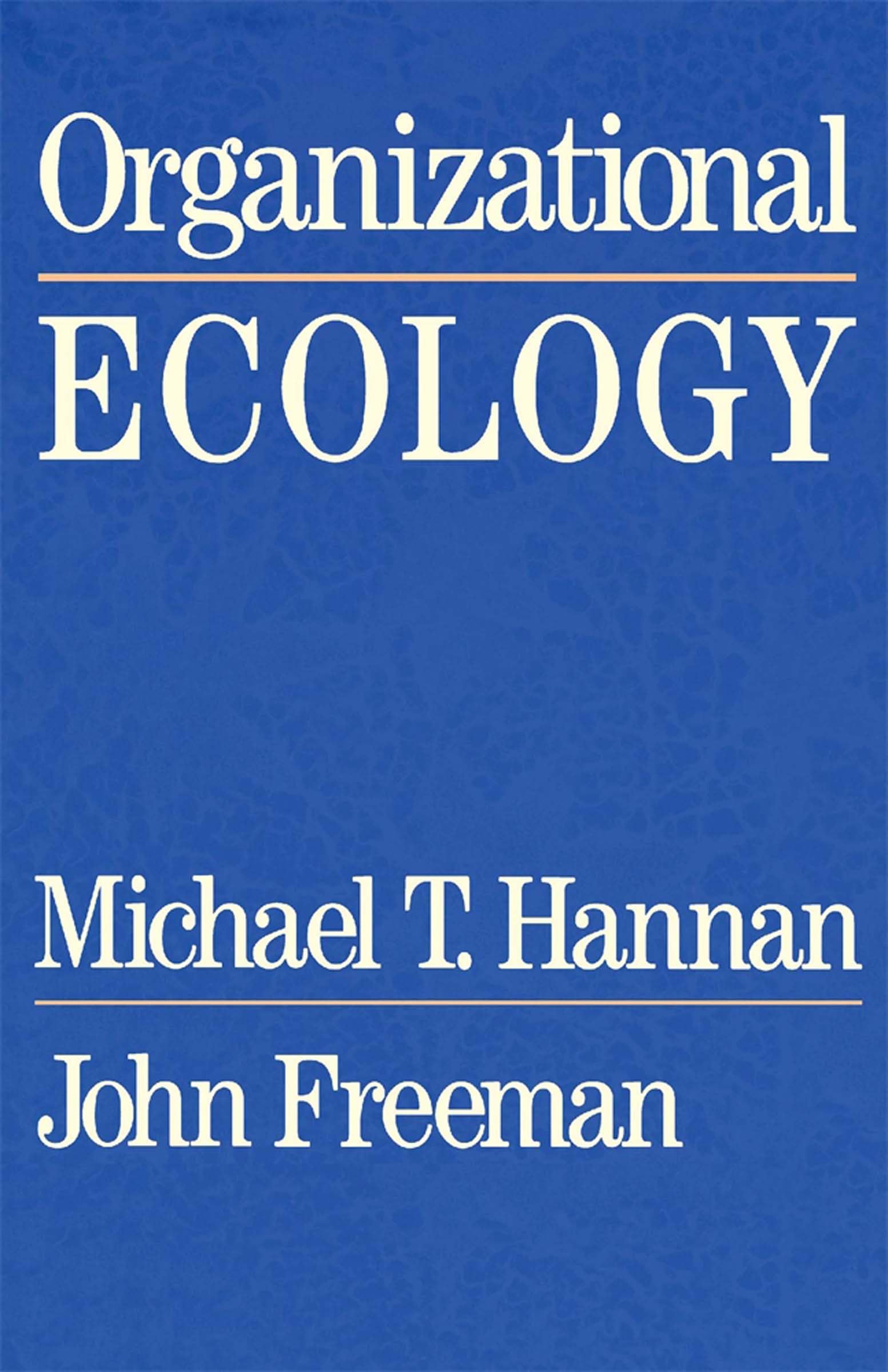
Organizational Ecology: Understanding Organizational Competition, Entry, Exit, and Diversity by Michael T. Hannan
Inclusive of all applicable taxes. FREE shipping on all orders.
Available Offers
- 🚚Free Delivery — Free shipping on all orders
- 💵Cash on Delivery — Pay when your order arrives
- ↩️15-Day Easy Returns — Hassle-free return policy
- 🔒Cash on Delivery — Pay safely when your order arrives
Check Delivery
Product Description
Introduction
In the vast and ever-shifting landscape of business and social structures, why do some organizations thrive while others vanish? Organizational Ecology by Michael T. Hannan offers a groundbreaking lens through which to understand the birth, survival, and death of organizations. This seminal work, published by Harvard University Press, is not just a book—it is a foundational text for students, researchers, and professionals seeking to grasp the impersonal, often invisible forces that shape the corporate and institutional world around us.
Book Overview
Organizational Ecology is a rigorous exploration of how organizations compete for limited resources in their environments. Written by Michael T. Hannan, one of the foremost thinkers in organizational theory, this hardcover volume presents a comprehensive framework that moves beyond individual leadership or strategy. Instead, it focuses on population-level dynamics—how entire groups of similar organizations (populations) emerge, change, and decline. Using rich data and mathematical models, Hannan examines the rates of organizational founding, growth, and failure, revealing patterns that are both surprising and deeply instructive.
Key Highlights
- Pioneering Framework: Introduces the ecological approach to studying organizations, treating them as species in a competitive ecosystem.
- Data-Driven Insights: Uses empirical evidence to challenge traditional management theories about why organizations succeed or fail.
- Population Thinking: Shifts focus from individual firms to entire populations, offering a macro-level understanding of change.
- Timeless Relevance: Despite being a classic, its principles apply equally to startups, multinationals, non-profits, and government agencies.
Inside the Book
This book delves into the core mechanisms that govern organizational life. Hannan explains how resource scarcity, competition, and institutional constraints create a constant churn of entries and exits. The chapters systematically build a theory of organizational diversity, showing why certain forms of organization become dominant while others fade. Key concepts such as niche width, density dependence, and structural inertia are unpacked with clarity. Readers will find detailed case studies and statistical analyses that illuminate the hidden logic behind market booms, industry collapses, and the resilience of certain institutional forms.
Key Topics
- Population ecology of organizations
- Resource competition and niche theory
- Rates of organizational founding and mortality
- Structural inertia and organizational change
- Diversity and selection in organizational populations
- Environmental constraints on strategy
- Long-term evolution of industries and sectors
Reader Benefits
By engaging with this book, readers will gain a powerful analytical toolkit for making sense of the business world. Instead of relying on anecdotal success stories, you will learn to see the larger patterns that determine which organizations survive economic shifts, regulatory changes, or technological disruptions. This ecological perspective is invaluable for strategists, policymakers, and entrepreneurs who want to anticipate trends rather than react to them. The book also sharpens critical thinking by emphasizing that outcomes are often shaped by forces beyond any single leader's control.
Learning Outcomes
- Understand why most new organizations fail and what factors increase survival odds.
- Analyze industries as dynamic populations rather than static lists of competitors.
- Identify the environmental conditions that foster or hinder organizational diversity.
- Apply ecological concepts to real-world scenarios, from startup ecosystems to public sector reforms.
- Critically evaluate traditional management theories through a scientific, evidence-based lens.
Who Should Read
This book is essential for graduate and advanced undergraduate students in sociology, business administration, economics, and public policy. It is equally valuable for researchers in organizational theory, strategy, and industrial dynamics. Practising managers, consultants, and entrepreneurs who wish to deepen their understanding of market evolution and competitive landscapes will find it intellectually rewarding. Anyone curious about why certain companies—like dinosaurs—dominate an era only to disappear will appreciate the depth and rigour of Hannan's analysis.
About the Author
Michael T. Hannan is a distinguished scholar and one of the founding figures of organizational ecology. A professor at Stanford University, he has shaped modern organizational theory through decades of research and teaching. His work bridges sociology and management, and he is widely cited for his contributions to understanding how environments select and shape organizations. Hannan's rigorous methodology and clear exposition make complex ideas accessible to serious readers.
About the Publisher
Harvard University Press is one of the most respected academic publishers in the world. With a legacy of excellence spanning over a century, it is known for publishing works that set the agenda in the humanities, social sciences, and natural sciences. This hardcover edition reflects the Press's commitment to quality scholarship, making it a durable addition to any library.
Conclusion
Organizational Ecology is more than a book—it is an invitation to see the world of organizations with new eyes. In an age of rapid disruption and uncertainty, Michael T. Hannan's ecological perspective offers a sobering yet empowering understanding of how systems evolve. Whether you are a student building your intellectual foundation or a professional navigating complex markets, this volume will equip you with insights that remain as relevant today as when first published. Add this classic to your collection and discover the hidden forces that shape our organizational world.
Quick Summary
Organizational Ecology by Michael T. Hannan is a seminal work that applies ecological principles to the study of organizations. The book argues that the survival and diversity of organizations are shaped by impersonal forces such as competition for resources, rather than individual managerial actions. It examines rates of organizational entry and exit, and how different organizational forms emerge and persist. Written for students and researchers in sociology, business, and management, this book provides a macro-level framework for understanding organizational dynamics. Readers will gain insights into density dependence, legitimacy, structural inertia, and niche theory. Published by Harvard University Press, this hardcover edition is a must-have for anyone interested in organizational theory. Purchase your copy from Bookshops.in, India's trusted online bookstore, to add this classic to your collection.
Book Highlights
Book Specifications
| ISBN-13 | 9780674643499 |
| ISBN-10 | 0674643496 |
| Publisher | Harvard University Press |
| Language | English |
| Dimensions | 15.24 x 2.44 x 22.86 cm |
| Weight | 544 g |
| Category | Biology & Life Sciences › Ecology |
| Genre | Non-fiction |
| Original Language | English |
Frequently Asked Questions
What is Organizational Ecology about?
Who is the author of Organizational Ecology?
Who should read this book?
What will readers learn from this book?
Is this book suitable for Indian students?
What is the ISBN of this book?
What is the price of this book?
Is this a hardcover or paperback?
What is the main argument of the book?
Does the book include case studies?
What is the significance of organizational ecology?
How does this book differ from traditional management texts?
Can this book be used in a course?
Where can I buy this book in India?
Readers Also Search For
Customers Also Bought
Mathematics
Stereotype Spaces and Algebras: 73 (De Gruyter Expositions in Mathematics, 73)

Mathematics
Semigroups in Algebra, Geometry and Analysis: 20 (De Gruyter Expositions in Mathematics, 20)

Mathematics
Geometry from the Pacific Rim: Proceedings of the Pacific Rim Geometry Conference held at National University of Singapore, Republic of Singapore, ... 1994 (De Gruyter Proceedings in Mathematics)

Mathematics
First International Tainan-Moscow Algebra Workshop: Proceedings of the International Conference held at National Cheng Kung University Tainan, Taiwan, ... 1994 (De Gruyter Proceedings in Mathematics)
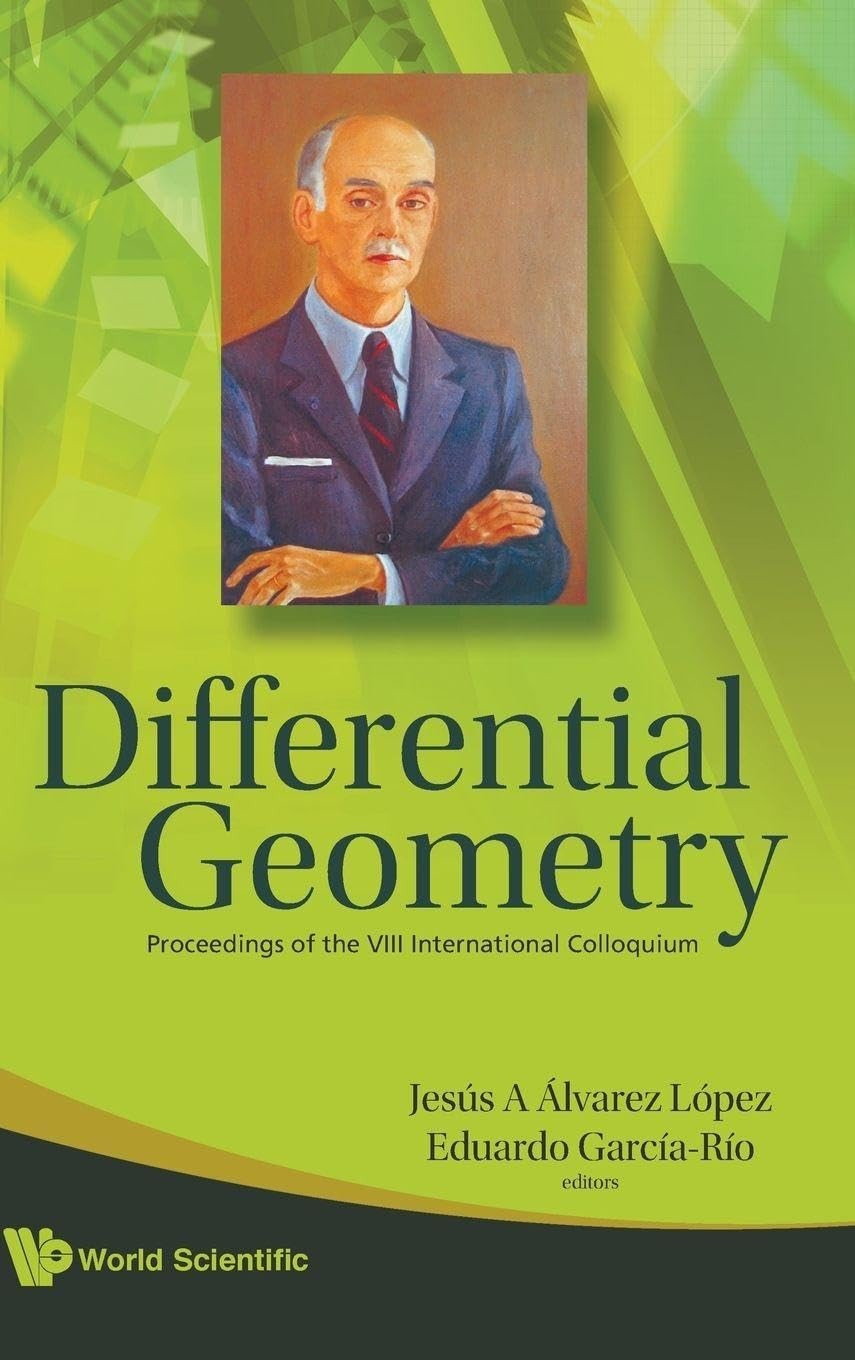
Mathematics
Differential Geometry - Proceedings of the VIII International Colloquium (English, Jesus A. Alvarez Lopez | Eduardo Garcia-Rio)

Mathematics
Mathematical Theory of Optimal Processes (Classics of Soviet Mathematics)
Related Products
View All
Science & Mathematics
Squid - Superconducting Quantum Interference Devices and Their Applications: Proceedings of the International Conference on Superconducting Quantum Devices, Berlin-west, October 4-8, 1976

Science & Mathematics
Thermodynamics and Pattern Formation in Biology

Science & Mathematics
The Nature of Mathematics and the Mathematics of Nature by S. Andersson – Mathematics & Science

Science & Mathematics
Linear Algebra | by Stephen Friedberg | Arnold Insel | Lawrence Spence | Pearson | by Stephen Friedberg | Arnold Insel | Lawrence Spence | Pearson | by Stephen Friedberg | Arnold Insel | Lawrence Spence | Pearson | by Stephen Friedberg | Arnold Insel | Lawrence Spence | Pearson | by Stephen Friedberg | Arnold Insel | Lawrence Spence | Pearson | by Stephen Friedberg | Arnold Insel | Lawrence Spence | Pearson | by Stephen Friedberg | Arnold Insel | Lawrence Spence | Pearson | by Stephen Friedberg

Science & Mathematics
University Calculus | by Joel Hass | Christopher Heil | Maurice Weir | Pearson | by Joel Hass | Christopher Heil | Maurice Weir | Pearson | by Joel Hass | Christopher Heil | Maurice Weir | Pearson | by Joel Hass | Christopher Heil | Maurice Weir | Pearson | by Joel Hass | Christopher Heil | Maurice Weir | Pearson | by Joel Hass | Christopher Heil | Maurice Weir | Pearson | by Joel Hass | Christopher Heil | Maurice Weir | Pearson | by Joel Hass | Christopher Heil | Maurice Weir | Pearson | by Joe
Science & Mathematics