
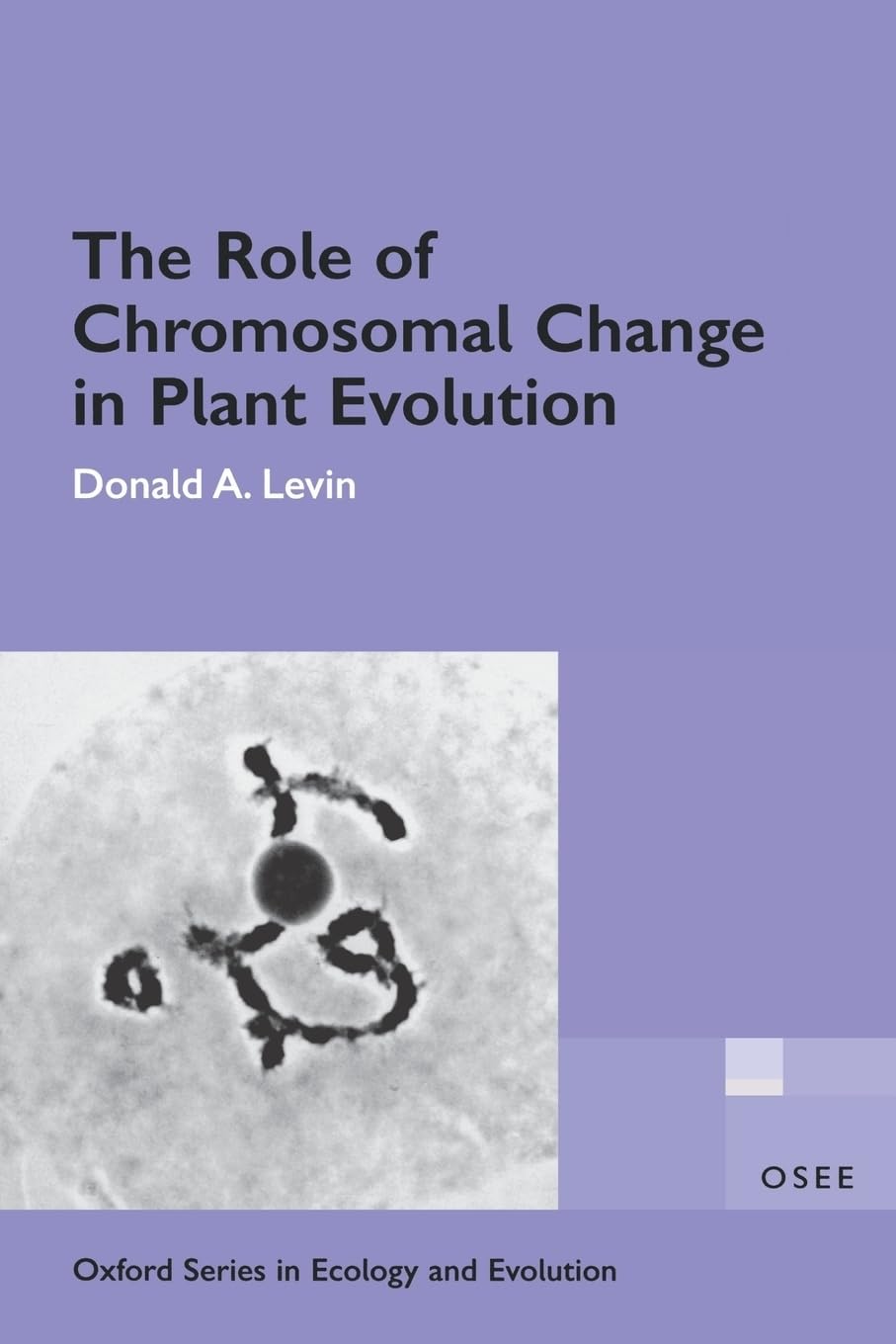
The Role of Chromosomal Change in Plant Evolution by Donald A. Levin – A Deep Dive into Plant Genetics and Genome Dynami
Inclusive of all applicable taxes. FREE shipping on all orders.
Available Offers
- 🚚Free Delivery — Free shipping on all orders
- 💵Cash on Delivery — Pay when your order arrives
- ↩️15-Day Easy Returns — Hassle-free return policy
- 🔒Cash on Delivery — Pay safely when your order arrives
Check Delivery
Product Description
Introduction
In the vast and intricate world of plant biology, few forces have shaped the diversity of life as profoundly as chromosomal change. The Role of Chromosomal Change in Plant Evolution by Donald A. Levin offers a masterful exploration of how alterations in chromosome number, structure, and genome size have driven the evolutionary success of plants. For Indian students, researchers, and botanists, this hardbound volume from Oxford University Press provides a rigorous yet accessible gateway into a field that is central to understanding everything from crop improvement to biodiversity conservation. Whether you are delving into polyploidy in wheat or chromosomal rearrangements in native flora, this book is an indispensable resource.
Book Overview
Published by the prestigious Oxford University Press, this hardcover edition brings together decades of research into a single, cohesive narrative. Donald A. Levin, a leading authority in plant evolutionary biology, synthesizes classical cytogenetics with modern molecular insights. The book examines how chromosomal changes—such as duplications, deletions, inversions, and translocations—act as raw material for natural selection. It also addresses the phenotypic consequences of genome doubling, a phenomenon particularly relevant to Indian agriculture where polyploid crops like bananas, potatoes, and sugarcane are staples. With a focus on empirical data and theoretical frameworks, this book bridges the gap between laboratory findings and field observations.
Key Highlights
- Comprehensive synthesis of classical and molecular cytogenetics, updated with the latest findings from genome sequencing and marker analyses.
- In-depth coverage of polyploidy, including its role in speciation, adaptation, and crop evolution—highly relevant for Indian agricultural research.
- Exploration of genome size variation within and among species, shedding light on the evolutionary significance of DNA content.
- Detailed case studies on chromosomal rearrangements and their impact on fertility, gene expression, and hybrid viability.
- Phenotypic consequences of chromosome doubling, linking genetic changes to observable traits in plants.
Inside the Book
Organized into well-structured chapters, the book begins with foundational concepts of chromosome structure and behavior, then progresses to advanced topics such as meiotic drive, B chromosomes, and the dynamics of heterochromatin. Each chapter is rich with illustrations, tables, and references that make complex ideas easier to grasp. Levin does not shy away from controversial topics; he critically evaluates competing hypotheses about the evolutionary role of chromosomal change. Indian readers will appreciate the global perspective, with examples drawn from temperate and tropical flora alike. The book also includes a thorough discussion of the molecular tools—such as fluorescent in situ hybridization and comparative genomics—that have revolutionized the field.
Key Topics
- Genome size evolution and the C-value enigma
- Polyploidy: autopolyploidy, allopolyploidy, and paleopolyploidy
- Chromosomal rearrangements: inversions, translocations, fusions, and fissions
- Structural heterozygosity and its evolutionary implications
- Role of transposable elements in chromosomal restructuring
- Phenotypic effects of genome doubling on morphology, physiology, and ecology
- Speciation via chromosomal change: models and evidence
- Chromosomal evolution in natural populations and crop species
Reader Benefits
This book empowers readers with a deep understanding of how chromosomal dynamics underpin plant diversity. For Indian students preparing for competitive exams like CSIR-UGC NET, GATE, or ICAR, it provides a solid foundation in evolutionary genetics. Researchers will find the comprehensive bibliography a valuable tool for further study. The hardcover binding ensures durability for repeated reference in libraries, labs, or field stations. By reading this book, you will gain the ability to interpret genomic data in an evolutionary context, appreciate the genetic basis of plant adaptation, and apply these insights to conservation and breeding programs.
Learning Outcomes
- Understand the mechanisms and consequences of chromosomal change in plants.
- Analyze the role of polyploidy in speciation and crop domestication.
- Evaluate the evidence for genome size evolution and its ecological correlates.
- Apply knowledge of chromosomal rearrangements to interpret patterns of genetic diversity.
- Critically assess modern molecular techniques used in plant cytogenetics.
Who Should Read
This book is ideal for postgraduate students and researchers in botany, genetics, plant breeding, and evolutionary biology. It is also highly suitable for faculty members teaching advanced courses in plant systematics or cytogenetics. Agricultural scientists working on polyploid crops, as well as conservation biologists studying rare and endemic plant species, will find the content directly applicable. Even advanced undergraduates with a strong background in genetics will benefit from the clear explanations and real-world examples. Indian readers with an interest in the evolutionary history of the subcontinent’s rich flora will discover a new lens through which to view plant diversity.
About the Author
Donald A. Levin is a distinguished professor emeritus of botany at the University of Texas at Austin, with a career spanning over four decades. He is widely recognized for his pioneering work on plant evolutionary biology, particularly in the areas of chromosomal evolution, speciation, and reproductive biology. Levin has authored numerous seminal papers and several influential books, including The Origin, Expansion, and Demise of Plant Species. His research has taken him from the deserts of North America to tropical ecosystems, giving him a global perspective that enriches this volume. His writing is known for its clarity, depth, and ability to connect disparate lines of evidence into a coherent narrative.
About the Publisher
Oxford University Press (OUP) is one of the oldest and most respected academic publishers in the world, with a legacy of excellence that dates back to 1586. Known for its rigorous peer-review process and high editorial standards, OUP publishes works that shape scholarship across disciplines. This hardcover edition reflects OUP’s commitment to producing durable, well-designed books that serve as lasting resources for the academic community. For Indian readers, OUP titles are synonymous with quality and authority, making this book a trusted addition to any library.
Conclusion
The Role of Chromosomal Change in Plant Evolution is more than a textbook; it is a synthesis of a lifetime of research that illuminates the hidden architecture of plant evolution. For anyone seeking to understand how chromosomes shape the natural world—from the wildflowers of the Western Ghats to the wheat fields of Punjab—this book is an essential companion. Its hardcover format, comprehensive coverage, and accessible prose make it a worthy investment for students, researchers, and institutions alike. Order your copy from Bookshops.in today and delve into the fascinating story of how chromosomal change has sculpted the green world around us.
Quick Summary
The Role of Chromosomal Change in Plant Evolution by Donald A. Levin is a definitive synthesis of how chromosomal alterations drive plant diversity and adaptation. Drawing on modern molecular tools, the book explores polyploidy, genome size variation, chromosomal rearrangements, and their phenotypic effects. It is written for advanced students, researchers, and professionals in botany, genetics, and evolutionary biology. Readers will gain a deep understanding of the mechanisms behind plant speciation and the evolutionary significance of genome dynamics. This hardcover volume from Oxford University Press is a trusted academic resource. By choosing Bookshops.in, Indian readers get fast delivery, competitive pricing, and a seamless shopping experience for premium academic books.
Book Highlights
Book Specifications
| ISBN-13 | 9780195138603 |
| ISBN-10 | 0195138600 |
| Publisher | OUP USA |
| Language | English |
| Dimensions | 15.24 x 1.4 x 23.5 cm |
| Weight | 408 g |
| Country | India |
| Category | Biology & Life Sciences › Botany |
| Genre | Science & Mathematics |
| Original Language | English |
Frequently Asked Questions
What is the main focus of this book?
Who is the author?
Is this book suitable for undergraduate students?
Does the book cover molecular techniques?
What is polyploidy and why is it important?
What is the price in India?
Is this book available in paperback?
Can I use this book for my research?
Does the book include case studies?
What languages is the book written in?
Is this book recommended for Indian students?
Where can I buy this book?
Does the book cover chromosomal rearrangements?
Readers Also Search For
Customers Also Bought

Mathematics
Stereotype Spaces and Algebras: 73 (De Gruyter Expositions in Mathematics, 73)

Mathematics
Semigroups in Algebra, Geometry and Analysis: 20 (De Gruyter Expositions in Mathematics, 20)

Mathematics
Geometry from the Pacific Rim: Proceedings of the Pacific Rim Geometry Conference held at National University of Singapore, Republic of Singapore, ... 1994 (De Gruyter Proceedings in Mathematics)

Mathematics
First International Tainan-Moscow Algebra Workshop: Proceedings of the International Conference held at National Cheng Kung University Tainan, Taiwan, ... 1994 (De Gruyter Proceedings in Mathematics)

Mathematics
Differential Geometry - Proceedings of the VIII International Colloquium (English, Jesus A. Alvarez Lopez | Eduardo Garcia-Rio)
Mathematics
Mathematical Theory of Optimal Processes (Classics of Soviet Mathematics)
Related Products
View All
Science & Mathematics
Elements of Pelagos Biology: With Focus on the Mediterranean Sea

Science & Mathematics
Squid - Superconducting Quantum Interference Devices and Their Applications: Proceedings of the International Conference on Superconducting Quantum Devices, Berlin-west, October 4-8, 1976

Science & Mathematics
Thermodynamics and Pattern Formation in Biology
Science & Mathematics
The Nature of Mathematics and the Mathematics of Nature by S. Andersson – Mathematics & Science

Science & Mathematics
Linear Algebra | by Stephen Friedberg | Arnold Insel | Lawrence Spence | Pearson | by Stephen Friedberg | Arnold Insel | Lawrence Spence | Pearson | by Stephen Friedberg | Arnold Insel | Lawrence Spence | Pearson | by Stephen Friedberg | Arnold Insel | Lawrence Spence | Pearson | by Stephen Friedberg | Arnold Insel | Lawrence Spence | Pearson | by Stephen Friedberg | Arnold Insel | Lawrence Spence | Pearson | by Stephen Friedberg | Arnold Insel | Lawrence Spence | Pearson | by Stephen Friedberg

Science & Mathematics