

Passage Through Crisis: Polio Victims and Their Families by Fred Davis – A Groundbreaking Sociological Study of Disabili
Inclusive of all applicable taxes. FREE shipping on all orders.
Available Offers
- 🚚Free Delivery — Free shipping on all orders
- 💵Cash on Delivery — Pay when your order arrives
- ↩️15-Day Easy Returns — Hassle-free return policy
- 🔒Cash on Delivery — Pay safely when your order arrives
Check Delivery
Product Description
Introduction
In the landscape of medical sociology and disability studies, few works have retained their relevance as powerfully as Fred Davis's Passage Through Crisis: Polio Victims and Their Families. Originally published in 1963 and now available in this hardcover edition from Routledge, the book offers a deeply human and analytical exploration of how families navigate the sudden, life-altering crisis of a child's paralytic polio. For Indian readers—where polio eradication efforts have been a monumental public health success—this book provides a poignant historical and sociological lens through which to understand the lived experience of disability, medical communication, and family resilience.
Book Overview
Based on a meticulous study of fourteen families whose children contracted paralytic poliomyelitis, this classic work investigates the emotional, social, and medical journey from diagnosis through rehabilitation. Fred Davis, a pioneering sociologist, goes beyond clinical statistics to capture the raw, often unspoken struggles of parents, siblings, and the affected child. The book examines how families reconstruct their worldviews, negotiate with medical professionals, and adapt to a new reality shaped by physical disability. It remains a cornerstone text for understanding the intersection of illness, identity, and social structure.
Key Highlights
- Pioneering sociological study of polio-affected families, offering rare qualitative insights into a now-eradicated disease in many parts of the world.
- In-depth analysis of doctor-patient communication, revealing the power dynamics and barriers that shaped medical encounters in the mid-20th century.
- Timeless reflection on disability in society, with a new opening essay by Davis that connects past findings to contemporary issues such as patient advocacy, the AIDS activism of the Gay community, and the shifting trust in scientific authority.
- Cross-cultural relevance for Indian students and professionals studying public health, social work, and medical ethics.
Inside the Book
The narrative unfolds through detailed case studies, capturing the immediate shock of diagnosis, the long months of hospitalization, and the slow return to home life. Davis dissects the 'crisis passage'—the period when families must make sense of a suddenly uncertain future. He explores how parents grapple with guilt, hope, and the search for meaning, while also navigating the often paternalistic language of doctors. The book includes rich transcripts of interviews, offering a window into the emotional landscape of each family. The new essay added for this edition reflects on how the culture of American health care has evolved, including the rise of patient self-help groups and the political militancy surrounding diseases like AIDS, drawing parallels that resonate globally.
Key Topics
- Family crisis and adaptation to childhood disability
- Doctor-patient communication and authority in medical settings
- The social construction of physical disability
- Normalization and stigma in post-polio life
- Historical context of polio epidemics and their social impact
- Comparative perspectives on health care activism and patient rights
Reader Benefits
Readers will gain a profound understanding of how a medical crisis reshapes family dynamics and individual identity. The book offers practical insights into the psychological and social processes of coping, making it valuable for caregivers, healthcare professionals, and educators. It also provides a historical benchmark for evaluating progress in disability rights and medical ethics, encouraging readers to think critically about the role of empathy, transparency, and shared decision-making in modern health care. For Indian students, it serves as a bridge between Western sociological frameworks and local experiences of illness and disability.
Learning Outcomes
- Analyze the stages of family adaptation to a sudden, chronic illness.
- Evaluate the impact of medical communication on patient and family outcomes.
- Understand the sociological dimensions of disability beyond the medical model.
- Critically reflect on the evolution of patient advocacy and health care activism.
- Apply qualitative research methods to real-world health crises.
Who Should Read
This book is essential for students and scholars of medical sociology, disability studies, public health, social work, and nursing. It is also highly recommended for healthcare practitioners—doctors, therapists, and counselors—who wish to deepen their understanding of the family experience during medical crises. Parents, caregivers, and anyone interested in the human story behind polio and disability will find this work both enlightening and moving. For Indian readers, it offers a valuable comparative perspective on a disease that shaped global health policy.
About the Author
Fred Davis was a distinguished American sociologist and professor known for his pioneering work in medical sociology and the sociology of deviance. His research focused on the subjective experience of illness, doctor-patient interaction, and the social meanings of disability. Davis's ability to blend rigorous qualitative research with compassionate storytelling made his work influential across multiple disciplines. Passage Through Crisis remains his most celebrated contribution, setting a standard for studying the human dimensions of health and illness.
About the Publisher
Routledge is a leading global academic publisher known for its extensive catalog in the social sciences, humanities, and behavioral sciences. With a legacy spanning over 180 years, Routledge is committed to publishing works that advance knowledge and foster critical thinking. This hardcover edition ensures that a classic text remains accessible to new generations of readers, scholars, and practitioners worldwide, including in India where Routledge titles are widely used in universities and research institutions.
Conclusion
Passage Through Crisis: Polio Victims and Their Families is more than a historical document; it is a timeless exploration of human vulnerability, resilience, and the social forces that shape our response to illness. Fred Davis's work challenges us to listen more deeply to the voices of patients and families, and to recognize the enduring struggle for dignity and understanding in the face of crisis. For anyone seeking to comprehend the profound interplay between medicine, society, and the human spirit, this book remains an indispensable read.
Quick Summary
Passage Through Crisis: Polio Victims and Their Families by Fred Davis is a foundational work in medical sociology, first published in 1963 and now available in a Routledge hardcover edition. The book is based on a detailed study of fourteen American families whose children contracted paralytic poliomyelitis. Davis examines how families cope with sudden crisis, the nature of doctor-patient communication, and the societal meaning of physical disability. This edition includes a new essay where Davis reflects on the evolution of healthcare culture, including the rise of patient self-help groups and the political activism seen in the AIDS movement. The book is ideal for students of sociology, medical professionals, disability studies scholars, and Indian readers interested in family dynamics and healthcare. By purchasing from Bookshops.in, readers receive a high-quality physical copy with prompt service across India.
Book Highlights
Book Specifications
| ISBN-13 | 9780887388538 |
| ISBN-10 | 0887388531 |
| Publisher | Routledge |
| Language | English |
| Dimensions | 15.24 x 1.27 x 22.86 cm |
| Weight | 340 g |
| Country | India |
| Category | Administration & Policy › Health Care Delivery |
| Genre | Nonfiction |
| Original Language | English |
Frequently Asked Questions
What is Passage Through Crisis about?
Who wrote Passage Through Crisis?
Is this book relevant for Indian readers?
What format is this book?
Does the book include new content?
What topics does the book cover?
Is this book suitable for academic study?
What language is the book in?
What is the ISBN?
Can I use this book for a research paper?
Does the book discuss AIDS?
Why buy from Bookshops.in?
Readers Also Search For
Customers Also Bought

Anatomy
Ultrastructure of the Digestive Tract: 4 (Electron Microscopy in Biology and Medicine)

Anatomy
Ultrastructure of the Connective Tissue Matrix: 3 (Electron Microscopy in Biology and Medicine)

Anatomy
Reproductive Genetics (Royal College of Obstetricians and Gynaecologists Study Group)

Anatomy
Human Gross Anatomy: An Outline Text by Robert J. Leonard – Medical Anatomy

Pharmacology
Mathematical Modeling and Simulation in Enteric Neurobiology

Anatomy
Nature’s Patterns and the Fractional Calculus: 2 (Fractional Calculus in Applied Sciences and Engineering, 2)
Related Products
View All
Medicine & Health Sciences
Handbook of Hospitality Strategic Management | by Olsen Michael | Taylor & Francis Ltd | by Olsen Michael | Taylor & Francis Ltd | by Olsen Michael | Taylor & Francis Ltd | by Olsen Michael | Taylor & Francis Ltd | by Olsen Michael | Taylor & Francis Ltd | by Olsen Michael | Taylor & Francis Ltd | by Olsen Michael | Taylor & Francis Ltd | by Olsen Michael | Taylor & Francis Ltd | by Olsen Michael | Taylor & Francis Ltd | by Olsen Michael | Taylor & Francis

Medicine & Health Sciences
Pediatrics on Call | by Charles A. Pohl | Kathleen Bradford | Clara Callahan | McGraw Hill / Medical | by Charles A. Pohl | Kathleen Bradford | Clara Callahan | McGraw Hill / Medical | by Charles A. Pohl | Kathleen Bradford | Clara Callahan | McGraw Hill / Medical | by Charles A. Pohl | Kathleen Bradford | Clara Callahan | McGraw Hill / Medical | by Charles A. Pohl | Kathleen Bradford | Clara Callahan | McGraw Hill / Medical | by Charles A. Pohl | Kathleen Bradford | Clara Callahan | McGraw Hill

Medicine & Health Sciences
The Physician's Guide to Depression and Bipolar Disorders | by Dwight L. Evans | Dennis S. Charney | Lydia Lewis | McGraw Hill / Medical | by Dwight L. Evans | Dennis S. Charney | Lydia Lewis | McGraw Hill / Medical | by Dwight L. Evans | Dennis S. Charney | Lydia Lewis | McGraw Hill / Medical | by Dwight L. Evans | Dennis S. Charney | Lydia Lewis | McGraw Hill / Medical | by Dwight L. Evans | Dennis S. Charney | Lydia Lewis | McGraw Hill / Medical | by Dwight L. Evans | Dennis S. Charney | Lydi
Medicine & Health Sciences
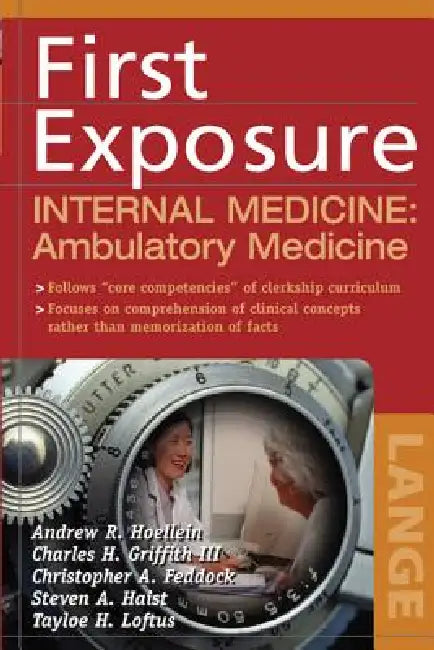
First Exposure to Internal Medicine | by Andrew R. Hoellein | Charles H. Griffith | McGraw Hill / Medical | by Andrew R. Hoellein | Charles H. Griffith | McGraw Hill / Medical | by Andrew R. Hoellein | Charles H. Griffith | McGraw Hill / Medical | by Andrew R. Hoellein | Charles H. Griffith | McGraw Hill / Medical | by Andrew R. Hoellein | Charles H. Griffith | McGraw Hill / Medical | by Andrew R. Hoellein | Charles H. Griffith | McGraw Hill / Medical | by Andrew R. Hoellein | Charles H. Griffit
Medicine & Health Sciences
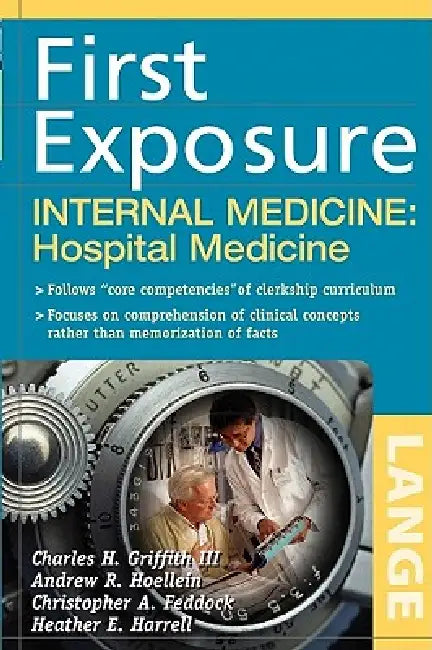
First Exposure to Internal Medicine | by Charles H. Griffith | Andrew R. Hoellein | McGraw Hill / Medical | by Charles H. Griffith | Andrew R. Hoellein | McGraw Hill / Medical | by Charles H. Griffith | Andrew R. Hoellein | McGraw Hill / Medical | by Charles H. Griffith | Andrew R. Hoellein | McGraw Hill / Medical | by Charles H. Griffith | Andrew R. Hoellein | McGraw Hill / Medical | by Charles H. Griffith | Andrew R. Hoellein | McGraw Hill / Medical | by Charles H. Griffith | Andrew R. Hoellei
Medicine & Health Sciences