

The Philosophy of Autism: A Philosophical Inquiry into Autism Spectrum Disorders by Jami L. Anderson
Inclusive of all applicable taxes. FREE shipping on all orders.
Available Offers
- 🚚Free Delivery — Free shipping on all orders
- 💵Cash on Delivery — Pay when your order arrives
- ↩️15-Day Easy Returns — Hassle-free return policy
- 🔒Cash on Delivery — Pay safely when your order arrives
Check Delivery
Product Description
Introduction
In a world where conversations about neurodiversity are finally gaining the depth they deserve, The Philosophy of Autism offers a groundbreaking perspective that bridges rigorous academic thought with real-world understanding. Edited by Jami L. Anderson, this hardcover volume published by Rowman & Littlefield Publishers is a rare gem in the field of Society & Social Sciences. It does not merely describe autism; it asks profound questions about identity, perception, morality, and what it means to be human. For Indian students, researchers, and thoughtful readers, this book provides a fresh lens to examine a topic often misunderstood or oversimplified. With clear, jargon-free essays, it invites you to think critically and empathetically about autism spectrum disorders.
Book Overview
The Philosophy of Autism is a collection of original essays that place autism at the centre of philosophical inquiry. Unlike clinical manuals or personal memoirs, this book uses the tools of analytic philosophy to explore the ethical, metaphysical, and epistemological dimensions of autism. Each chapter is written to be accessible without sacrificing depth, making it ideal for both newcomers and those already familiar with philosophical discourse. The editor, Jami L. Anderson, has curated contributions that challenge stereotypes and open up new ways of understanding autistic experience. This is not just a book about autism; it is a book that takes autistic perspectives seriously as a source of insight into fundamental questions about mind, language, and society.
Key Highlights
- Original philosophical analysis: Each essay is written specifically for this volume, offering fresh arguments and reflections.
- Accessible language: Complex ideas are presented without unnecessary jargon, making philosophy approachable for all readers.
- Respectful and dignified approach: The book places autistic individuals at the heart of the discussion, treating their experiences as valuable rather than pathological.
- Interdisciplinary relevance: Connects philosophy with psychology, education, disability studies, and ethics.
- Hardcover edition: A durable, premium-quality book suitable for libraries, classrooms, and personal collections.
Inside the Book
Open the pages of The Philosophy of Autism and you will find a carefully structured journey through the most pressing questions surrounding autism. The essays cover topics such as the nature of autistic cognition, the moral status of autistic individuals, the role of language and communication, and the social construction of disability. Each chapter builds on the last, creating a cohesive narrative that respects both philosophical rigour and human experience. The writing is clear and engaging, with real-world examples that ground abstract ideas. Whether you are reading about theory of mind, empathy, or the ethics of intervention, you will find arguments that challenge assumptions and encourage deeper reflection.
Key Topics
- The philosophy of mind and autistic cognition
- Ethical considerations in autism research and therapy
- Language, communication, and meaning-making in autism
- Social identity, stigma, and neurodiversity
- The concept of normalcy and its philosophical implications
- Autism and moral agency
- Epistemic injustice and the voices of autistic people
Reader Benefits
By reading The Philosophy of Autism, you will gain a richer, more nuanced understanding of autism that goes beyond stereotypes. You will learn to ask better questions about difference, inclusion, and human flourishing. The book equips you with philosophical tools to critically evaluate claims about autism in media, policy, and everyday life. For students, it provides a solid foundation for essays and discussions. For professionals in education, healthcare, or social work, it offers ethical insights that can inform practice. For autistic readers and their families, it affirms the value of autistic experience as a source of wisdom, not deficit.
Learning Outcomes
- Understand key philosophical debates surrounding autism spectrum disorders
- Analyse ethical issues in autism diagnosis, treatment, and representation
- Evaluate arguments about autistic cognition and social interaction
- Develop a critical perspective on the social construction of disability
- Appreciate the diversity of autistic experiences and perspectives
- Apply philosophical reasoning to real-world issues in neurodiversity
Who Should Read
This book is ideal for undergraduate and postgraduate students in philosophy, psychology, sociology, and disability studies. It is also highly recommended for educators, therapists, counsellors, and healthcare professionals who work with autistic individuals. Parents and family members seeking a deeper intellectual understanding will find it enlightening. Finally, anyone with a curiosity about the human mind—and a desire to think more clearly about difference—will benefit from this thoughtful collection.
About the Author
Jami L. Anderson is a philosopher with expertise in ethics, social philosophy, and philosophy of disability. She has taught and written extensively on issues of justice, identity, and marginalisation. As the editor of The Philosophy of Autism, she brings together leading voices in analytic philosophy to create a volume that is both intellectually rigorous and deeply humane. Her commitment to clarity and respect ensures that every essay is accessible without compromising on substance.
About the Publisher
Rowman & Littlefield Publishers is a distinguished academic and trade publisher known for producing high-quality works in philosophy, social sciences, and the humanities. With a reputation for scholarly excellence and editorial integrity, they have published books that shape conversations across disciplines. This hardcover edition reflects their commitment to durable, beautifully produced volumes that stand the test of time.
Conclusion
The Philosophy of Autism is more than a book—it is an invitation to rethink what we know about autism, philosophy, and ourselves. In an era where understanding neurodiversity is essential, this volume provides the intellectual depth and respectful tone that the topic deserves. Whether you are a student, a professional, or a curious reader, this book will leave you with new questions, new insights, and a greater appreciation for the philosophical dimensions of human difference. Order your copy today from Bookshops.in and add a truly original work to your library.
Quick Summary
The Philosophy of Autism, edited by Jami L. Anderson and published by Rowman & Littlefield, is a groundbreaking collection of essays that applies analytic philosophy to autism spectrum disorders. Written in clear, jargon-free language, the book addresses profound questions about personhood, identity, ethics, and neurodiversity. It moves beyond clinical descriptions to place dignity and respect for autistic individuals at the heart of philosophical inquiry. This volume is ideal for Indian students and scholars in philosophy, psychology, and disability studies, as well as general readers seeking a thoughtful, respectful exploration of autism. Readers will learn to critically examine assumptions about autism and develop a nuanced understanding of its philosophical implications. By choosing Bookshops.in, you support a trusted Indian bookstore that offers authentic imported editions, secure payment, and reliable delivery across India.
Book Highlights
Book Specifications
| ISBN-13 | 9781442217072 |
| ISBN-10 | 1442217073 |
| Publisher | Rowman & Littlefield Pub Inc |
| Language | English |
| Dimensions | 15.24 x 1.57 x 22.86 cm |
| Weight | 445 g |
| Category | Clinical › Neurology |
| Genre | Philosophy |
| Original Language | English |
Frequently Asked Questions
What is The Philosophy of Autism about?
Who is the author of this book?
Is this book suitable for beginners in philosophy?
What makes this book different from other autism books?
Does the book include autistic perspectives?
Can I use this book for my university course?
What topics are covered in the book?
Is this book available in India?
What is the price of this book?
Who is the publisher?
Is this book part of a series?
What language is the book in?
Does the book have an index?
How can I buy this book?
Readers Also Search For
Customers Also Bought

Anatomy
Ultrastructure of the Digestive Tract: 4 (Electron Microscopy in Biology and Medicine)

Anatomy
Ultrastructure of the Connective Tissue Matrix: 3 (Electron Microscopy in Biology and Medicine)

Anatomy
Reproductive Genetics (Royal College of Obstetricians and Gynaecologists Study Group)

Anatomy
Human Gross Anatomy: An Outline Text by Robert J. Leonard – Medical Anatomy

Pharmacology
Mathematical Modeling and Simulation in Enteric Neurobiology

Anatomy
Nature’s Patterns and the Fractional Calculus: 2 (Fractional Calculus in Applied Sciences and Engineering, 2)
Related Products
View All
Medicine & Health Sciences
Pediatrics on Call | by Charles A. Pohl | Kathleen Bradford | Clara Callahan | McGraw Hill / Medical | by Charles A. Pohl | Kathleen Bradford | Clara Callahan | McGraw Hill / Medical | by Charles A. Pohl | Kathleen Bradford | Clara Callahan | McGraw Hill / Medical | by Charles A. Pohl | Kathleen Bradford | Clara Callahan | McGraw Hill / Medical | by Charles A. Pohl | Kathleen Bradford | Clara Callahan | McGraw Hill / Medical | by Charles A. Pohl | Kathleen Bradford | Clara Callahan | McGraw Hill

Medicine & Health Sciences
The Physician's Guide to Depression and Bipolar Disorders | by Dwight L. Evans | Dennis S. Charney | Lydia Lewis | McGraw Hill / Medical | by Dwight L. Evans | Dennis S. Charney | Lydia Lewis | McGraw Hill / Medical | by Dwight L. Evans | Dennis S. Charney | Lydia Lewis | McGraw Hill / Medical | by Dwight L. Evans | Dennis S. Charney | Lydia Lewis | McGraw Hill / Medical | by Dwight L. Evans | Dennis S. Charney | Lydia Lewis | McGraw Hill / Medical | by Dwight L. Evans | Dennis S. Charney | Lydi
Medicine & Health Sciences
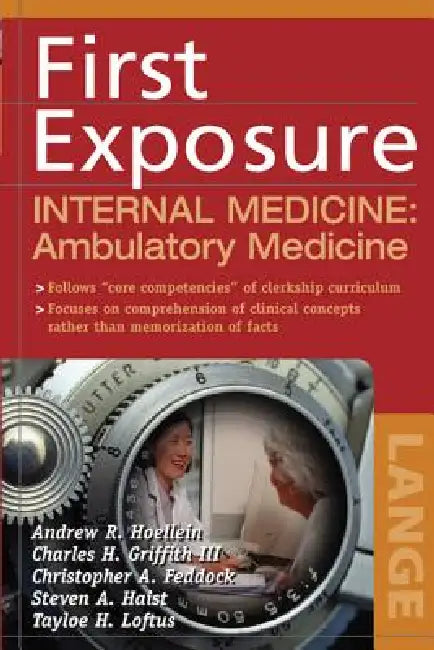
First Exposure to Internal Medicine | by Andrew R. Hoellein | Charles H. Griffith | McGraw Hill / Medical | by Andrew R. Hoellein | Charles H. Griffith | McGraw Hill / Medical | by Andrew R. Hoellein | Charles H. Griffith | McGraw Hill / Medical | by Andrew R. Hoellein | Charles H. Griffith | McGraw Hill / Medical | by Andrew R. Hoellein | Charles H. Griffith | McGraw Hill / Medical | by Andrew R. Hoellein | Charles H. Griffith | McGraw Hill / Medical | by Andrew R. Hoellein | Charles H. Griffit

Medicine & Health Sciences
First Exposure to Internal Medicine | by Charles H. Griffith | Andrew R. Hoellein | McGraw Hill / Medical | by Charles H. Griffith | Andrew R. Hoellein | McGraw Hill / Medical | by Charles H. Griffith | Andrew R. Hoellein | McGraw Hill / Medical | by Charles H. Griffith | Andrew R. Hoellein | McGraw Hill / Medical | by Charles H. Griffith | Andrew R. Hoellein | McGraw Hill / Medical | by Charles H. Griffith | Andrew R. Hoellein | McGraw Hill / Medical | by Charles H. Griffith | Andrew R. Hoellei

Medicine & Health Sciences
Internal Medicine | by Paul G. Schmitz | Kevin J. Martin | McGraw Hill / Medical | by Paul G. Schmitz | Kevin J. Martin | McGraw Hill / Medical | by Paul G. Schmitz | Kevin J. Martin | McGraw Hill / Medical | by Paul G. Schmitz | Kevin J. Martin | McGraw Hill / Medical | by Paul G. Schmitz | Kevin J. Martin | McGraw Hill / Medical | by Paul G. Schmitz | Kevin J. Martin | McGraw Hill / Medical | by Paul G. Schmitz | Kevin J. Martin | McGraw Hill / Medical | by Paul G. Schmitz | Kevin J. Martin |

Medicine & Health Sciences