
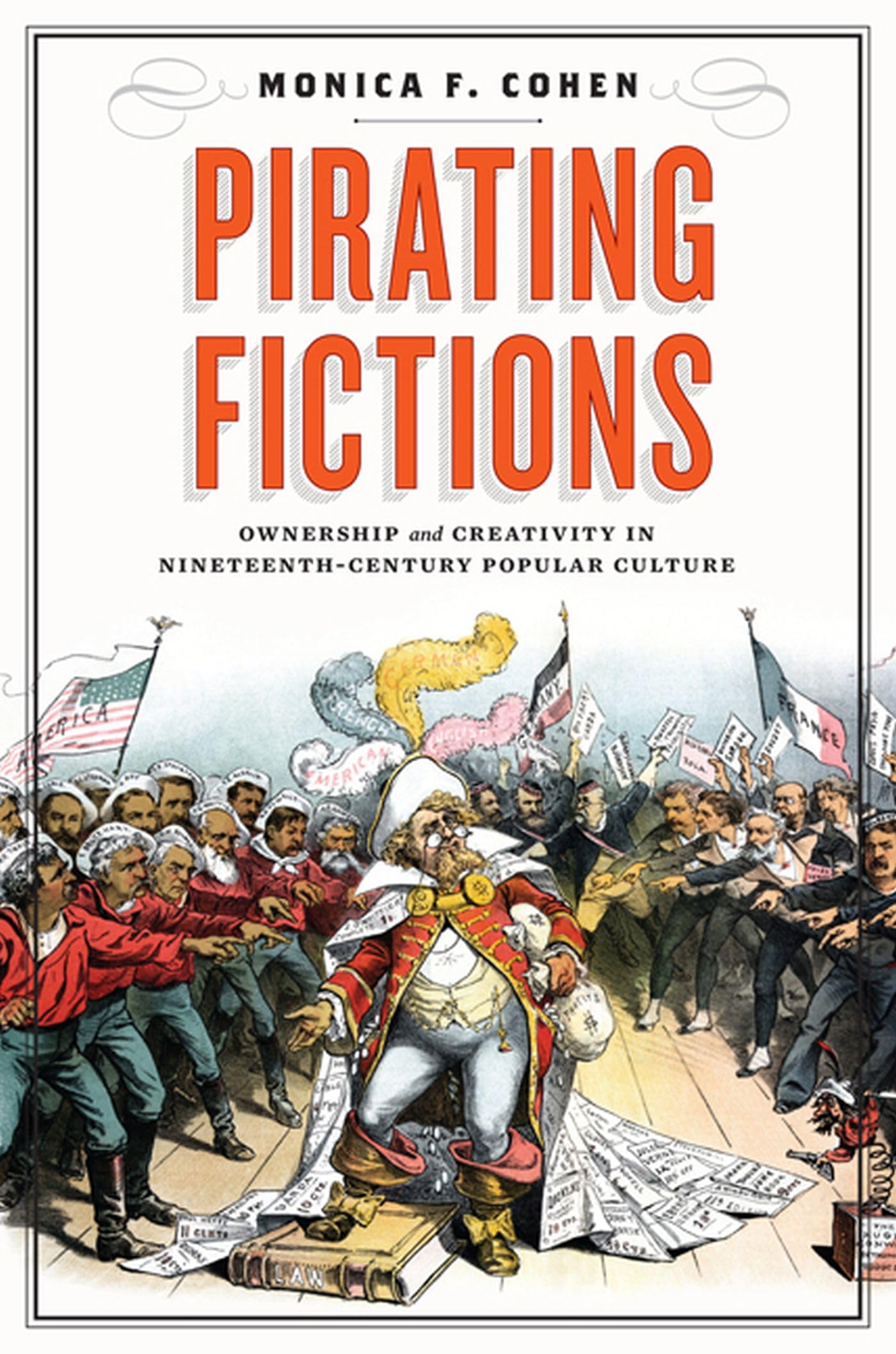
Pirating Fictions: Ownership and Creativity in Nineteenth-Century Popular Culture by Monica F. Cohen – A Study of Litera
Inclusive of all applicable taxes. FREE shipping on all orders.
Available Offers
- 🚚Free Delivery — Free shipping on all orders
- 💵Cash on Delivery — Pay when your order arrives
- ↩️15-Day Easy Returns — Hassle-free return policy
- 🔒Cash on Delivery — Pay safely when your order arrives
Check Delivery
Product Description
Introduction
In the crowded landscape of nineteenth-century popular culture, few figures loomed as large—or as lawlessly—as the pirate. Yet, as Monica F. Cohen reveals in her insightful study Pirating Fictions: Ownership and Creativity in Nineteenth-Century Popular Culture, the swashbuckling buccaneer was more than just a thrilling character. He was a mirror held up to the anxieties and contradictions of an age grappling with the very idea of intellectual property. This hardcover edition from the University of Virginia Press offers Indian readers a fresh, scholarly lens through which to examine the tangled relationship between literary creation, copyright law, and the stories that captivated millions.
Book Overview
Cohen’s work deftly explores how the golden age of piracy—immortalised in bestsellers like Treasure Island and stage hits such as The Pirates of Penzance and Peter Pan—became a playground for authors who were themselves victims of literary piracy. While writers publicly railed against unauthorised reprints and dramatic adaptations that robbed them of profits, their fiction often told a more complicated tale. Pirating Fictions argues that these popular pirate narratives mischievously resisted the creation of rigid intellectual property rights, revealing a deep-seated ambivalence about ownership and creativity. By weaving together landmark copyright debates with close readings of novels and plays, Cohen shows how the pirate became a symbol of both theft and liberation in the Victorian imagination.
Key Highlights
- Original interdisciplinary approach that merges literary analysis with copyright history, offering a unique perspective on how law and literature influenced each other.
- In-depth examination of canonical works including Robert Louis Stevenson’s Treasure Island, J.M. Barrie’s Peter Pan, and Gilbert and Sullivan’s The Pirates of Penzance, alongside lesser-known texts.
- Reveals the paradox of authorship in the nineteenth century, where creators both condemned and romanticised the act of taking another’s work.
- Rich contextual detail about the publishing industry, theatrical culture, and the legal battles that shaped modern copyright.
Story Themes
At its heart, Pirating Fictions grapples with themes of ownership versus creativity, showing how the line between borrowing and stealing was constantly redrawn. Cohen explores the tension between the romantic ideal of the solitary genius and the collaborative, often piratical nature of popular entertainment. The book also delves into questions of cultural authority—who gets to tell a story, and who profits from it?—and the politics of adaptation, as plays and novels were freely adapted across borders and media. Through the figure of the pirate, Cohen examines how Victorian society negotiated the competing demands of commerce, art, and the public good.
Reader Benefits
For Indian students and scholars of English literature, this book offers a compelling case study in how legal frameworks shape creative expression. It provides a historical backdrop to contemporary debates about plagiarism, copyright infringement, and the ethics of adaptation—issues that are especially relevant in India’s vibrant literary and film industries. Readers will gain a deeper appreciation for the complexities behind beloved classics, and will be equipped to analyse how the pirate trope continues to evolve in modern storytelling. The clear, engaging prose makes complex legal and theoretical ideas accessible, making it suitable for both advanced undergraduates and postgraduate researchers.
Who Should Read
- Students of Victorian literature looking to understand the cultural and legal contexts of popular fiction.
- Scholars of intellectual property law interested in the historical roots of copyright debates.
- Fans of adventure classics like Treasure Island and Peter Pan who want to explore the deeper meanings behind the swashbuckling action.
- Indian academics and researchers in cultural studies, theatre history, and the sociology of literature.
- General readers curious about how pirates became symbols of both rebellion and regulation in the nineteenth century.
About the Author
Monica F. Cohen is a literary scholar specialising in nineteenth-century British literature and culture. Her research focuses on the intersections of law, popular entertainment, and narrative form. She has published widely on Victorian fiction and drama, and her work brings a nuanced understanding of how legal structures influenced creative practices. In Pirating Fictions, Cohen combines her expertise in literary analysis with a deep knowledge of copyright history, offering readers a fresh perspective on the period’s most iconic works.
About the Publisher
The University of Virginia Press is a distinguished academic publisher known for its rigorous scholarship in the humanities. With a strong list in literary studies, history, and cultural criticism, the press is committed to publishing works that challenge and inform. This hardcover edition reflects the press’s dedication to producing high-quality, durable books that serve the needs of students and scholars alike.
Conclusion
By turns enlightening and entertaining, Pirating Fictions is a vital addition to the study of nineteenth-century popular culture. Monica F. Cohen’s deft handling of the pirate as both a literary figure and a legal metaphor will change the way you read the adventure stories of the past. For anyone interested in the origins of our modern ideas about creativity and ownership, this book is an essential—and thoroughly enjoyable—guide. Add it to your collection today and discover how the pirate’s lawless spirit shaped the very stories we thought we knew.
Quick Summary
Pirating Fictions: Ownership and Creativity in Nineteenth-Century Popular Culture by Monica F. Cohen is a compelling scholarly work that intertwines two meanings of piracy: the romanticized golden age of pirates in popular fiction and the real-world literary piracy that plagued nineteenth-century authors. Cohen examines how iconic works like Treasure Island, The Pirates of Penzance, and Peter Pan were both inspired by pirate lore and shaped by the authors' struggles against unauthorized reprinting and dramatic adaptation. Drawing on essays, speeches, and legal testimonies, the book reveals a paradox: while authors publicly denounced literary piracy, their fiction often embraced the pirate as a symbol of freedom and rebellion. This study is ideal for students and scholars of Victorian literature, cultural history, and intellectual property law. Readers will gain fresh insights into the relationship between creativity and ownership, and how historical copyright battles continue to resonate today. By purchasing from Bookshops.in, you support a curated selection of academic and literary titles delivered across India, ensuring quality and authenticity.
Book Highlights
Book Specifications
| ISBN-13 | 9780813940694 |
| ISBN-10 | 0813940699 |
| Publisher | University of Virginia Press |
| Language | English |
| Dimensions | 15.24 x 3.18 x 22.86 cm |
| Weight | 544 g |
| Country | India |
| Category | Literature & Fiction › Literary Theory, History & Criticism |
| Genre | Literary Criticism |
| Reading Age | Adult |
| Original Language | English |
Frequently Asked Questions
What is Pirating Fictions about?
Who is the author of Pirating Fictions?
Which books are discussed in Pirating Fictions?
Is this book about actual pirates or literary piracy?
Who should read Pirating Fictions?
Does the book cover modern copyright issues?
What is the main argument of the book?
Is this book suitable for undergraduate students?
Does it include analysis of Peter Pan?
How does the book treat The Pirates of Penzance?
What primary sources does the author use?
Is the book focused only on British literature?
Does the book have illustrations?
What is the publication date?
Where can I buy this book in India?
Readers Also Search For
Customers Also Bought
Contemporary Fiction
Stepladder Junction and Other Stories
Contemporary Fiction
Fabrications by Pamela Painter – Short Story Collection
Contemporary Fiction
The Double Life of an Alaskan Sled Dog (English, Andrea Finney Aufder Heyde)
Contemporary Fiction
The Alabaster Girl by Zan Perrion

Contemporary Fiction
Grimm and Grimmer: Classic Fairy Tales Rebooted by Mark Russell
Classic Literature
The Prose Works of Andrew Marvell: 1676-1678 by Andrew Marvell – Restoration Literature
Related Products
View All
Literature & Fiction
Shakespeare, Madness, and Music: Scoring Insanity in Cinematic Adaptations
Literature & Fiction
Literary Research and Canadian Literature: Strategies and Sources: 10 (Literary Research: Strategies and Sources, 10)

Literature & Fiction
Crime Fiction and National Identities in the Global Age | by Julie H. Kim | McFarland & Company | by Julie H. Kim | McFarland & Company | by Julie H. Kim | McFarland & Company | by Julie H. Kim | McFarland & Company | by Julie H. Kim | McFarland & Company | by Julie H. Kim | McFarland & Company | by Julie H. Kim | McFarland & Company | by Julie H. Kim | McFarland & Company | by Julie H. Kim | McFarland & Company | by Julie H. Kim | McFarland & Company | by
Literature & Fiction
Greek Literature in the Classical Period: The Poetics of Drama in Athens: 4 (Greek Literature Vol. 4)
Literature & Fiction
Greek Literature and Philosophy (Greek Literature, Volume 6)
Literature & Fiction