
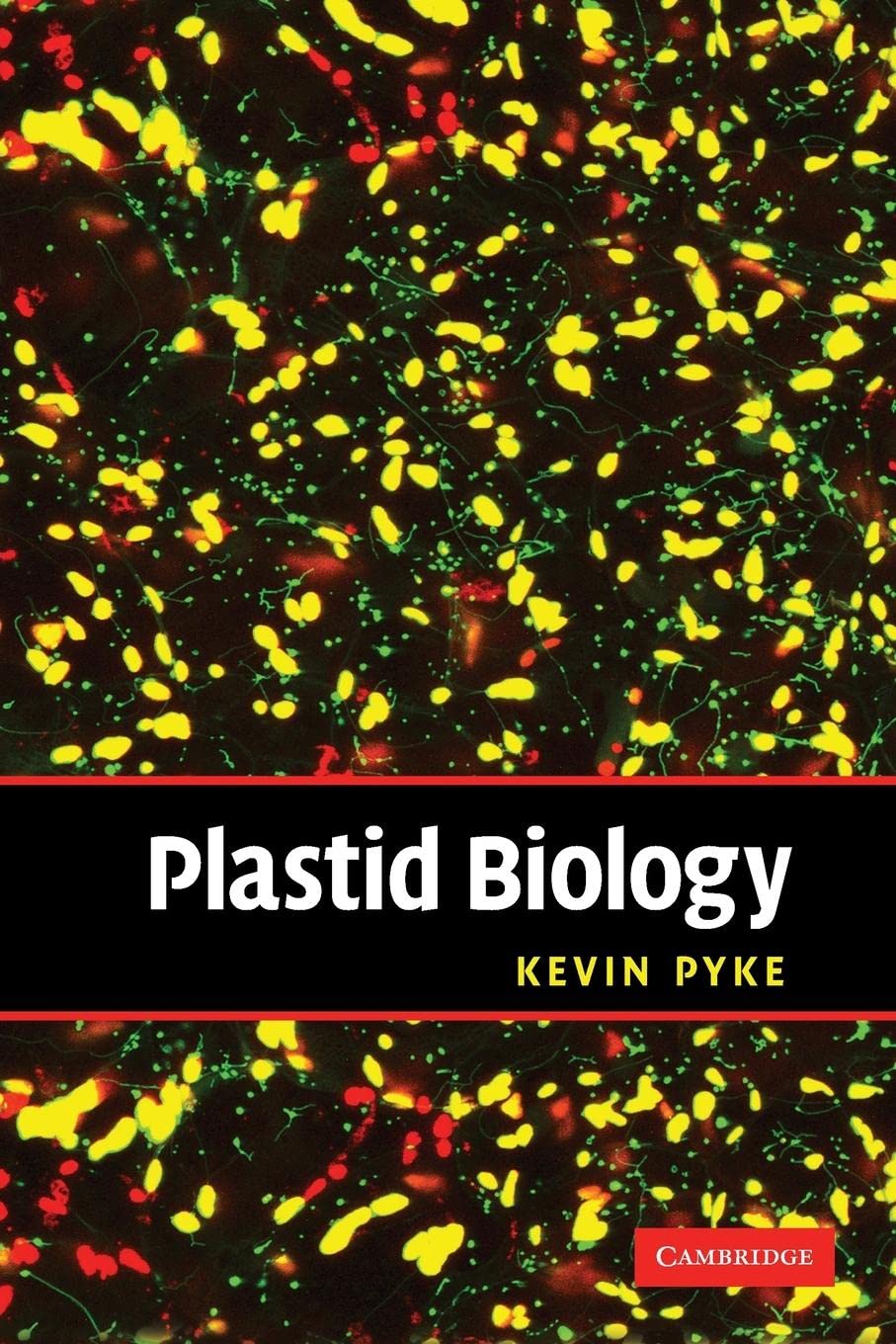
Plastid Biology: Understanding Plant Cell Organelles and Molecular Function by Kevin Pyke
Inclusive of all applicable taxes. FREE shipping on all orders.
Available Offers
- 🚚Free Delivery — Free shipping on all orders
- 💵Cash on Delivery — Pay when your order arrives
- ↩️15-Day Easy Returns — Hassle-free return policy
- 🔒Cash on Delivery — Pay safely when your order arrives
Check Delivery
Product Description
Introduction
Plants are the silent architects of our world, converting sunlight into life itself. At the heart of this miraculous process lies the plastid—a tiny, dynamic organelle that shapes everything from the colour of a tomato to the energy stored in a grain of rice. In Plastid Biology, Kevin Pyke offers a clear and comprehensive guide to understanding these essential cellular components. Designed for Indian students and researchers in botany, plant biotechnology, and agricultural sciences, this hardbound volume from Cambridge University Press bridges classic cell biology with modern molecular insights.
Book Overview
This book takes you on a journey from the evolutionary origins of plastids to their sophisticated roles in plant metabolism and development. Pyke explains how plastids—whether chloroplasts, chromoplasts, or leucoplasts—are not static structures but highly adaptable organelles that respond to environmental cues and cellular demands. With a focus on clarity, the text unpacks complex topics such as plastid genome organization, protein import mechanisms, and the intricate dance of plastid-to-nucleus signalling. Each chapter builds on the last, making it ideal for final-year undergraduate and postgraduate students who want a solid foundation in plant cell biology.
Key Highlights
- Evolutionary Context: Understand how plastids originated from cyanobacterial endosymbionts and retained their own genomes.
- Diverse Plastid Types: Explore chloroplasts, chromoplasts, etioplasts, and amyloplasts—each with unique functions in photosynthesis, pigment storage, and starch accumulation.
- Molecular Machinery: Learn how thousands of nuclear-encoded proteins are imported into plastids via the TOC/TIC translocons.
- Photosynthesis Deep Dive: Covers the light reactions, carbon fixation, and the regulation of plastid metabolism in changing environments.
- Genetic Engineering: A dedicated chapter on plastid transformation techniques, a promising tool for producing vaccines, enzymes, and stress-tolerant crops.
Inside the Book
The book is structured into ten well-organised chapters, each beginning with learning objectives and ending with a summary of key points. Readers will find clear diagrams, tables comparing plastid types, and step-by-step illustrations of protein import pathways. Supplementary colour images—available online—enhance understanding of ultrastructure and fluorescence microscopy. The writing style is direct and avoids unnecessary jargon, making it accessible even for those new to plant molecular biology.
Key Topics
- Plastid genome structure and gene expression
- Biogenesis and differentiation of plastids during plant development
- Role of plastids in stress responses and retrograde signalling
- Lipid and pigment biosynthesis pathways
- Plastid inheritance and maternal transmission
- Applications in biotechnology and synthetic biology
Reader Benefits
By reading this book, you will gain the ability to connect plastid biology with real-world agricultural challenges. Whether you are preparing for competitive exams like CSIR-NET or ICAR-JRF, or pursuing research in plant genetics, this text provides the conceptual clarity needed to tackle advanced topics. The emphasis on plastid genetic manipulation also opens doors to understanding how India’s crop improvement programmes could benefit from transplastomic technologies.
Learning Outcomes
- Differentiate between plastid types and explain their functional specialisations
- Describe the molecular mechanisms of protein import and plastid division
- Analyse how plastid signals coordinate nuclear gene expression
- Evaluate strategies for plastid genome engineering and its ethical implications
- Interpret experimental data from plastid biology research papers
Who Should Read
This book is perfect for B.Sc. and M.Sc. students in botany, plant sciences, and biotechnology. It also serves as an excellent refresher for PhD scholars and early-career researchers shifting into plant molecular biology. Teachers designing courses on cell biology or plant physiology will find it a reliable reference. Indian readers will appreciate the practical connections to crops like rice, wheat, and mustard, where plastid function directly impacts yield and nutritional quality.
About the Author
Kevin Pyke is a Professor of Plant Cell Biology at the University of Nottingham, UK. With decades of research on plastid development and chloroplast biogenesis, he has published extensively in leading journals. His teaching experience shines through in this book’s student-friendly tone and logical flow. Pyke’s passion for making complex cell biology understandable has earned him accolades from both students and peers.
About the Publisher
Cambridge University Press is one of the world’s oldest and most respected academic publishers. Known for rigorous peer review and high-quality educational resources, Cambridge books are trusted by universities across India. This hardcover edition is built to last—perfect for library shelves and laboratory reference desks.
Conclusion
Plastid Biology is more than a textbook; it is an invitation to explore the microscopic engines that sustain life on Earth. For any Indian student or researcher eager to master plant cell biology, this book offers both depth and accessibility. Add it to your collection today and unlock the secrets of the green world.
Quick Summary
Plastid Biology by Kevin Pyke is a comprehensive and accessible textbook that explores the fascinating world of plastids—the organelles at the heart of plant cell function. The book covers all major plastid types, including chloroplasts, chromoplasts, and leucoplasts, and explains their roles in photosynthesis, storage, and metabolism. It delves into plastid genomes, gene expression, and the intricate process of protein import into plastids. Written for final-year undergraduate and graduate students, the text integrates molecular biology and genetics to present a modern understanding of plastid evolution and development. Readers will gain a solid foundation in plastid biochemistry, division, and inheritance, and learn about cutting-edge topics like plastid transformation. This book is ideal for Indian students pursuing degrees in botany, plant biology, or biotechnology, and for researchers seeking a clear reference. By purchasing from Bookshops.in, you support a trusted Indian bookstore that offers genuine, high-quality academic texts at competitive prices with reliable delivery across India.
Book Highlights
Book Specifications
| ISBN-13 | 9780521711975 |
| ISBN-10 | 0521711975 |
| Publisher | Cambridge University Press |
| Language | English |
| Dimensions | 15.24 x 1.22 x 22.86 cm |
| Weight | 350 g |
| Country | India |
| Category | Sciences, Technology & Medicine › Biology & Life Sciences |
| Genre | Science & Mathematics |
| Original Language | English |
Frequently Asked Questions
What is plastid biology?
Who is the author of Plastid Biology?
Is this book suitable for Indian students?
Does the book cover chloroplasts only?
What topics are included in the book?
Is this book a textbook or a reference?
Does the book include recent research?
What is the price of Plastid Biology?
Where can I buy this book in India?
Is the book available in hardcover?
What is the ISBN of this book?
Does the book include diagrams?
Can this book help with competitive exams?
Is the book written in simple language?
Readers Also Search For
Customers Also Bought
Research
Mathematical Modeling of Biological Systems, Volume I (English, Andreas Deutsch | Lutz Brusch | Helen Byrne)
Research
Intermediate Statistics (English, James P. Stevens)
Research
Statistics Explained by Steve McKillup – Life Science Statistics Guide

Research
Data Analysis and Graphics Using R by John Maindonald – Statistical Computing
Research
Applied Longitudinal Data Analysis (English, Judith D. Singer | John B. Willett)
Research
Bayesian Biostatistics (STATISTICS, A SERIES OF TEXTBOOKS AND MONOGRAPHS)
Related Products
View All
Sciences, Technology & Medicine
African Philosophy and the Epistemic Marginalization of Women (Routledge African Studies)
Sciences, Technology & Medicine
Evolution Interrupted: How We Change Nature and How Nature Changes Us
Sciences, Technology & Medicine
The Tragicomedy of Classical Thermodynamics: Course Held at the Department of Mechanics of Solids (July 1971): 70 (CISM International Centre for Mechanical Sciences)
Sciences, Technology & Medicine
DNA Repair Protocols: 113 (Methods in Molecular Biology)
Sciences, Technology & Medicine
Acoustic Fish Reconnaissance: 32 (Marine Science, 32)
Sciences, Technology & Medicine