
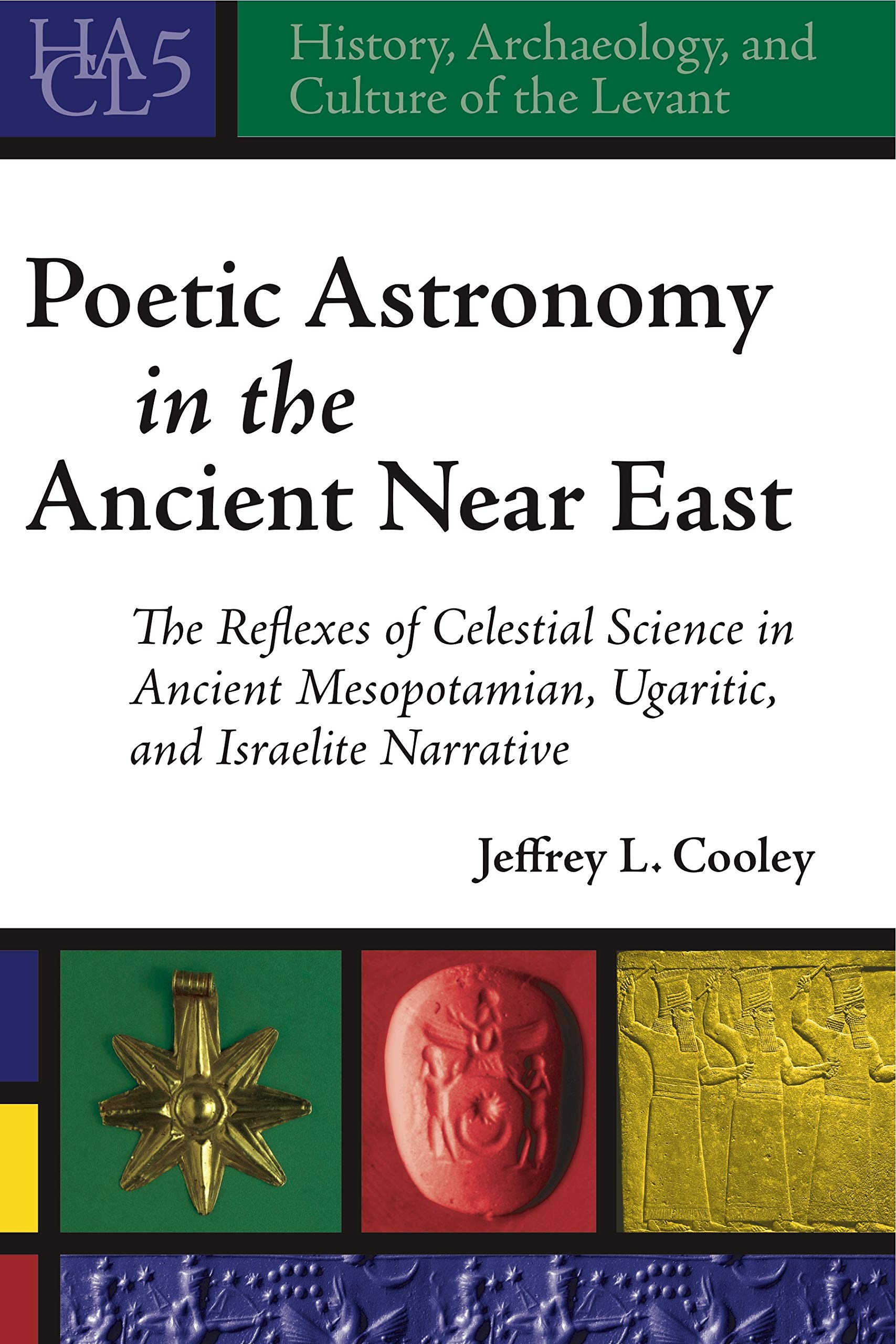
Poetic Astronomy in the Ancient Near East: The Reflexes of Celestial Science in Ancient Mesopotamian, Ugaritic, and Isra
Inclusive of all applicable taxes. FREE shipping on all orders.
Available Offers
- 🚚Free Delivery — Free shipping on all orders
- 💵Cash on Delivery — Pay when your order arrives
- ↩️15-Day Easy Returns — Hassle-free return policy
- 🔒Cash on Delivery — Pay safely when your order arrives
Check Delivery
Product Description
Introduction
In the vast tapestry of ancient Near Eastern studies, few works manage to bridge the divide between celestial science and literary narrative as seamlessly as Jeffrey L. Cooley's Poetic Astronomy in the Ancient Near East: The Reflexes of Celestial Science in Ancient Mesopotamian, Ugaritic, and Israelite Narrative. Published by Eisenbrauns, this hardcover volume offers a groundbreaking exploration of how ancient authors wove their cultures' astronomical knowledge into the fabric of myth, epic, and sacred story. For Indian readers and students interested in the intersections of science, religion, and literature, this book opens a window into a world where the stars were not merely observed but narrated, revered, and embedded in the human quest for meaning.
Book Overview
Cooley's study challenges the conventional separation between the history of science and the study of ancient texts. By examining celestial divination in Mesopotamian masterpieces like Enuma Eliš and Erra and Išum, astral devotion in Ugaritic tales such as the Baal Cycle and Shahar and Shalim, and the theological nuances of Israelite narratives, this book reveals a shared intellectual heritage. It demonstrates that ancient peoples did not compartmentalize their understanding of the cosmos from their storytelling; rather, they used celestial phenomena—eclipses, planetary movements, star patterns—as powerful literary devices to convey divine will, cosmic order, and human destiny. This is not a dry treatise on ancient astronomy, but a vivid journey into how the sky shaped the stories that defined civilizations.
Key Highlights
- Interdisciplinary Approach: Merges contemporary science history with biblical studies to offer a holistic view of ancient thought.
- Comparative Analysis: Explores Mesopotamian, Ugaritic, and Israelite cultures side by side, highlighting both shared motifs and unique perspectives.
- Literary Focus: Treats celestial references not as mere background but as integral narrative elements that drive plot and meaning.
- Original Scholarship: Offers fresh interpretations of well-known texts like the Baal Cycle and lesser-studied works, backed by rigorous research.
- Accessible Yet Scholarly: Written for both advanced students and curious readers, with clear explanations of complex concepts.
Inside the Book
The volume is structured to guide readers through the celestial landscapes of three major ancient Near Eastern cultures. In Mesopotamian chapters, Cooley unpacks how divination practices—reading omens in the sky—shaped narratives of creation and conflict. The Ugaritic section delves into the roles of astral deities like Shahar (dawn) and Shalim (dusk), showing how their movements mirrored human experiences of hope and loss. The Israelite portion reexamines passages from the Hebrew Bible, arguing that God's transcendence was often articulated through cosmic imagery that resonated with neighboring traditions. Throughout, the book includes detailed textual analyses, comparative tables, and references to cuneiform tablets and Ugaritic scripts, making it a rich resource for in-depth study.
Key Topics
- Celestial Divination in Mesopotamia: How priests and poets interpreted planetary omens in epics like Enuma Eliš.
- Astral Deities in Ugarit: The worship of sun, moon, and star gods in Canaanite religion and its literary expressions.
- Israelite Cosmic Theology: The biblical portrayal of Yahweh as controller of the heavens, distinct from but conversant with Near Eastern astronomy.
- Narrative Function of Astronomy: How celestial events serve as plot catalysts, symbols of divine intervention, or markers of time in ancient stories.
- Science and Religion Interplay: The blurred boundaries between empirical observation and theological belief in pre-modern cultures.
Reader Benefits
- Deepen Cultural Understanding: Gain insight into how ancient peoples perceived the universe and their place within it.
- Enhance Literary Analysis: Learn to identify and interpret celestial motifs in ancient texts, enriching your reading of myths and scriptures.
- Bridge Disciplines: Connect the dots between science history, religious studies, and literary criticism—a skill valuable for interdisciplinary research.
- Critical Thinking: Challenge modern assumptions about the separation of science and storytelling, and appreciate the holistic worldview of antiquity.
- Academic Edge: Equip yourself with specialized knowledge useful for seminars, dissertations, or personal scholarship in ancient Near Eastern studies.
Learning Outcomes
By engaging with this book, readers will be able to: identify the major celestial motifs in Mesopotamian, Ugaritic, and Israelite narratives; analyze how ancient authors used astronomical knowledge to convey theological and philosophical ideas; compare the scientific and literary traditions of three interconnected cultures; critically evaluate modern scholarly approaches to ancient science; and apply these insights to broader discussions about the relationship between cosmology and culture. The book also fosters an appreciation for the sophistication of pre-modern astronomical observation and its enduring impact on Western and Near Eastern literary heritage.
Who Should Read
This book is ideally suited for postgraduate students and researchers in ancient Near Eastern studies, biblical studies, history of science, and comparative literature. It will also appeal to Indian readers with interests in mythology, archaeoastronomy, and the cultural history of the Middle East. Undergraduate students taking courses on ancient religions or the history of astronomy will find it a valuable supplementary text. Moreover, general readers who are fascinated by how ancient civilizations understood the stars—and how those understandings shaped their greatest stories—will discover a rewarding and thought-provoking read. The book's academic rigor does not preclude accessibility; it invites anyone with curiosity to explore the celestial narratives of the past.
About the Author
Jeffrey L. Cooley is a scholar of ancient Near Eastern languages and literatures, with a particular focus on the intersection of science and religion in antiquity. His research spans Mesopotamian, Ugaritic, and biblical texts, and he has published extensively on celestial divination, mythology, and the history of astronomy. Cooley's work is characterized by a commitment to interdisciplinary methodology, drawing on philology, archaeology, and the history of science to illuminate the intellectual worlds of ancient peoples. He has taught at several universities and is recognized for making complex subjects accessible to a wider academic audience.
About the Publisher
Eisenbrauns, an imprint of Penn State University Press, is renowned for its high-quality publications in ancient Near Eastern studies, biblical scholarship, and semitic linguistics. For decades, Eisenbrauns has served as a trusted source for critical editions, monographs, and reference works that advance the understanding of the ancient world. Their commitment to rigorous scholarship and durable hardcover editions makes them a preferred publisher for libraries, scholars, and serious students alike. Poetic Astronomy in the Ancient Near East exemplifies their dedication to publishing works that push the boundaries of traditional disciplines.
Conclusion
Jeffrey L. Cooley's Poetic Astronomy in the Ancient Near East is more than a book—it is an invitation to see the ancient world through the eyes of its poets, priests, and astronomers. By revealing how celestial science was woven into the very fabric of narrative, it transforms our understanding of both the texts and the cultures that produced them. For anyone seeking to explore the profound connections between the heavens and human storytelling, this hardcover volume is an indispensable addition to their library. Order your copy from Bookshops.in today and embark on a journey that spans millennia, from the ziggurats of Mesopotamia to the hills of Canaan, all under the same starry sky that inspired our ancestors.
Quick Summary
Poetic Astronomy in the Ancient Near East by Jeffrey L. Cooley is a groundbreaking academic work that examines how ancient Mesopotamian, Ugaritic, and Israelite authors wove celestial science into their narratives. Challenging the 20th-century divide between science history and biblical studies, Cooley demonstrates that celestial divination and astronomical speculation were integral to cultural expression in the ancient Near East. The book analyzes prominent works such as Enuma Eliš and Erra and Išum, revealing how these texts reflect sophisticated astronomical knowledge. This interdisciplinary study is essential for scholars of ancient history, astronomy, religious studies, and biblical literature. Indian students and researchers will find it invaluable for understanding the intersection of mythology, science, and culture. Published by Eisenbrauns in a durable hardcover edition, this book is a must-have for academic libraries. Purchase from Bookshops.in to receive an authentic copy with trusted service across India.
Book Highlights
Book Specifications
| ISBN-13 | 9781575062624 |
| ISBN-10 | 1575062623 |
| Publisher | Eisenbrauns |
| Language | English |
| Dimensions | 15.24 x 3.51 x 22.86 cm |
| Weight | 748 g |
| Country | India |
| Category | History Textbooks › Ancient |
| Genre | Academic |
| Original Language | English |
Frequently Asked Questions
What is Poetic Astronomy in the Ancient Near East about?
Who is the author of this book?
Is this book suitable for Indian students?
What ancient texts are analyzed in the book?
Does the book cover celestial divination?
Is this a hardcover or paperback edition?
What is the ISBN of this book?
What language is the book in?
What is the price of this book at Bookshops.in?
Can I use this book for my PhD research?
Does the book include comparative analysis?
Why should I buy from Bookshops.in?
Readers Also Search For
Customers Also Bought
Mathematics
Stereotype Spaces and Algebras: 73 (De Gruyter Expositions in Mathematics, 73)
Mathematics
Semigroups in Algebra, Geometry and Analysis: 20 (De Gruyter Expositions in Mathematics, 20)
Mathematics
Geometry from the Pacific Rim: Proceedings of the Pacific Rim Geometry Conference held at National University of Singapore, Republic of Singapore, ... 1994 (De Gruyter Proceedings in Mathematics)

Mathematics
First International Tainan-Moscow Algebra Workshop: Proceedings of the International Conference held at National Cheng Kung University Tainan, Taiwan, ... 1994 (De Gruyter Proceedings in Mathematics)

Mathematics
Differential Geometry - Proceedings of the VIII International Colloquium (English, Jesus A. Alvarez Lopez | Eduardo Garcia-Rio)
Mathematics
Mathematical Theory of Optimal Processes (Classics of Soviet Mathematics)
Related Products
View All
Science & Mathematics
Elements of Pelagos Biology: With Focus on the Mediterranean Sea

Science & Mathematics
Squid - Superconducting Quantum Interference Devices and Their Applications: Proceedings of the International Conference on Superconducting Quantum Devices, Berlin-west, October 4-8, 1976

Science & Mathematics
Thermodynamics and Pattern Formation in Biology
Science & Mathematics
The Nature of Mathematics and the Mathematics of Nature by S. Andersson – Mathematics & Science

Science & Mathematics
Linear Algebra | by Stephen Friedberg | Arnold Insel | Lawrence Spence | Pearson | by Stephen Friedberg | Arnold Insel | Lawrence Spence | Pearson | by Stephen Friedberg | Arnold Insel | Lawrence Spence | Pearson | by Stephen Friedberg | Arnold Insel | Lawrence Spence | Pearson | by Stephen Friedberg | Arnold Insel | Lawrence Spence | Pearson | by Stephen Friedberg | Arnold Insel | Lawrence Spence | Pearson | by Stephen Friedberg | Arnold Insel | Lawrence Spence | Pearson | by Stephen Friedberg

Science & Mathematics