
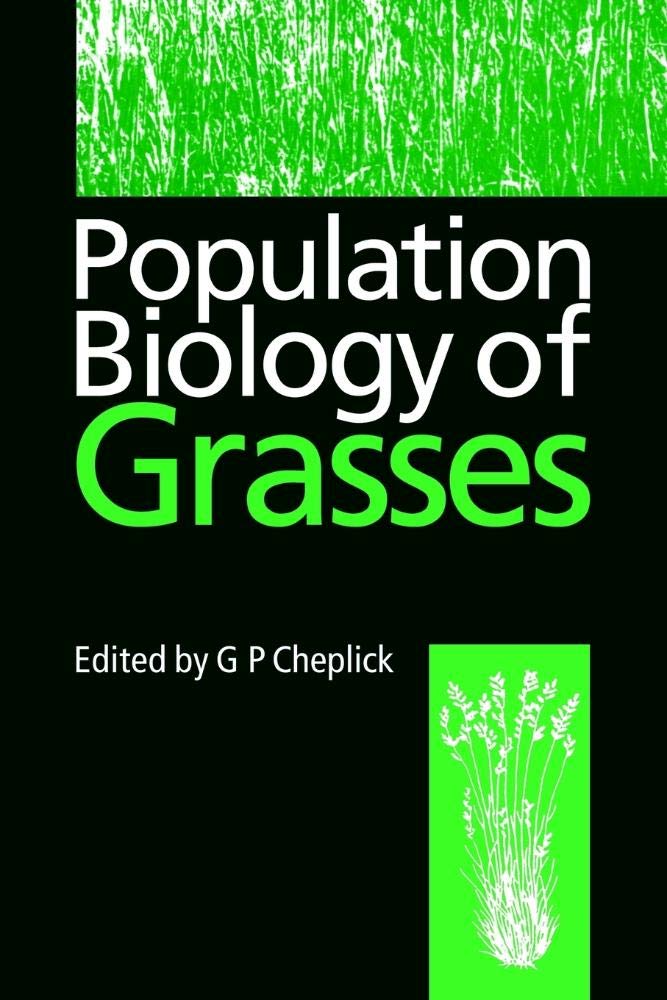
Population Biology of Grasses: An In-Depth Scientific Study by G. P. Cheplick – Essential for Ecology and Plant Science
Inclusive of all applicable taxes. FREE shipping on all orders.
Available Offers
- 🚚Free Delivery — Free shipping on all orders
- 💵Cash on Delivery — Pay when your order arrives
- ↩️15-Day Easy Returns — Hassle-free return policy
- 🔒Cash on Delivery — Pay safely when your order arrives
Check Delivery
Product Description
Introduction
Grasses are not merely the green carpets of our lawns or the fodder for livestock; they are among the most resilient and ecologically significant plants on Earth. In the Indian context, from the vast grasslands of the Deccan to the cultivated fields of wheat and rice, grasses form the backbone of our agriculture and natural ecosystems. Population Biology of Grasses by G. P. Cheplick is a comprehensive scientific exploration that delves into the intricate lives of these plants, offering a deep understanding of their population dynamics, genetic diversity, and ecological roles. Published by Cambridge University Press, this hardbound volume is an essential resource for students and researchers in botany, ecology, and agricultural sciences.
Book Overview
This authoritative volume presents the latest research on grass population biology, synthesizing demographic, physiological, ecological, and molecular approaches. It explores how grasses disperse, germinate, establish seedlings, reproduce, and interact with their environment. The book also examines the genetic variation and phenotypic plasticity that shape life history traits, alongside the impact of biotic factors such as herbivory and competition. With case studies from Africa, Australia, and Japan, the book provides a global perspective while offering insights applicable to Indian grasslands and agricultural systems.
Key Highlights
- Comprehensive Coverage: Integrates demography, physiology, genetics, and ecology in one cohesive text.
- Global Case Studies: Includes detailed analyses of grass-dominated ecosystems in Africa, Australia, and Japan.
- Applied and Fundamental Insights: Bridges basic research with practical applications in agriculture and conservation.
- Molecular Perspectives: Explores the role of molecular tools in understanding grass population structure and evolution.
- Indian Relevance: Offers principles directly applicable to studying native grasses, crops like rice and wheat, and grassland management.
Inside the Book
Readers will journey through chapters that systematically unravel the life of grasses. The book begins with an introduction to grass diversity and distribution, then moves into detailed discussions on seed dispersal mechanisms, germination ecology, and seedling establishment. Later chapters focus on population dynamics, including growth, mortality, and reproduction. A significant portion is dedicated to genetic variation and phenotypic plasticity, explaining how grasses adapt to changing environments. The biotic interactions section covers competition, herbivory, and symbiosis. Each chapter is supported by data, graphs, and references to original research, making it a robust academic tool.
Key Topics
- Seed dispersal and dormancy strategies in grasses
- Germination ecology and seedling establishment
- Population growth models and life tables
- Reproductive biology and mating systems
- Genetic diversity and population structure
- Phenotypic plasticity and local adaptation
- Biotic interactions: competition, herbivory, and mutualism
- Grassland ecology in tropical and temperate regions
- Conservation and management of grass populations
Reader Benefits
This book empowers readers with a thorough understanding of how grass populations function and evolve. Students will gain conceptual clarity for exams and research projects. Researchers will find a wealth of data and methodologies to design their own studies. Ecologists and conservationists can apply the principles to restore degraded grasslands or manage invasive species. Agricultural scientists will benefit from insights into crop wild relatives and sustainable farming practices. The book also enhances critical thinking by presenting contrasting hypotheses and unresolved questions in grass biology.
Learning Outcomes
By studying this book, readers will be able to: describe the key demographic processes in grass populations; analyze the role of genetic variation in adaptation; evaluate the impact of biotic and abiotic factors on grass life cycles; apply population biology concepts to real-world problems in agriculture and conservation; and design experiments to test hypotheses about grass ecology and evolution. These outcomes align with advanced undergraduate and postgraduate curricula in botany, ecology, and environmental science.
Who Should Read
- Botany and Ecology Students: Ideal for those specializing in plant population biology or grassland ecology.
- Agricultural Scientists: Researchers working on cereal crops, fodder grasses, or weed management.
- Conservation Biologists: Professionals involved in grassland restoration and biodiversity conservation.
- Environmental Science Enthusiasts: Anyone keen to understand the ecological backbone of terrestrial ecosystems.
- Indian Academics: Faculty and students in Indian universities where grass ecology is part of the curriculum.
About the Author
G. P. Cheplick is a distinguished plant ecologist with decades of research experience in grass population biology. He has published extensively on the ecology and evolution of grasses, with a focus on life history variation, seed biology, and genetic diversity. His work has appeared in leading international journals, and he has contributed to several edited volumes. Cheplick’s expertise ensures that this book is both scientifically rigorous and accessible to a wide audience.
About the Publisher
Cambridge University Press is one of the world’s oldest and most respected academic publishers, known for its high-quality scientific and scholarly works. With a legacy dating back to 1534, Cambridge University Press maintains rigorous editorial standards, making this volume a trusted reference for students and researchers globally. Their commitment to advancing knowledge aligns perfectly with the depth and precision of Population Biology of Grasses.
Conclusion
In an era where climate change and land-use shifts threaten biodiversity, understanding the population biology of foundational plants like grasses is more crucial than ever. This book equips readers with the knowledge to investigate, conserve, and sustainably utilize grass populations. Whether you are a student preparing for a career in ecology, a researcher seeking a comprehensive reference, or a practitioner managing grasslands, Population Biology of Grasses is an indispensable addition to your library. Order your hardcover copy from Bookshops.in today and deepen your connection with the green world that sustains us.
Quick Summary
Population Biology of Grasses, edited by G. P. Cheplick and published by Cambridge University Press, is an authoritative academic volume that delves into the ecological and evolutionary mechanisms driving grass populations. Grasses cover more land than any other plant family and are critical for food security and ecosystem function. This book brings together diverse research perspectives—demographic, physiological, ecological, and molecular—to provide a holistic understanding of grass life history, including seed dispersal, germination, seedling establishment, population dynamics, and reproduction. It also explores the roles of genetic variation and phenotypic plasticity in shaping adaptive traits. Targeted at advanced students, researchers, and professionals in botany, ecology, and agriculture, the book serves as both a textbook and a reference. Indian readers will find it valuable for studying grasslands, crop grasses, and native species. By purchasing from Bookshops.in, you get a genuine hardcover edition with fast delivery across India, supporting a trusted local bookstore committed to academic excellence.
Book Highlights
Book Specifications
| ISBN-13 | 9780521052351 |
| ISBN-10 | 0521052351 |
| Publisher | Cambridge University Press |
| Language | English |
| Dimensions | 15.24 x 2.62 x 22.86 cm |
| Weight | 600 g |
| Country | India |
| Category | Biology & Life Sciences › Botany |
| Genre | Science & Mathematics |
| Original Language | English |
Frequently Asked Questions
What is the main focus of Population Biology of Grasses?
Who is the author of this book?
Is this book suitable for undergraduate students?
What topics are covered in the book?
Which publisher released this book?
Is this book available in hardcover?
What is the ISBN-13?
Can I use this book for research on Indian grasslands?
Does the book include molecular approaches?
What is the language of the book?
Is this book part of a series?
Where can I buy this book in India?
Does the book cover agricultural grasses?
Readers Also Search For
Customers Also Bought
Mathematics
Stereotype Spaces and Algebras: 73 (De Gruyter Expositions in Mathematics, 73)

Mathematics
Semigroups in Algebra, Geometry and Analysis: 20 (De Gruyter Expositions in Mathematics, 20)

Mathematics
Geometry from the Pacific Rim: Proceedings of the Pacific Rim Geometry Conference held at National University of Singapore, Republic of Singapore, ... 1994 (De Gruyter Proceedings in Mathematics)
Mathematics
First International Tainan-Moscow Algebra Workshop: Proceedings of the International Conference held at National Cheng Kung University Tainan, Taiwan, ... 1994 (De Gruyter Proceedings in Mathematics)

Mathematics
Differential Geometry - Proceedings of the VIII International Colloquium (English, Jesus A. Alvarez Lopez | Eduardo Garcia-Rio)

Mathematics
Mathematical Theory of Optimal Processes (Classics of Soviet Mathematics)
Related Products
View All
Science & Mathematics
Squid - Superconducting Quantum Interference Devices and Their Applications: Proceedings of the International Conference on Superconducting Quantum Devices, Berlin-west, October 4-8, 1976
Science & Mathematics
Thermodynamics and Pattern Formation in Biology
Science & Mathematics
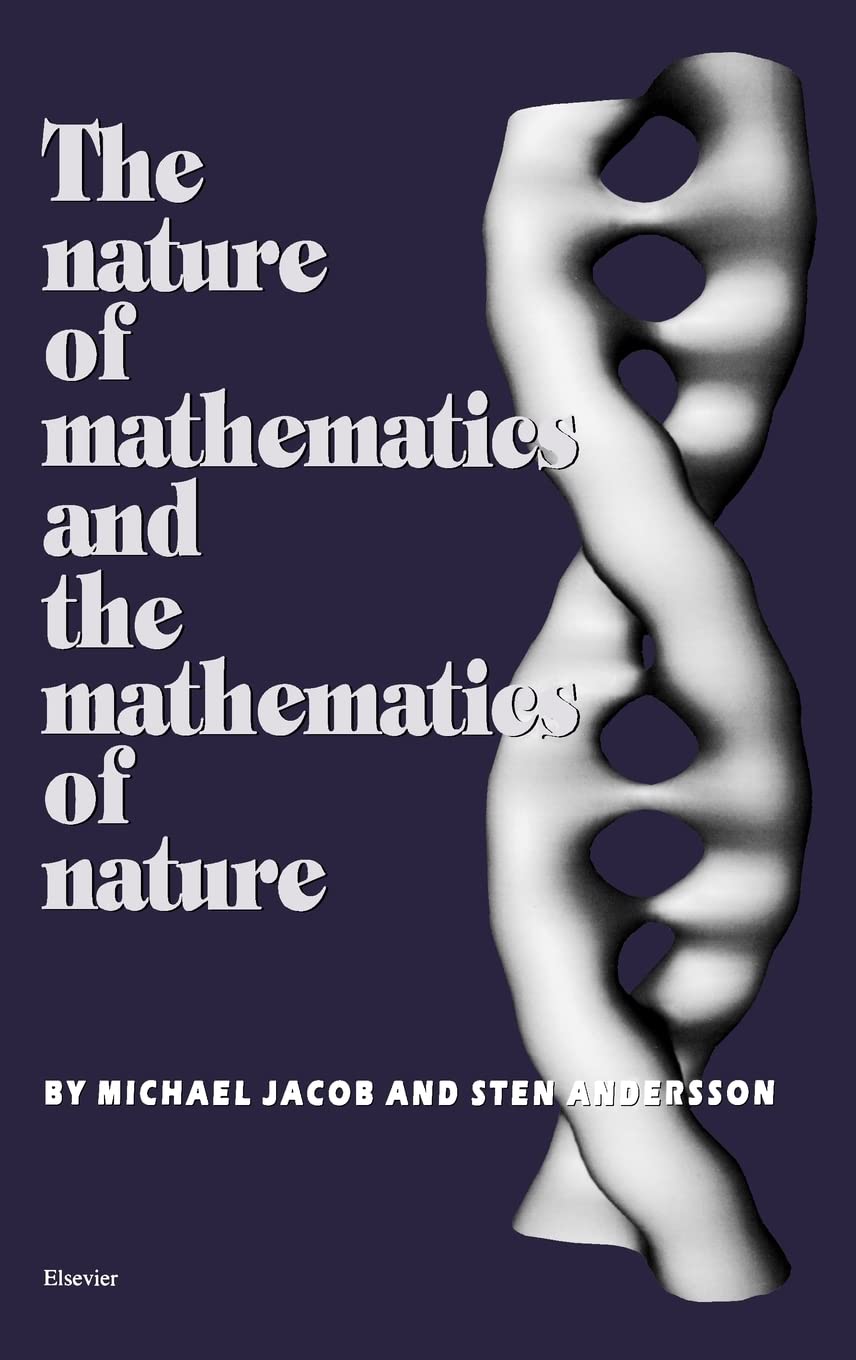
The Nature of Mathematics and the Mathematics of Nature by S. Andersson – Mathematics & Science

Science & Mathematics
Linear Algebra | by Stephen Friedberg | Arnold Insel | Lawrence Spence | Pearson | by Stephen Friedberg | Arnold Insel | Lawrence Spence | Pearson | by Stephen Friedberg | Arnold Insel | Lawrence Spence | Pearson | by Stephen Friedberg | Arnold Insel | Lawrence Spence | Pearson | by Stephen Friedberg | Arnold Insel | Lawrence Spence | Pearson | by Stephen Friedberg | Arnold Insel | Lawrence Spence | Pearson | by Stephen Friedberg | Arnold Insel | Lawrence Spence | Pearson | by Stephen Friedberg

Science & Mathematics
University Calculus | by Joel Hass | Christopher Heil | Maurice Weir | Pearson | by Joel Hass | Christopher Heil | Maurice Weir | Pearson | by Joel Hass | Christopher Heil | Maurice Weir | Pearson | by Joel Hass | Christopher Heil | Maurice Weir | Pearson | by Joel Hass | Christopher Heil | Maurice Weir | Pearson | by Joel Hass | Christopher Heil | Maurice Weir | Pearson | by Joel Hass | Christopher Heil | Maurice Weir | Pearson | by Joel Hass | Christopher Heil | Maurice Weir | Pearson | by Joe
Science & Mathematics