
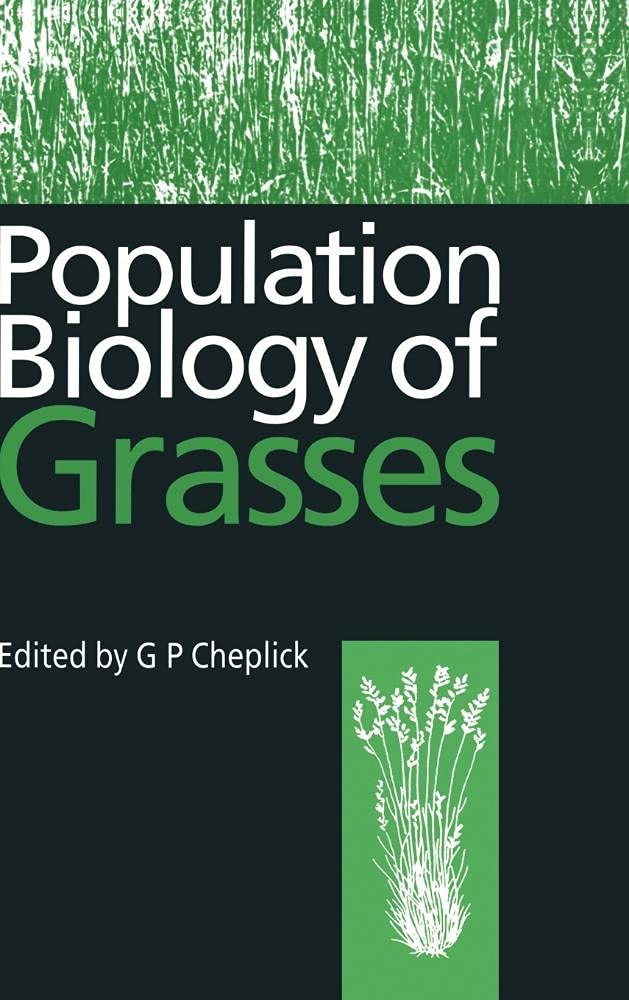
Population Biology of Grasses by G. P. Cheplick – A Detailed Scientific Exploration of Grass Ecology and Population Dyna
Inclusive of all applicable taxes. FREE shipping on all orders.
Available Offers
- 🚚Free Delivery — Free shipping on all orders
- 💵Cash on Delivery — Pay when your order arrives
- ↩️15-Day Easy Returns — Hassle-free return policy
- 🔒Cash on Delivery — Pay safely when your order arrives
Check Delivery
Product Description
Introduction
Grasses are among the most widespread and ecologically vital plant families on Earth. They form the backbone of agricultural systems, natural grasslands, and savannas, supporting both human livelihoods and wildlife. In the Indian context, grasses such as rice, wheat, sugarcane, and millets are central to food security and rural economies. Population Biology of Grasses by G. P. Cheplick offers a comprehensive scientific exploration of how grass populations function, adapt, and thrive across diverse environments. This hardcover volume from Cambridge University Press is an essential resource for students, researchers, and professionals in plant sciences, ecology, and agriculture.
Book Overview
This authoritative work brings together cutting-edge research on the population biology of grasses, covering topics from demography and physiology to molecular genetics and ecological interactions. The book examines how grasses reproduce, disperse, germinate, establish seedlings, and maintain populations over time. It also delves into genetic variation, phenotypic plasticity, and the impact of biotic factors such as herbivory and competition. With case studies from Africa, Australia, and Japan, the book provides a global perspective while offering insights applicable to Indian grasslands and crop systems.
Key Highlights
- Comprehensive coverage: Integrates demographic, physiological, ecological, and molecular approaches to grass population biology.
- Global case studies: Includes detailed examples from major grass-dominated ecosystems in Africa, Australia, and Japan.
- Applied relevance: Connects fundamental research to practical issues in agriculture, conservation, and land management.
- Expert authorship: Edited by G. P. Cheplick, a renowned plant ecologist with decades of research on grass populations.
- Premium hardcover edition: Published by Cambridge University Press, ensuring high-quality content and durability.
Inside the Book
The book is structured into thematic chapters that systematically explore the life history of grasses. Early chapters focus on seed dispersal, germination, and seedling establishment, highlighting the challenges grasses face in different environments. Subsequent sections address population dynamics, including growth, mortality, and reproductive strategies. The role of genetic variation and phenotypic plasticity is examined in depth, showing how grasses adapt to changing conditions. Later chapters discuss biotic interactions such as competition, herbivory, and symbiosis with fungi and bacteria. The final chapters present ecological studies of specific grass species in their natural habitats, offering real-world insights into population processes.
Key Topics
- Demographic patterns and life tables of grass populations
- Seed ecology: dispersal, dormancy, and germination cues
- Clonal growth and vegetative reproduction
- Genetic diversity and population structure
- Phenotypic plasticity in response to environmental stress
- Competition and coexistence among grass species
- Herbivore–grass interactions and grazing ecology
- Molecular markers in population studies
- Conservation and management of grassland ecosystems
Reader Benefits
- Gain a deep understanding of how grass populations function in natural and agricultural systems.
- Learn about advanced research methods, including molecular tools and field techniques.
- Apply knowledge to improve crop productivity, grassland restoration, and biodiversity conservation.
- Access a wealth of data and case studies that complement classroom learning and fieldwork.
- Develop a holistic view of plant population biology with a focus on an economically and ecologically vital family.
Learning Outcomes
By reading this book, you will be able to: explain the key demographic processes that regulate grass populations; analyze the roles of genetic variation and environmental factors in shaping life history traits; evaluate the impact of biotic interactions on population dynamics; design studies to investigate grass population biology using modern techniques; and apply ecological principles to real-world problems in agriculture and conservation. The book also strengthens critical thinking and quantitative skills through its integration of models and empirical data.
Who Should Read
- Students of botany, ecology, agriculture, and environmental science at undergraduate and postgraduate levels
- Researchers specializing in plant population biology, grassland ecology, or crop science
- Conservation biologists and land managers working with grassland ecosystems
- Agricultural professionals seeking deeper insights into grass crop biology
- Wildlife biologists interested in habitat dynamics and forage species
About the Author
G. P. Cheplick is a distinguished plant ecologist and professor at the College of Staten Island, City University of New York. His research focuses on the population biology of grasses, particularly the roles of seed size, germination, and genetic variation in shaping life histories. He has published extensively in leading journals and has contributed to several edited volumes on plant ecology. His expertise in both field studies and molecular approaches makes him uniquely qualified to compile this comprehensive reference.
About the Publisher
Cambridge University Press is one of the world's oldest and most respected academic publishers, with a history spanning over 400 years. Known for its rigorous peer-review process and high editorial standards, Cambridge publishes groundbreaking research across all disciplines of science and humanities. This hardcover edition reflects the press's commitment to producing durable, authoritative books that serve scholars, students, and professionals worldwide.
Conclusion
Population Biology of Grasses is an indispensable resource for anyone serious about understanding the science behind one of the most important plant families on Earth. Whether you are a student preparing for exams, a researcher designing experiments, or a practitioner managing grasslands, this book provides the theoretical foundation and practical insights you need. With its blend of classic ecology and modern molecular perspectives, it remains a timeless reference for Indian and global readers alike. Order your copy today from Bookshops.in and add this essential volume to your library.
Quick Summary
Population Biology of Grasses by G. P. Cheplick is a comprehensive academic volume that synthesizes the latest research on the population biology of the grass family (Poaceae). Grasses dominate more land area than any other plant family and are critical for food security and ecosystem function. This book brings together contributions from leading researchers who apply demographic, physiological, ecological, and molecular approaches to understand grass populations. Key topics include reproduction, seed dispersal, germination, seedling establishment, population dynamics, and life history patterns. The book also delves into genetic variation and phenotypic plasticity, showing how these factors shape grass traits. It is an essential resource for postgraduate students, researchers, and professionals in botany, ecology, agriculture, and conservation biology. By purchasing from Bookshops.in, Indian readers receive a genuine hardcover edition with reliable service and fast delivery, making it a valuable addition to any academic library.
Book Highlights
Book Specifications
| ISBN-13 | 9780521572057 |
| ISBN-10 | 0521572053 |
| Publisher | Cambridge University Press |
| Language | English |
| Dimensions | 15.88 x 2.54 x 24.13 cm |
| Weight | 795 g |
| Country | India |
| Category | Biology & Life Sciences › Botany |
| Genre | Non-fiction |
| Original Language | English |
Frequently Asked Questions
What is the main focus of Population Biology of Grasses?
Who is the author of this book?
Is this book suitable for Indian students?
Does this book cover genetic aspects of grasses?
Is this book a hardcover edition?
What is the ISBN-13 of this book?
Can this book be used for teaching?
Does the book discuss grass reproduction?
What languages is the book available in?
What is the price of this book in India?
Is this book relevant for agricultural research?
Why buy from Bookshops.in?
Readers Also Search For
Customers Also Bought
Mathematics
Stereotype Spaces and Algebras: 73 (De Gruyter Expositions in Mathematics, 73)
Mathematics
Semigroups in Algebra, Geometry and Analysis: 20 (De Gruyter Expositions in Mathematics, 20)

Mathematics
Geometry from the Pacific Rim: Proceedings of the Pacific Rim Geometry Conference held at National University of Singapore, Republic of Singapore, ... 1994 (De Gruyter Proceedings in Mathematics)
Mathematics
First International Tainan-Moscow Algebra Workshop: Proceedings of the International Conference held at National Cheng Kung University Tainan, Taiwan, ... 1994 (De Gruyter Proceedings in Mathematics)
Mathematics
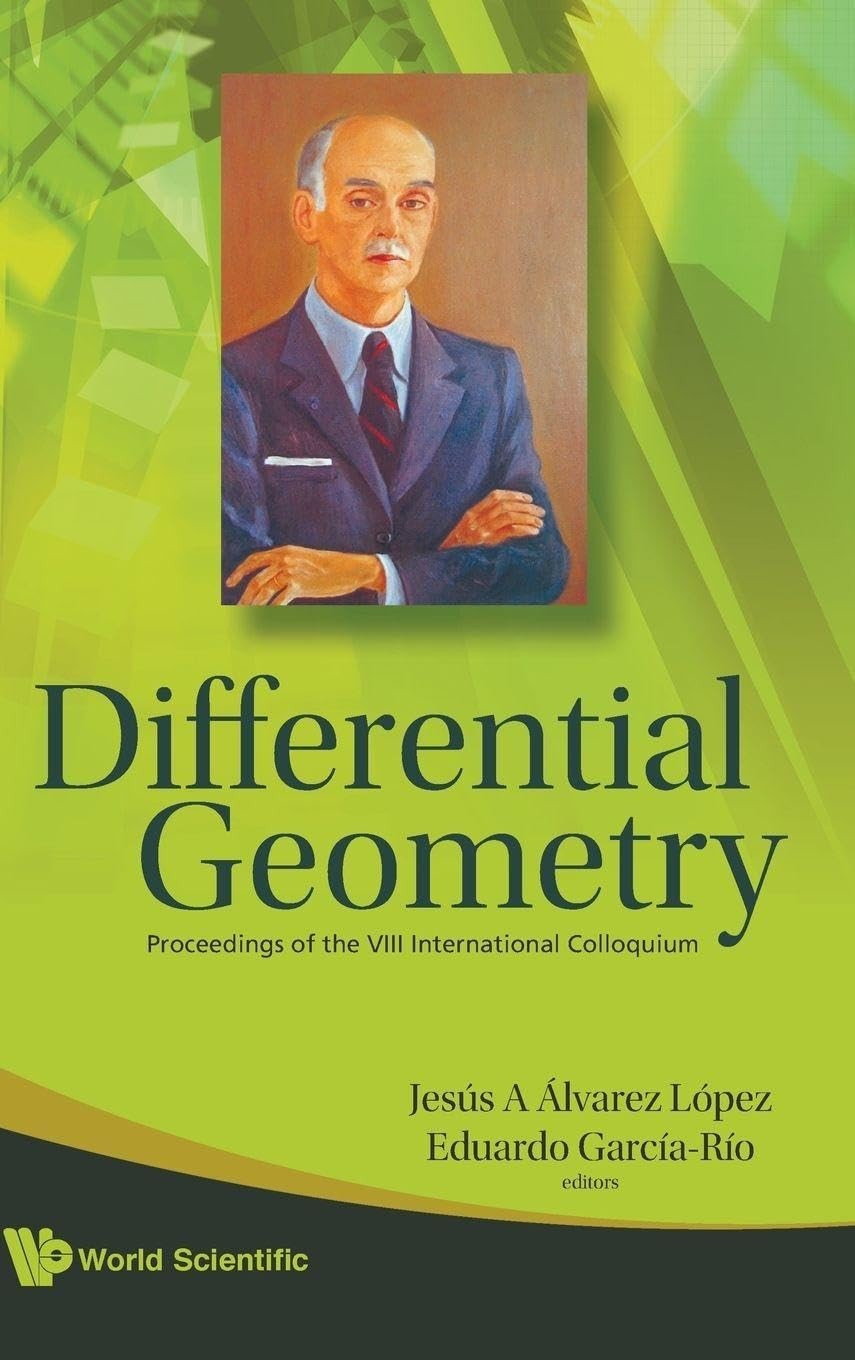
Differential Geometry - Proceedings of the VIII International Colloquium (English, Jesus A. Alvarez Lopez | Eduardo Garcia-Rio)

Mathematics
Mathematical Theory of Optimal Processes (Classics of Soviet Mathematics)
Related Products
View All
Science & Mathematics
Squid - Superconducting Quantum Interference Devices and Their Applications: Proceedings of the International Conference on Superconducting Quantum Devices, Berlin-west, October 4-8, 1976
Science & Mathematics
Thermodynamics and Pattern Formation in Biology
Science & Mathematics
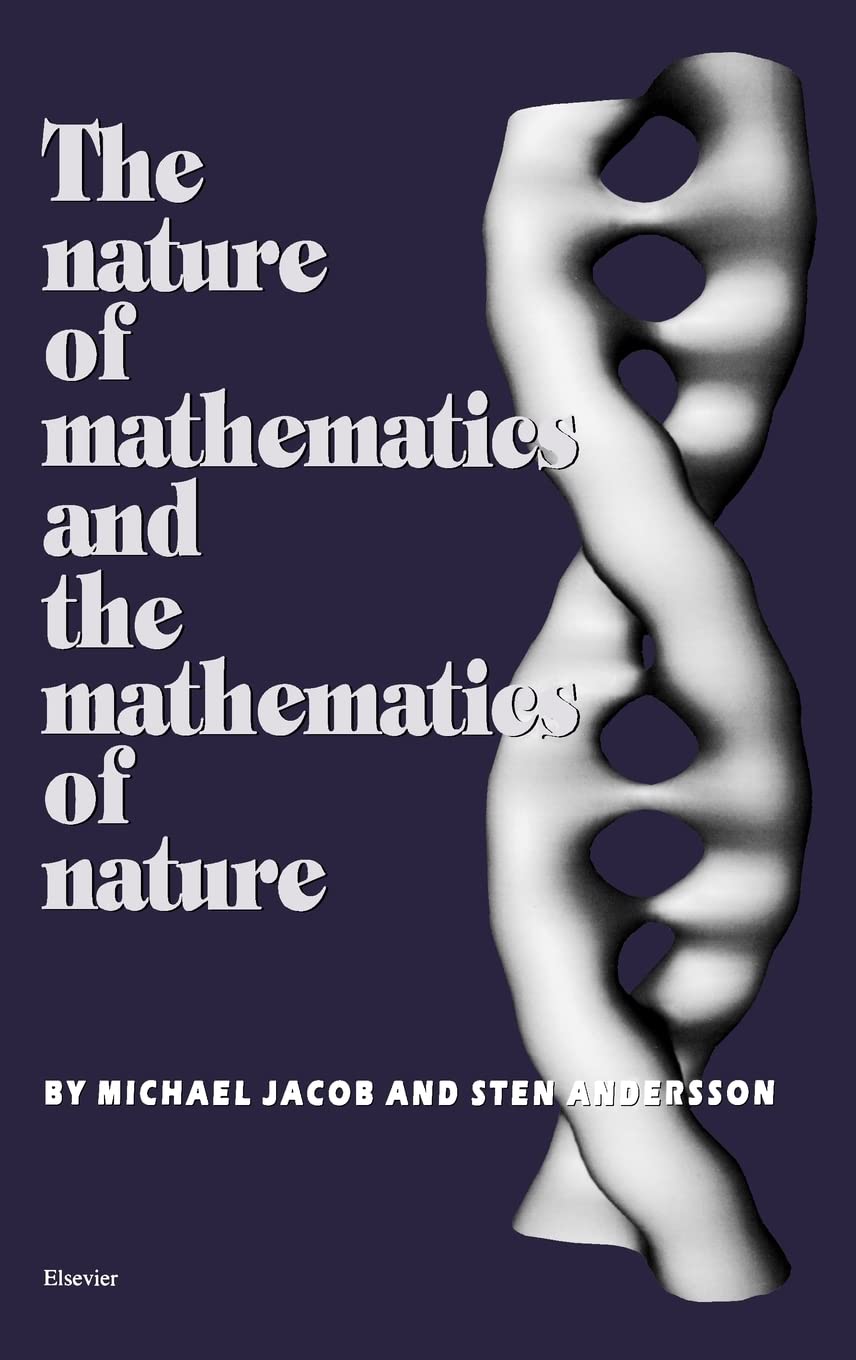
The Nature of Mathematics and the Mathematics of Nature by S. Andersson – Mathematics & Science

Science & Mathematics
Linear Algebra | by Stephen Friedberg | Arnold Insel | Lawrence Spence | Pearson | by Stephen Friedberg | Arnold Insel | Lawrence Spence | Pearson | by Stephen Friedberg | Arnold Insel | Lawrence Spence | Pearson | by Stephen Friedberg | Arnold Insel | Lawrence Spence | Pearson | by Stephen Friedberg | Arnold Insel | Lawrence Spence | Pearson | by Stephen Friedberg | Arnold Insel | Lawrence Spence | Pearson | by Stephen Friedberg | Arnold Insel | Lawrence Spence | Pearson | by Stephen Friedberg

Science & Mathematics
University Calculus | by Joel Hass | Christopher Heil | Maurice Weir | Pearson | by Joel Hass | Christopher Heil | Maurice Weir | Pearson | by Joel Hass | Christopher Heil | Maurice Weir | Pearson | by Joel Hass | Christopher Heil | Maurice Weir | Pearson | by Joel Hass | Christopher Heil | Maurice Weir | Pearson | by Joel Hass | Christopher Heil | Maurice Weir | Pearson | by Joel Hass | Christopher Heil | Maurice Weir | Pearson | by Joel Hass | Christopher Heil | Maurice Weir | Pearson | by Joe
Science & Mathematics