
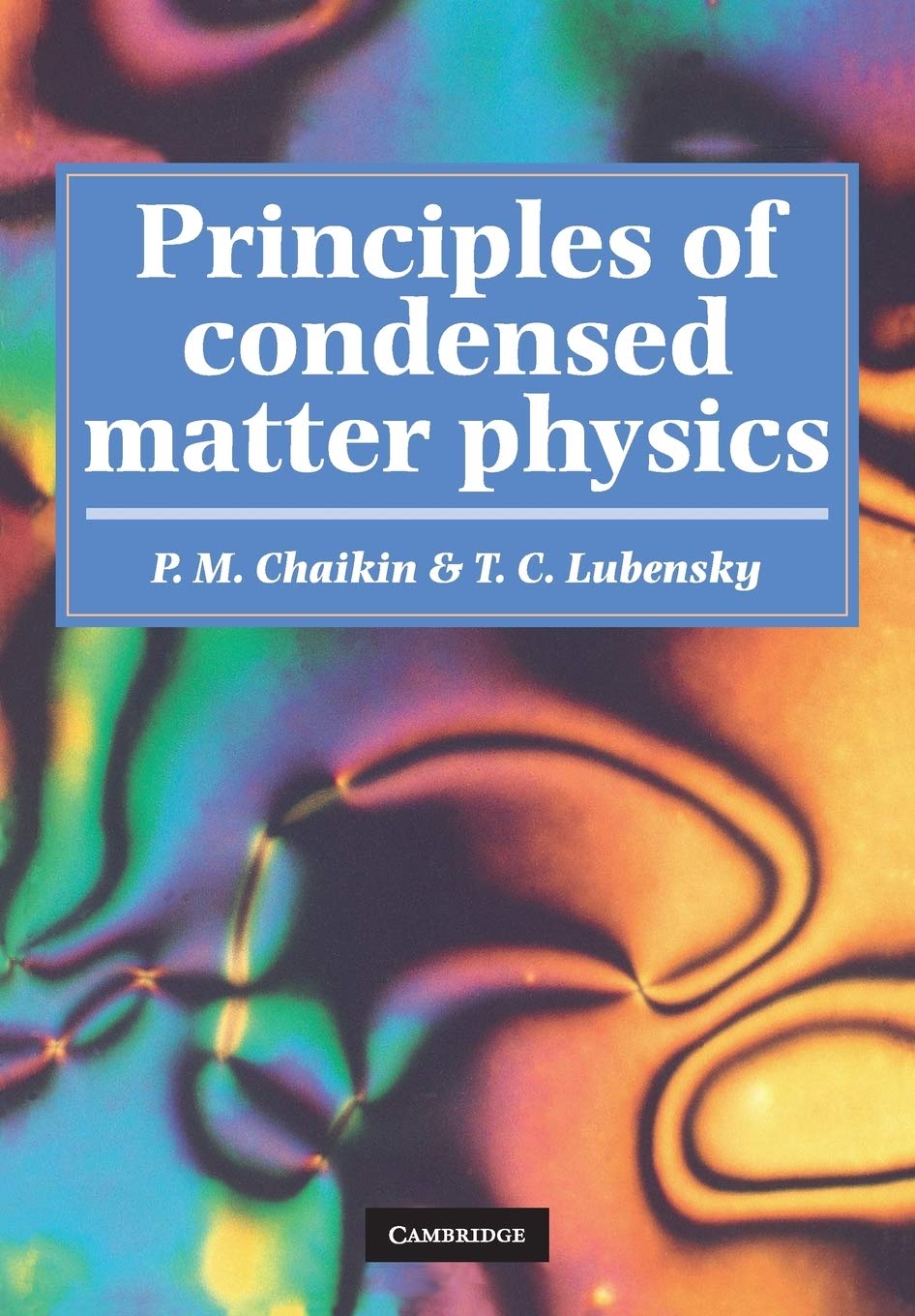
Principles of Condensed Matter Physics by P. M. Chaikin – A Comprehensive Graduate Textbook on Symmetries, Phase Transit
Inclusive of all applicable taxes. FREE shipping on all orders.
Available Offers
- 🚚Free Delivery — Free shipping on all orders
- 💵Cash on Delivery — Pay when your order arrives
- ↩️15-Day Easy Returns — Hassle-free return policy
- 🔒Cash on Delivery — Pay safely when your order arrives
Check Delivery
Product Description
Introduction
Condensed matter physics forms the backbone of modern materials science, bridging the gap between quantum mechanics and the macroscopic world we experience daily. For Indian students and researchers delving into this vast field, Principles of Condensed Matter Physics by P. M. Chaikin stands as a definitive and rigorous guide. Published by Cambridge University Press, this hardcover edition is an indispensable resource for anyone seeking a deep, conceptual understanding of how matter organizes itself into solids, liquids, and everything in between.
Book Overview
This book offers a comprehensive exploration of condensed matter systems, starting from fundamental symmetries and conservation laws. It systematically builds a framework that explains the structure, properties, and phase transitions of diverse materials. From crystalline solids and liquids to quasicrystals, liquid crystals, and amorphous solids, every state of matter is examined through the lens of generalized rigidity, hydrodynamics, and topological defects. The text assumes familiarity with quantum mechanics and statistical mechanics, making it ideal for advanced undergraduate and postgraduate students in Indian universities, as well as practicing researchers in physics, chemistry, and applied physics.
Key Highlights
- Symmetry-Based Approach: Unifies the description of all condensed phases using symmetry and conservation laws.
- Phase Transitions & Critical Phenomena: In-depth coverage of renormalization group methods and critical exponents.
- Topological Defects: Clear exposition of defects in liquid crystals, solids, and magnetic systems.
- Interdisciplinary Relevance: Essential for physicists, chemists, and materials scientists alike.
- Classic Reference: A trusted text used in top Indian institutes like IISc, IITs, and central universities.
Inside the Book
The content is structured to guide the reader from basic principles to advanced topics. Early chapters establish the language of symmetry and order parameters. Subsequent sections delve into hydrodynamics of simple and complex fluids, elasticity of solids, and the dynamics of phase transitions. Special attention is given to the role of dimensionality and microscopic interactions in determining collective behavior. The final chapters explore topological defects and their role in melting, glass transitions, and magnetic ordering.
Key Topics
- Symmetry, order parameters, and broken symmetry
- Hydrodynamics of simple and complex fluids
- Elasticity and generalized rigidity
- Phase transitions and critical phenomena
- Renormalization group theory
- Liquid crystals, quasicrystals, and incommensurate phases
- Topological defects: vortices, dislocations, and domain walls
- Magnetic ordering and spin systems
- Amorphous solids and glasses
Reader Benefits
Indian readers will find this book particularly valuable for its logical progression from fundamentals to frontier research. The hardcover binding ensures durability for repeated use in libraries and personal collections. The clear notation and detailed derivations make it suitable for self-study, while the problem sets and references at each chapter help in exam preparation and research. By mastering the concepts here, students can confidently tackle modern condensed matter research papers.
Learning Outcomes
After thorough study, readers will be able to: identify the symmetry group of any condensed phase; write down the hydrodynamic equations for a given system; analyze phase transitions using Landau theory and renormalization group; classify topological defects and their interactions; and understand the universal behavior of diverse materials near critical points. These skills are directly applicable to research in solid-state physics, soft matter, and materials science.
Who Should Read
- M.Sc. and Ph.D. students in physics, applied physics, and materials science
- Researchers in condensed matter theory and experiment
- Faculty members teaching advanced solid-state physics courses
- Professionals in semiconductor, optics, and magnetic materials industries
- Chemistry students interested in the physical properties of materials
About the Author
P. M. Chaikin is a distinguished physicist and professor known for his pioneering work in condensed matter physics. With decades of research experience at institutions like Princeton University and the University of Pennsylvania, he has made seminal contributions to the understanding of electronic transport, polymers, and colloidal systems. His clear, pedagogical writing style reflects his deep commitment to teaching and mentoring the next generation of scientists.
About the Publisher
Cambridge University Press is one of the world's oldest and most respected academic publishers. Known for rigorous peer review and high editorial standards, Cambridge books are trusted by students and researchers globally. This hardcover edition upholds that legacy with a durable binding, crisp print, and high-quality paper, making it a lasting addition to any Indian library.
Conclusion
Principles of Condensed Matter Physics is more than a textbook—it is a gateway to understanding the elegant order hidden within everyday matter. For Indian students aspiring to excel in physics and materials research, this book offers both a solid foundation and a bridge to advanced topics. Whether you are preparing for competitive exams, writing a thesis, or simply curious about why solids are rigid and liquids flow, this volume will reward you with deep insight. Order your copy from Bookshops.in today and embark on a journey through the fascinating world of condensed matter.
Quick Summary
Principles of Condensed Matter Physics by P. M. Chaikin is a seminal graduate-level textbook that provides a unified framework for understanding condensed phases of matter. The book begins by establishing the importance of symmetries and conservation laws, then explores the structure and properties of materials with different symmetries, including liquids, liquid crystals, quasicrystals, crystalline solids, magnetically ordered systems, and amorphous solids. A major highlight is its thorough treatment of phase transitions, critical phenomena, and renormalization group methods, which are essential for modern condensed matter research. The text emphasizes how spatial dimensionality and microscopic interactions determine phase behavior, and introduces concepts like generalized rigidity and topological defects. This book is ideal for graduate students in physics who have a background in quantum mechanics and statistical mechanics, as well as researchers seeking a deep conceptual understanding. By purchasing from Bookshops.in, Indian readers get a genuine hardcover edition at a competitive price with reliable service.
Book Highlights
Book Specifications
| ISBN-13 | 9780521794503 |
| ISBN-10 | 0521794501 |
| Publisher | Cambridge Univ Pr |
| Language | English |
| Dimensions | 16.99 x 4.14 x 24.41 cm |
| Weight | 1 kg 220 g |
| Country | India |
| Category | Mechanical Engineering › Material Science & Engineering |
| Genre | Science & Mathematics |
| Reading Age | Adult |
| Original Language | English |
Frequently Asked Questions
What is the main focus of Principles of Condensed Matter Physics?
Who is the author of this book?
Is this book suitable for beginners?
Does the book cover liquid crystals?
What is the ISBN-13 of this book?
Is this book available in Indian rupees?
What topics are covered in the renormalization group section?
Can I use this book for GATE physics preparation?
Does the book include problems or exercises?
What is the binding of this book?
Who is the publisher?
Is this book used in Indian universities?
Why should I buy from Bookshops.in?
Readers Also Search For
Customers Also Bought
Mathematics
Stereotype Spaces and Algebras: 73 (De Gruyter Expositions in Mathematics, 73)

Mathematics
Semigroups in Algebra, Geometry and Analysis: 20 (De Gruyter Expositions in Mathematics, 20)
Mathematics
Geometry from the Pacific Rim: Proceedings of the Pacific Rim Geometry Conference held at National University of Singapore, Republic of Singapore, ... 1994 (De Gruyter Proceedings in Mathematics)
Mathematics
First International Tainan-Moscow Algebra Workshop: Proceedings of the International Conference held at National Cheng Kung University Tainan, Taiwan, ... 1994 (De Gruyter Proceedings in Mathematics)
Mathematics
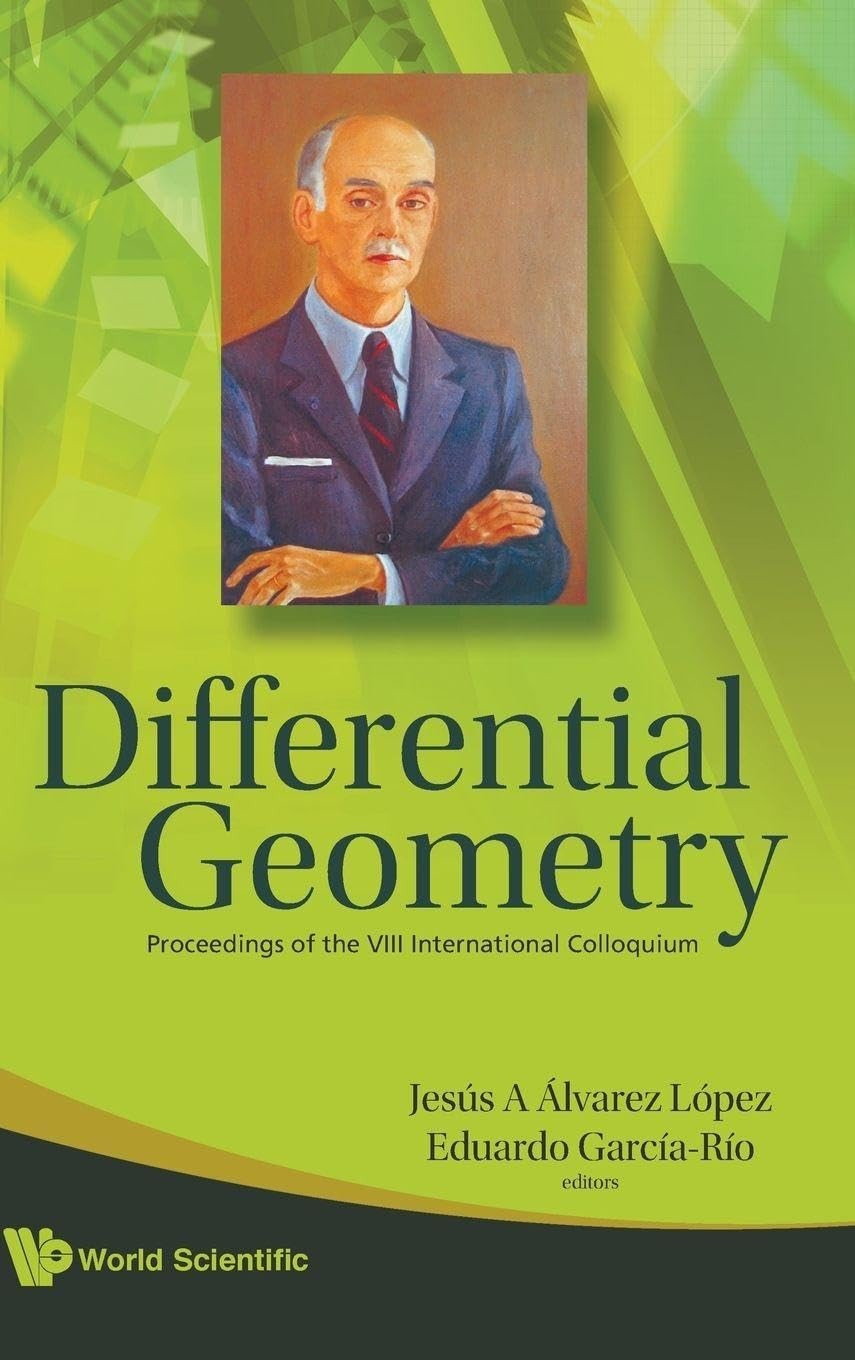
Differential Geometry - Proceedings of the VIII International Colloquium (English, Jesus A. Alvarez Lopez | Eduardo Garcia-Rio)
Mathematics
Mathematical Theory of Optimal Processes (Classics of Soviet Mathematics)
Related Products
View All
Science & Mathematics
Squid - Superconducting Quantum Interference Devices and Their Applications: Proceedings of the International Conference on Superconducting Quantum Devices, Berlin-west, October 4-8, 1976

Science & Mathematics
Thermodynamics and Pattern Formation in Biology
Science & Mathematics
The Nature of Mathematics and the Mathematics of Nature by S. Andersson – Mathematics & Science

Science & Mathematics
Linear Algebra | by Stephen Friedberg | Arnold Insel | Lawrence Spence | Pearson | by Stephen Friedberg | Arnold Insel | Lawrence Spence | Pearson | by Stephen Friedberg | Arnold Insel | Lawrence Spence | Pearson | by Stephen Friedberg | Arnold Insel | Lawrence Spence | Pearson | by Stephen Friedberg | Arnold Insel | Lawrence Spence | Pearson | by Stephen Friedberg | Arnold Insel | Lawrence Spence | Pearson | by Stephen Friedberg | Arnold Insel | Lawrence Spence | Pearson | by Stephen Friedberg
Science & Mathematics
University Calculus | by Joel Hass | Christopher Heil | Maurice Weir | Pearson | by Joel Hass | Christopher Heil | Maurice Weir | Pearson | by Joel Hass | Christopher Heil | Maurice Weir | Pearson | by Joel Hass | Christopher Heil | Maurice Weir | Pearson | by Joel Hass | Christopher Heil | Maurice Weir | Pearson | by Joel Hass | Christopher Heil | Maurice Weir | Pearson | by Joel Hass | Christopher Heil | Maurice Weir | Pearson | by Joel Hass | Christopher Heil | Maurice Weir | Pearson | by Joe

Science & Mathematics