

Psychological Masquerade: Distinguishing Psychological from Organic Disorders by Robert L. Taylor – A Comprehensive Clin
Inclusive of all applicable taxes. FREE shipping on all orders.
Available Offers
- 🚚Free Delivery — Free shipping on all orders
- 💵Cash on Delivery — Pay when your order arrives
- ↩️15-Day Easy Returns — Hassle-free return policy
- 🔒Cash on Delivery — Pay safely when your order arrives
Check Delivery
Product Description
Introduction
In the demanding field of mental health, few challenges are as perplexing as the patient whose psychological symptoms may actually arise from an underlying medical condition. Psychological Masquerade: Distinguishing Psychological from Organic Disorders by Robert L. Taylor is a definitive clinical handbook designed to help practitioners navigate this diagnostic minefield. This hardcover edition, published by Springer Publishing Company, offers a systematic approach to differentiating true psychiatric disorders from organic conditions that mimic them—an essential skill for psychologists, psychiatrists, social workers, and nurses working in India's diverse healthcare landscape.
Book Overview
Now in its updated edition, Psychological Masquerade serves as a comprehensive guide for clinicians who encounter patients presenting with psychological complaints that may have an organic root. Drawing on decades of clinical experience, Robert L. Taylor equips readers with a structured framework to identify red flags, gather critical clues, and avoid misdiagnosis. The book bridges the gap between psychiatry and medicine, making it indispensable for anyone involved in patient assessment and care.
Key Highlights
- Updated Content: Includes new chapters on violent behaviour, amnesia and dementia, sex obsession, and Munchausen-by-Proxy—conditions that often confuse clinicians.
- Hands-On Approach: Numerous real-world case studies illustrate diagnostic criteria and clinical decision-making in action.
- Self-Assessment Tools: Hypothetical cases with self-tests help sharpen diagnostic skills and reinforce learning.
- Practical Guidance: Specific clinical tests and clue-gathering strategies are provided to aid in differentiating organic from psychological disorders.
Inside the Book
This hardcover volume is structured to be both a reference and a training tool. Each chapter explores a specific diagnostic challenge, from depression mimicking hypothyroidism to anxiety caused by endocrine disorders. The author walks readers through symptom patterns, medical history red flags, and laboratory findings that point to organic causes. Case vignettes bring theory to life, while self-test sections allow readers to apply what they have learned. The new chapters on violent behaviour and amnesia reflect emerging concerns in contemporary clinical practice.
Key Topics
- Differentiating psychological from organic disorders in clinical practice
- Medical conditions that masquerade as psychiatric illness
- Violent behaviour: organic roots and assessment strategies
- Amnesia and dementia: distinguishing causes
- Sex obsession: organic versus psychological origins
- Munchausen-by-Proxy: recognition and intervention
- Use of clinical tests and clue-gathering techniques
- Case-based learning for improved diagnostic accuracy
Reader Benefits
- Enhanced Diagnostic Precision: Learn to identify organic causes behind psychological symptoms, reducing misdiagnosis and improving patient outcomes.
- Time-Saving Framework: Structured assessment methods help clinicians quickly narrow down possibilities.
- Confidence in Complex Cases: Real-world examples and self-tests build competence in handling challenging presentations.
- Updated Knowledge: Stay current with new chapters on violent behaviour, amnesia, and Munchausen-by-Proxy.
Learning Outcomes
- Recognize key clinical indicators that suggest an organic basis for psychological symptoms.
- Apply a systematic differential diagnosis framework in everyday practice.
- Interpret medical history, laboratory data, and physical findings in psychiatric contexts.
- Use case studies to refine clinical reasoning and avoid common pitfalls.
- Identify rare but critical conditions such as Munchausen-by-Proxy and organic causes of violent behaviour.
Who Should Read
This book is essential for practising psychologists, psychiatrists, clinical social workers, psychiatric nurses, and mental health counsellors. It is also highly valuable for postgraduate students in clinical psychology, psychiatry, and psychiatric nursing, particularly those preparing for licensing exams or working in hospital settings. Medical professionals who encounter patients with unexplained psychological symptoms—such as neurologists, general physicians, and internists—will also find this guide immensely useful.
About the Author
Robert L. Taylor, MD, is a distinguished psychiatrist with extensive experience in clinical assessment and medical education. His work focuses on the intersection of psychiatry and internal medicine, making him uniquely qualified to address the challenge of psychological masquerade. Dr. Taylor's practical, case-based teaching style has helped countless clinicians improve their diagnostic accuracy.
About the Publisher
Springer Publishing Company is a globally recognised academic and professional publisher known for high-quality resources in medicine, nursing, psychology, and social work. Their titles are trusted by educators and practitioners worldwide for their rigorous content and practical relevance.
Conclusion
Psychological Masquerade: Distinguishing Psychological from Organic Disorders is more than a textbook—it is a clinical lifeline for anyone who must untangle the complex web of mind and body. Whether you are a seasoned practitioner or a student entering the field, this hardcover edition from Springer Publishing Company will sharpen your diagnostic skills and deepen your understanding of the hidden medical causes behind psychological presentations. Add it to your professional library today and gain the confidence to see beyond the mask.
Quick Summary
Psychological Masquerade by Robert L. Taylor is an essential clinical handbook for mental health professionals who need to differentiate psychological symptoms from organic medical conditions. This updated edition includes new chapters on violent behavior, amnesia, dementia, sex obsession, and Munchausen-by-Proxy, along with numerous case studies and self-tests that make learning practical and engaging. The book is designed for psychologists, social workers, and nurses, providing them with a structured assessment framework to avoid misdiagnosis and improve patient care. Readers will learn to recognize when symptoms such as hallucinations, mood changes, or cognitive decline have underlying medical causes, and how to apply differential diagnosis techniques effectively. Taylor’s clear writing and real-world examples make complex concepts accessible, even for those new to the field. By purchasing from Bookshops.in, Indian readers get a high-quality hardcover edition delivered to their doorstep, along with reliable customer service. Whether you are a practicing clinician or a student, this book will sharpen your diagnostic skills and enhance your professional competence.
Book Highlights
Book Specifications
| ISBN-13 | 9780826102478 |
| ISBN-10 | 0826102476 |
| Publisher | Springer Pub Co |
| Language | English |
| Dimensions | 15.24 x 1.73 x 22.86 cm |
| Weight | 408 g |
| Country | India |
| Category | Clinical › Diseases |
| Genre | Psychology |
| Original Language | English |
Frequently Asked Questions
What is Psychological Masquerade about?
Who is the author of this book?
Is this book suitable for Indian students?
What new chapters are included in this edition?
Does the book include case studies?
Are there self-tests in the book?
What is the binding of this book?
Who is the publisher?
Is this book available in hardcover?
What is the ISBN?
Can this book help in avoiding misdiagnosis?
Is it useful for social workers?
Does it cover Munchausen-by-Proxy?
Where can I buy this book in India?
Readers Also Search For
Customers Also Bought

Anatomy
Ultrastructure of the Digestive Tract: 4 (Electron Microscopy in Biology and Medicine)

Anatomy
Ultrastructure of the Connective Tissue Matrix: 3 (Electron Microscopy in Biology and Medicine)

Anatomy
Reproductive Genetics (Royal College of Obstetricians and Gynaecologists Study Group)

Anatomy
Human Gross Anatomy: An Outline Text by Robert J. Leonard – Medical Anatomy

Pharmacology
Mathematical Modeling and Simulation in Enteric Neurobiology

Anatomy
Nature’s Patterns and the Fractional Calculus: 2 (Fractional Calculus in Applied Sciences and Engineering, 2)
Related Products
View All
Medicine & Health Sciences
Handbook of Hospitality Strategic Management | by Olsen Michael | Taylor & Francis Ltd | by Olsen Michael | Taylor & Francis Ltd | by Olsen Michael | Taylor & Francis Ltd | by Olsen Michael | Taylor & Francis Ltd | by Olsen Michael | Taylor & Francis Ltd | by Olsen Michael | Taylor & Francis Ltd | by Olsen Michael | Taylor & Francis Ltd | by Olsen Michael | Taylor & Francis Ltd | by Olsen Michael | Taylor & Francis Ltd | by Olsen Michael | Taylor & Francis

Medicine & Health Sciences
Pediatrics on Call | by Charles A. Pohl | Kathleen Bradford | Clara Callahan | McGraw Hill / Medical | by Charles A. Pohl | Kathleen Bradford | Clara Callahan | McGraw Hill / Medical | by Charles A. Pohl | Kathleen Bradford | Clara Callahan | McGraw Hill / Medical | by Charles A. Pohl | Kathleen Bradford | Clara Callahan | McGraw Hill / Medical | by Charles A. Pohl | Kathleen Bradford | Clara Callahan | McGraw Hill / Medical | by Charles A. Pohl | Kathleen Bradford | Clara Callahan | McGraw Hill

Medicine & Health Sciences
The Physician's Guide to Depression and Bipolar Disorders | by Dwight L. Evans | Dennis S. Charney | Lydia Lewis | McGraw Hill / Medical | by Dwight L. Evans | Dennis S. Charney | Lydia Lewis | McGraw Hill / Medical | by Dwight L. Evans | Dennis S. Charney | Lydia Lewis | McGraw Hill / Medical | by Dwight L. Evans | Dennis S. Charney | Lydia Lewis | McGraw Hill / Medical | by Dwight L. Evans | Dennis S. Charney | Lydia Lewis | McGraw Hill / Medical | by Dwight L. Evans | Dennis S. Charney | Lydi
Medicine & Health Sciences
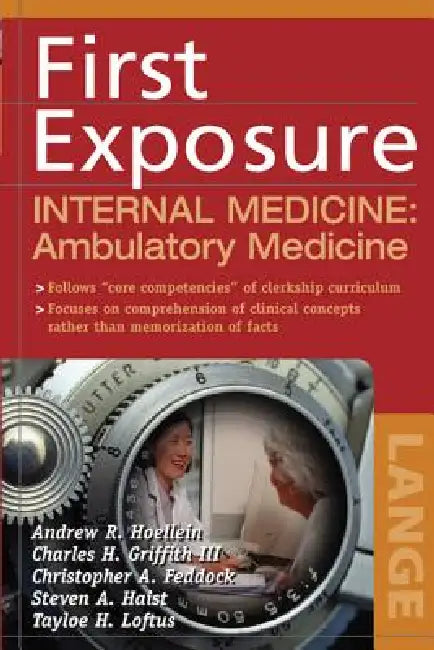
First Exposure to Internal Medicine | by Andrew R. Hoellein | Charles H. Griffith | McGraw Hill / Medical | by Andrew R. Hoellein | Charles H. Griffith | McGraw Hill / Medical | by Andrew R. Hoellein | Charles H. Griffith | McGraw Hill / Medical | by Andrew R. Hoellein | Charles H. Griffith | McGraw Hill / Medical | by Andrew R. Hoellein | Charles H. Griffith | McGraw Hill / Medical | by Andrew R. Hoellein | Charles H. Griffith | McGraw Hill / Medical | by Andrew R. Hoellein | Charles H. Griffit

Medicine & Health Sciences
First Exposure to Internal Medicine | by Charles H. Griffith | Andrew R. Hoellein | McGraw Hill / Medical | by Charles H. Griffith | Andrew R. Hoellein | McGraw Hill / Medical | by Charles H. Griffith | Andrew R. Hoellein | McGraw Hill / Medical | by Charles H. Griffith | Andrew R. Hoellein | McGraw Hill / Medical | by Charles H. Griffith | Andrew R. Hoellein | McGraw Hill / Medical | by Charles H. Griffith | Andrew R. Hoellein | McGraw Hill / Medical | by Charles H. Griffith | Andrew R. Hoellei
Medicine & Health Sciences