

Quantum Field Theory of Many-body Systems: From the Origin of Sound to an Origin of Light and Electrons by Xiao-Gang Wen
Inclusive of all applicable taxes. FREE shipping on all orders.
Available Offers
- 🚚Free Delivery — Free shipping on all orders
- 💵Cash on Delivery — Pay when your order arrives
- ↩️15-Day Easy Returns — Hassle-free return policy
- 🔒Cash on Delivery — Pay safely when your order arrives
Check Delivery
Product Description
Introduction
Quantum Field Theory of Many-body Systems is a transformative work that redefines how we understand condensed matter physics. Authored by the renowned physicist Xiao-Gang Wen, this hardcover volume from Oxford University Press takes readers on a journey from the fundamental origins of sound to the very emergence of light and electrons. For Indian students and researchers seeking a deep, conceptual grasp of modern theoretical physics, this book offers an essential bridge between traditional paradigms and the revolutionary ideas that are reshaping the field.
Book Overview
This book presents a pedagogical and systematic introduction to the new concepts and quantum field theoretical methods that have emerged in condensed matter physics over the last two decades. It moves beyond band theory and Landau's symmetry breaking framework to explore fractionalization, topological order, emergent gauge bosons and fermions, and string condensation. Wen masterfully connects these ideas to the broader universe, suggesting that the origin of light and electrons may be understood through the same principles that govern many-body systems. The text is rigorous yet accessible, making it a cornerstone for advanced study.
Key Highlights
- Revolutionary Paradigm: Introduces fractionalization, topological order, and emergent phenomena that challenge traditional condensed matter theory.
- Unified Vision: Explores a notion that unifies light and electrons, offering a fresh perspective on fundamental particles.
- Pedagogical Approach: Designed as a systematic guide for graduate students and researchers, with clear explanations and logical progression.
- Comprehensive Coverage: Includes dissipative quantum systems, boson condensation, symmetry breaking, Fermi liquids, quantum Hall effects, and more.
- Authoritative Source: Written by Xiao-Gang Wen, a leading figure in topological order and quantum field theory.
Inside the Book
The book is structured to build understanding step by step. Early chapters lay the groundwork with quantum field theory basics and many-body techniques. Later chapters dive into advanced topics like spin density wave states, fractional statistics, and the quantum Hall effect. Wen uses concrete examples and mathematical derivations to illustrate how emergent gauge bosons and fermions arise from strongly correlated systems. The text also discusses string condensation, a concept that has implications for high-energy physics and cosmology. Each chapter concludes with exercises and references, making it ideal for self-study or classroom use.
Key Topics
- Dissipative quantum systems and quantum phase transitions
- Boson condensation and symmetry breaking
- Fermi liquids and non-Fermi liquids
- Spin density wave states and magnetic order
- Fractional statistics and anyons
- Quantum Hall effects and topological order
- Emergent gauge bosons and fermions
- String condensation and origin of light and electrons
Reader Benefits
Readers will gain a profound understanding of how quantum field theory applies to real materials and phenomena. The book equips you with the tools to analyze strongly correlated systems, a critical skill in modern condensed matter research. It also nurtures a conceptual framework that connects microscopic physics to macroscopic properties, enhancing your ability to tackle open problems in physics. For Indian students preparing for competitive exams or research careers, this book provides a solid foundation that goes beyond standard curricula.
Learning Outcomes
- Master the language of quantum field theory for many-body systems.
- Understand topological order and its role in quantum matter.
- Apply concepts of fractionalization to explain exotic phases.
- Analyze emergent phenomena like gauge bosons in condensed matter.
- Develop a unified perspective on the origin of fundamental particles.
Who Should Read
This book is ideal for graduate students in physics, especially those specializing in condensed matter theory, quantum field theory, or particle physics. Researchers and faculty members seeking to update their knowledge with modern paradigms will find it invaluable. Advanced undergraduates with a strong background in quantum mechanics and statistical mechanics can also benefit. It is a must-have for Indian institutions and libraries that aim to offer cutting-edge resources in theoretical physics.
About the Author
Xiao-Gang Wen is a distinguished theoretical physicist and professor at the Perimeter Institute for Theoretical Physics and the University of Waterloo. He is widely recognized for his pioneering contributions to topological order, fractional quantum Hall effect, and quantum field theory. His work has profoundly influenced our understanding of exotic phases of matter and their relation to fundamental physics. Wen's ability to communicate complex ideas with clarity makes this book a classic in the field.
About the Publisher
Oxford University Press is a globally respected academic publisher known for its rigorous editorial standards and authoritative titles in science and mathematics. This hardcover edition reflects OUP's commitment to producing high-quality, durable books that serve as lasting references for scholars and students. Indian readers can trust the accuracy and reliability that OUP brings to every publication.
Conclusion
Quantum Field Theory of Many-body Systems is more than a textbook—it is a gateway to the frontiers of modern physics. By bridging condensed matter and particle physics, Xiao-Gang Wen offers a vision that could reshape our understanding of the universe. For anyone serious about mastering the theoretical foundations of quantum matter, this book is an indispensable addition to your library. Order your copy today from Bookshops.in and embark on a journey from the origin of sound to the origin of light and electrons.
Quick Summary
Quantum Field Theory of Many-body Systems by Xiao-Gang Wen is a seminal advanced textbook that introduces the revolutionary concepts of topological order, fractionalization, emergent gauge bosons and fermions, and string condensation in condensed matter physics. Written by a leading physicist from MIT, the book systematically develops quantum field theoretical methods to describe phenomena ranging from the origin of sound to the origin of light and electrons. It moves beyond the traditional Landau symmetry-breaking paradigm, offering Indian graduate students, researchers, and faculty a deep understanding of modern many-body physics. Readers will learn how gauge fields and matter particles can emerge from purely bosonic degrees of freedom, how anyonic statistics arise in fractional quantum Hall systems, and how string-net condensation provides a unified framework for understanding gauge bosons and electrons. The book is ideal for those with a background in quantum mechanics and statistical mechanics who wish to explore the frontiers of condensed matter theory. Buying from Bookshops.in ensures you receive a genuine Oxford University Press hardcover edition with prompt delivery across India.
Book Highlights
Book Specifications
| ISBN-13 | 9780199227259 |
| ISBN-10 | 019922725X |
| Publisher | Oxford Univ Pr |
| Language | English |
| Dimensions | 23.98 x 16.64 x 2.69 cm |
| Weight | 1 kg 50 g |
| Category | Mechanical Engineering › Material Science & Engineering |
| Genre | Science & Mathematics |
| Original Language | English |
Frequently Asked Questions
What is the main topic of this book?
Who is the author?
What prerequisites are needed to read this book?
Is this book suitable for Indian students?
Does the book cover the quantum Hall effect?
Is this a hardcover edition?
What is the price in India?
Does the book explain the origin of light and electrons?
What is topological order?
Are there exercises in the book?
What is the ISBN-13?
Can this book help with research on quantum materials?
Why buy from Bookshops.in?
Readers Also Search For
Customers Also Bought
Mathematics
Stereotype Spaces and Algebras: 73 (De Gruyter Expositions in Mathematics, 73)
Mathematics
Semigroups in Algebra, Geometry and Analysis: 20 (De Gruyter Expositions in Mathematics, 20)
Mathematics
Geometry from the Pacific Rim: Proceedings of the Pacific Rim Geometry Conference held at National University of Singapore, Republic of Singapore, ... 1994 (De Gruyter Proceedings in Mathematics)
Mathematics
First International Tainan-Moscow Algebra Workshop: Proceedings of the International Conference held at National Cheng Kung University Tainan, Taiwan, ... 1994 (De Gruyter Proceedings in Mathematics)
Mathematics
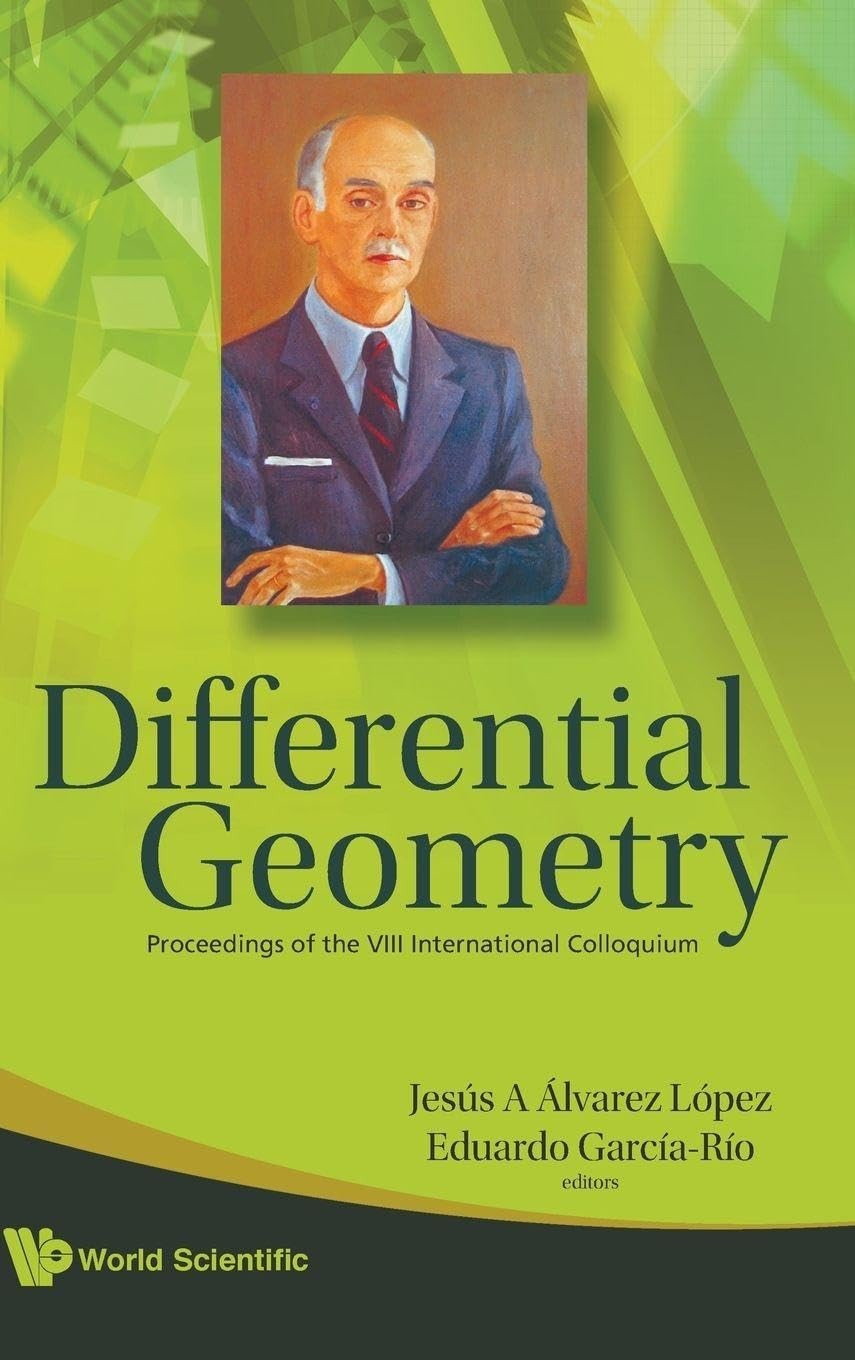
Differential Geometry - Proceedings of the VIII International Colloquium (English, Jesus A. Alvarez Lopez | Eduardo Garcia-Rio)
Mathematics
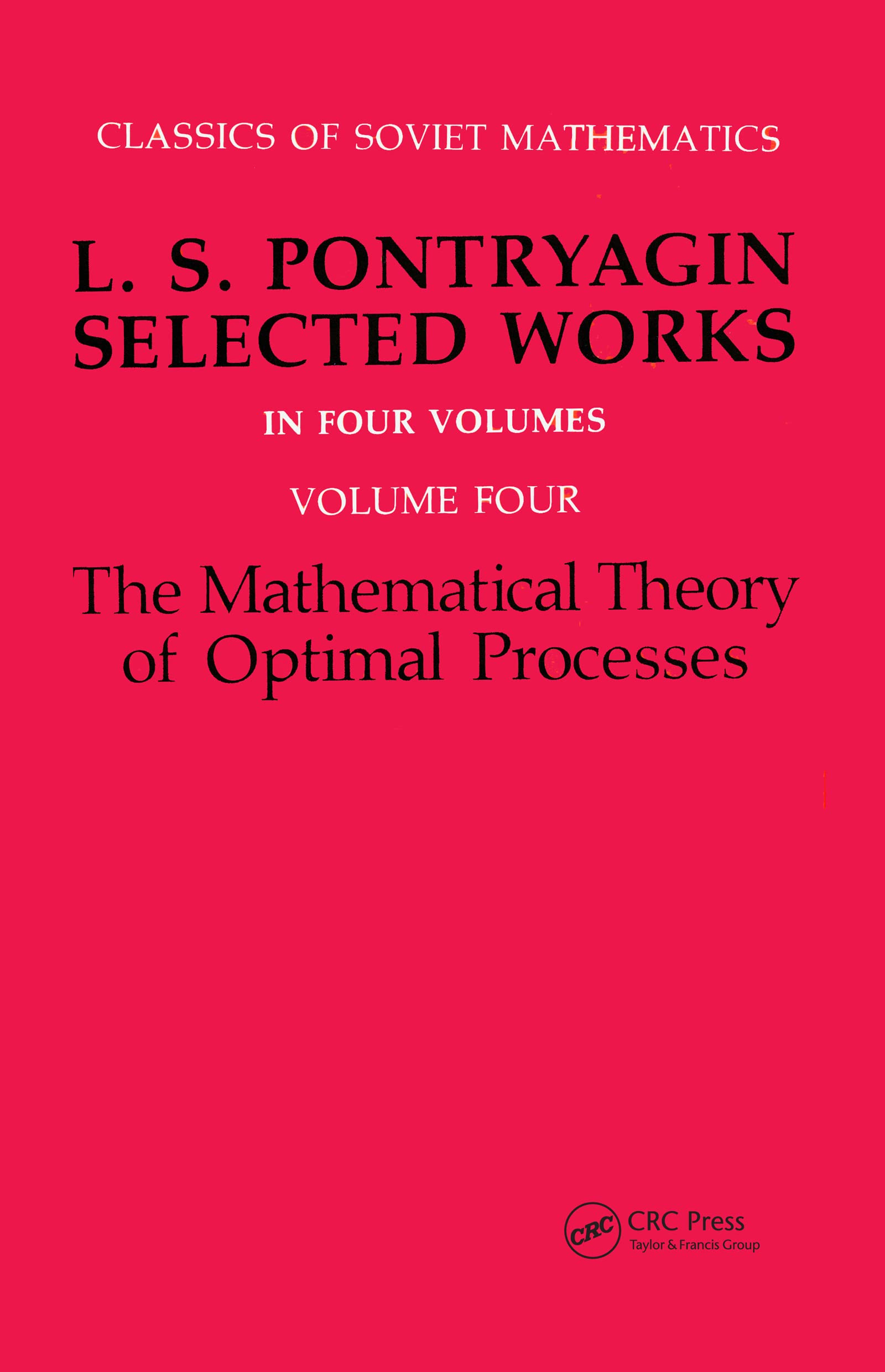
Mathematical Theory of Optimal Processes (Classics of Soviet Mathematics)
Related Products
View All
Science & Mathematics
Elements of Pelagos Biology: With Focus on the Mediterranean Sea
Science & Mathematics
Squid - Superconducting Quantum Interference Devices and Their Applications: Proceedings of the International Conference on Superconducting Quantum Devices, Berlin-west, October 4-8, 1976
Science & Mathematics
Thermodynamics and Pattern Formation in Biology
Science & Mathematics
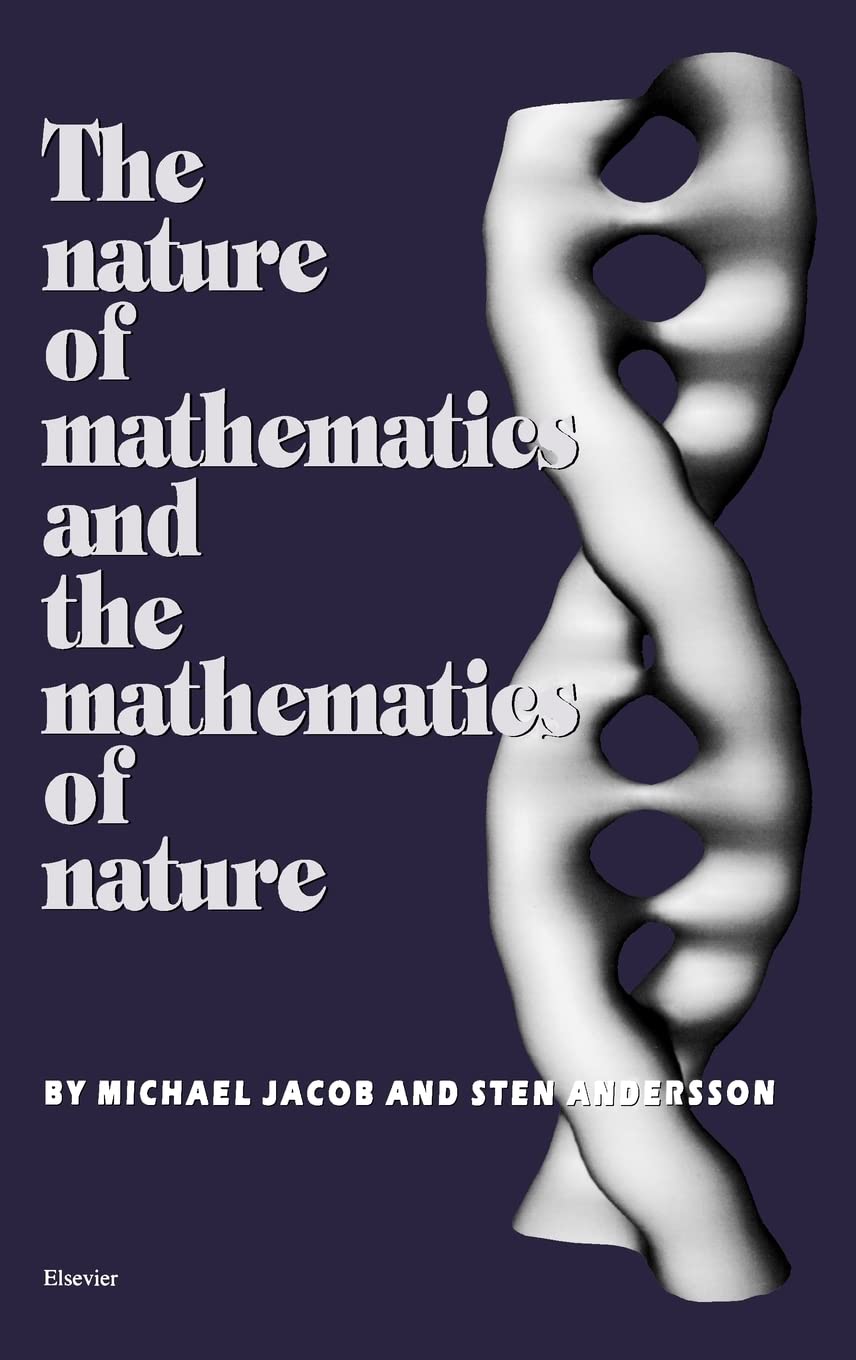
The Nature of Mathematics and the Mathematics of Nature by S. Andersson – Mathematics & Science

Science & Mathematics
Linear Algebra | by Stephen Friedberg | Arnold Insel | Lawrence Spence | Pearson | by Stephen Friedberg | Arnold Insel | Lawrence Spence | Pearson | by Stephen Friedberg | Arnold Insel | Lawrence Spence | Pearson | by Stephen Friedberg | Arnold Insel | Lawrence Spence | Pearson | by Stephen Friedberg | Arnold Insel | Lawrence Spence | Pearson | by Stephen Friedberg | Arnold Insel | Lawrence Spence | Pearson | by Stephen Friedberg | Arnold Insel | Lawrence Spence | Pearson | by Stephen Friedberg
Science & Mathematics