
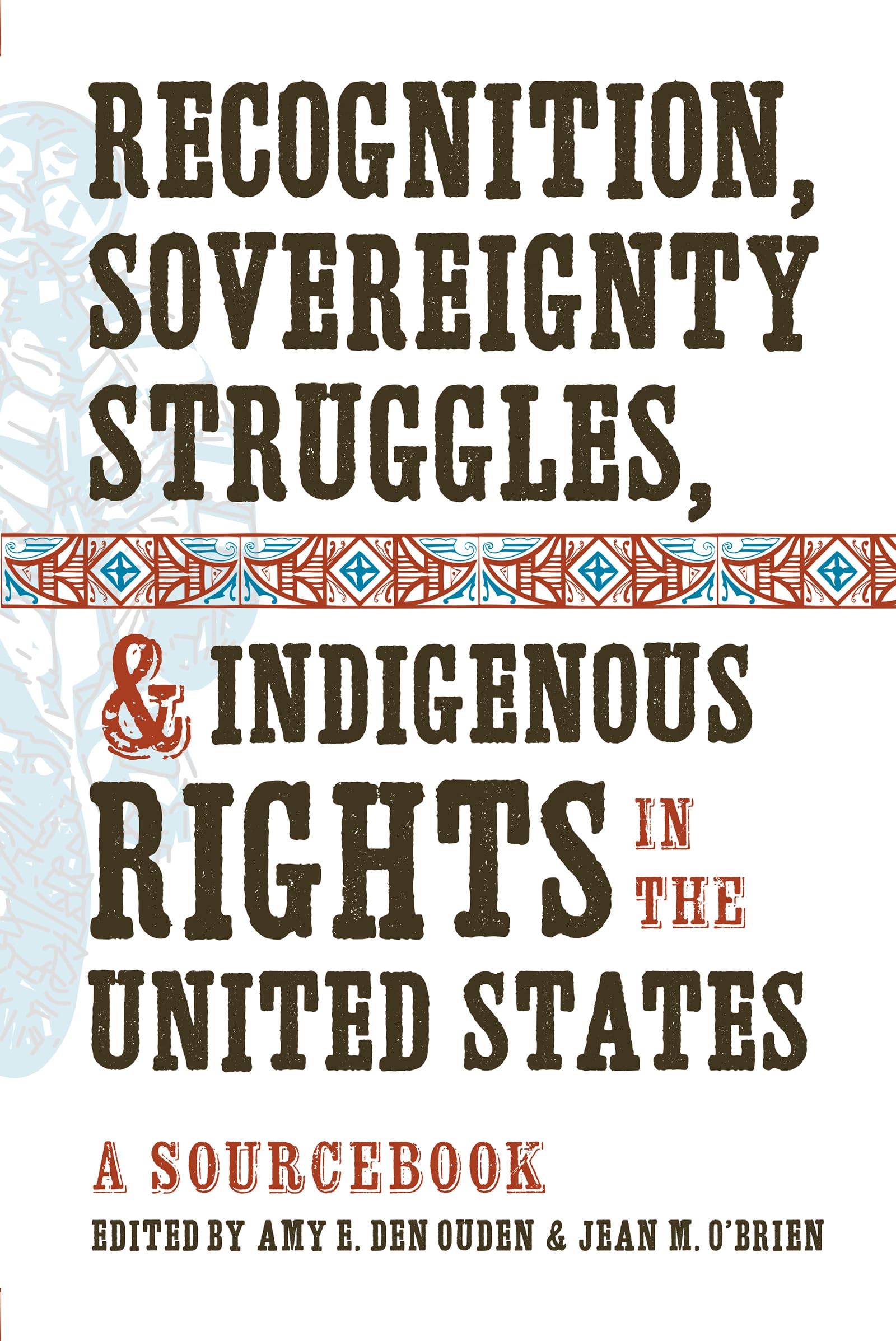
Recognition, Sovereignty Struggles, & Indigenous Rights in the United States: A Sourcebook by Amy E. Den Ouden – A Schol
Inclusive of all applicable taxes. FREE shipping on all orders.
Available Offers
- 🚚Free Delivery — Free shipping on all orders
- 💵Cash on Delivery — Pay when your order arrives
- ↩️15-Day Easy Returns — Hassle-free return policy
- 🔒Cash on Delivery — Pay safely when your order arrives
Check Delivery
Product Description
Introduction
In the vast landscape of Native American studies, few topics are as legally intricate and historically charged as the question of federal and state recognition. Recognition, Sovereignty Struggles, & Indigenous Rights in the United States: A Sourcebook offers a comprehensive, multidisciplinary exploration of how Native American tribal nations have fought for—and continue to fight for—their sovereign status within the United States. Edited by Amy E. Den Ouden and Jean M. O'Brien, this hardcover volume brings together leading scholars to illuminate the legal, political, and cultural dimensions of recognition. For Indian readers, students, and researchers interested in comparative indigenous rights, this sourcebook provides invaluable insights into the parallels and divergences between tribal sovereignty movements in the U.S. and similar struggles in South Asia.
Book Overview
This sourcebook is not merely a collection of academic essays; it is a carefully curated dialogue between historians, anthropologists, legal experts, and political scientists. The editors have organized the content to guide readers from the historical roots of recognition policies to contemporary case studies that reveal the lived realities of Native communities. The book covers the evolution of federal recognition criteria, the role of state governments in tribal acknowledgment, and the profound impact of recognition—or its denial—on cultural survival, land rights, and self-governance. Each chapter is designed to be accessible yet rigorous, making it suitable for both classroom use and independent study.
Key Highlights
- Multidisciplinary Perspectives: Contributions from experts in law, anthropology, history, and political science ensure a well-rounded understanding of recognition as a legal and cultural process.
- Contemporary Relevance: The book examines recent struggles, including cases involving the Muwekma Ohlone, Schaghticoke, and Lumbee tribes, offering a timely lens on ongoing sovereignty battles.
- Indigenous Voices: Several contributors are themselves Native American scholars and activists, providing insider perspectives that enrich the analysis.
- Pedagogical Design: Each chapter includes discussion questions and suggested readings, making it an excellent resource for university courses on indigenous studies, legal anthropology, and American history.
Inside the Book
The sourcebook is structured in three major parts. Part One delves into the historical foundations of recognition, tracing the colonial and federal policies that have shaped tribal status. Part Two focuses on legal and administrative processes, including the Bureau of Indian Affairs' acknowledgment procedures and the role of federal courts. Part Three presents case studies from across the United States, from California to the Southeast, highlighting the diversity of recognition struggles. Notable chapters include an analysis of the Kanaka Maoli sovereignty movement in Hawaii and a critical examination of the Lumbee tribe's quest for full federal recognition. The book concludes with a reflective essay on the future of indigenous rights in an era of increasing global awareness of tribal sovereignty.
Key Topics
- Federal vs. State Recognition: The legal distinctions and practical implications of being recognized by the federal government versus a state government.
- Historical Trauma and Cultural Continuity: How recognition processes intersect with the preservation of language, traditions, and communal identity.
- Land Rights and Repatriation: The connection between sovereign status and the ability to reclaim ancestral lands or protect sacred sites.
- Legal Strategies and Activism: The role of litigation, lobbying, and grassroots organizing in achieving or defending recognition.
- Comparative Indigenous Rights: While focused on the U.S., the book offers frameworks that can be applied to indigenous movements in India and other parts of the world.
Reader Benefits
Readers will gain a nuanced understanding of why recognition matters beyond mere legal status. The book demonstrates that recognition is a gateway to essential resources—healthcare, education, housing, and economic development—as well as a marker of cultural respect. For Indian students studying political science or law, the sourcebook provides a comparative model for analyzing tribal rights within India's own complex system of scheduled tribes and autonomous councils. Activists and community leaders will find practical insights into the strategies used by Native American groups to navigate bureaucratic hurdles and assert their sovereignty. The essays also challenge stereotypes about indigenous peoples, presenting them as active agents in their own histories rather than passive subjects of federal policy.
Learning Outcomes
- Critical Analysis: Develop the ability to critically evaluate the legal and historical criteria used to determine tribal recognition.
- Contextual Understanding: Understand how recognition policies have evolved from the colonial era to the present day, including the impact of the Indian Reorganization Act and the Termination Era.
- Case Study Application: Apply the insights from specific case studies—such as the Brothertown Indian Nation or the Haliwa-Saponi tribe—to broader debates about indigenous rights.
- Interdisciplinary Thinking: Integrate perspectives from law, anthropology, and history to form a holistic view of sovereignty struggles.
- Global Awareness: Recognize the parallels between U.S. tribal recognition and the recognition of indigenous groups in other countries, including India's own Adivasi communities.
Who Should Read
This sourcebook is ideal for university students and faculty in departments of Native American studies, anthropology, legal studies, political science, and history. It is also highly recommended for lawyers, policymakers, and activists working on indigenous rights issues. For Indian readers, the book offers a valuable comparative perspective that can inform research on the legal status of tribal communities in India, particularly in states like Jharkhand, Chhattisgarh, and the Northeast. Anyone interested in the intersection of law, culture, and social justice will find this volume both enlightening and empowering.
About the Author
Amy E. Den Ouden is a professor of anthropology at the University of Massachusetts Boston, where she specializes in Native American studies, colonialism, and human rights. She has written extensively on the politics of recognition and the history of New England tribes. Jean M. O'Brien, a citizen of the White Earth Ojibwe Nation, is a distinguished historian at the University of Minnesota. Her research focuses on indigenous historical narratives and the erasure of Native peoples from American memory. Together, they have assembled a team of contributors that includes both established scholars and emerging voices, ensuring a rich diversity of perspectives.
About the Publisher
The University of North Carolina Press is a leading academic publisher known for its rigorous scholarship in American history, indigenous studies, and the social sciences. With a commitment to publishing works that challenge conventional narratives, UNC Press has been at the forefront of bringing marginalized voices into mainstream academic discourse. This sourcebook reflects their dedication to producing high-quality, accessible resources that serve both scholars and the broader public.
Conclusion
Recognition, Sovereignty Struggles, & Indigenous Rights in the United States: A Sourcebook is an essential addition to any library concerned with justice, identity, and the law. By weaving together historical analysis, legal critique, and personal testimony, the editors have created a work that is as informative as it is inspiring. For Indian readers, the book opens a window onto the struggles of Native American tribes while also offering tools to think critically about indigenous rights in India. Whether you are a student, a researcher, or an activist, this sourcebook will deepen your understanding of what it means to fight for recognition and sovereignty in a world that often denies both.
Quick Summary
Recognition, Sovereignty Struggles, & Indigenous Rights in the United States: A Sourcebook, edited by Amy E. Den Ouden, is a comprehensive anthology that delves into the intricate and often contentious process of federal and state recognition for Native American tribal nations. The book brings together a diverse group of leading scholars—including historians, anthropologists, legal experts, and political scientists—to explore the historical roots, legal frameworks, and contemporary challenges of tribal recognition. Through a series of teachable essays and detailed case studies, readers gain insight into the struggles of tribes such as the Muwekma Ohlone, Brothertown, Haliwa-Saponi, and Nipmuc as they navigate the complexities of sovereignty and identity. The book is ideal for Indian students and researchers interested in comparative indigenous rights, federal Indian law, and political science. It offers a nuanced understanding of how recognition policies impact tribal self-determination, cultural survival, and legal standing. By purchasing this hardcover edition from Bookshops.in, Indian readers gain access to a vital resource that bridges academic theory and real-world advocacy, supporting their studies and broadening their perspective on global indigenous movements.
Book Highlights
Book Specifications
| ISBN-13 | 9781469602165 |
| ISBN-10 | 1469602164 |
| Publisher | Univ of North Carolina Pr |
| Language | English |
| Dimensions | 15.54 x 2.13 x 23.5 cm |
| Weight | 249 g |
| Country | India |
| Category | Americas › United States |
| Genre | Non-fiction |
| Original Language | English |
Frequently Asked Questions
What is the main focus of this book?
Who edited this sourcebook?
What types of contributors are included?
Is this book suitable for Indian students?
Does the book include case studies?
What is the ISBN-13?
Is this a textbook or a reference work?
Does the book cover contemporary issues?
What language is the book in?
What is the price in INR?
Can I use this book for a course on indigenous rights?
Does the book address the role of the US federal government?
Is the book available in hardcover?
Readers Also Search For
Customers Also Bought

Related Products
View All
History
The Information Revolution: Transforming the World Through Technology (World History)
History
Human Nature and the French Revolution: From the Enlightenment to the Napoleonic Code: 3 (Polygons: Cultural Diversities and Intersections, 3)

History
The Unmaking of Home in Contemporary Art (Cultural Spaces)

History
Handbook to Life in Medieval and Early Modern Japan | by William E. Deal | Oxford University Press | by William E. Deal | Oxford University Press | by William E. Deal | Oxford University Press | by William E. Deal | Oxford University Press | by William E. Deal | Oxford University Press | by William E. Deal | Oxford University Press | by William E. Deal | Oxford University Press | by William E. Deal | Oxford University Press | by William E. Deal | Oxford University Press | by William E. Deal | Ox

History
The Narrators of Barbarian History (A.D. 550-800) | by Walter Goffart | University of Notre Dame Press | by Walter Goffart | University of Notre Dame Press | by Walter Goffart | University of Notre Dame Press | by Walter Goffart | University of Notre Dame Press | by Walter Goffart | University of Notre Dame Press | by Walter Goffart | University of Notre Dame Press | by Walter Goffart | University of Notre Dame Press | by Walter Goffart | University of Notre Dame Press | by Walter Goffart | Univ

History