
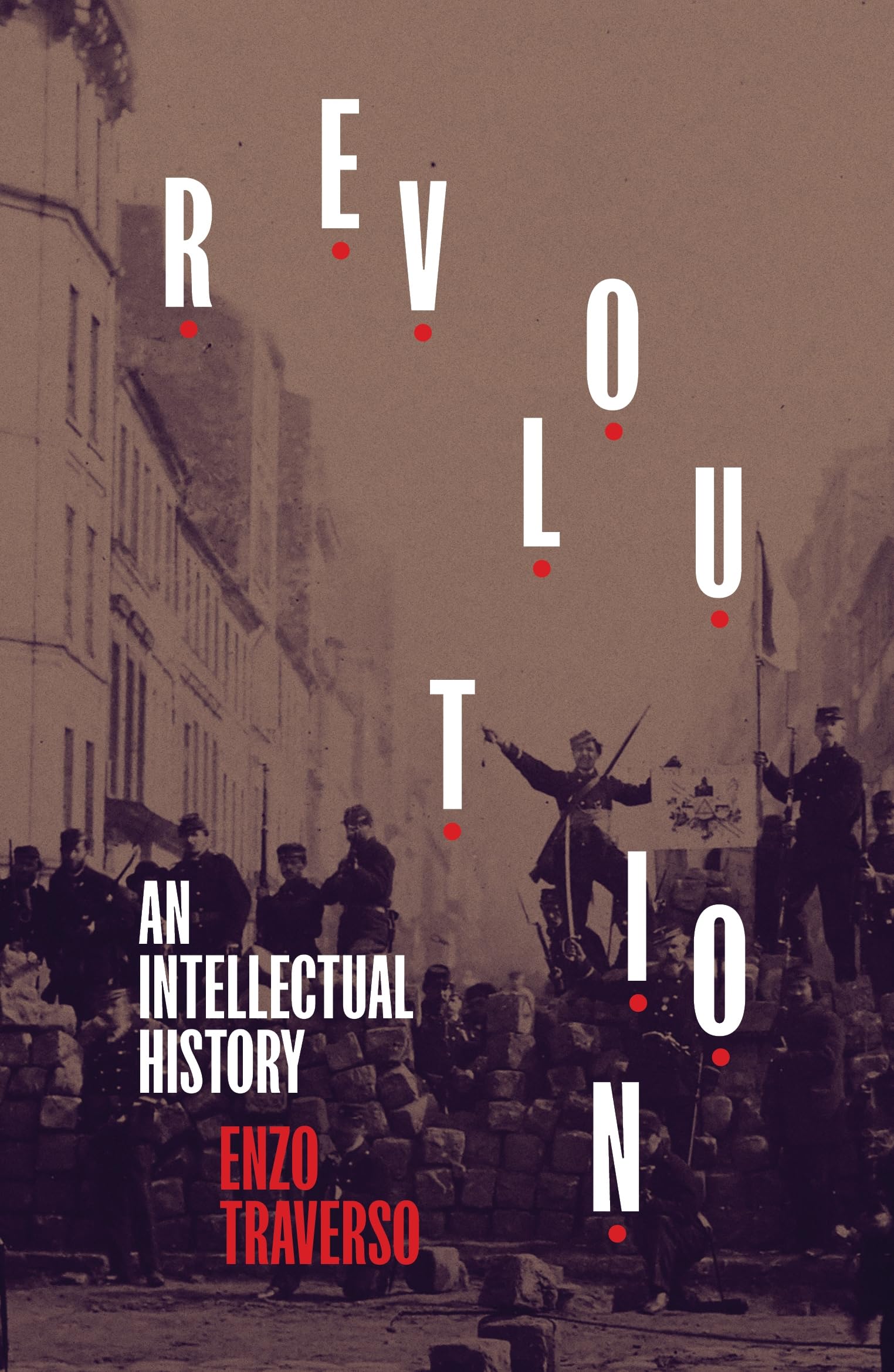
Revolution: An Intellectual History
Inclusive of all applicable taxes. FREE shipping on all orders.
Available Offers
- 🚚Free Delivery — Free shipping on all orders
- 💵Cash on Delivery — Pay when your order arrives
- ↩️15-Day Easy Returns — Hassle-free return policy
- 🔒Cash on Delivery — Pay safely when your order arrives
Check Delivery
Product Description
Introduction
In an era where the very idea of revolution is often romanticised or misunderstood, Enzo Traverso’s Revolution: An Intellectual History offers a profound and necessary reexamination. This hardcover volume from Verso is not merely a chronicle of uprisings; it is a deeply philosophical and cultural inquiry into the meaning, legacy, and intellectual currents that have shaped revolutionary thought from the nineteenth century to the present. For Indian readers and students of political science, history, and sociology, this book serves as a bridge between Western revolutionary traditions and the global struggles for justice, making it an indispensable addition to any serious library.
Book Overview
Traverso invites us to think of revolution not as a series of isolated events but as a constellation of ideas, images, and lived experiences. He constructs a mosaic of ‘dialectical images’—from Marx’s famous metaphor of locomotives to the barricades of Auguste Blanqui, the red flags of the Paris Commune, and the mummified body of Lenin. Rather than a dry academic text, the book reads like an intellectual adventure, weaving together theory, biography, and visual culture. It presents revolution as a total social phenomenon that transforms not only political structures but also bodies, art, and memory.
Key Highlights
- Original Method: Uses Walter Benjamin’s concept of ‘dialectical images’ to create a fresh, non-linear history of revolutions.
- Global Scope: Moves beyond Europe to include thinkers from the Global South, such as José Carlos Mariátegui, C.L.R. James, and Ho Chi Minh.
- Biographical Depth: Connects revolutionary theories to the personal lives of intellectuals—Marx, Bakunin, Luxemburg, Lenin, and Mao—showing how exile, pariah status, and marginality shaped their ideas.
- Cultural Analysis: Examines how revolutions are remembered through monuments, bodies, and iconography, from the Vendôme Column’s demolition to Lenin’s embalming.
Inside the Book
The book is structured around a series of thematic chapters that blend history with philosophy. Traverso begins by questioning the linear narrative of progress, then dives into the aesthetics of revolution—how revolutions are staged, seen, and felt. He explores the ‘revolutionary body’ through the lens of Alexandra Kollontai’s writings on sexuality and Lenin’s preserved corpse. Later chapters dissect the figure of the revolutionary intellectual as an outcast, tracing the trajectories of thinkers who lived on the margins of society. The final sections grapple with the entanglement between revolution and communism, offering a sober yet hopeful reflection on a century of upheaval.
Key Topics
- The philosophy of history and temporality in revolutionary thought
- The relationship between violence, aesthetics, and political change
- Iconography and memory: how revolutions are represented and monumentalised
- The role of the intellectual as a pariah and revolutionary
- Global Marxism and anti-colonial revolutions
- The crisis of the revolutionary imagination in the twenty-first century
Reader Benefits
- Deepen Your Understanding: Move beyond textbook narratives to grasp the intellectual and emotional core of revolutions.
- Contextualise Current Events: Gain tools to analyse contemporary protests and movements in India and beyond through a historical lens.
- Enhance Critical Thinking: Traverso’s dialectical method encourages readers to question received wisdom and see history as a field of conflicting possibilities.
- Expand Your Library: A hardcover edition that is both a scholarly resource and a beautifully written work of literature.
Learning Outcomes
Readers of Revolution: An Intellectual History will be able to: identify the key intellectual currents that have shaped revolutionary movements over two centuries; analyse the interplay between theory and practice in the lives of revolutionary thinkers; critically evaluate the visual and symbolic dimensions of political change; and apply a global, comparative perspective to the study of revolutions. The book also equips readers with a nuanced understanding of why revolutions often fail or betray their own ideals, and how they continue to inspire new generations.
Who Should Read
This book is ideal for university students and scholars of history, political science, sociology, and cultural studies. It is equally valuable for activists, journalists, and general readers who are curious about the intellectual roots of social change. Indian readers, in particular, will appreciate the connections Traverso draws between European revolutions and anti-colonial struggles, resonating with the country’s own history of independence and ongoing movements for justice. Anyone who has ever wondered what it truly means to make a revolution will find this book both enlightening and provocative.
About the Author
Enzo Traverso is a renowned historian and political theorist, currently teaching at Cornell University. He is the author of several influential works, including The Origins of Nazi Violence and Left-Wing Melancholia. Traverso’s scholarship is known for its interdisciplinary approach, blending intellectual history, cultural criticism, and political theory. Born in Italy and educated in France, he brings a European sensibility to global questions, making him a unique voice in contemporary historiography.
About the Publisher
Verso Books is an independent publishing house based in London and New York, celebrated for its radical and critical titles. Since its founding in 1970, Verso has been at the forefront of publishing works by thinkers such as E.P. Thompson, Eric Hobsbawm, and Slavoj Žižek. Their commitment to rigorous, accessible scholarship makes them a trusted source for readers seeking to understand the world’s most pressing political and intellectual debates.
Conclusion
Revolution: An Intellectual History is more than a book—it is an invitation to think with the revolutionaries of the past while imagining new futures. Enzo Traverso’s masterful synthesis of theory, biography, and cultural analysis will leave readers with a deeper appreciation for the complexities of revolutionary change. Whether you are a seasoned scholar or a curious student, this hardcover edition from Verso deserves a place on your shelf. Order your copy today from Bookshops.in and embark on a journey through the intellectual heart of modernity.
Quick Summary
Revolution: An Intellectual History by Enzo Traverso is a groundbreaking work that reinterprets the revolutionary tradition of the nineteenth and twentieth centuries through a series of 'dialectical images'—powerful symbols that capture the spirit of an age. From Marx's metaphor of locomotives of history to Lenin's preserved body, from the red flags of Blanqui to the demolition of the Vendôme Column during the Paris Commune, Traverso weaves together theory and biography. He profiles revolutionary intellectuals such as Marx, Bakunin, Luxemburg, Kollontai, and Mao, showing how their personal trajectories shaped their ideas. This book is for students of political theory, historians, and anyone seeking to understand the intellectual currents that drove radical change. Readers will learn to see revolutions not just as political events but as cultural and symbolic transformations. Praised by China Miéville as 'brilliant and beautiful,' this hardcover edition from Verso is a must-have for serious readers. Buy from Bookshops.in for fast delivery and the best prices in India.
Book Highlights
Book Specifications
| ISBN-13 | 9781839763595 |
| ISBN-10 | 1839763590 |
| Publisher | Verso Books |
| Language | English |
| Dimensions | 12.9 x 3.05 x 19.81 cm |
| Weight | 1 kg 50 g |
| Category | Political Science › Political History |
| Genre | Nonfiction |
| Reading Age | Adult |
| Original Language | English |
Frequently Asked Questions
What is Revolution: An Intellectual History about?
Who is the author of this book?
Is this book suitable for beginners?
Does the book cover the Russian Revolution?
What are dialectical images?
How is this book different from other histories of revolution?
What is the Paris Commune's role in the book?
Does the book include Alexandra Kollontai?
What is the publication date?
Is this a hardcover edition?
What is the price in India?
What is the ISBN?
Can I get this book from Bookshops.in?
Readers Also Search For
Customers Also Bought
Mathematics
Stereotype Spaces and Algebras: 73 (De Gruyter Expositions in Mathematics, 73)

Mathematics
Semigroups in Algebra, Geometry and Analysis: 20 (De Gruyter Expositions in Mathematics, 20)

Mathematics
Geometry from the Pacific Rim: Proceedings of the Pacific Rim Geometry Conference held at National University of Singapore, Republic of Singapore, ... 1994 (De Gruyter Proceedings in Mathematics)
Mathematics
First International Tainan-Moscow Algebra Workshop: Proceedings of the International Conference held at National Cheng Kung University Tainan, Taiwan, ... 1994 (De Gruyter Proceedings in Mathematics)

Mathematics
Differential Geometry - Proceedings of the VIII International Colloquium (English, Jesus A. Alvarez Lopez | Eduardo Garcia-Rio)
Mathematics
Mathematical Theory of Optimal Processes (Classics of Soviet Mathematics)
Related Products
View All
Science & Mathematics
Elements of Pelagos Biology: With Focus on the Mediterranean Sea

Science & Mathematics
Squid - Superconducting Quantum Interference Devices and Their Applications: Proceedings of the International Conference on Superconducting Quantum Devices, Berlin-west, October 4-8, 1976

Science & Mathematics
Thermodynamics and Pattern Formation in Biology
Science & Mathematics
The Nature of Mathematics and the Mathematics of Nature by S. Andersson – Mathematics & Science

Science & Mathematics
Linear Algebra | by Stephen Friedberg | Arnold Insel | Lawrence Spence | Pearson | by Stephen Friedberg | Arnold Insel | Lawrence Spence | Pearson | by Stephen Friedberg | Arnold Insel | Lawrence Spence | Pearson | by Stephen Friedberg | Arnold Insel | Lawrence Spence | Pearson | by Stephen Friedberg | Arnold Insel | Lawrence Spence | Pearson | by Stephen Friedberg | Arnold Insel | Lawrence Spence | Pearson | by Stephen Friedberg | Arnold Insel | Lawrence Spence | Pearson | by Stephen Friedberg
Science & Mathematics