
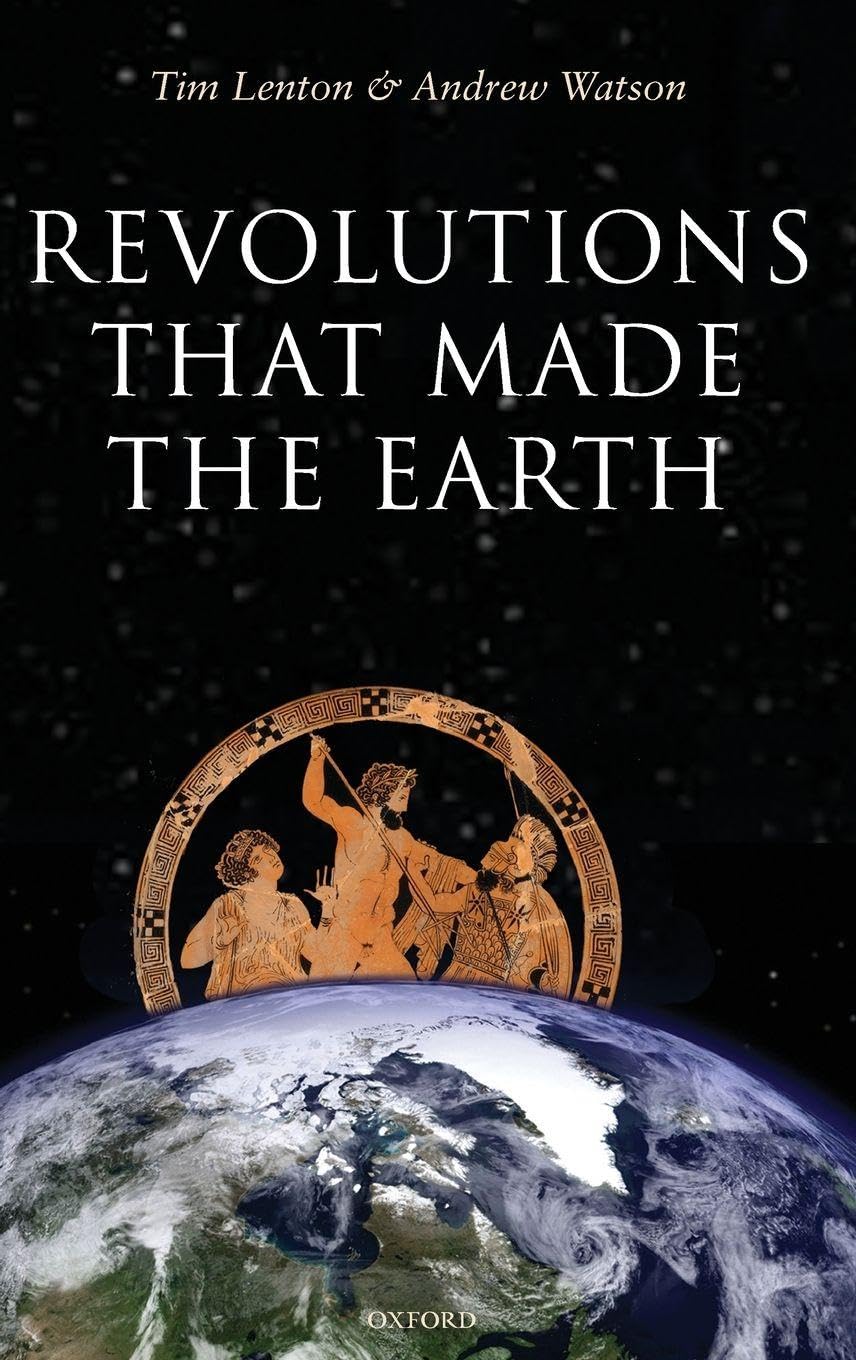
Revolutions that Made the Earth by Tim Lenton – Understanding the Co-Evolution of Life and the Planet
Inclusive of all applicable taxes. FREE shipping on all orders.
Available Offers
- 🚚Free Delivery — Free shipping on all orders
- 💵Cash on Delivery — Pay when your order arrives
- ↩️15-Day Easy Returns — Hassle-free return policy
- 🔒Cash on Delivery — Pay safely when your order arrives
Check Delivery
Product Description
Introduction
What if the Earth we know today—with its breathable air, stable climate, and teeming life—was not always this way? What if it was forged through a series of violent, planet-wide revolutions, each triggered by living organisms and each reshaping the very fabric of the planet? Revolutions that Made the Earth by Tim Lenton is a bold and illuminating journey through the deep history of our planet, revealing how life and the non-living world have co-evolved in a dramatic, interdependent dance. This hardcover edition from Oxford University Press is a must-have for every Indian science enthusiast, student, and curious mind who wants to understand the epic story of our home.
Book Overview
In this groundbreaking work, Tim Lenton, a leading Earth system scientist, argues that the Earth’s history is not a slow, steady march but a series of abrupt, revolutionary transformations. Each revolution began with a biological innovation—like the evolution of photosynthesis or the rise of multicellular life—and then spiralled into global environmental consequences that changed the atmosphere, oceans, and climate forever. The book shows that these revolutions share common features: they all increased the complexity, energy use, and information processing of life on Earth. Far from being disasters, these near-catastrophic events eventually settled into new, stable states that allowed life to flourish. Lenton also places our own species in this grand narrative, suggesting that the current human-driven changes to the planet may be the start of another great revolution—one whose outcome is far from certain. This book is both a scientific synthesis and a cautionary tale, offering a deep perspective on where we came from and where we might be heading.
Key Highlights
- Revolutionary framework: Understand Earth’s history as a series of transformative events, not gradual change.
- Life as a planetary force: Discover how biological innovations—from microbes to humans—have reshaped oceans, air, and rocks.
- Interdependence of life and environment: See how evolution and geology are two sides of the same coin.
- Humanity in context: A sobering look at our current ecological crisis as part of a long pattern of Earth system revolutions.
- Accessible science: Complex ideas explained with clarity, making it suitable for both students and general readers.
Inside the Book
This volume is structured around the major revolutions that have defined Earth’s 4.5-billion-year story. Lenton begins with the origin of life itself, then moves through the Great Oxidation Event—when photosynthetic bacteria filled the atmosphere with oxygen, wiping out most anaerobic life but paving the way for complex organisms. He explores the rise of multicellular life, the colonisation of land, and the evolution of forests and animals. Each chapter weaves together evidence from geology, biology, and chemistry to paint a vivid picture of a planet in constant, dramatic flux. The final chapters turn to the Anthropocene, our current era, and ask whether humanity can steer the next revolution toward a successful, stable outcome. The book is richly illustrated with diagrams and timelines that help readers visualise these immense transformations.
Key Topics
- The origin of life and the first cells
- The Great Oxidation Event and its global aftermath
- The Snowball Earth glaciations and their role in evolution
- The rise of complex multicellular life and the Cambrian explosion
- Colonisation of land by plants and animals
- The evolution of forests and the carbon cycle
- Human evolution and the Industrial Revolution
- The Anthropocene: a new Earth system revolution
- Gaia theory and Earth system science
- Pathways to a sustainable future
Reader Benefits
- Deepen your understanding: Gain a holistic view of Earth’s history that connects biology, geology, and climate science.
- Think critically: Learn to see environmental change as part of a long-term pattern, not just a modern problem.
- Inspire curiosity: Perfect for Indian students preparing for competitive exams like UPSC, JEE, or NEET, who want to go beyond textbooks.
- Engage with big ideas: The book challenges readers to think about humanity’s role on a planetary scale.
- Quality production: This Oxford University Press hardcover is built to last, with crisp print and durable binding.
Learning Outcomes
After reading this book, you will be able to: describe the major revolutions that shaped Earth’s environment; explain how life and the non-living world have co-evolved; identify the common features of planetary revolutions; analyse the current human-driven changes in the context of Earth’s deep history; and evaluate possible pathways for a sustainable future. You will also develop a systems-thinking approach that is invaluable for any science or environmental career.
Who Should Read
- Science students in Indian universities and colleges studying geology, biology, environmental science, or Earth system science.
- Competitive exam aspirants looking for a deeper conceptual foundation in Earth and life sciences.
- Teachers and educators who want to enrich their curriculum with a compelling narrative of planetary change.
- General readers with a passion for science, history, and the future of our planet.
- Environmentalists and policy enthusiasts seeking a long-term perspective on sustainability.
About the Author
Tim Lenton is a professor of Earth system science at the University of Exeter, UK. He is a leading figure in the study of planetary feedbacks, the Gaia hypothesis, and the Anthropocene. His research focuses on how life has shaped Earth’s environment over billions of years, and how humanity might navigate the current global crisis. He has published extensively in top scientific journals and is known for making complex systems thinking accessible to a wide audience.
About the Publisher
Oxford University Press (OUP) is one of the oldest and most prestigious academic publishers in the world, with a history dating back to 1586. OUP is renowned for its rigorous editorial standards, authoritative content, and commitment to spreading knowledge. This hardcover edition reflects OUP’s tradition of excellence, offering a book that is both intellectually robust and beautifully produced.
Conclusion
Revolutions that Made the Earth is not just a book—it is a new way of seeing our planet. It reveals that we are not separate from nature but deeply embedded in a living, evolving system that has been through upheavals before. For Indian readers who want to understand the science behind climate change, biodiversity loss, and sustainability, this book provides an essential foundation. Whether you are a student, a teacher, or simply a lover of big ideas, this hardcover will enrich your mind and change how you think about the ground beneath your feet. Order your copy from Bookshops.in today and join the revolution in understanding our remarkable Earth.
Quick Summary
Revolutions that Made the Earth by Tim Lenton is a groundbreaking exploration of how life-driven revolutions have shaped our planet's past, present, and future. The book argues that a handful of biological innovations—such as the evolution of photosynthesis and the rise of complex life—triggered global environmental changes that created the world we know. Lenton masterfully weaves together geology, biology, and climate science to show that life is not merely a passenger on Earth but an active force that co-evolves with its non-living environment. Each revolution increased the complexity, energy use, and information processing of the biosphere, leading to new stable states. The book also confronts the current human-driven transformation, the Anthropocene, asking whether it will be another successful revolution or a catastrophic failure. This book is written for students, researchers, and curious readers who want a deep, integrated understanding of Earth's history. It is especially valuable for Indian readers studying earth sciences, environmental studies, or evolutionary biology. By purchasing from Bookshops.in, you support a trusted Indian bookstore that delivers authentic Oxford University Press editions with care.
Book Highlights
Book Specifications
| ISBN-13 | 9780199587049 |
| ISBN-10 | 0199587043 |
| Publisher | OUP Oxford |
| Language | English |
| Dimensions | 23.37 x 3.05 x 15.75 cm |
| Weight | 907 g |
| Category | Science & Mathematics › Earth Sciences |
| Genre | Non-fiction |
| Original Language | English |
Frequently Asked Questions
What is 'Revolutions that Made the Earth' about?
Who is the author Tim Lenton?
Is this book suitable for Indian students?
What makes this book different from other Earth history books?
Does the book discuss human impact on Earth?
What is the ISBN-13 of this book?
Is this a hardcover book?
What is the price of this book in India?
What is the rating of this book?
Can I use this book for my university course?
Does the book cover the Gaia hypothesis?
Why buy from Bookshops.in?
Readers Also Search For
Customers Also Bought
Mathematics
Stereotype Spaces and Algebras: 73 (De Gruyter Expositions in Mathematics, 73)
Mathematics
Semigroups in Algebra, Geometry and Analysis: 20 (De Gruyter Expositions in Mathematics, 20)
Mathematics
Geometry from the Pacific Rim: Proceedings of the Pacific Rim Geometry Conference held at National University of Singapore, Republic of Singapore, ... 1994 (De Gruyter Proceedings in Mathematics)
Mathematics
First International Tainan-Moscow Algebra Workshop: Proceedings of the International Conference held at National Cheng Kung University Tainan, Taiwan, ... 1994 (De Gruyter Proceedings in Mathematics)
Mathematics
Differential Geometry - Proceedings of the VIII International Colloquium (English, Jesus A. Alvarez Lopez | Eduardo Garcia-Rio)
Mathematics
Mathematical Theory of Optimal Processes (Classics of Soviet Mathematics)
Related Products
View All
Science & Mathematics
Squid - Superconducting Quantum Interference Devices and Their Applications: Proceedings of the International Conference on Superconducting Quantum Devices, Berlin-west, October 4-8, 1976
Science & Mathematics
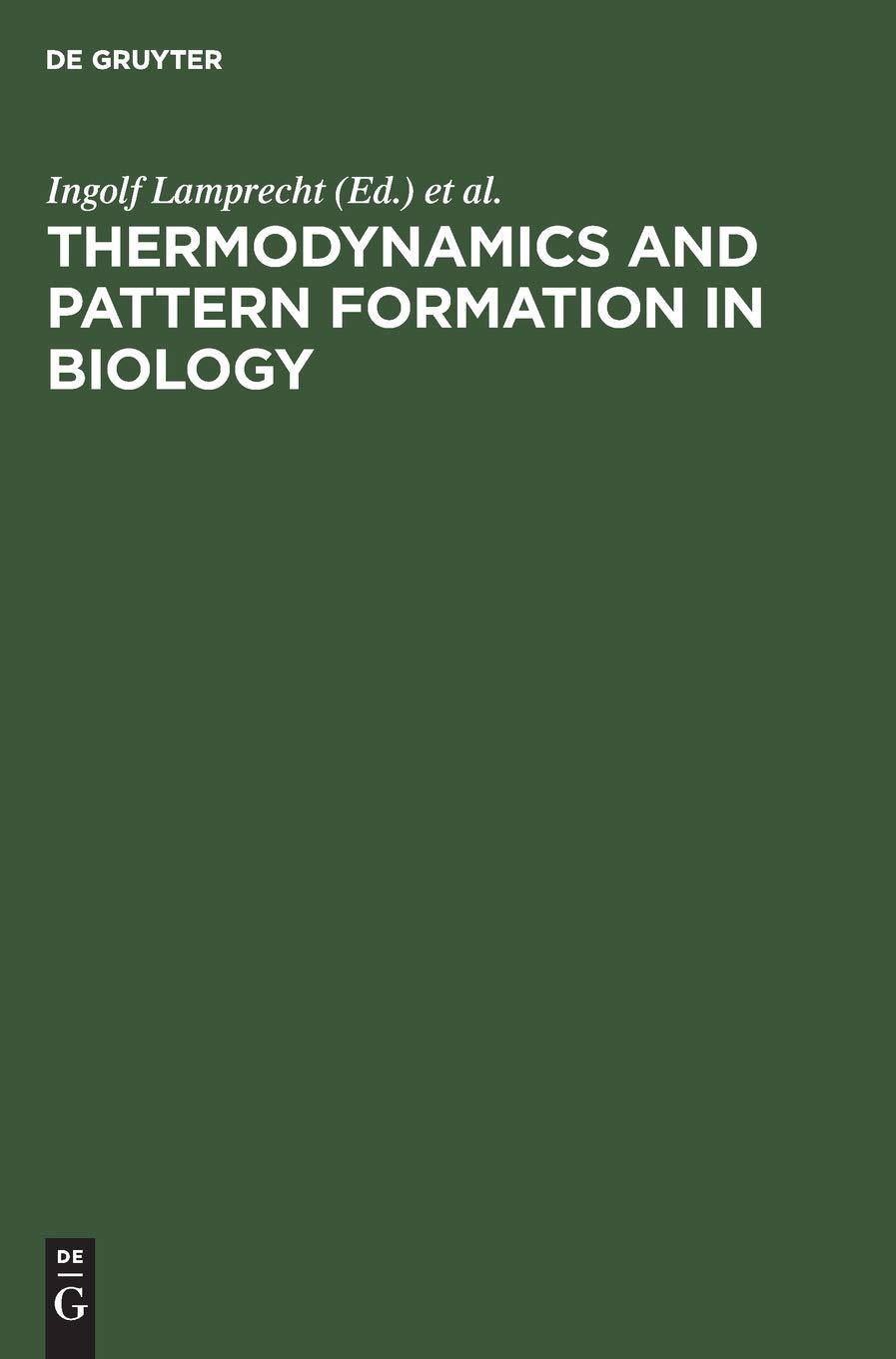
Thermodynamics and Pattern Formation in Biology
Science & Mathematics
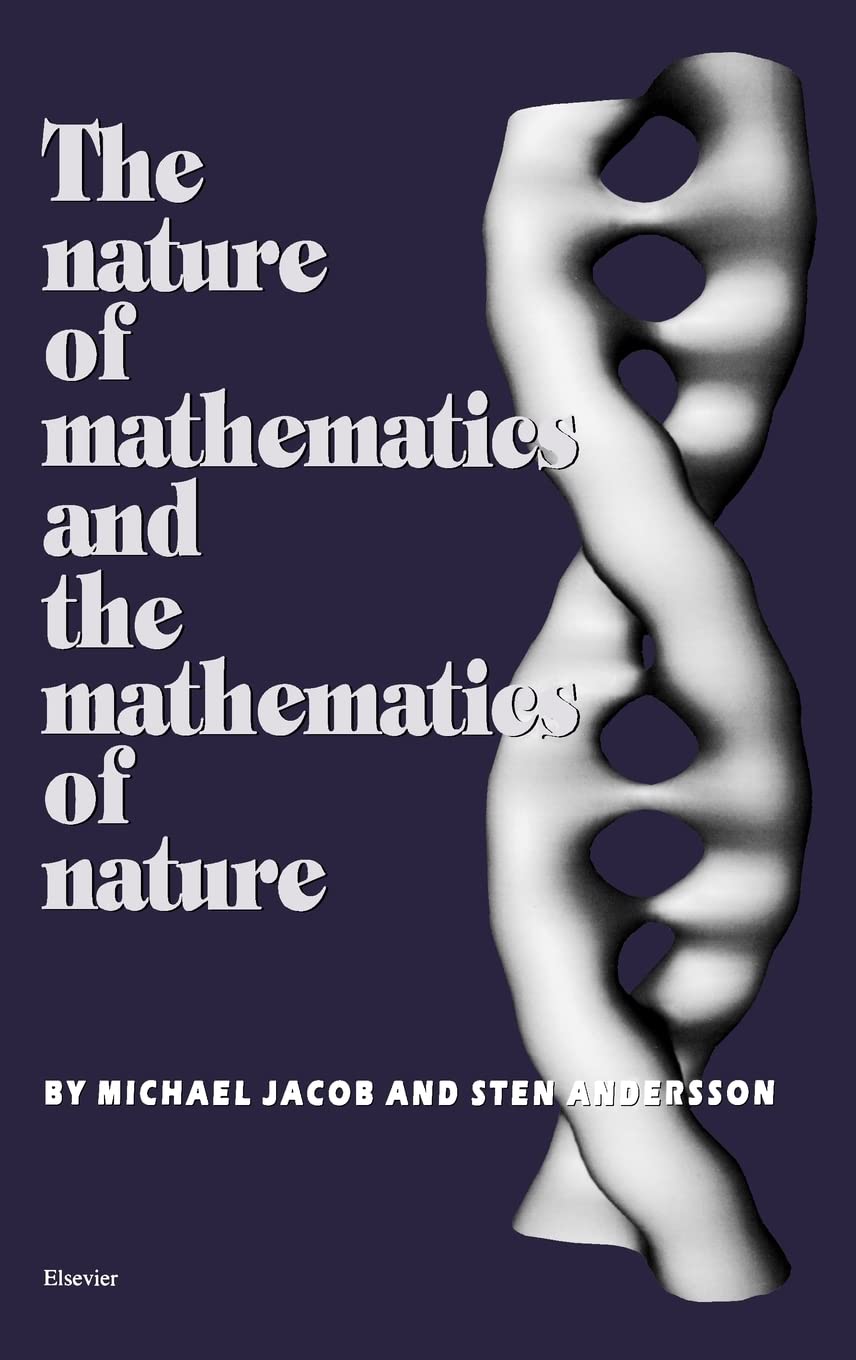
The Nature of Mathematics and the Mathematics of Nature by S. Andersson – Mathematics & Science

Science & Mathematics
Linear Algebra | by Stephen Friedberg | Arnold Insel | Lawrence Spence | Pearson | by Stephen Friedberg | Arnold Insel | Lawrence Spence | Pearson | by Stephen Friedberg | Arnold Insel | Lawrence Spence | Pearson | by Stephen Friedberg | Arnold Insel | Lawrence Spence | Pearson | by Stephen Friedberg | Arnold Insel | Lawrence Spence | Pearson | by Stephen Friedberg | Arnold Insel | Lawrence Spence | Pearson | by Stephen Friedberg | Arnold Insel | Lawrence Spence | Pearson | by Stephen Friedberg
Science & Mathematics
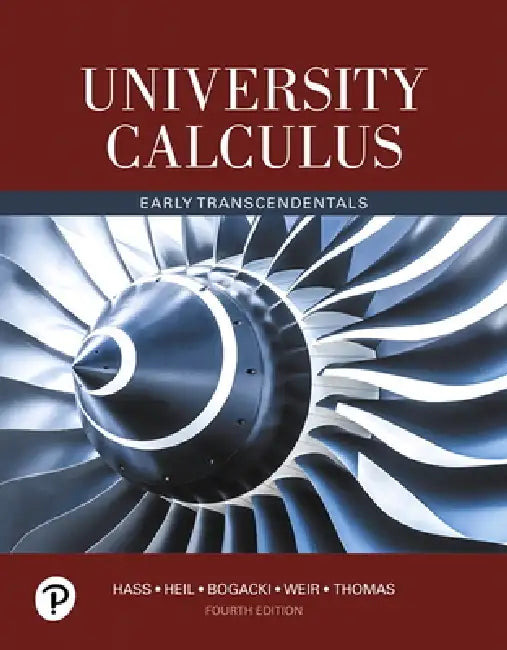
University Calculus | by Joel Hass | Christopher Heil | Maurice Weir | Pearson | by Joel Hass | Christopher Heil | Maurice Weir | Pearson | by Joel Hass | Christopher Heil | Maurice Weir | Pearson | by Joel Hass | Christopher Heil | Maurice Weir | Pearson | by Joel Hass | Christopher Heil | Maurice Weir | Pearson | by Joel Hass | Christopher Heil | Maurice Weir | Pearson | by Joel Hass | Christopher Heil | Maurice Weir | Pearson | by Joel Hass | Christopher Heil | Maurice Weir | Pearson | by Joe
Science & Mathematics