

Self-Exciting Fluid Dynamos by Keith Moffatt – Magnetohydrodynamics, Geomagnetism and Solar Magnetic Fields
Inclusive of all applicable taxes. FREE shipping on all orders.
Available Offers
- 🚚Free Delivery — Free shipping on all orders
- 💵Cash on Delivery — Pay when your order arrives
- ↩️15-Day Easy Returns — Hassle-free return policy
- 🔒Cash on Delivery — Pay safely when your order arrives
Check Delivery
Product Description
Introduction
Magnetic fields are among the most fascinating and mysterious phenomena in the universe, shaping the behavior of planets, stars, and entire galaxies. For students and researchers in physics, Earth sciences, and astrophysics, understanding how these fields originate and evolve is essential. Self-Exciting Fluid Dynamos by Keith Moffatt offers a rigorous yet accessible exploration of the fundamental processes that generate and sustain magnetic fields in celestial bodies. Published by Cambridge University Press, this hardcover volume is a definitive resource for anyone seeking to master the principles of magnetohydrodynamics and dynamo theory.
Book Overview
This book provides a comprehensive introduction to the theory of fluid dynamos, which explains how the motion of electrically conducting fluids—such as liquid iron in Earth’s core or plasma in the Sun—can generate magnetic fields. Starting with the basics of magnetohydrodynamics, the author systematically builds up to advanced topics like mean-field electrodynamics, magnetic relaxation, and fast-dynamo theory. The text is enriched with observational data from geomagnetism and solar magnetism, as well as insights from pioneering laboratory experiments that replicate dynamo action. Written in a clear, mathematical style, it bridges theoretical concepts with real-world applications, making it an indispensable guide for graduate-level study.
Key Highlights
- Complete treatment of laminar dynamo theory and the role of random waves and turbulence in mean-field electrodynamics.
- In-depth exploration of magnetic helicity and topological constraints that govern field evolution.
- Coverage of fast-dynamo theory, accretion-disc dynamos, and magnetostrophic turbulence—cutting-edge areas of research.
- Integration of laboratory experiments that mimic astrophysical dynamo processes.
- Focus on geomagnetism and solar magnetism, with observational data from Earth and the Sun.
Inside the Book
The book is structured to guide readers from foundational concepts to advanced research topics. Early chapters introduce the governing equations of magnetohydrodynamics and the observational context of planetary and stellar magnetic fields. Subsequent sections delve into laminar dynamo models, the kinematic dynamo problem, and the effects of turbulence. The latter part of the book addresses magnetic relaxation, helicity conservation, and the challenges of fast dynamos in astrophysical settings. Each chapter includes mathematical derivations, illustrative examples, and references to key studies, ensuring a thorough understanding of both theory and application.
Key Topics
- Magnetohydrodynamics and the induction equation
- Geomagnetism and solar magnetic field observations
- Laminar and turbulent dynamo mechanisms
- Mean-field electrodynamics and the alpha effect
- Magnetic helicity and topological invariants
- Fast-dynamo theory and accretion-disc dynamos
- Magnetostrophic turbulence and relaxation processes
Reader Benefits
- Build a solid foundation in magnetohydrodynamics and dynamo theory from a world-renowned expert.
- Gain insight into real astrophysical phenomena, including Earth’s magnetic field reversals and solar cycle activity.
- Develop mathematical skills needed to tackle complex problems in plasma physics and geophysics.
- Stay current with research frontiers such as fast dynamos and turbulent magnetic field generation.
- Enhance your academic or professional work with a authoritative reference that is widely cited in the field.
Learning Outcomes
By studying this book, readers will be able to understand the fundamental principles of self-exciting fluid dynamos, analyze the stability and evolution of magnetic fields in conducting fluids, and apply mean-field electrodynamics to turbulent systems. They will also gain the ability to interpret observational data from planetary and stellar magnetism, and engage critically with advanced topics like magnetic relaxation and helicity conservation. This knowledge is directly applicable to research in geophysics, astrophysics, and space science.
Who Should Read
This book is primarily aimed at graduate-level students in mathematics, physics, Earth sciences, and astrophysics. It is also a valuable resource for researchers and professionals working in geophysics, solar physics, plasma physics, and planetary science. Practitioners in laboratory dynamo experiments and computational magnetohydrodynamics will find the theoretical framework highly relevant. A background in basic fluid dynamics and electromagnetism is recommended for full comprehension.
About the Author
Keith Moffatt is a distinguished British mathematician and physicist, renowned for his contributions to fluid dynamics and magnetohydrodynamics. He has held professorships at the University of Cambridge and has been a Fellow of the Royal Society since 1986. His work on magnetic field generation, topological fluid dynamics, and turbulence has shaped modern understanding of dynamo theory. With decades of teaching and research experience, Moffatt brings clarity and depth to complex subjects, making this book a hallmark of scholarly excellence.
About the Publisher
Cambridge University Press is one of the world’s oldest and most prestigious academic publishers, with a history dating back to 1534. Known for its rigorous peer-review process and high-quality publications, Cambridge University Press produces authoritative texts across all disciplines of science and humanities. This hardcover edition reflects the publisher’s commitment to academic integrity and durability, ensuring that the book remains a lasting reference for students and researchers in India and around the globe.
Conclusion
Self-Exciting Fluid Dynamos is an essential addition to the library of any serious student or researcher in the physical sciences. Keith Moffatt’s masterful exposition of dynamo theory, combined with the latest observational and experimental insights, makes this book a cornerstone of modern magnetohydrodynamics. Whether you are studying Earth’s magnetic field, solar activity, or astrophysical dynamos, this volume provides the theoretical tools and conceptual clarity you need. Order your copy from Bookshops.in today and delve into the fascinating world of fluid dynamos.
Quick Summary
Self-Exciting Fluid Dynamos by Keith Moffatt is a comprehensive academic text that explores the origins and evolution of magnetic fields in planets, stars and galaxies. It provides a basic introduction to magnetohydrodynamics and surveys observational data, with particular emphasis on geomagnetism and solar magnetism. The book covers pioneering laboratory experiments that replicate fluid dynamo action, along with complete treatments of laminar dynamo theory and mean-field electrodynamics incorporating random waves and turbulence. Both dynamo theory and magnetic relaxation theory are presented, with thorough exploration of topological constraints associated with magnetic helicity conservation. Major challenges in fast-dynamo theory and accretion-disc magnetism are addressed. This Cambridge University Press hardcover is ideal for Indian postgraduate students, researchers and academics in astrophysics, geophysics and fluid dynamics. Readers will gain a deep understanding of how magnetic fields are generated and sustained in cosmic settings. Purchasing from Bookshops.in ensures you receive an authentic, high-quality print edition with reliable service.
Book Highlights
Book Specifications
| ISBN-13 | 9781107065871 |
| ISBN-10 | 1107065879 |
| Publisher | Cambridge University Press |
| Language | English |
| Dimensions | 17.78 x 3.18 x 24.77 cm |
| Weight | 1 kg 220 g |
| Category | Science & Mathematics › Astronomy & Astrophysics |
| Genre | Science |
| Reading Age | 18+ |
| Original Language | English |
Frequently Asked Questions
What is the main subject of Self-Exciting Fluid Dynamos?
Who is the author of this book?
Is this book suitable for Indian students?
Does the book include laboratory experiments?
What is the ISBN-13 of this book?
What topics are covered under dynamo theory?
Does the book discuss solar magnetism?
What is the price of this book on Bookshops.in?
Does the book cover geomagnetism?
What is magnetic helicity?
Who would benefit most from reading this book?
Does the book include mathematical derivations?
Why buy from Bookshops.in?
Readers Also Search For
Customers Also Bought
Mathematics
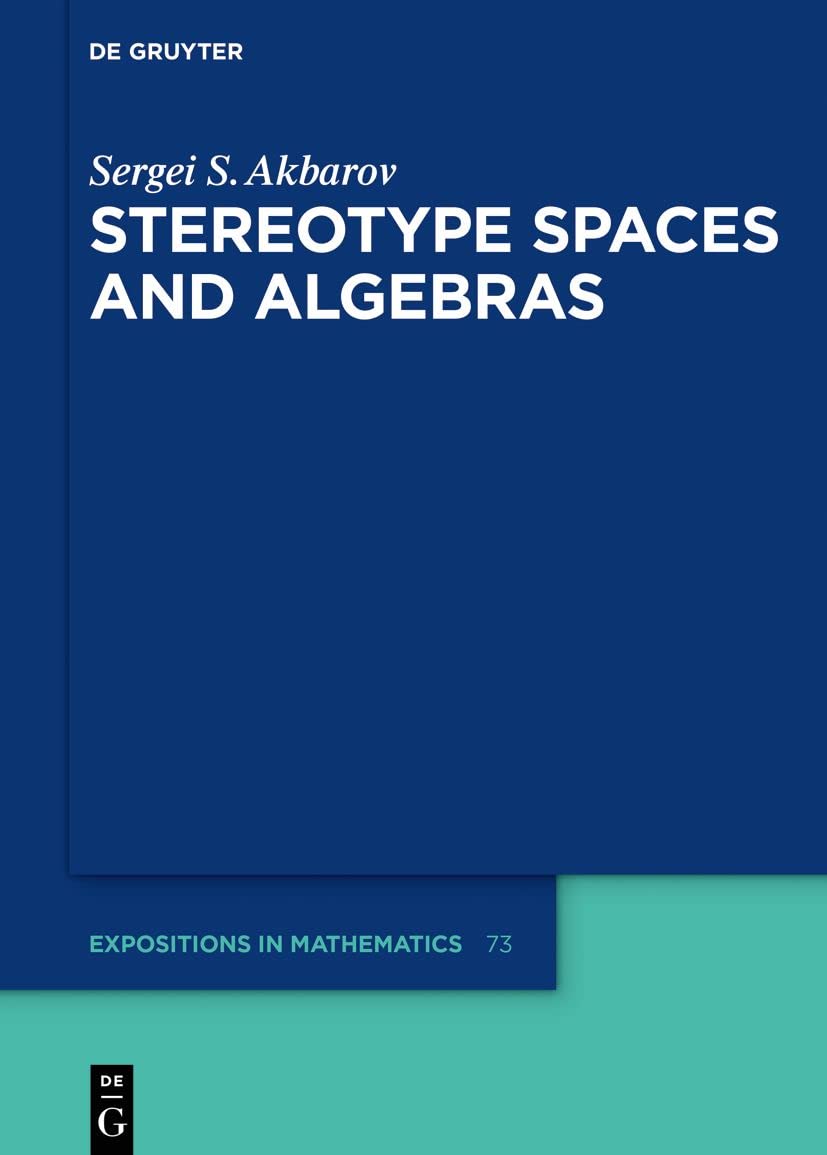
Stereotype Spaces and Algebras: 73 (De Gruyter Expositions in Mathematics, 73)

Mathematics
Semigroups in Algebra, Geometry and Analysis: 20 (De Gruyter Expositions in Mathematics, 20)

Mathematics
Geometry from the Pacific Rim: Proceedings of the Pacific Rim Geometry Conference held at National University of Singapore, Republic of Singapore, ... 1994 (De Gruyter Proceedings in Mathematics)

Mathematics
First International Tainan-Moscow Algebra Workshop: Proceedings of the International Conference held at National Cheng Kung University Tainan, Taiwan, ... 1994 (De Gruyter Proceedings in Mathematics)

Mathematics
Differential Geometry - Proceedings of the VIII International Colloquium (English, Jesus A. Alvarez Lopez | Eduardo Garcia-Rio)

Mathematics
Mathematical Theory of Optimal Processes (Classics of Soviet Mathematics)
Related Products
View All
Science & Mathematics
Squid - Superconducting Quantum Interference Devices and Their Applications: Proceedings of the International Conference on Superconducting Quantum Devices, Berlin-west, October 4-8, 1976

Science & Mathematics
Thermodynamics and Pattern Formation in Biology
Science & Mathematics
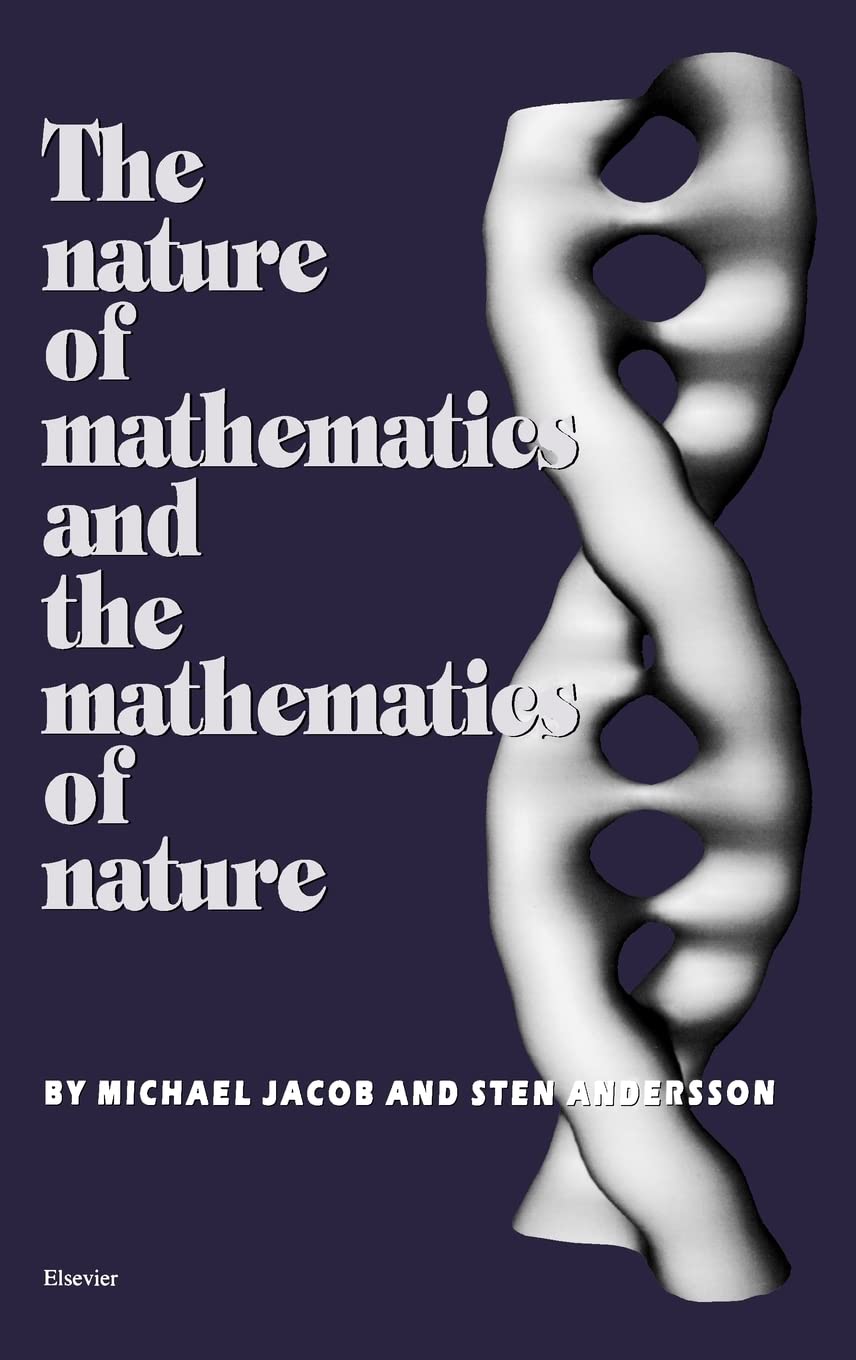
The Nature of Mathematics and the Mathematics of Nature by S. Andersson – Mathematics & Science

Science & Mathematics
Linear Algebra | by Stephen Friedberg | Arnold Insel | Lawrence Spence | Pearson | by Stephen Friedberg | Arnold Insel | Lawrence Spence | Pearson | by Stephen Friedberg | Arnold Insel | Lawrence Spence | Pearson | by Stephen Friedberg | Arnold Insel | Lawrence Spence | Pearson | by Stephen Friedberg | Arnold Insel | Lawrence Spence | Pearson | by Stephen Friedberg | Arnold Insel | Lawrence Spence | Pearson | by Stephen Friedberg | Arnold Insel | Lawrence Spence | Pearson | by Stephen Friedberg
Science & Mathematics
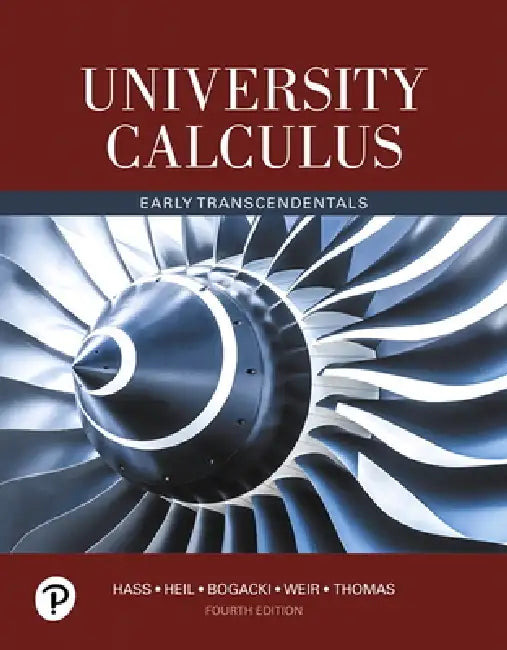
University Calculus | by Joel Hass | Christopher Heil | Maurice Weir | Pearson | by Joel Hass | Christopher Heil | Maurice Weir | Pearson | by Joel Hass | Christopher Heil | Maurice Weir | Pearson | by Joel Hass | Christopher Heil | Maurice Weir | Pearson | by Joel Hass | Christopher Heil | Maurice Weir | Pearson | by Joel Hass | Christopher Heil | Maurice Weir | Pearson | by Joel Hass | Christopher Heil | Maurice Weir | Pearson | by Joel Hass | Christopher Heil | Maurice Weir | Pearson | by Joe

Science & Mathematics