
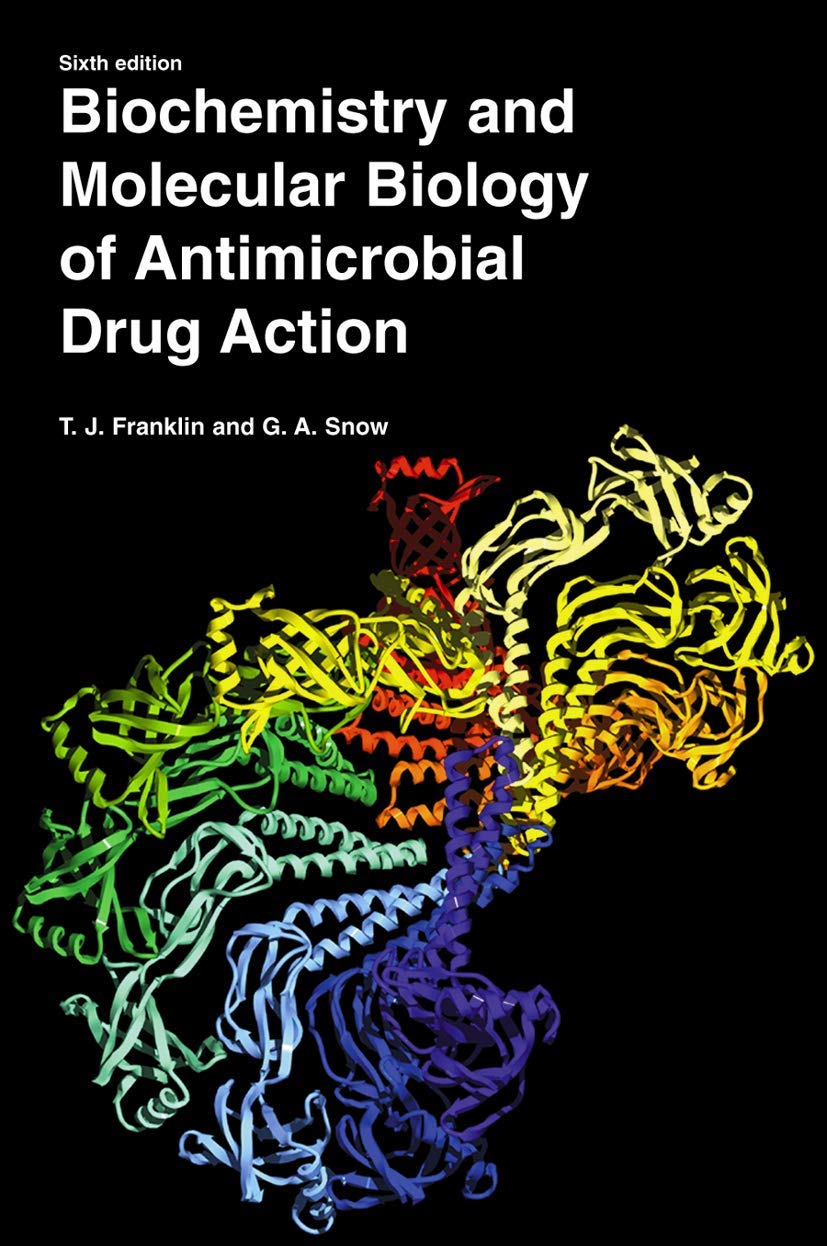
Biochemistry and Molecular Biology of Antimicrobial Drug Action by Trevor J. Franklin – A Deep Dive into Antimicrobial A
Inclusive of all applicable taxes. FREE shipping on all orders.
Available Offers
- 🚚Free Delivery — Free shipping on all orders
- 💵Cash on Delivery — Pay when your order arrives
- ↩️15-Day Easy Returns — Hassle-free return policy
- 🔒Cash on Delivery — Pay safely when your order arrives
Check Delivery
Product Description
Introduction
In an era where antimicrobial resistance poses one of the greatest challenges to global health, understanding the molecular dance between drugs and pathogens has never been more critical. Biochemistry and Molecular Biology of Antimicrobial Drug Action, authored by Trevor J. Franklin and published by Springer, offers an authoritative and updated exploration of how antimicrobial agents work at the biochemical and molecular levels. This hardbound volume is an indispensable resource for Indian students, researchers, and medical professionals who seek to grasp the intricate mechanisms that underpin the action and resistance of antimicrobial compounds.
Book Overview
This carefully revised edition builds on the legacy of its predecessors, providing a comprehensive yet accessible account of the science behind antimicrobial drugs. While the primary focus remains on medically relevant agents, the book also delves into compounds that, though not currently used in clinical practice, have served as invaluable research tools in biochemistry. The text reflects the profound impact of molecular biology on our understanding of drug-target interactions and the evolution of resistance. With a strong emphasis on recent breakthroughs, the book unravels the complex molecular details of how drugs bind to their targets and how pathogens adapt to survive.
Key Highlights
- Updated Coverage: Includes the latest discoveries in the molecular biology of drug action and resistance mechanisms.
- Medically Focused: Primarily covers antimicrobial agents used in clinical settings, with selected research-only compounds for context.
- Molecular Insights: Detailed explanations of drug interactions with key cellular targets such as ribosomes, cell wall synthesis enzymes, and nucleic acid replication machinery.
- Resistance Mechanisms: In-depth analysis of how bacteria, fungi, and viruses develop resistance at the genetic and biochemical levels.
- Research Tools: Highlights how certain non-clinical compounds have advanced our understanding of cellular processes.
Inside the Book
Readers will find a logical progression from fundamental biochemical principles to advanced molecular concepts. The book opens with an overview of antimicrobial drug classification and target identification. Subsequent chapters systematically examine each major class of antimicrobials—including beta-lactams, aminoglycosides, tetracyclines, macrolides, fluoroquinolones, and antifungals—detailing their mechanisms of action and the molecular basis of resistance. Special attention is given to emerging pathogens and the role of horizontal gene transfer in spreading resistance genes. The final sections explore the future of antimicrobial drug development, including novel targets and combination therapies.
Key Topics
- Molecular targets of antibacterial, antifungal, antiviral, and antiparasitic drugs
- Biochemical pathways disrupted by antimicrobial agents
- Genetic and epigenetic mechanisms of drug resistance
- Structure-activity relationships and drug design
- Role of efflux pumps, biofilms, and persister cells in resistance
- Recent advances in understanding drug-target interactions using X-ray crystallography and cryo-EM
Reader Benefits
- Deep Understanding: Gain a thorough grasp of how antimicrobials work at the molecular level, beyond simple memorization of drug names.
- Up-to-Date Knowledge: Stay current with the latest research on drug resistance mechanisms that are shaping clinical practice.
- Research Foundation: Build a strong base for further studies in medicinal chemistry, pharmacology, or infectious disease biology.
- Exam Ready: Ideal for students preparing for competitive exams like CSIR-NET, GATE, ICMR-JRF, and university postgraduate entrance tests.
- Clinical Relevance: Connects molecular insights to real-world challenges in treating infections, especially in the Indian context where antimicrobial resistance is a pressing issue.
Learning Outcomes
- Explain the biochemical basis of action for major classes of antimicrobial drugs
- Analyze how molecular biology techniques have revolutionized our understanding of drug-target interactions
- Evaluate the mechanisms by which pathogens acquire and spread resistance
- Interpret recent research data on drug resistance from primary literature
- Apply knowledge of drug action to predict potential new targets for antimicrobial therapy
Who Should Read
This book is tailored for postgraduate and advanced undergraduate students in biochemistry, microbiology, molecular biology, pharmacy, and medicine. It is equally valuable for researchers in pharmaceutical sciences, clinicians seeking to understand resistance patterns, and educators designing courses on antimicrobial chemotherapy. Indian readers, in particular, will find the content relevant to the growing challenge of drug-resistant tuberculosis, malaria, and hospital-acquired infections.
About the Author
Trevor J. Franklin is a renowned biochemist with decades of experience in antimicrobial research. His work has contributed significantly to the understanding of drug action mechanisms, and he has authored multiple editions of this seminal text. His clear, methodical writing style makes complex topics accessible without sacrificing scientific rigor.
About the Publisher
Springer is a globally respected academic publisher known for producing high-quality scientific and medical literature. With a legacy of excellence spanning over 180 years, Springer ensures that each volume, including this one, meets the highest standards of accuracy and comprehensiveness. Indian readers benefit from Springer's commitment to making advanced knowledge available in durable hardcover editions.
Conclusion
Biochemistry and Molecular Biology of Antimicrobial Drug Action is more than a textbook—it is a window into the molecular battlefield where drugs and pathogens collide. For anyone serious about understanding antimicrobial resistance or pursuing a career in the life sciences, this book provides the essential biochemical and molecular framework. Order your hardcover copy today from Bookshops.in and equip yourself with the knowledge to tackle one of the greatest medical challenges of our time.
Quick Summary
Biochemistry and Molecular Biology of Antimicrobial Drug Action by Trevor J. Franklin is an authoritative textbook that delves into the molecular mechanisms by which antimicrobial drugs work and how pathogens develop resistance. This Springer publication is ideal for postgraduate students, researchers, and professionals in biochemistry, microbiology, and pharmacology in India. Readers will gain a deep understanding of drug-target interactions, including enzyme inhibition, cell wall synthesis disruption, and nucleic acid and protein synthesis interference. The book also covers recent molecular biology advances that have unraveled complex resistance pathways, making it a vital resource for combating infectious diseases. By purchasing from Bookshops.in, you get a genuine hardcover edition with fast delivery and excellent customer service, ensuring a reliable addition to your academic library.
Book Highlights
Book Specifications
| ISBN-13 | 9780387225548 |
| ISBN-10 | 0387225544 |
| Publisher | Springer |
| Language | English |
| Dimensions | 18.08 x 1.78 x 26.37 cm |
| Weight | 557 g |
| Category | Basic Sciences › Microbiology |
| Genre | Non-fiction |
| Original Language | English |
Frequently Asked Questions
Is this book suitable for Indian undergraduate students?
Does the book cover both bacterial and viral drug action?
Who is the author of this book?
Is the book available in hardcover?
Does the book include recent developments in drug resistance?
What is the ISBN of this book?
Can this book be used for self-study?
Does the book cover clinical applications of antimicrobials?
Is there a focus on Indian pathogens or resistance patterns?
What topics are covered in the first few chapters?
Is the book written in English?
Does the book include diagrams and illustrations?
Where can I buy this book in India?
Readers Also Search For
Customers Also Bought

Anatomy
Ultrastructure of the Digestive Tract: 4 (Electron Microscopy in Biology and Medicine)

Anatomy
Ultrastructure of the Connective Tissue Matrix: 3 (Electron Microscopy in Biology and Medicine)

Anatomy
Reproductive Genetics (Royal College of Obstetricians and Gynaecologists Study Group)

Anatomy
Human Gross Anatomy: An Outline Text by Robert J. Leonard – Medical Anatomy

Pharmacology
Mathematical Modeling and Simulation in Enteric Neurobiology

Anatomy
Nature’s Patterns and the Fractional Calculus: 2 (Fractional Calculus in Applied Sciences and Engineering, 2)
Related Products
View All
Medicine & Health Sciences
Handbook of Hospitality Strategic Management | by Olsen Michael | Taylor & Francis Ltd | by Olsen Michael | Taylor & Francis Ltd | by Olsen Michael | Taylor & Francis Ltd | by Olsen Michael | Taylor & Francis Ltd | by Olsen Michael | Taylor & Francis Ltd | by Olsen Michael | Taylor & Francis Ltd | by Olsen Michael | Taylor & Francis Ltd | by Olsen Michael | Taylor & Francis Ltd | by Olsen Michael | Taylor & Francis Ltd | by Olsen Michael | Taylor & Francis
Medicine & Health Sciences
Pediatrics on Call | by Charles A. Pohl | Kathleen Bradford | Clara Callahan | McGraw Hill / Medical | by Charles A. Pohl | Kathleen Bradford | Clara Callahan | McGraw Hill / Medical | by Charles A. Pohl | Kathleen Bradford | Clara Callahan | McGraw Hill / Medical | by Charles A. Pohl | Kathleen Bradford | Clara Callahan | McGraw Hill / Medical | by Charles A. Pohl | Kathleen Bradford | Clara Callahan | McGraw Hill / Medical | by Charles A. Pohl | Kathleen Bradford | Clara Callahan | McGraw Hill

Medicine & Health Sciences
The Physician's Guide to Depression and Bipolar Disorders | by Dwight L. Evans | Dennis S. Charney | Lydia Lewis | McGraw Hill / Medical | by Dwight L. Evans | Dennis S. Charney | Lydia Lewis | McGraw Hill / Medical | by Dwight L. Evans | Dennis S. Charney | Lydia Lewis | McGraw Hill / Medical | by Dwight L. Evans | Dennis S. Charney | Lydia Lewis | McGraw Hill / Medical | by Dwight L. Evans | Dennis S. Charney | Lydia Lewis | McGraw Hill / Medical | by Dwight L. Evans | Dennis S. Charney | Lydi
Medicine & Health Sciences
First Exposure to Internal Medicine | by Andrew R. Hoellein | Charles H. Griffith | McGraw Hill / Medical | by Andrew R. Hoellein | Charles H. Griffith | McGraw Hill / Medical | by Andrew R. Hoellein | Charles H. Griffith | McGraw Hill / Medical | by Andrew R. Hoellein | Charles H. Griffith | McGraw Hill / Medical | by Andrew R. Hoellein | Charles H. Griffith | McGraw Hill / Medical | by Andrew R. Hoellein | Charles H. Griffith | McGraw Hill / Medical | by Andrew R. Hoellein | Charles H. Griffit
Medicine & Health Sciences
First Exposure to Internal Medicine | by Charles H. Griffith | Andrew R. Hoellein | McGraw Hill / Medical | by Charles H. Griffith | Andrew R. Hoellein | McGraw Hill / Medical | by Charles H. Griffith | Andrew R. Hoellein | McGraw Hill / Medical | by Charles H. Griffith | Andrew R. Hoellein | McGraw Hill / Medical | by Charles H. Griffith | Andrew R. Hoellein | McGraw Hill / Medical | by Charles H. Griffith | Andrew R. Hoellein | McGraw Hill / Medical | by Charles H. Griffith | Andrew R. Hoellei
Medicine & Health Sciences