
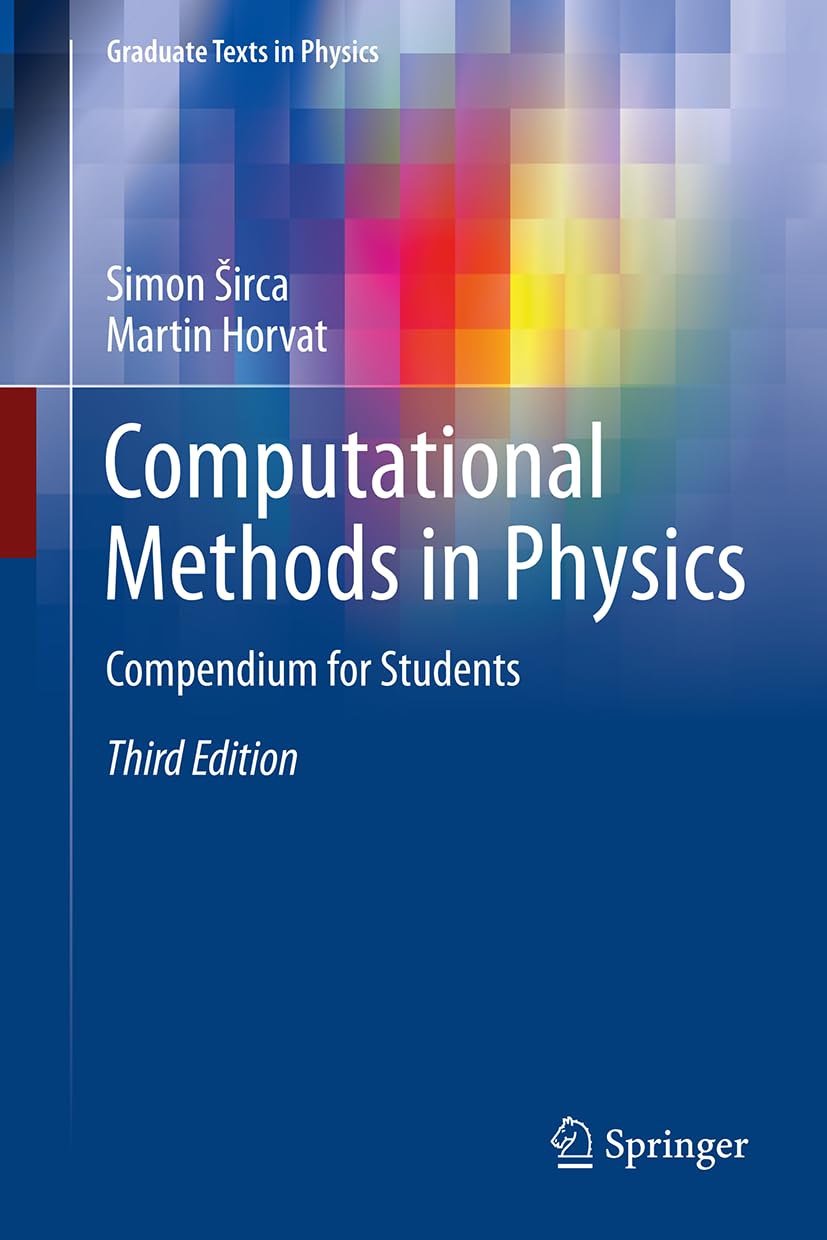
Computational Methods in Physics: Compendium for Students by Simon Sirca – A Comprehensive Guide to Numerical Techniques
Inclusive of all applicable taxes. FREE shipping on all orders.
Available Offers
- 🚚Free Delivery — Free shipping on all orders
- 💵Cash on Delivery — Pay when your order arrives
- ↩️15-Day Easy Returns — Hassle-free return policy
- 🔒Cash on Delivery — Pay safely when your order arrives
Check Delivery
Product Description
Introduction
For physics students and researchers in India, mastering computational methods is no longer optional—it is essential. Computational Methods in Physics: Compendium for Students by Simon Sirca is a meticulously crafted textbook that bridges the gap between theoretical physics and practical computation. Published by Springer, this hardcover edition offers a rigorous yet accessible guide to numerical techniques, error analysis, and algorithm design. Whether you are preparing for advanced research, working on your thesis, or teaching a computational physics course, this compendium provides the depth and clarity you need.
Book Overview
This revised and expanded edition builds on the strengths of its predecessor, offering a comprehensive survey of numerical methods tailored specifically for physics. The book emphasizes understanding over black-box usage, encouraging readers to develop a critical eye for error estimates, stability, and convergence. It covers everything from basic numerical integration to advanced topics like spectral methods for infinite domains and phase retrieval. With numerous worked examples and physics-rich problems, the text ensures that theoretical concepts are immediately grounded in real-world applications.
Key Highlights
- Revised and Expanded Edition – Includes a brand-new chapter on numerical integration and stable differentiation, plus fresh material on optimal filtering, gravitational many-body problems, Poincaré maps, and singular Sturm-Liouville problems.
- Physics-First Approach – Every method is introduced with a clear physics motivation, making it easier to see why a particular technique is chosen and how it applies to actual research scenarios.
- Focus on Error Control – Detailed discussions on error estimates, stability, and convergence help students avoid common pitfalls and produce reliable results.
- Practical Problem Sets – Each chapter concludes with comprehensive problems that challenge students to apply methods to realistic physics systems, from quantum mechanics to celestial mechanics.
- Updated Content – Covers time evolution techniques, regularization of orbits, and spectral methods for semi-infinite domains, keeping pace with modern computational physics research.
Inside the Book
The book is organized into self-contained chapters that progress from fundamental to advanced topics. The opening chapters lay the groundwork with numerical differentiation, integration, and root-finding. Subsequent chapters delve into ordinary and partial differential equations, eigenvalue problems, and Monte Carlo methods. Special attention is given to methods for stiff equations, symplectic integrators for Hamiltonian systems, and adaptive algorithms. The final chapters explore spectral methods, phase retrieval, and optimal filtering, providing a bridge to current research literature. Each section includes pseudocode and algorithmic descriptions, making the book suitable for implementation in any programming language.
Key Topics
- Numerical integration and stable differentiation techniques
- Error analysis, stability, and convergence criteria
- Solving ordinary and partial differential equations
- Eigenvalue problems and singular Sturm-Liouville problems
- Monte Carlo methods and statistical sampling
- Gravitational many-body problems and Poincaré maps
- Spectral methods for infinite and semi-infinite domains
- Phase retrieval and optimal filtering
- Time evolution algorithms for classical and quantum systems
Reader Benefits
By working through this compendium, you will gain a solid foundation in numerical methods that directly applies to physics research and coursework. You will learn to choose the right algorithm for a given problem, assess its accuracy, and optimize its performance. The emphasis on understanding rather than blind implementation means you will be able to debug and adapt methods for your unique needs. The updated content ensures that you are learning techniques that are actively used in contemporary physics—whether in condensed matter, astrophysics, or quantum information. Indian students will particularly appreciate the clear exposition and the focus on problem-solving, which aligns well with the rigorous training expected in our top universities and institutes.
Learning Outcomes
- Proficiency in implementing core numerical algorithms for physics problems
- Ability to critically evaluate numerical results using error estimates and stability analysis
- Skill in selecting optimal methods for specific applications, from ODEs to spectral decompositions
- Understanding of advanced topics such as symplectic integration and phase retrieval
- Confidence to tackle research-level computational challenges in physics
Who Should Read
This book is ideal for undergraduate and postgraduate physics students who are taking courses in computational physics or numerical methods. It is equally valuable for PhD students and early-career researchers who need a reliable reference for daily computational work. Teachers and instructors will find it a rich resource for designing assignments and lectures. The book assumes a basic familiarity with calculus, linear algebra, and introductory physics, but no prior experience with numerical computing is required—making it accessible to motivated students at the B.Sc. and M.Sc. levels in Indian universities.
About the Author
Simon Sirca is an accomplished physicist and educator with extensive experience in computational methods. His research spans multiple areas of theoretical and computational physics, and he has a deep understanding of the challenges students face when learning numerical techniques. This compendium reflects his commitment to clear, rigorous, and practical teaching, drawing on years of classroom experience and research collaboration. His work ensures that the book is not just a collection of formulas, but a true guide to thinking computationally about physics.
About the Publisher
Springer is one of the world's leading academic publishers, known for its high-quality textbooks and research monographs in science, technology, and mathematics. With a reputation for rigorous peer review and editorial excellence, Springer ensures that every book meets the highest standards of accuracy and relevance. This edition of Computational Methods in Physics is part of Springer's commitment to supporting physics education globally, including in India, where the demand for skilled computational physicists continues to grow.
Conclusion
Computational Methods in Physics: Compendium for Students is more than a textbook—it is a lifelong companion for anyone serious about using computation to explore the physical world. With its updated content, physics-centric approach, and emphasis on critical thinking, it stands out as an indispensable resource. Whether you are a student at an IIT, IISc, a central university, or a private college, this hardcover volume will serve you well in your academic journey and beyond. Add it to your library today and take a confident step toward mastering computational physics.
Quick Summary
Computational Methods in Physics: Compendium for Students by Simon Sirca is a comprehensive textbook designed to equip physics students and researchers with essential numerical techniques. The book goes beyond mere recipe-style instruction, encouraging readers to critically evaluate methods, understand error propagation, assess stability and convergence, and choose optimal algorithms for their specific problems. This revised edition adds significant new content, including a chapter on numerical integration and stable differentiation, as well as coverage of optimal filtering, integration of gravitational many-body problems, and computation of Poincaré maps. Each chapter is rich with physics-based examples and concludes with challenging problems that reinforce learning. The author’s approach fosters a skeptical mindset toward black-box computational tools, promoting deeper understanding and more reliable results. Ideal for advanced undergraduate and graduate students, as well as practicing physicists, this book serves as both a classroom text and a handy desk reference. By purchasing from Bookshops.in, Indian readers gain access to this authoritative Springer publication with reliable delivery and competitive pricing.
Book Highlights
Book Specifications
| ISBN-13 | 9783031685651 |
| ISBN-10 | 3031685652 |
| Publisher | Springer Nature |
| Language | English |
| Dimensions | 16.59 x 4.9 x 23.67 cm |
| Weight | 1 kg 890 g |
| Category | Non-Core Engineering › Mathematics & Statistics |
| Genre | Non-fiction |
| Original Language | English |
Frequently Asked Questions
What is the main focus of this book?
Who is the author?
Is this book suitable for beginners?
Does the book include programming code?
What new topics are in this edition?
Is this book used in Indian universities?
What is the price in INR?
Does the book cover error analysis?
Can researchers use this book?
What makes this book different from other numerical methods books?
Are there exercises in the book?
Is the language English?
How can I order this book?
Readers Also Search For
Customers Also Bought
Mathematics
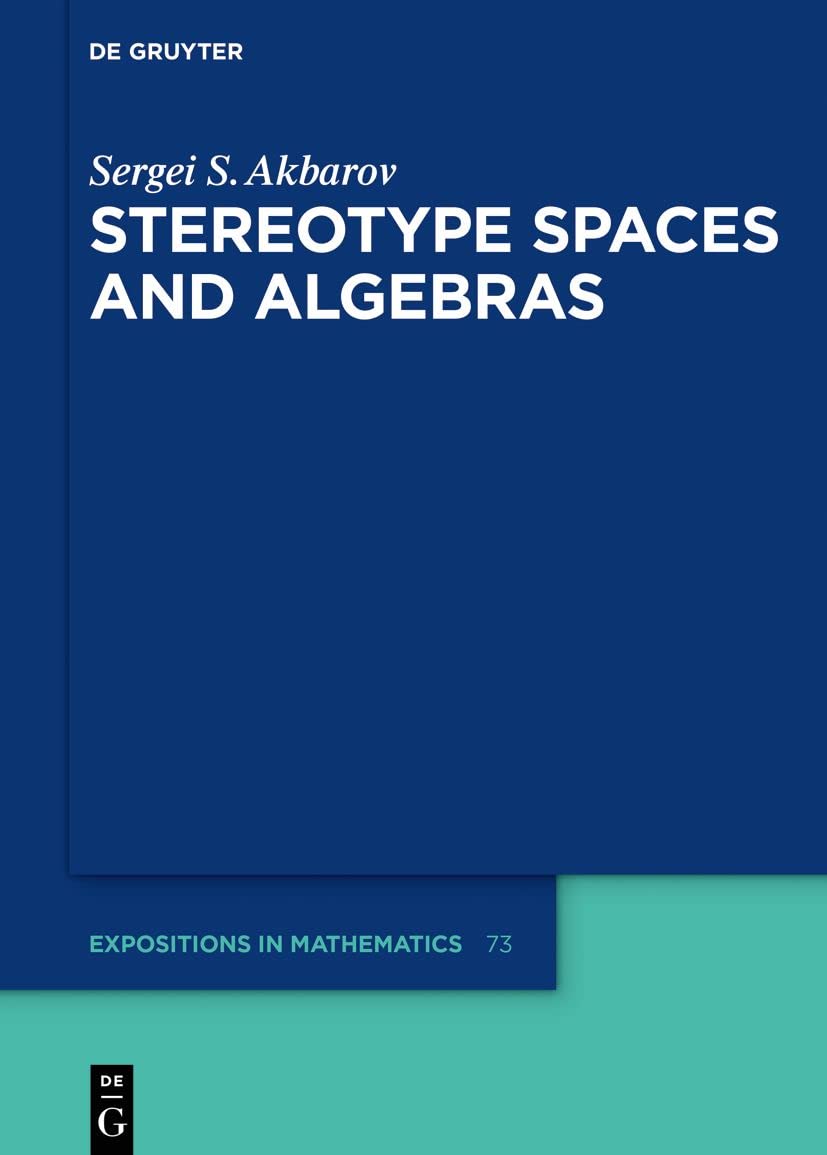
Stereotype Spaces and Algebras: 73 (De Gruyter Expositions in Mathematics, 73)
Mathematics
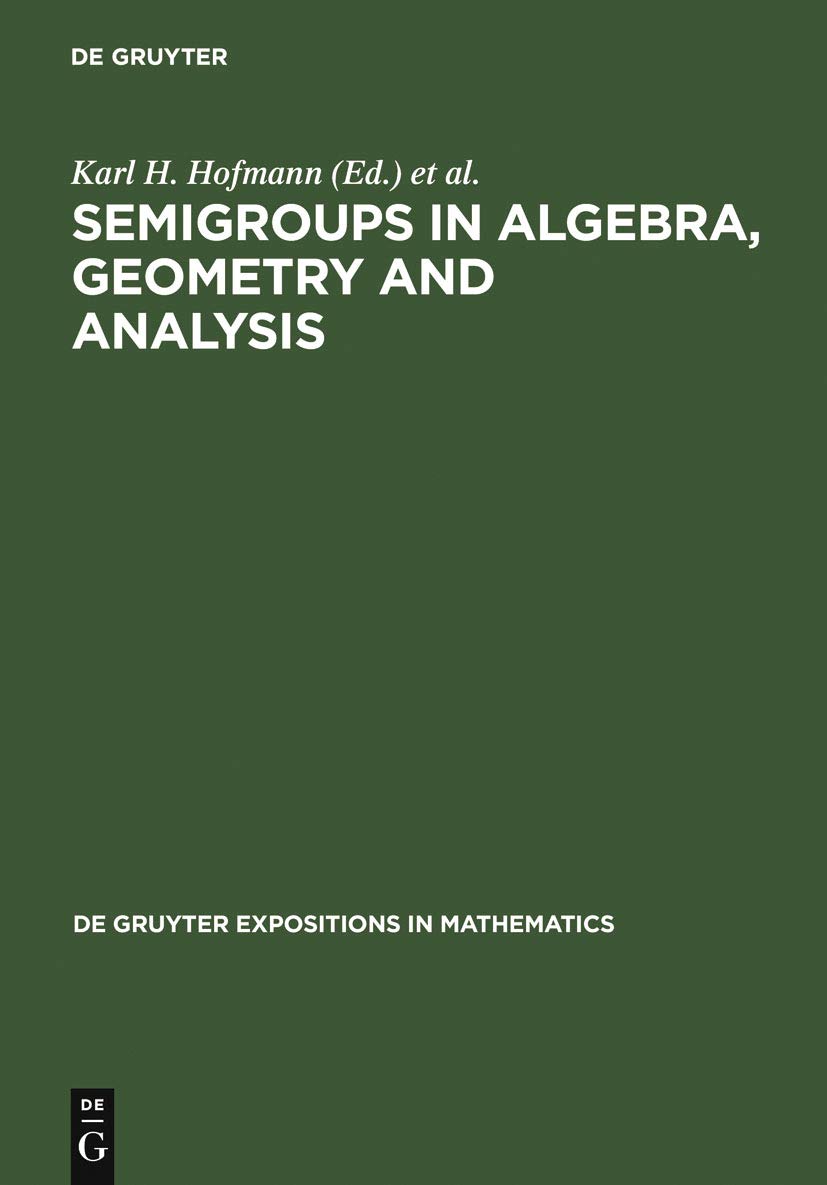
Semigroups in Algebra, Geometry and Analysis: 20 (De Gruyter Expositions in Mathematics, 20)
Mathematics
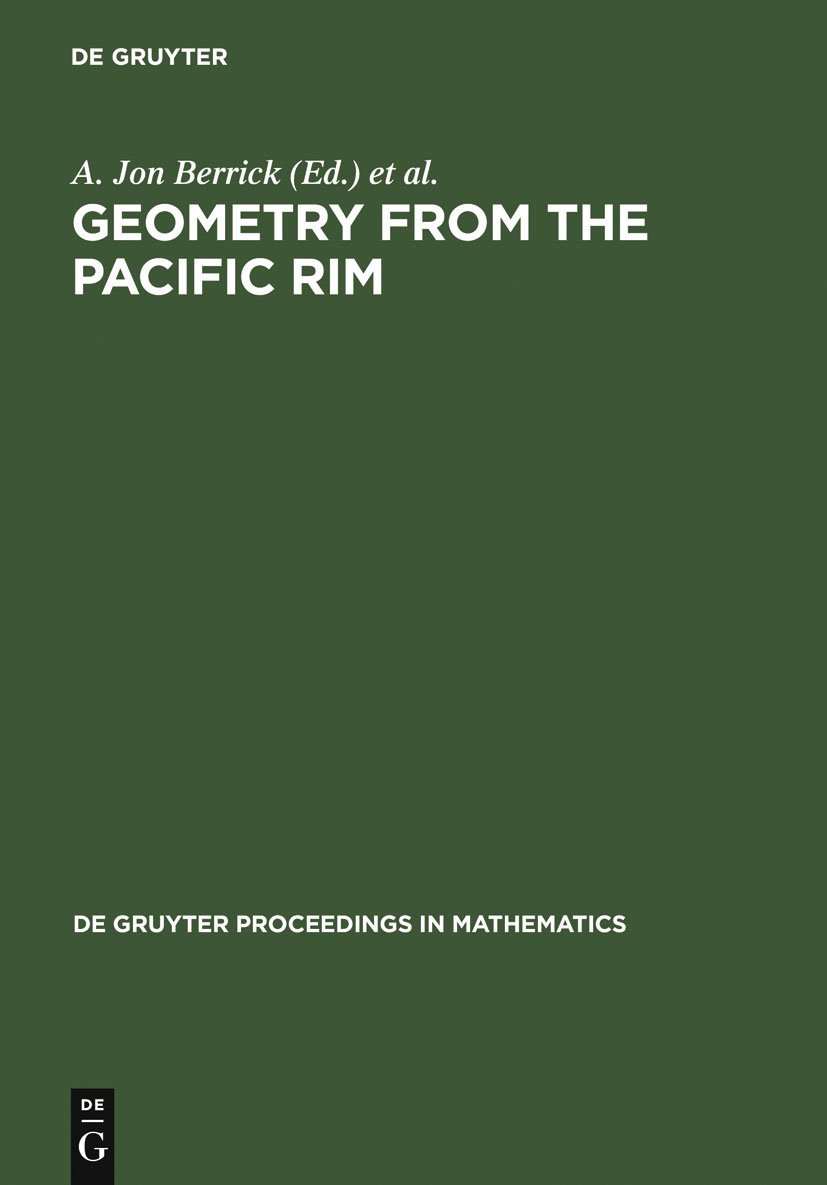
Geometry from the Pacific Rim: Proceedings of the Pacific Rim Geometry Conference held at National University of Singapore, Republic of Singapore, ... 1994 (De Gruyter Proceedings in Mathematics)
Mathematics
First International Tainan-Moscow Algebra Workshop: Proceedings of the International Conference held at National Cheng Kung University Tainan, Taiwan, ... 1994 (De Gruyter Proceedings in Mathematics)

Mathematics
Differential Geometry - Proceedings of the VIII International Colloquium (English, Jesus A. Alvarez Lopez | Eduardo Garcia-Rio)
Mathematics
Mathematical Theory of Optimal Processes (Classics of Soviet Mathematics)
Related Products
View All
Science & Mathematics
Elements of Pelagos Biology: With Focus on the Mediterranean Sea
Science & Mathematics
Squid - Superconducting Quantum Interference Devices and Their Applications: Proceedings of the International Conference on Superconducting Quantum Devices, Berlin-west, October 4-8, 1976

Science & Mathematics
Thermodynamics and Pattern Formation in Biology
Science & Mathematics
The Nature of Mathematics and the Mathematics of Nature by S. Andersson – Mathematics & Science

Science & Mathematics
Linear Algebra | by Stephen Friedberg | Arnold Insel | Lawrence Spence | Pearson | by Stephen Friedberg | Arnold Insel | Lawrence Spence | Pearson | by Stephen Friedberg | Arnold Insel | Lawrence Spence | Pearson | by Stephen Friedberg | Arnold Insel | Lawrence Spence | Pearson | by Stephen Friedberg | Arnold Insel | Lawrence Spence | Pearson | by Stephen Friedberg | Arnold Insel | Lawrence Spence | Pearson | by Stephen Friedberg | Arnold Insel | Lawrence Spence | Pearson | by Stephen Friedberg
Science & Mathematics