

Modern Techniques in Protein Nmr: Advanced Biomolecular NMR Methods for Researchers and Students by N. Rama Krishna
Inclusive of all applicable taxes. FREE shipping on all orders.
Available Offers
- 🚚Free Delivery — Free shipping on all orders
- 💵Cash on Delivery — Pay when your order arrives
- ↩️15-Day Easy Returns — Hassle-free return policy
- 🔒Cash on Delivery — Pay safely when your order arrives
Check Delivery
Product Description
Introduction
Modern Techniques in Protein NMR, edited by N. Rama Krishna, is a definitive reference volume that captures the cutting-edge developments in biomolecular nuclear magnetic resonance spectroscopy. Published by Springer, this hardbound edition is an essential resource for researchers, graduate students, and professionals working in structural biology, biochemistry, and biophysics. As the 16th volume in the acclaimed Biological Magnetic Resonance series, it inaugurates a special topic series focusing on the latest experimental and methodological innovations in protein NMR, with an emphasis on advances from the last five years.
Book Overview
This volume presents a comprehensive collection of chapters written by world-renowned experts who have shaped the field of protein NMR. The book is organized into two broad sections: the first addresses the challenges and solutions for studying large proteins, complexes, and membrane proteins; the second delves into advanced pulse methods. Each chapter offers in-depth theoretical background, practical protocols, and critical insights, making this book both a scholarly treatise and a practical laboratory companion. The text is designed to bridge the gap between fundamental principles and state-of-the-art applications, ensuring that readers gain a thorough understanding of modern NMR techniques.
Key Highlights
- Expert Authorship: Contributions from pioneers such as Marius Clore, Angela Gronenborn, and other leading scientists.
- Special Topic Series: First of a two-volume set (Volume 16 and 17) dedicated to modern protein NMR.
- Comprehensive Coverage: Includes large protein systems, membrane proteins, and pulse sequence innovations.
- Practical Focus: Detailed methodologies, experimental strategies, and data analysis approaches.
- High-Quality Production: Durable hardcover binding, suitable for long-term use in academic libraries and research labs.
Inside the Book
The opening chapter by Clore and Gronenborn reviews NMR strategies for structure determination, emphasizing the use of long-range restraints. Subsequent chapters explore topics such as residual dipolar couplings, transverse relaxation-optimized spectroscopy (TROSY), and isotope labeling techniques for large macromolecular assemblies. The pulse methods section covers advanced experiments including multidimensional NMR, relaxation measurements, and novel coherence transfer pathways. Each chapter is richly illustrated with figures, spectra, and tables that clarify complex concepts.
Key Topics
- Structure determination of large proteins and protein complexes
- Membrane protein NMR: methods and applications
- Long-range structural restraints and their utilization
- Transverse relaxation-optimized spectroscopy (TROSY)
- Residual dipolar couplings and alignment media
- Advanced pulse sequences and coherence transfer
- Isotope labeling strategies for high-molecular-weight systems
- Relaxation theory and dynamics measurements
Reader Benefits
Readers will gain a deep understanding of how modern NMR techniques overcome traditional size limitations, enabling the study of biomolecules that were once considered intractable. The book provides practical guidance for designing experiments, selecting appropriate pulse sequences, and interpreting complex spectral data. It also serves as a valuable reference for staying current with rapidly evolving methodologies, helping researchers to push the boundaries of structural biology.
Learning Outcomes
- Understand the principles behind advanced NMR methods for large proteins and complexes.
- Learn how to implement TROSY, residual dipolar couplings, and other techniques in your own research.
- Gain insights into the design of isotope labeling schemes for membrane proteins.
- Develop the ability to critically evaluate NMR data and structural models.
- Acquire knowledge of pulse sequence development and optimization.
Who Should Read
This book is ideal for postgraduate students and researchers in structural biology, biochemistry, biophysics, and chemistry. It is also highly relevant for NMR spectroscopists, pharmaceutical scientists involved in drug discovery, and academicians teaching advanced bioanalytical techniques. Professionals working in protein engineering, molecular biophysics, and related interdisciplinary fields will find the content indispensable for their work.
About the Author
N. Rama Krishna is a distinguished professor and researcher with decades of experience in biomolecular NMR spectroscopy. He has contributed extensively to the development of NMR methods for studying protein structure and dynamics. His editorial leadership ensures that the volume presents a coherent and authoritative overview of the field. The contributing authors are internationally recognized experts, each bringing unique perspectives and breakthrough discoveries to the chapters.
About the Publisher
Springer is one of the world's leading academic and scientific publishers, known for its rigorous peer-review process and high-quality publications in science, technology, and medicine. The Biological Magnetic Resonance series, under which this volume is published, is a trusted resource for the NMR community. Springer's commitment to excellence ensures that this book meets the highest standards of accuracy and scholarship.
Conclusion
Modern Techniques in Protein NMR is an indispensable addition to any research library or personal collection. It captures a pivotal moment in the evolution of biomolecular NMR, providing both a snapshot of current capabilities and a roadmap for future innovations. Whether you are a seasoned spectroscopist or a newcomer to the field, this volume offers the knowledge and inspiration needed to advance your research. Order your copy today from Bookshops.in and explore the frontiers of protein NMR.
Quick Summary
Modern Techniques in Protein Nmr by N. Rama Krishna is a comprehensive volume that delves into advanced biomolecular NMR methods, with a special emphasis on large proteins, protein complexes, and membrane proteins. This book, part of the Biological Magnetic Resonance series, brings together contributions from world-class experts who present the latest developments in NMR pulse techniques and experimental strategies. Readers will gain a deep understanding of how to apply modern NMR approaches to solve complex structural and dynamic problems in biology. The book is ideal for graduate students, postdoctoral researchers, and established scientists in structural biology, biophysics, and biochemistry. It covers topics such as isotope labeling, relaxation measurements, and membrane protein NMR, providing both theoretical foundations and practical insights. By purchasing from Bookshops.in, Indian customers receive a genuine, high-quality hardcover edition with fast delivery and excellent customer service, making it a valuable addition to any research library.
Book Highlights
Book Specifications
| ISBN-13 | 9780306459528 |
| ISBN-10 | 0306459523 |
| Publisher | Springer Verlag |
| Language | English |
| Dimensions | 15.6 x 2.39 x 23.39 cm |
| Weight | 726 g |
| Country | USA |
| Category | Radiology & Nuclear Medicine › Diagnostic Imaging |
| Series | Biological Magnetic Resonance |
| Genre | Science |
| Reading Age | 18+ |
| Original Language | English |
Frequently Asked Questions
What is the main focus of Modern Techniques in Protein Nmr?
Who is the author of this book?
Is this book suitable for beginners in NMR?
Does the book cover computational methods?
What type of binding does this book have?
Can I use this book for my PhD research?
Are there practical examples or case studies?
Is this book part of a series?
Does the book include membrane protein NMR?
What is the ISBN-13 of this book?
Is this book available in Indian bookstores?
What language is the book written in?
Does the book cover pulse sequence design?
Why should I buy this book from Bookshops.in?
Readers Also Search For
Customers Also Bought

Anatomy
Ultrastructure of the Digestive Tract: 4 (Electron Microscopy in Biology and Medicine)

Anatomy
Ultrastructure of the Connective Tissue Matrix: 3 (Electron Microscopy in Biology and Medicine)

Anatomy
Reproductive Genetics (Royal College of Obstetricians and Gynaecologists Study Group)

Anatomy
Human Gross Anatomy: An Outline Text by Robert J. Leonard – Medical Anatomy

Pharmacology
Mathematical Modeling and Simulation in Enteric Neurobiology

Anatomy
Nature’s Patterns and the Fractional Calculus: 2 (Fractional Calculus in Applied Sciences and Engineering, 2)
Related Products
View All
Medicine & Health Sciences
Pediatrics on Call | by Charles A. Pohl | Kathleen Bradford | Clara Callahan | McGraw Hill / Medical | by Charles A. Pohl | Kathleen Bradford | Clara Callahan | McGraw Hill / Medical | by Charles A. Pohl | Kathleen Bradford | Clara Callahan | McGraw Hill / Medical | by Charles A. Pohl | Kathleen Bradford | Clara Callahan | McGraw Hill / Medical | by Charles A. Pohl | Kathleen Bradford | Clara Callahan | McGraw Hill / Medical | by Charles A. Pohl | Kathleen Bradford | Clara Callahan | McGraw Hill

Medicine & Health Sciences
The Physician's Guide to Depression and Bipolar Disorders | by Dwight L. Evans | Dennis S. Charney | Lydia Lewis | McGraw Hill / Medical | by Dwight L. Evans | Dennis S. Charney | Lydia Lewis | McGraw Hill / Medical | by Dwight L. Evans | Dennis S. Charney | Lydia Lewis | McGraw Hill / Medical | by Dwight L. Evans | Dennis S. Charney | Lydia Lewis | McGraw Hill / Medical | by Dwight L. Evans | Dennis S. Charney | Lydia Lewis | McGraw Hill / Medical | by Dwight L. Evans | Dennis S. Charney | Lydi
Medicine & Health Sciences
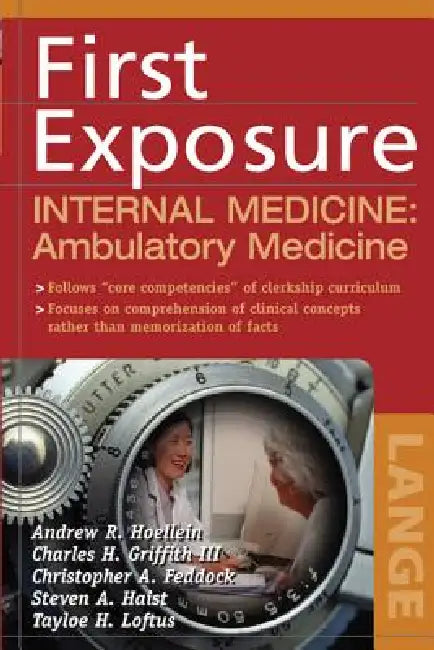
First Exposure to Internal Medicine | by Andrew R. Hoellein | Charles H. Griffith | McGraw Hill / Medical | by Andrew R. Hoellein | Charles H. Griffith | McGraw Hill / Medical | by Andrew R. Hoellein | Charles H. Griffith | McGraw Hill / Medical | by Andrew R. Hoellein | Charles H. Griffith | McGraw Hill / Medical | by Andrew R. Hoellein | Charles H. Griffith | McGraw Hill / Medical | by Andrew R. Hoellein | Charles H. Griffith | McGraw Hill / Medical | by Andrew R. Hoellein | Charles H. Griffit
Medicine & Health Sciences
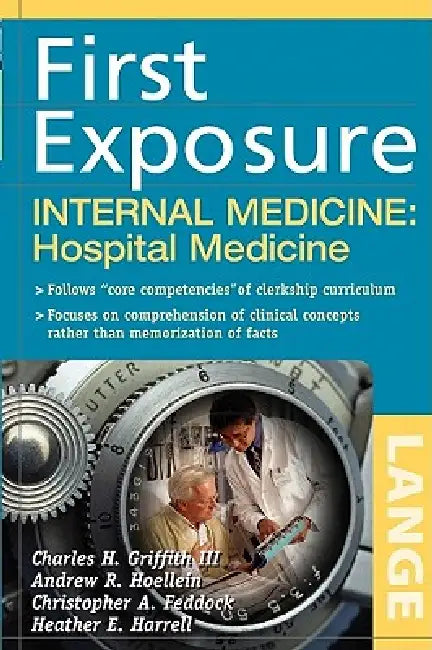
First Exposure to Internal Medicine | by Charles H. Griffith | Andrew R. Hoellein | McGraw Hill / Medical | by Charles H. Griffith | Andrew R. Hoellein | McGraw Hill / Medical | by Charles H. Griffith | Andrew R. Hoellein | McGraw Hill / Medical | by Charles H. Griffith | Andrew R. Hoellein | McGraw Hill / Medical | by Charles H. Griffith | Andrew R. Hoellein | McGraw Hill / Medical | by Charles H. Griffith | Andrew R. Hoellein | McGraw Hill / Medical | by Charles H. Griffith | Andrew R. Hoellei

Medicine & Health Sciences
Internal Medicine | by Paul G. Schmitz | Kevin J. Martin | McGraw Hill / Medical | by Paul G. Schmitz | Kevin J. Martin | McGraw Hill / Medical | by Paul G. Schmitz | Kevin J. Martin | McGraw Hill / Medical | by Paul G. Schmitz | Kevin J. Martin | McGraw Hill / Medical | by Paul G. Schmitz | Kevin J. Martin | McGraw Hill / Medical | by Paul G. Schmitz | Kevin J. Martin | McGraw Hill / Medical | by Paul G. Schmitz | Kevin J. Martin | McGraw Hill / Medical | by Paul G. Schmitz | Kevin J. Martin |

Medicine & Health Sciences