

The Physics of Coronary Blood Flow by M. Zamir – A Comprehensive Study of Cardiovascular Hemodynamics for Medical Profes
Inclusive of all applicable taxes. FREE shipping on all orders.
Available Offers
- 🚚Free Delivery — Free shipping on all orders
- 💵Cash on Delivery — Pay when your order arrives
- ↩️15-Day Easy Returns — Hassle-free return policy
- 🔒Cash on Delivery — Pay safely when your order arrives
Check Delivery
Product Description
Introduction
Understanding the intricate mechanics of coronary blood flow is essential for students, researchers, and medical professionals alike. The Physics of Coronary Blood Flow by M. Zamir offers a rigorous yet accessible exploration of the biophysical principles governing blood circulation in the heart. Published by Springer, this hardcover edition is a definitive resource for anyone seeking to bridge the gap between physics and cardiovascular physiology.
Book Overview
This book systematically examines the fluid dynamics, pressure-flow relationships, and mechanical forces that shape coronary circulation. Unlike standard clinical texts, it places a strong emphasis on the underlying physical laws—from the Navier-Stokes equations to the elasticity of arterial walls—providing a solid foundation for quantitative analysis. With clear mathematical derivations and real-world examples, it serves as both a textbook and a reference for advanced study.
Key Highlights
- Comprehensive coverage of coronary hemodynamics, including steady and pulsatile flow models.
- Detailed mathematical framework for understanding resistance, capacitance, and impedance in coronary vessels.
- Integration of clinical insights with physical theory, linking stenosis, autoregulation, and myocardial perfusion.
- Over 100 illustrations and diagrams that clarify complex concepts.
- End-of-chapter exercises to reinforce learning and problem-solving skills.
Inside the Book
The book is organized into ten well-structured chapters. It begins with the basic physics of fluid flow, then progresses to the specialized anatomy of coronary arteries, the mechanics of vessel wall deformation, and the dynamics of blood flow under normal and pathological conditions. Later chapters delve into the effects of arterial branching, the role of the microcirculation, and the impact of heart contraction on coronary perfusion. Each concept is supported by equations, graphs, and clinical correlations.
Key Topics
- Fundamentals of fluid dynamics and viscosity
- Poiseuille flow and its limitations in pulsatile systems
- Pressure-flow relationships in coronary arteries
- Wall shear stress and endothelial function
- Coronary stenosis and pressure drop calculations
- Autoregulation and metabolic control of blood flow
- Myocardial oxygen supply-demand balance
Reader Benefits
Readers will gain a deep, quantitative understanding of how blood flows through the heart's own vessels. The book equips you to critically evaluate research papers, design experiments, or apply physical principles in clinical settings. It demystifies complex topics like wave reflection, compliance, and the Windkessel effect, making them intuitive. Indian students preparing for competitive exams or research careers in biomedical engineering, cardiology, or physiology will find this book invaluable.
Learning Outcomes
- Analyze coronary circulation using fundamental laws of physics.
- Model blood flow in healthy and diseased coronary arteries.
- Interpret clinical measurements such as fractional flow reserve (FFR) and coronary flow reserve (CFR).
- Understand the biomechanical basis of atherosclerosis and ischemia.
- Apply mathematical techniques to solve problems in cardiovascular mechanics.
Who Should Read
This book is ideal for graduate students and researchers in biomedical engineering, cardiovascular physics, and physiology. It is also highly recommended for cardiologists, radiologists, and medical physicists who wish to deepen their theoretical grounding. Advanced undergraduates with a strong background in mathematics and physics will also benefit greatly.
About the Author
M. Zamir is a distinguished researcher and educator with decades of experience in cardiovascular fluid dynamics. He has contributed extensively to the scientific literature on coronary blood flow and is known for his ability to translate complex physical concepts into accessible knowledge. His work bridges engineering and medicine, making him a trusted voice in the field.
About the Publisher
Springer is a globally renowned academic publisher, known for its high-quality scientific and technical books. With a legacy spanning over 180 years, Springer's publications are trusted by researchers, universities, and professionals worldwide. This hardcover edition reflects Springer's commitment to excellence in content and production.
Conclusion
The Physics of Coronary Blood Flow is an essential addition to any serious science or medical library. Whether you are a student seeking mastery or a professional aiming to update your knowledge, this book provides the depth and clarity you need. Order your hardcover copy from Bookshops.in today and explore the fascinating physics behind the heart's own circulation.
Quick Summary
The Physics of Coronary Blood Flow by M. Zamir is a definitive academic work that unravels the complex fluid dynamics and mechanical principles underlying coronary circulation. Written for advanced students, researchers, and clinicians, the book bridges the gap between pure physics and cardiovascular medicine. Readers will explore topics such as pressure-flow relationships, autoregulation, shear stress, and the impact of stenosis on myocardial perfusion. The text is rich with mathematical models, diagrams, and clinical correlations, making it an indispensable tool for those pursuing cardiology, biomedical engineering, or medical physics. By purchasing from Bookshops.in, Indian readers gain access to a genuine Springer hardcover edition, ensuring durability and reliable content. Whether preparing for competitive exams or conducting cutting-edge research, this book provides the foundational knowledge needed to understand how blood flows through the heart's own vessels.
Book Highlights
Book Specifications
| ISBN-13 | 9780387252971 |
| ISBN-10 | 0387252975 |
| Publisher | SPRINGER |
| Language | English |
| Dimensions | 16.26 x 2.54 x 23.88 cm |
| Weight | 210 g |
| Country | Germany |
| Category | Basic Sciences › Physiology |
| Genre | Science & Mathematics |
| Reading Age | Adult |
| Original Language | English |
Frequently Asked Questions
What is the main focus of this book?
Who is the author M. Zamir?
Is this book suitable for Indian medical students?
Does the book include mathematical equations?
Is this book relevant for clinical practice?
Can this book be used for research?
What is the price in India?
Is the language easy to understand?
Does it cover coronary artery disease?
Are there illustrations?
Is this a textbook or a monograph?
Why buy from Bookshops.in?
Readers Also Search For
Customers Also Bought

Anatomy
Ultrastructure of the Digestive Tract: 4 (Electron Microscopy in Biology and Medicine)

Anatomy
Ultrastructure of the Connective Tissue Matrix: 3 (Electron Microscopy in Biology and Medicine)

Anatomy
Reproductive Genetics (Royal College of Obstetricians and Gynaecologists Study Group)

Anatomy
Human Gross Anatomy: An Outline Text by Robert J. Leonard – Medical Anatomy

Pharmacology
Mathematical Modeling and Simulation in Enteric Neurobiology

Anatomy
Nature’s Patterns and the Fractional Calculus: 2 (Fractional Calculus in Applied Sciences and Engineering, 2)
Related Products
View All
Medicine & Health Sciences
Handbook of Hospitality Strategic Management | by Olsen Michael | Taylor & Francis Ltd | by Olsen Michael | Taylor & Francis Ltd | by Olsen Michael | Taylor & Francis Ltd | by Olsen Michael | Taylor & Francis Ltd | by Olsen Michael | Taylor & Francis Ltd | by Olsen Michael | Taylor & Francis Ltd | by Olsen Michael | Taylor & Francis Ltd | by Olsen Michael | Taylor & Francis Ltd | by Olsen Michael | Taylor & Francis Ltd | by Olsen Michael | Taylor & Francis

Medicine & Health Sciences
Pediatrics on Call | by Charles A. Pohl | Kathleen Bradford | Clara Callahan | McGraw Hill / Medical | by Charles A. Pohl | Kathleen Bradford | Clara Callahan | McGraw Hill / Medical | by Charles A. Pohl | Kathleen Bradford | Clara Callahan | McGraw Hill / Medical | by Charles A. Pohl | Kathleen Bradford | Clara Callahan | McGraw Hill / Medical | by Charles A. Pohl | Kathleen Bradford | Clara Callahan | McGraw Hill / Medical | by Charles A. Pohl | Kathleen Bradford | Clara Callahan | McGraw Hill

Medicine & Health Sciences
The Physician's Guide to Depression and Bipolar Disorders | by Dwight L. Evans | Dennis S. Charney | Lydia Lewis | McGraw Hill / Medical | by Dwight L. Evans | Dennis S. Charney | Lydia Lewis | McGraw Hill / Medical | by Dwight L. Evans | Dennis S. Charney | Lydia Lewis | McGraw Hill / Medical | by Dwight L. Evans | Dennis S. Charney | Lydia Lewis | McGraw Hill / Medical | by Dwight L. Evans | Dennis S. Charney | Lydia Lewis | McGraw Hill / Medical | by Dwight L. Evans | Dennis S. Charney | Lydi
Medicine & Health Sciences
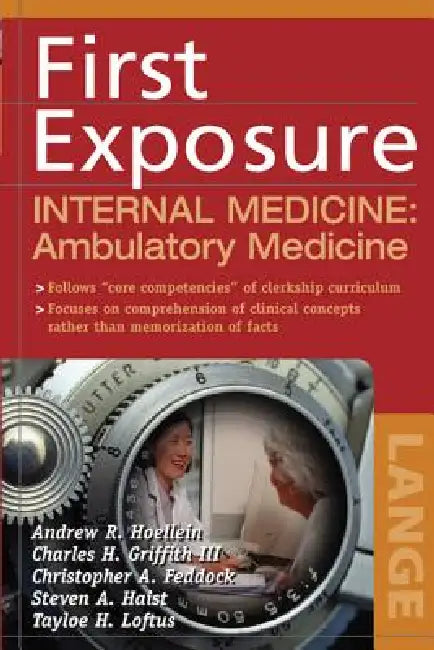
First Exposure to Internal Medicine | by Andrew R. Hoellein | Charles H. Griffith | McGraw Hill / Medical | by Andrew R. Hoellein | Charles H. Griffith | McGraw Hill / Medical | by Andrew R. Hoellein | Charles H. Griffith | McGraw Hill / Medical | by Andrew R. Hoellein | Charles H. Griffith | McGraw Hill / Medical | by Andrew R. Hoellein | Charles H. Griffith | McGraw Hill / Medical | by Andrew R. Hoellein | Charles H. Griffith | McGraw Hill / Medical | by Andrew R. Hoellein | Charles H. Griffit
Medicine & Health Sciences
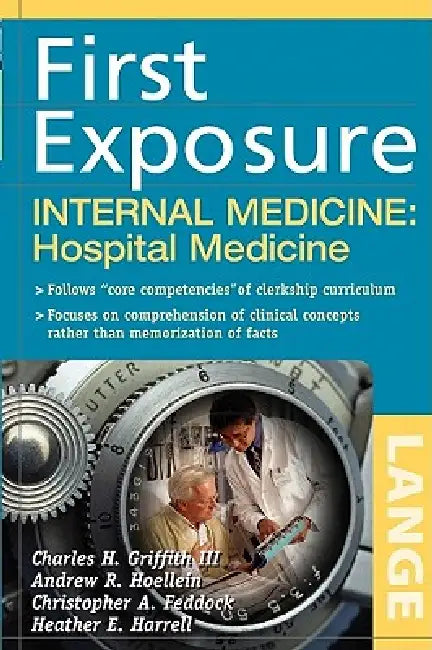
First Exposure to Internal Medicine | by Charles H. Griffith | Andrew R. Hoellein | McGraw Hill / Medical | by Charles H. Griffith | Andrew R. Hoellein | McGraw Hill / Medical | by Charles H. Griffith | Andrew R. Hoellein | McGraw Hill / Medical | by Charles H. Griffith | Andrew R. Hoellein | McGraw Hill / Medical | by Charles H. Griffith | Andrew R. Hoellein | McGraw Hill / Medical | by Charles H. Griffith | Andrew R. Hoellein | McGraw Hill / Medical | by Charles H. Griffith | Andrew R. Hoellei

Medicine & Health Sciences