
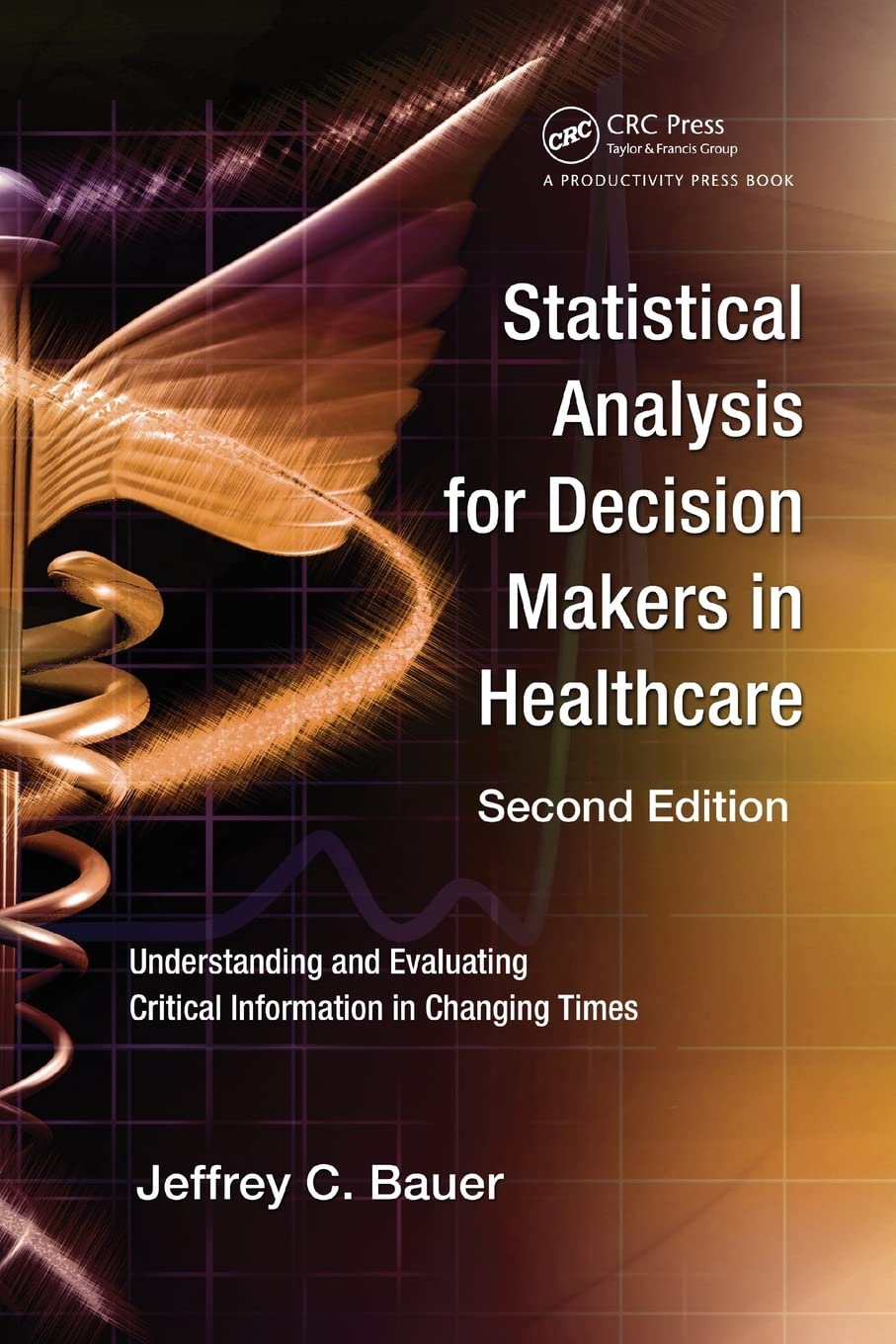
Statistical Analysis for Decision Makers in Healthcare: Understanding and Evaluating Critical Information in Changing Ti
Inclusive of all applicable taxes. FREE shipping on all orders.
Available Offers
- 🚚Free Delivery — Free shipping on all orders
- 💵Cash on Delivery — Pay when your order arrives
- ↩️15-Day Easy Returns — Hassle-free return policy
- 🔒Cash on Delivery — Pay safely when your order arrives
Check Delivery
Product Description
Introduction
In an era where healthcare decisions are increasingly driven by complex data, the ability to interpret statistical information with clarity and confidence is no longer optional—it is essential. Statistical Analysis for Decision Makers in Healthcare: Understanding and Evaluating Critical Information in Changing Times by Jeffrey C. Bauer is a comprehensive guide designed to empower healthcare professionals, administrators, and students to navigate the often confusing world of healthcare statistics. This hardcover edition, published by Productivity Press, offers a jargon-free, mathematically accessible approach to understanding how data shapes medical policy, treatment outcomes, and institutional strategy. For Indian readers and students looking to build a strong foundation in healthcare analytics, this book serves as a trusted companion in a rapidly evolving field.
Book Overview
This book is not a traditional textbook filled with complex formulas and abstract theories. Instead, it focuses on the practical application of statistical reasoning in real-world healthcare settings. Bauer demystifies the numbers that flood the healthcare sector—from insurance claims and clinical trials to government health surveys—and teaches readers how to separate reliable evidence from misleading or dangerous statistics. The second edition has been thoroughly updated to reflect the latest trends, including the impact of digital health records, value-based care, and the growing role of data in patient safety. Whether you are a hospital administrator in Mumbai, a public health student in Delhi, or a policymaker in Bengaluru, this book will help you make more informed decisions based on sound analytical thinking.
Key Highlights
- No Mathematical Prerequisites: The book explains statistical concepts using plain English, making it accessible to readers without a background in mathematics or statistics.
- Real-World Healthcare Examples: Each chapter uses case studies and examples drawn from actual healthcare scenarios, ensuring relevance and practical applicability.
- Focus on Misuses of Statistics: Bauer dedicates significant attention to common errors, biases, and misleading claims that often appear in healthcare literature and media.
- Updated for Modern Challenges: The second edition includes new material on big data, predictive analytics, and the statistical challenges posed by the COVID-19 pandemic.
- Critical Thinking Framework: Readers learn a systematic approach to evaluating data sources, study designs, and statistical claims.
Inside the Book
The book is structured into clear, logical sections that build upon each other. It begins with the fundamental question: Why do healthcare professionals need to understand statistics? From there, it moves into core concepts such as averages, variability, probability, and correlation—always with a focus on how these concepts are used (and misused) in healthcare. Subsequent chapters explore more advanced topics like regression analysis, hypothesis testing, and the interpretation of clinical trial results. Each chapter ends with a summary of key takeaways and thought-provoking questions that encourage readers to apply what they have learned. The tone is conversational and supportive, making even the most daunting topics feel approachable.
Key Topics
- Understanding Descriptive Statistics: Mean, median, mode, standard deviation, and how they apply to patient data and hospital performance metrics.
- Probability and Risk Assessment: How to interpret risk ratios, odds ratios, and absolute versus relative risk in medical studies.
- Sampling and Study Design: The importance of random sampling, sample size, and common pitfalls in observational and experimental studies.
- Correlation vs. Causation: Why a statistical relationship does not always imply a cause-and-effect link, with examples from healthcare research.
- Statistical Significance and Confidence Intervals: What p-values really mean and how to avoid overinterpreting them.
- Data Visualization: How to read and critique graphs, charts, and tables commonly used in healthcare reports.
- Ethical Use of Statistics: The responsibility of decision makers to use data honestly and transparently.
Reader Benefits
By reading this book, you will gain the confidence to question the numbers presented to you in meetings, reports, and research papers. You will learn to identify when statistics are being used to manipulate or mislead, and you will be equipped with the tools to demand better evidence. For professionals in hospital management, public health, nursing, or pharmaceutical sectors, this skill set can lead to improved patient outcomes, more efficient resource allocation, and stronger strategic planning. Students will find this book an invaluable supplement to their coursework, helping them bridge the gap between theory and practice. Moreover, the practical focus means you can immediately apply the concepts to your own work or studies.
Learning Outcomes
- Understand the basic principles of statistical analysis without needing to perform complex calculations.
- Critically evaluate statistical claims made in healthcare news, research articles, and policy documents.
- Recognize common statistical errors and biases that can lead to flawed decisions.
- Communicate statistical findings effectively to colleagues, patients, and stakeholders.
- Apply a structured framework for making data-informed decisions in clinical and administrative settings.
Who Should Read
This book is ideal for healthcare administrators, hospital managers, clinical directors, public health officials, policy analysts, and healthcare consultants. It is also highly recommended for students pursuing degrees in medicine, nursing, public health, health administration, or health informatics. Additionally, journalists and advocates who cover healthcare issues will find the book useful for interpreting data responsibly. No prior statistical training is required, making it suitable for anyone who wants to become a more critical consumer of healthcare information.
About the Author
Jeffrey C. Bauer is a nationally recognized healthcare futurist, economist, and author with decades of experience in the healthcare industry. He has consulted for hospitals, insurance companies, and government agencies across the United States, and he is known for his ability to translate complex data into actionable insights. Bauer has written numerous books and articles on healthcare reform, technology, and management, and he is a sought-after speaker at conferences worldwide. His practical, no-nonsense approach makes him a trusted voice for decision makers navigating the challenges of modern healthcare.
About the Publisher
Productivity Press is a leading publisher of books focused on operational excellence, quality improvement, and data-driven decision making. With a strong catalog in healthcare management, lean methodologies, and statistical process control, Productivity Press is committed to providing professionals with the tools they need to improve performance and outcomes. This book is part of their ongoing effort to bring rigorous, accessible resources to healthcare leaders around the world.
Conclusion
In a world where healthcare data grows exponentially every day, the ability to think statistically is a superpower. Statistical Analysis for Decision Makers in Healthcare offers a clear, practical, and engaging path to mastering that power. Whether you are looking to sharpen your analytical skills, advance your career, or simply make better sense of the numbers that surround you, this book is an investment that will pay dividends for years to come. Order your copy from Bookshops.in today and take the first step toward becoming a more informed, confident decision maker.
Quick Summary
Statistical Analysis for Decision Makers in Healthcare by Jeffrey C. Bauer is an essential guide for healthcare professionals navigating the complex world of medical data. In an era where insurance companies, government agencies, and research firms flood decision makers with statistics, this book teaches readers to ask the right questions: Are the assumptions behind the numbers valid? Is the data accurate or misleading? Written in a clear, accessible style, it empowers hospital administrators, clinicians, policy makers, and students in India to critically evaluate information and make evidence-based decisions. Readers will learn to spot common statistical pitfalls, understand the context of healthcare data, and apply these skills to improve patient care and organizational performance. Unlike traditional textbooks, this book focuses on real-world application, making it ideal for busy professionals. By purchasing from Bookshops.in, you get a premium hardcover edition delivered to your doorstep, backed by India's trusted bookstore for quality titles.
Book Highlights
Book Specifications
| ISBN-13 | 9781439800768 |
| ISBN-10 | 1439800766 |
| Publisher | Productivity Pr |
| Language | English |
| Dimensions | 15.19 x 1.04 x 22.91 cm |
| Weight | 249 g |
| Country | India |
| Category | Administration & Policy › Health Care Delivery |
| Genre | Healthcare Management |
| Original Language | English |
Frequently Asked Questions
What is this book about?
Who is the author?
Is this book suitable for beginners in statistics?
Can Indian healthcare professionals benefit from this book?
Does the book cover data from Indian sources?
What format is this book available in?
Is this book used in Indian universities?
What makes this book different from other statistics books?
Does the book include case studies?
Is the language easy to understand?
Can this help me in my job as a hospital manager?
Does the book discuss healthcare policy?
Is it relevant for doctors?
Where can I buy this book in India?
Readers Also Search For
Customers Also Bought

Anatomy
Ultrastructure of the Digestive Tract: 4 (Electron Microscopy in Biology and Medicine)

Anatomy
Ultrastructure of the Connective Tissue Matrix: 3 (Electron Microscopy in Biology and Medicine)

Anatomy
Reproductive Genetics (Royal College of Obstetricians and Gynaecologists Study Group)

Anatomy
Human Gross Anatomy: An Outline Text by Robert J. Leonard – Medical Anatomy

Pharmacology
Mathematical Modeling and Simulation in Enteric Neurobiology

Anatomy
Nature’s Patterns and the Fractional Calculus: 2 (Fractional Calculus in Applied Sciences and Engineering, 2)
Related Products
View All
Medicine & Health Sciences
Handbook of Hospitality Strategic Management | by Olsen Michael | Taylor & Francis Ltd | by Olsen Michael | Taylor & Francis Ltd | by Olsen Michael | Taylor & Francis Ltd | by Olsen Michael | Taylor & Francis Ltd | by Olsen Michael | Taylor & Francis Ltd | by Olsen Michael | Taylor & Francis Ltd | by Olsen Michael | Taylor & Francis Ltd | by Olsen Michael | Taylor & Francis Ltd | by Olsen Michael | Taylor & Francis Ltd | by Olsen Michael | Taylor & Francis
Medicine & Health Sciences
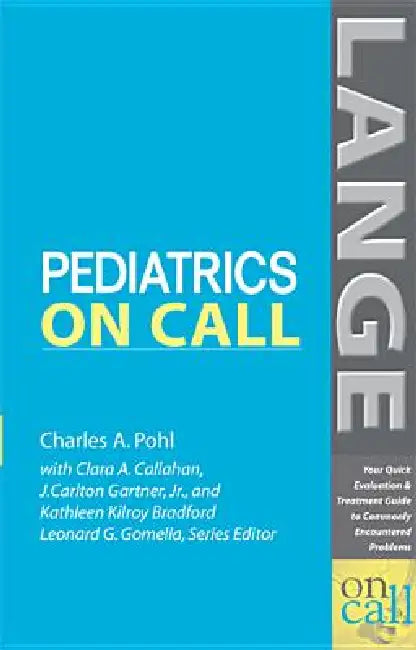
Pediatrics on Call | by Charles A. Pohl | Kathleen Bradford | Clara Callahan | McGraw Hill / Medical | by Charles A. Pohl | Kathleen Bradford | Clara Callahan | McGraw Hill / Medical | by Charles A. Pohl | Kathleen Bradford | Clara Callahan | McGraw Hill / Medical | by Charles A. Pohl | Kathleen Bradford | Clara Callahan | McGraw Hill / Medical | by Charles A. Pohl | Kathleen Bradford | Clara Callahan | McGraw Hill / Medical | by Charles A. Pohl | Kathleen Bradford | Clara Callahan | McGraw Hill
Medicine & Health Sciences
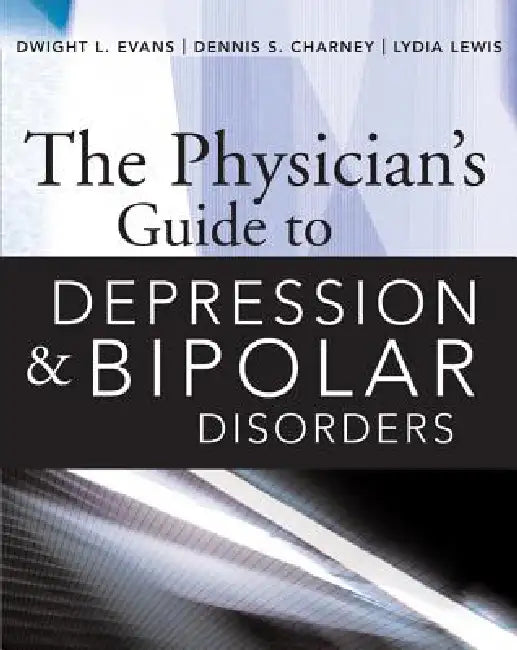
The Physician's Guide to Depression and Bipolar Disorders | by Dwight L. Evans | Dennis S. Charney | Lydia Lewis | McGraw Hill / Medical | by Dwight L. Evans | Dennis S. Charney | Lydia Lewis | McGraw Hill / Medical | by Dwight L. Evans | Dennis S. Charney | Lydia Lewis | McGraw Hill / Medical | by Dwight L. Evans | Dennis S. Charney | Lydia Lewis | McGraw Hill / Medical | by Dwight L. Evans | Dennis S. Charney | Lydia Lewis | McGraw Hill / Medical | by Dwight L. Evans | Dennis S. Charney | Lydi
Medicine & Health Sciences
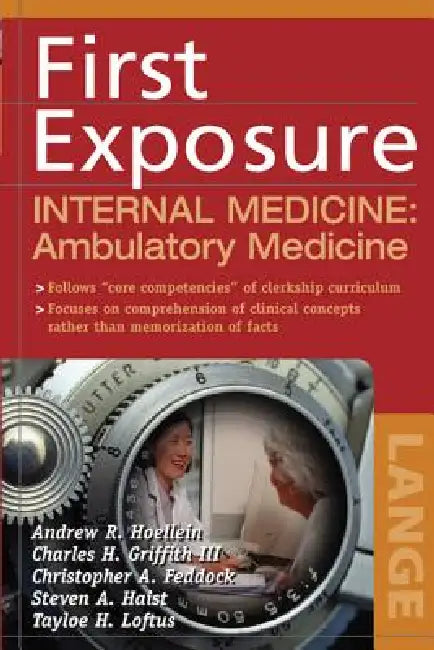
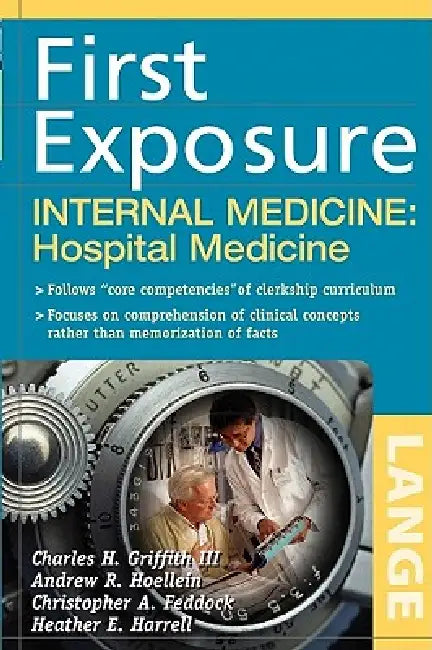
First Exposure to Internal Medicine | by Andrew R. Hoellein | Charles H. Griffith | McGraw Hill / Medical | by Andrew R. Hoellein | Charles H. Griffith | McGraw Hill / Medical | by Andrew R. Hoellein | Charles H. Griffith | McGraw Hill / Medical | by Andrew R. Hoellein | Charles H. Griffith | McGraw Hill / Medical | by Andrew R. Hoellein | Charles H. Griffith | McGraw Hill / Medical | by Andrew R. Hoellein | Charles H. Griffith | McGraw Hill / Medical | by Andrew R. Hoellein | Charles H. Griffit
Medicine & Health Sciences
First Exposure to Internal Medicine | by Charles H. Griffith | Andrew R. Hoellein | McGraw Hill / Medical | by Charles H. Griffith | Andrew R. Hoellein | McGraw Hill / Medical | by Charles H. Griffith | Andrew R. Hoellein | McGraw Hill / Medical | by Charles H. Griffith | Andrew R. Hoellein | McGraw Hill / Medical | by Charles H. Griffith | Andrew R. Hoellein | McGraw Hill / Medical | by Charles H. Griffith | Andrew R. Hoellein | McGraw Hill / Medical | by Charles H. Griffith | Andrew R. Hoellei
Medicine & Health Sciences