
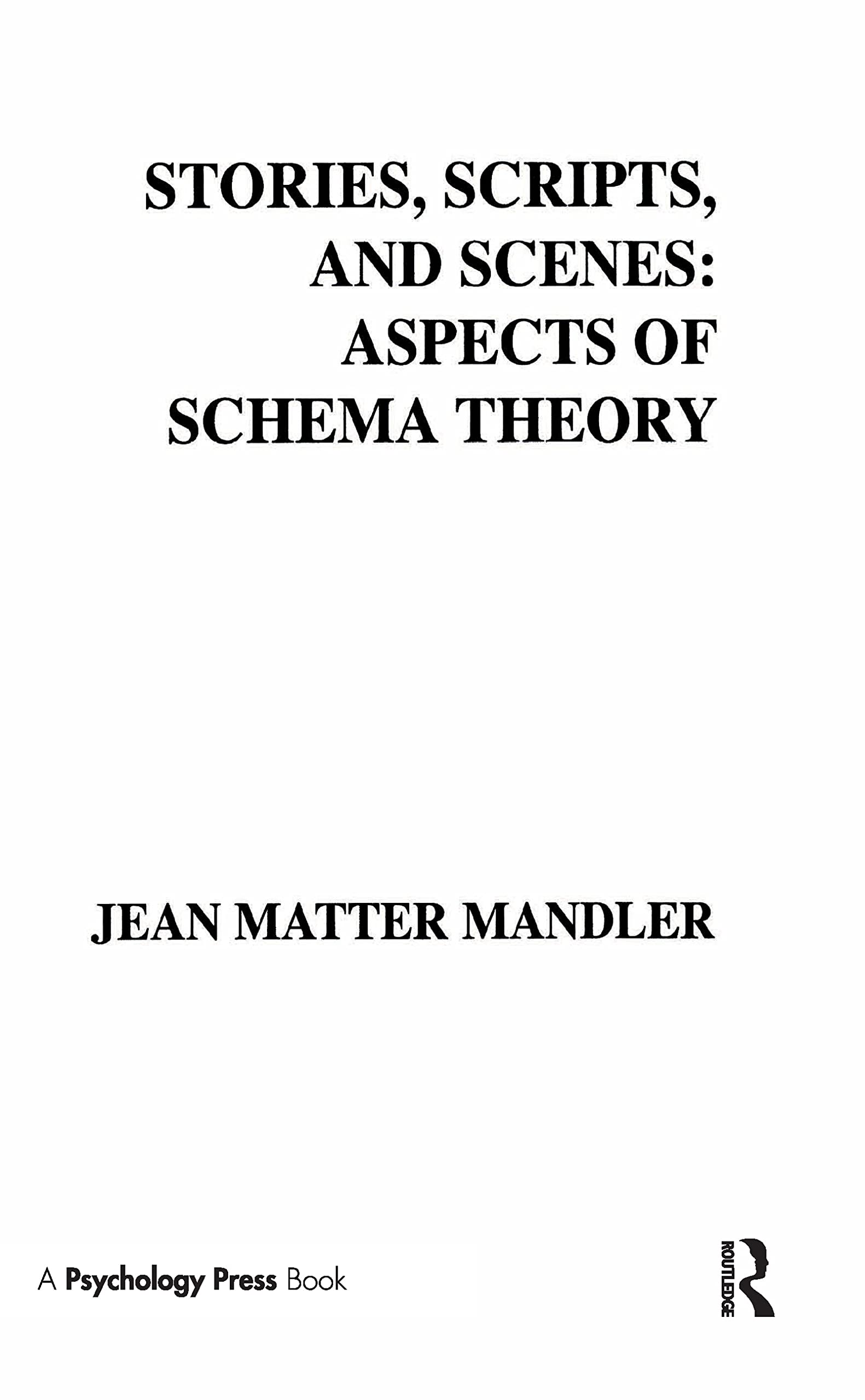
Stories, Scripts, and Scenes: Aspects of Schema Theory by J. M. Mandler – A Foundational Text in Cognitive Psychology
Inclusive of all applicable taxes. FREE shipping on all orders.
Available Offers
- 🚚Free Delivery — Free shipping on all orders
- 💵Cash on Delivery — Pay when your order arrives
- ↩️15-Day Easy Returns — Hassle-free return policy
- 🔒Cash on Delivery — Pay safely when your order arrives
Check Delivery
Product Description
Introduction
Stories, Scripts, and Scenes: Aspects of Schema Theory by J. M. Mandler is a foundational work that explores how the human mind organises and interprets everyday experiences through mental frameworks known as schemas. Originally presented as three lectures at the University of Alberta in 1983, this concise yet profound volume delves into the cognitive structures that shape our understanding of narratives, social routines, and visual scenes. For Indian students and researchers in psychology, linguistics, and cognitive science, this book offers timeless insights into the architecture of memory and comprehension.
Book Overview
First published in 1984, this hardcover edition from Psychology Press brings together Mandler’s seminal ideas on schema theory in a compact, accessible format. The book examines how schemas—mental templates built from prior knowledge—guide our interpretation of stories, scripts (like ordering food or visiting a doctor), and scenes (such as a classroom or a market). Mandler bridges experimental psychology with real-world examples, making complex concepts relatable. This volume remains a classic reference for understanding how we make sense of the world, from childhood story comprehension to adult social interactions.
Key Highlights
- Concise yet comprehensive: Distils three influential lectures into a single, tightly argued book.
- Pioneering framework: Introduces schema theory as a lens for analysing narratives, daily routines, and spatial settings.
- Empirically grounded: Draws on experimental studies to illustrate how schemas influence recall, inference, and comprehension.
- Cross-disciplinary relevance: Valuable for psychology, education, artificial intelligence, and literary studies.
- Enduring impact: A foundational text that continues to inform modern cognitive research.
Inside the Book
The book is structured around three core lectures. The first explores story schemas—how we recognise and remember narrative structures, including characters, settings, and plot sequences. The second examines script schemas, the mental representations of routine events like attending a wedding or buying groceries. The third focuses on scene schemas, the spatial and contextual knowledge that helps us navigate environments such as a railway station or a hospital. Mandler supports each concept with clear examples and experimental findings, showing how schemas shape our expectations and fill in gaps when information is missing.
Key Topics
- Definition and origins of schema theory
- Story grammars and narrative comprehension
- Event scripts and their role in memory
- Spatial scene schemas in everyday perception
- How schemas guide inference and recall
- Developmental aspects of schema formation
- Applications in education and artificial intelligence
Reader Benefits
- Deepen your understanding of how the mind organises complex information.
- Gain practical insights into improving teaching, storytelling, and user experience design.
- Enhance analytical skills by applying schema theory to literature, films, or social situations.
- Build a strong foundation for advanced studies in cognitive psychology or linguistics.
- Appreciate classic research that remains relevant in the age of cognitive science.
Learning Outcomes
By reading this book, you will be able to: identify different types of schemas in everyday life; explain how schemas influence memory and comprehension; analyse stories and events using schema-based frameworks; apply schema theory to educational or research contexts; and critically evaluate classic experiments that shaped the field. These outcomes are especially valuable for students preparing for exams or research projects in psychology and related disciplines.
Who Should Read
This book is ideal for undergraduate and postgraduate students in psychology, cognitive science, linguistics, and education. It also appeals to researchers exploring memory, narrative theory, or artificial intelligence. Teachers, storytellers, and anyone curious about how the mind processes stories and routines will find Mandler’s insights illuminating. Indian readers, in particular, will appreciate the universal applicability of schema theory to diverse cultural contexts, from traditional folktales to modern urban life.
About the Author
J. M. Mandler is a distinguished cognitive psychologist known for her pioneering work on schema theory and memory. Her research has significantly advanced our understanding of how children and adults organise knowledge. With a career spanning decades, Mandler has contributed to top-tier journals and influenced generations of scholars. Her clear, engaging writing style makes complex ideas accessible without sacrificing depth.
About the Publisher
Psychology Press is a leading academic publisher specialising in psychology, neuroscience, and cognitive science. With a reputation for publishing authoritative works by eminent researchers, Psychology Press ensures that books like Stories, Scripts, and Scenes reach a global audience. Their commitment to quality makes this hardcover edition a durable addition to any library.
Conclusion
Stories, Scripts, and Scenes: Aspects of Schema Theory remains a vital resource for anyone seeking to understand the cognitive foundations of human experience. J. M. Mandler’s lucid exposition of schema theory provides tools for analysing narratives, routines, and spaces that are as relevant today as they were in 1984. Whether you are a student, researcher, or lifelong learner, this book offers a rewarding journey into the mind’s organising principles. Add this timeless classic to your collection from Bookshops.in—your trusted Indian bookstore for academic excellence.
Quick Summary
Stories, Scripts, and Scenes: Aspects of Schema Theory by J. M. Mandler is a seminal cognitive psychology text that distills three influential lectures from the MacEachran Memorial Series at the University of Alberta. The book explores how schemas—mental frameworks—shape our comprehension of narratives, routine events, and spatial environments. Mandler, a leading figure in memory research, explains story grammars that guide narrative understanding, scripts that organize everyday experiences, and scenes that provide contextual cues for recall. Written in an accessible yet rigorous style, this volume is ideal for graduate students, researchers, and educators in psychology, cognitive science, and related fields. Readers will gain a foundational grasp of knowledge representation, memory organization, and the cognitive processes underlying interpretation. By purchasing from Bookshops.in, you receive a genuine hardcover edition with reliable Indian delivery, supporting your academic journey with a trusted local bookstore.
Book Highlights
Book Specifications
| ISBN-13 | 9780898594461 |
| ISBN-10 | 0898594464 |
| Publisher | Psychology Pr |
| Language | English |
| Dimensions | 14.57 x 1.32 x 22.19 cm |
| Weight | 181 g |
| Country | India |
| Category | Allied Health Services › Occupational Therapy |
| Genre | Non-fiction |
| Reading Age | Adult |
| Original Language | English |
Frequently Asked Questions
What is schema theory?
Who is J. M. Mandler?
Is this book suitable for beginners?
Does this book cover AI applications?
Is this a hardcover edition?
Can I use this book for my university course?
What is the MacEachran Memorial Lecture Series?
Does the book include diagrams or illustrations?
Is this book relevant to Indian readers?
What is the language of the book?
Why buy from Bookshops.in?
Does this book have a rating?
Is the book part of a series?
Readers Also Search For
Customers Also Bought

Anatomy
Ultrastructure of the Digestive Tract: 4 (Electron Microscopy in Biology and Medicine)

Anatomy
Ultrastructure of the Connective Tissue Matrix: 3 (Electron Microscopy in Biology and Medicine)

Anatomy
Reproductive Genetics (Royal College of Obstetricians and Gynaecologists Study Group)

Anatomy
Human Gross Anatomy: An Outline Text by Robert J. Leonard – Medical Anatomy

Pharmacology
Mathematical Modeling and Simulation in Enteric Neurobiology

Anatomy
Nature’s Patterns and the Fractional Calculus: 2 (Fractional Calculus in Applied Sciences and Engineering, 2)
Related Products
View All
Medicine & Health Sciences
Handbook of Hospitality Strategic Management | by Olsen Michael | Taylor & Francis Ltd | by Olsen Michael | Taylor & Francis Ltd | by Olsen Michael | Taylor & Francis Ltd | by Olsen Michael | Taylor & Francis Ltd | by Olsen Michael | Taylor & Francis Ltd | by Olsen Michael | Taylor & Francis Ltd | by Olsen Michael | Taylor & Francis Ltd | by Olsen Michael | Taylor & Francis Ltd | by Olsen Michael | Taylor & Francis Ltd | by Olsen Michael | Taylor & Francis
Medicine & Health Sciences
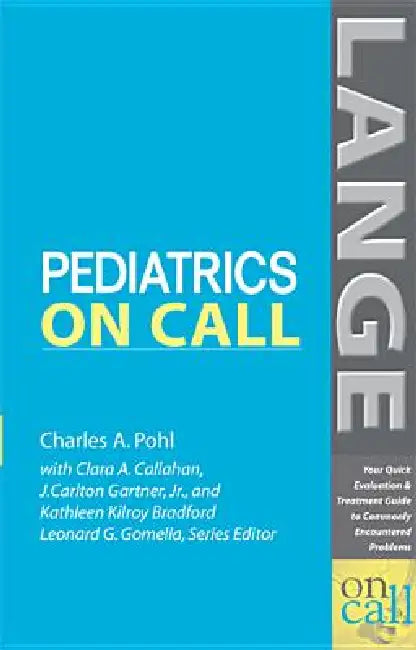
Pediatrics on Call | by Charles A. Pohl | Kathleen Bradford | Clara Callahan | McGraw Hill / Medical | by Charles A. Pohl | Kathleen Bradford | Clara Callahan | McGraw Hill / Medical | by Charles A. Pohl | Kathleen Bradford | Clara Callahan | McGraw Hill / Medical | by Charles A. Pohl | Kathleen Bradford | Clara Callahan | McGraw Hill / Medical | by Charles A. Pohl | Kathleen Bradford | Clara Callahan | McGraw Hill / Medical | by Charles A. Pohl | Kathleen Bradford | Clara Callahan | McGraw Hill

Medicine & Health Sciences
The Physician's Guide to Depression and Bipolar Disorders | by Dwight L. Evans | Dennis S. Charney | Lydia Lewis | McGraw Hill / Medical | by Dwight L. Evans | Dennis S. Charney | Lydia Lewis | McGraw Hill / Medical | by Dwight L. Evans | Dennis S. Charney | Lydia Lewis | McGraw Hill / Medical | by Dwight L. Evans | Dennis S. Charney | Lydia Lewis | McGraw Hill / Medical | by Dwight L. Evans | Dennis S. Charney | Lydia Lewis | McGraw Hill / Medical | by Dwight L. Evans | Dennis S. Charney | Lydi
Medicine & Health Sciences
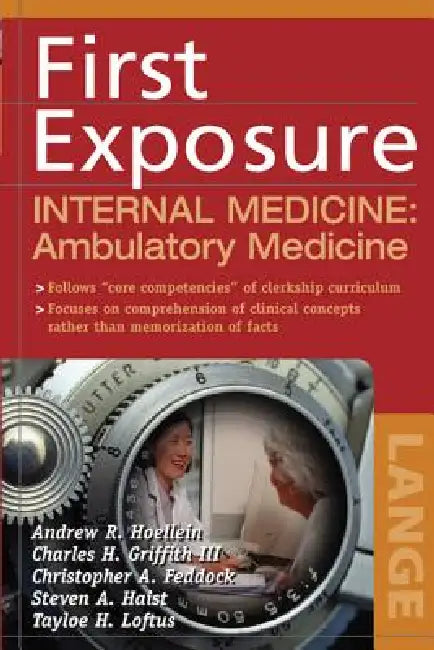
First Exposure to Internal Medicine | by Andrew R. Hoellein | Charles H. Griffith | McGraw Hill / Medical | by Andrew R. Hoellein | Charles H. Griffith | McGraw Hill / Medical | by Andrew R. Hoellein | Charles H. Griffith | McGraw Hill / Medical | by Andrew R. Hoellein | Charles H. Griffith | McGraw Hill / Medical | by Andrew R. Hoellein | Charles H. Griffith | McGraw Hill / Medical | by Andrew R. Hoellein | Charles H. Griffith | McGraw Hill / Medical | by Andrew R. Hoellein | Charles H. Griffit
Medicine & Health Sciences
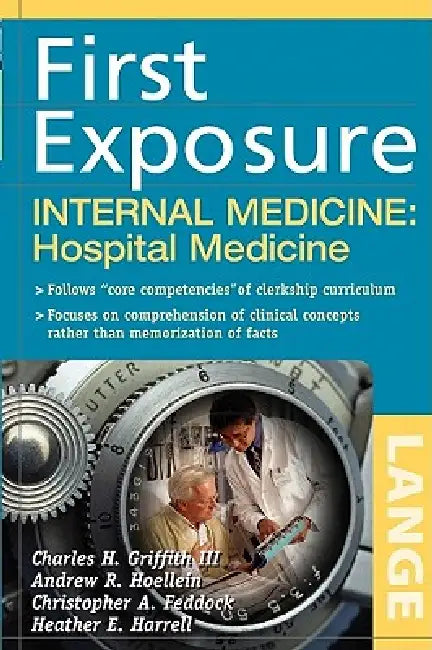
First Exposure to Internal Medicine | by Charles H. Griffith | Andrew R. Hoellein | McGraw Hill / Medical | by Charles H. Griffith | Andrew R. Hoellein | McGraw Hill / Medical | by Charles H. Griffith | Andrew R. Hoellein | McGraw Hill / Medical | by Charles H. Griffith | Andrew R. Hoellein | McGraw Hill / Medical | by Charles H. Griffith | Andrew R. Hoellein | McGraw Hill / Medical | by Charles H. Griffith | Andrew R. Hoellein | McGraw Hill / Medical | by Charles H. Griffith | Andrew R. Hoellei

Medicine & Health Sciences