
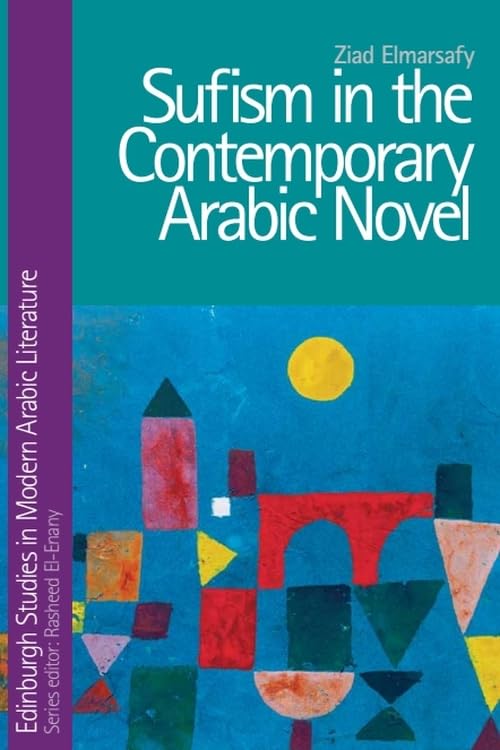
Sufism in the Contemporary Arabic Novel by Ziad Elmarsafy – Exploring Mystical Heritage in Modern Arabic Fiction
Inclusive of all applicable taxes. FREE shipping on all orders.
Available Offers
- 🚚Free Delivery — Free shipping on all orders
- 💵Cash on Delivery — Pay when your order arrives
- ↩️15-Day Easy Returns — Hassle-free return policy
- 🔒Cash on Delivery — Pay safely when your order arrives
Check Delivery
Product Description
Introduction
Sufism in the Contemporary Arabic Novel offers a profound exploration of how modern Arabic fiction draws upon the rich mystical traditions of Sufism. Written by Ziad Elmarsafy, this hardbound volume from Edinburgh University Press examines the ways in which celebrated novelists weave Sufi characters, ideas, and language into their narratives. For Indian readers and students of comparative literature, this book opens a window into the spiritual and literary currents that shape contemporary Arabic storytelling.
Book Overview
This scholarly work delves into the works of major Arabic authors such as Naguib Mahfouz, Gamal Al-Ghitany, Taher Ouettar, Ibrahim Al-Koni, Mahmud Al-Mas’adi, and Tayeb Salih. Elmarsafy traces their intertextual dialogues with classical Sufi masters like Al-Hallaj, Ibn Arabi, Al-Niffari, and Al-Suhrawardi. The book investigates how these novelists use Sufism not merely as a thematic device but as a lens to question individuality, rationality, the limits of the creative self, and the possibilities of literature itself. Set against the backdrop of late 20th- and early 21st-century socio-political upheavals, the study reveals how mystical heritage becomes a refuge for the self under siege from oppression and reactionary forces.
Key Highlights
- In-depth analysis of six major Arabic novelists and their engagement with Sufi thought.
- Intertextual connections between modern fiction and classical Sufi texts, including works by Al-Hallaj and Ibn Arabi.
- Critical examination of how Sufi characters—saints, dervishes, wanderers—serve as vehicles for philosophical inquiry.
- Contextual focus on the role of literature in preserving individual identity amid political and social turmoil.
- Rigorous academic approach suitable for scholars, students, and general readers interested in Arabic literature and mysticism.
Story Themes
The central themes of this book revolve around the tension between the spiritual and the rational, the individual and the collective, and the sacred and the secular. Elmarsafy shows how Sufi-inspired narratives often grapple with the search for meaning in a world dominated by authoritarianism and materialism. The theme of the wandering dervish becomes a metaphor for the exiled self, while the figure of the saint represents a counterpoint to institutional power. The book also explores the theme of language as a mystical tool—how novelists use poetic, allusive prose to transcend the limits of ordinary communication and reach for the ineffable.
Reader Benefits
- Deepen your understanding of modern Arabic literature and its spiritual dimensions.
- Gain insights into how mystical traditions can inform contemporary fiction and critical thought.
- Enhance your knowledge of comparative literature, especially the intersection of religion and narrative.
- Discover new authors and texts that may enrich your personal or academic reading list.
- Develop analytical skills through Elmarsafy’s nuanced readings of complex literary works.
Who Should Read
This book is ideal for students and scholars of Arabic literature, comparative literature, religious studies, and Middle Eastern studies. It will also appeal to general readers with a keen interest in Sufism, mysticism, and the interplay between spirituality and fiction. Indian readers, in particular, will find parallels with their own mystical traditions—such as Bhakti and Sufi currents in the subcontinent—making this a valuable resource for cross-cultural literary exploration.
About the Author
Ziad Elmarsafy is a distinguished scholar of Arabic and comparative literature. He has taught at several universities and published widely on the relationship between literature, philosophy, and religion in the Arab world. His work is known for its clarity, depth, and ability to bridge classical and modern texts. Elmarsafy’s expertise makes him a trusted guide through the complex terrain of Sufi-inspired fiction.
About the Publisher
Edinburgh University Press is a prestigious academic publisher based in Scotland. Renowned for its rigorous scholarship in the humanities and social sciences, the press has a strong catalogue in Middle Eastern studies, literary theory, and religious thought. This hardcover edition reflects the publisher’s commitment to producing high-quality, durable books that serve the needs of researchers, students, and lifelong learners.
Conclusion
Sufism in the Contemporary Arabic Novel is a compelling study that illuminates the enduring power of mystical thought in modern literature. Elmarsafy’s insightful analysis reveals how Arabic novelists transform Sufi heritage into a living, breathing force that challenges oppression and nurtures the creative spirit. For anyone seeking to understand the soul of contemporary Arabic fiction—and its resonance with global spiritual traditions—this book is an indispensable addition to the library.
Quick Summary
Sufism in the Contemporary Arabic Novel by Ziad Elmarsafy is a scholarly exploration of how six major modern Arabic novelists—Naguib Mahfouz, Gamal Al-Ghitany, Taher Ouettar, Ibrahim Al-Koni, Mahmud Al-Mas'adi, and Tayeb Salih—engage with Sufi thought and language. The book reveals that Sufi characters like saints, dervishes, and wanderers are not mere literary ornaments but are central to interrogating the limits of the self, rationality, and creativity. By establishing a strong intertextual relationship with classical Sufi masters such as Al-Hallaj, Ibn Arabi, Al-Niffari, and Al-Suhrawardi, these writers use mystical heritage as a means of preserving individuality against the crushing forces of political oppression and reaction that marked the late 20th and early 21st centuries. This book is ideal for students and researchers in Arabic literature, comparative literature, Islamic mysticism, and postcolonial studies. Readers will learn how fiction can become a space for spiritual and philosophical resistance. Buying from Bookshops.in ensures you receive a genuine hardcover copy from a trusted Indian bookstore with reliable delivery.
Book Highlights
Book Specifications
| ISBN-13 | 9780748641406 |
| ISBN-10 | 0748641408 |
| Publisher | Edinburgh Univ Pr |
| Language | English |
| Dimensions | 16.51 x 2.54 x 24.13 cm |
| Weight | 612 g |
| Category | World Literature › African & Middle Eastern |
| Genre | Literary Criticism |
| Original Language | English |
Frequently Asked Questions
What is Sufism in the Contemporary Arabic Novel about?
Who is the author of this book?
Which authors are discussed in the book?
Is this book suitable for Indian readers?
What is the publication date?
What language is the book in?
What is the ISBN?
Is this a hardcover or paperback?
What is the price in India?
Can I use this book for my PhD research?
Does the book cover only Egyptian authors?
Is there a focus on any particular Sufi master?
Where can I buy this book in India?
Readers Also Search For
Customers Also Bought
Contemporary Fiction
Stepladder Junction and Other Stories

Contemporary Fiction
Fabrications by Pamela Painter – Short Story Collection

Contemporary Fiction
The Double Life of an Alaskan Sled Dog (English, Andrea Finney Aufder Heyde)

Contemporary Fiction
The Alabaster Girl by Zan Perrion

Contemporary Fiction
Grimm and Grimmer: Classic Fairy Tales Rebooted by Mark Russell
Classic Literature
The Prose Works of Andrew Marvell: 1676-1678 by Andrew Marvell – Restoration Literature
Related Products
View All
Literature & Fiction
Shakespeare, Madness, and Music: Scoring Insanity in Cinematic Adaptations
Literature & Fiction
Literary Research and Canadian Literature: Strategies and Sources: 10 (Literary Research: Strategies and Sources, 10)

Literature & Fiction
Crime Fiction and National Identities in the Global Age | by Julie H. Kim | McFarland & Company | by Julie H. Kim | McFarland & Company | by Julie H. Kim | McFarland & Company | by Julie H. Kim | McFarland & Company | by Julie H. Kim | McFarland & Company | by Julie H. Kim | McFarland & Company | by Julie H. Kim | McFarland & Company | by Julie H. Kim | McFarland & Company | by Julie H. Kim | McFarland & Company | by Julie H. Kim | McFarland & Company | by
Literature & Fiction
Greek Literature in the Classical Period: The Poetics of Drama in Athens: 4 (Greek Literature Vol. 4)
Literature & Fiction
Greek Literature and Philosophy (Greek Literature, Volume 6)

Literature & Fiction