
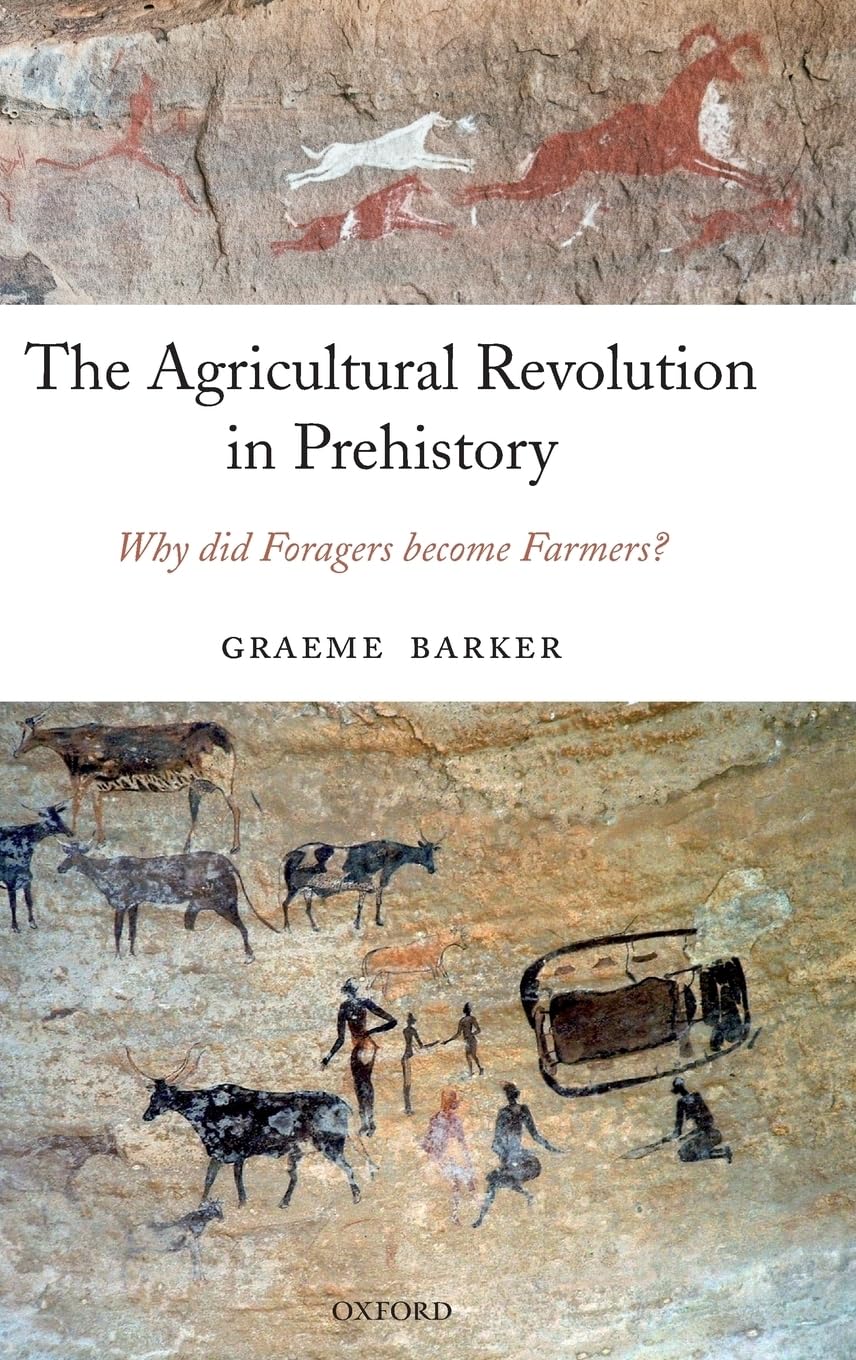
The Agricultural Revolution in Prehistory: Why Did Foragers Become Farmers? by Graeme Barker – A Comprehensive Archaeolo
Inclusive of all applicable taxes. FREE shipping on all orders.
Available Offers
- 🚚Free Delivery — Free shipping on all orders
- 💵Cash on Delivery — Pay when your order arrives
- ↩️15-Day Easy Returns — Hassle-free return policy
- 🔒Cash on Delivery — Pay safely when your order arrives
Check Delivery
Product Description
Introduction
Why did our ancestors, who lived as hunters and gatherers for hundreds of thousands of years, suddenly take up farming? This question lies at the heart of The Agricultural Revolution in Prehistory: Why Did Foragers Become Farmers?, a masterful work by renowned archaeologist Graeme Barker. Published by OUP Oxford, this hardcover volume offers a sweeping, interdisciplinary examination of one of humanity’s most transformative shifts. For Indian students and scholars of archaeology, anthropology, and history, this book provides a fresh perspective that challenges long-held assumptions about the origins of agriculture.
Book Overview
Graeme Barker takes a global approach, weaving together evidence from archaeology, anthropology, botany, climatology, genetics, linguistics, and zoology. Instead of viewing the Neolithic Revolution as a sudden invention, Barker argues that farming emerged gradually as indigenous foraging societies adapted their social norms, ideologies, and subsistence strategies. The book is richly illustrated with line drawings and photographs, making complex ideas accessible. It is not merely a textbook but a compelling narrative that redefines how we understand the relationship between humans and their environment.
Key Highlights
- Global Perspective: Covers agricultural origins from the Fertile Crescent to East Asia, the Americas, Africa, and the Indian subcontinent.
- Interdisciplinary Synthesis: Integrates genetics, climate science, and linguistics to build a holistic picture.
- Challenges Orthodoxy: Offers a strong counter-argument to the idea that farming was a revolutionary invention imposed by external forces.
- Rich Visuals: Includes numerous line drawings, maps, and photographs to support the text.
- Comprehensive Bibliography: An invaluable resource for further research and academic reference.
Inside the Book
The book is structured to guide readers through the evidence step by step. Barker begins by examining the theoretical frameworks used to study the transition to farming. He then explores regional case studies, from the earliest domestication of wheat and barley in the Levant to the independent development of rice cultivation in the Yangtze Valley and millet farming in the Indus region. Each chapter includes detailed discussions of archaeological sites, plant and animal remains, and climatic shifts. The final sections synthesize the data to propose a new model of agricultural origins rooted in social change rather than environmental determinism.
Key Topics
- Theories of agricultural origins: from V. Gordon Childe to modern debates
- Hunter-gatherer societies and their diversity
- Plant and animal domestication processes
- Climate change and its role in the Neolithic transition
- Social and ideological transformations in early farming communities
- Regional case studies: Southwest Asia, East Asia, South Asia, Africa, and the Americas
- Genetics and linguistics of early farming populations
Reader Benefits
For Indian readers, this book offers a rare chance to understand the agricultural roots of their own subcontinent within a global framework. Students will gain critical thinking skills as they evaluate competing hypotheses. Researchers will appreciate the exhaustive bibliography and interdisciplinary methodology. General readers with an interest in prehistory will find the narrative engaging and thought-provoking. The hardcover format ensures durability for repeated reference.
Learning Outcomes
- Understand the major theories explaining the shift from foraging to farming
- Analyze archaeological evidence from multiple world regions
- Evaluate the role of climate, population pressure, and social change in agricultural origins
- Critically assess the concept of a 'Neolithic Revolution'
- Develop an integrated view of human-environment interactions in prehistory
Who Should Read
This book is ideal for undergraduate and postgraduate students in archaeology, anthropology, history, and environmental studies. It is also a valuable resource for teachers, researchers, and anyone fascinated by the deep history of human societies. Indian civil services aspirants with an interest in prehistory will find it especially useful for building conceptual clarity. The accessible writing style also makes it suitable for curious general readers who want a serious yet readable account of our ancient past.
About the Author
Graeme Barker is a distinguished British archaeologist and a former Disney Professor of Archaeology at the University of Cambridge. He has conducted extensive fieldwork in Europe, Africa, and Asia, particularly on early farming communities. His research has reshaped our understanding of how prehistoric societies adapted to changing environments. Barker is also the author of several influential books, including The Cambridge History of Southeast Asia and Companion Encyclopedia of Archaeology.
About the Publisher
OUP Oxford is the academic publishing arm of the University of Oxford, one of the world’s oldest and most respected university presses. Known for rigorous scholarship and high editorial standards, OUP Oxford publishes works that advance knowledge across all disciplines. This hardcover edition reflects their commitment to producing authoritative and durable academic texts.
Conclusion
The Agricultural Revolution in Prehistory is an essential addition to any serious library on human origins. Graeme Barker’s masterful synthesis challenges us to rethink the very nature of progress and change. For Indian readers, it offers a window into the global story of how our ancestors transformed from foragers to farmers—a story that continues to shape our world today. Whether you are a student, a teacher, or a lifelong learner, this book will deepen your appreciation of the ingenuity and resilience of prehistoric peoples.
Quick Summary
The Agricultural Revolution in Prehistory by Graeme Barker is a landmark archaeological study that investigates one of the most profound transformations in human history: the shift from foraging to farming. Unlike many works that focus solely on the Near East, Barker takes a truly global perspective, examining evidence from the Americas, Africa, Asia, and Europe. He integrates data from archaeology, anthropology, botany, genetics, climatology, and linguistics to build a compelling case that agriculture was not a sudden invention but a series of social and ideological changes within indigenous forager societies. The book challenges the long-held view that farming was a necessary response to environmental pressures, instead highlighting the role of human agency, cultural values, and social structures. This hardcover edition from Oxford University Press is richly illustrated and includes an extensive bibliography, making it an essential resource for students, researchers, and anyone fascinated by human prehistory. For Indian readers, it offers valuable comparative insights into the development of agriculture in the subcontinent and beyond. Buying from Bookshops.in ensures you receive a genuine, high-quality copy with reliable delivery across India.
Book Highlights
Book Specifications
| ISBN-13 | 9780199281091 |
| ISBN-10 | 0199281092 |
| Publisher | Oxford Univ Pr on Demand |
| Language | English |
| Dimensions | 23.98 x 16.56 x 3.76 cm |
| Weight | 1 kg 250 g |
| Category | Biology & Life Sciences › Botany |
| Genre | Non-fiction |
| Original Language | English |
Frequently Asked Questions
What is this book about?
Who is the author?
Is this book suitable for Indian readers?
What disciplines does the book cover?
Does it focus only on the Middle East?
Is this book for beginners?
Is there a paperback edition?
Does the book include illustrations?
What is the ISBN?
Can I use this for my PhD research?
Does it challenge existing theories?
Is the book available in India?
What is the price in INR?
Readers Also Search For
Customers Also Bought
Mathematics
Stereotype Spaces and Algebras: 73 (De Gruyter Expositions in Mathematics, 73)

Mathematics
Semigroups in Algebra, Geometry and Analysis: 20 (De Gruyter Expositions in Mathematics, 20)

Mathematics
Geometry from the Pacific Rim: Proceedings of the Pacific Rim Geometry Conference held at National University of Singapore, Republic of Singapore, ... 1994 (De Gruyter Proceedings in Mathematics)

Mathematics
First International Tainan-Moscow Algebra Workshop: Proceedings of the International Conference held at National Cheng Kung University Tainan, Taiwan, ... 1994 (De Gruyter Proceedings in Mathematics)

Mathematics
Differential Geometry - Proceedings of the VIII International Colloquium (English, Jesus A. Alvarez Lopez | Eduardo Garcia-Rio)

Mathematics
Mathematical Theory of Optimal Processes (Classics of Soviet Mathematics)
Related Products
View All
Science & Mathematics
Elements of Pelagos Biology: With Focus on the Mediterranean Sea

Science & Mathematics
Squid - Superconducting Quantum Interference Devices and Their Applications: Proceedings of the International Conference on Superconducting Quantum Devices, Berlin-west, October 4-8, 1976
Science & Mathematics
Thermodynamics and Pattern Formation in Biology
Science & Mathematics
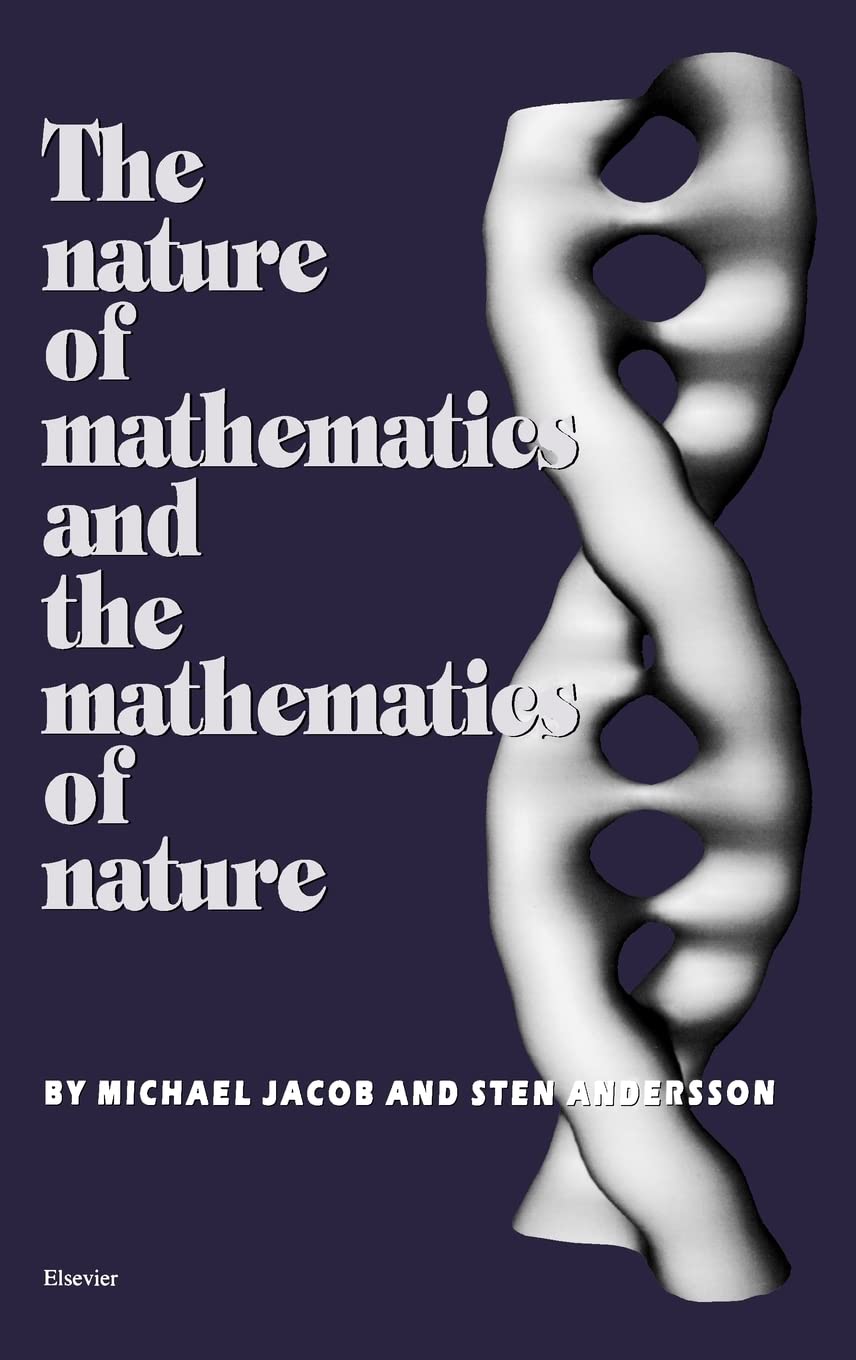
The Nature of Mathematics and the Mathematics of Nature by S. Andersson – Mathematics & Science

Science & Mathematics
Linear Algebra | by Stephen Friedberg | Arnold Insel | Lawrence Spence | Pearson | by Stephen Friedberg | Arnold Insel | Lawrence Spence | Pearson | by Stephen Friedberg | Arnold Insel | Lawrence Spence | Pearson | by Stephen Friedberg | Arnold Insel | Lawrence Spence | Pearson | by Stephen Friedberg | Arnold Insel | Lawrence Spence | Pearson | by Stephen Friedberg | Arnold Insel | Lawrence Spence | Pearson | by Stephen Friedberg | Arnold Insel | Lawrence Spence | Pearson | by Stephen Friedberg
Science & Mathematics