

The Anatomy of Blackness: Science & Slavery in an Age of Enlightenment by Andrew S. Curran – A Critical Study of Race an
Inclusive of all applicable taxes. FREE shipping on all orders.
Available Offers
- 🚚Free Delivery — Free shipping on all orders
- 💵Cash on Delivery — Pay when your order arrives
- ↩️15-Day Easy Returns — Hassle-free return policy
- 🔒Cash on Delivery — Pay safely when your order arrives
Check Delivery
Product Description
Introduction
The Anatomy of Blackness: Science & Slavery in an Age of Enlightenment by Andrew S. Curran is a groundbreaking work that re-examines how European thinkers of the eighteenth century constructed the idea of Blackness. Published by Johns Hopkins University Press, this hardcover volume is an essential read for students and scholars of history, philosophy, and postcolonial studies. Curran traces the evolution of racial thought, showing how Black Africans were transformed from mere subjects of travel narratives into objects of scientific dissection and brutalization. This book is a must-have for anyone seeking to understand the deep roots of racial ideology in Western science.
Book Overview
In this meticulously researched study, Curran surveys French and European travelogues, natural histories, anatomical works, pro- and anti-slavery tracts, philosophical treatises, and literary texts. He reveals how naturalists and philosophers drew from travel literature to frame human blackness as a problem to be solved by the nascent human sciences. The book documents how forgotten anatomists revolutionized the era’s understanding of Black Africans and how the slavery debate shifted from moral and theological grounds to the realm of the physical body itself. By replicating the reading practices of eighteenth-century audiences, Curran offers a fresh perspective on the textualization of Blackness.
Key Highlights
- Winner of the 2012 Outstanding Academic Title by Choice Magazine, affirming its scholarly excellence.
- Meticulous archival research drawing from rare French and European sources, many previously overlooked.
- Interdisciplinary approach bridging history of science, literary studies, and race theory.
- Original thesis that Blackness changed from a descriptor to a measurable, dissectible, and brutalized category.
- Engaging narrative that makes complex ideas accessible to advanced undergraduates and general readers.
Inside the Book
The book is divided into thematic chapters that trace the intellectual journey of Blackness in European thought. Curran begins with early travel accounts that exoticized African bodies, then moves to the rise of natural history and anatomy as tools for racial classification. He examines how philosophers like Montesquieu, Voltaire, and Rousseau engaged with or ignored these scientific claims. The later chapters focus on the abolitionist movement and the counter-arguments that weaponized anatomical data to justify slavery. Each section is richly illustrated with excerpts from historical texts, making the reader feel like a participant in eighteenth-century debates.
Key Topics
- The textualization of Black Africans in travelogues and natural histories
- The role of anatomists in defining racial difference through dissection
- The shift from moral and theological slavery debates to biological determinism
- How Enlightenment thinkers like Buffon, Linnaeus, and Blumenbach shaped racial science
- The intersection of science, philosophy, and colonialism in the Age of Enlightenment
- The legacy of these ideas in modern racism and postcolonial studies
Reader Benefits
This book offers Indian readers and students a unique opportunity to understand the global history of racial thinking. It provides critical tools to analyze contemporary issues of caste, colourism, and identity by tracing their intellectual origins. The clear prose and structured arguments make it suitable for self-study or classroom use. Additionally, the hardcover edition is built to last, making it a valuable addition to any personal or institutional library.
Learning Outcomes
After reading this book, you will be able to: identify key European thinkers who shaped racial science; explain how travel literature influenced early anthropology; analyse the transition from moral to scientific arguments about slavery; critique the concept of race as a historical construct; and connect Enlightenment-era ideas to modern racial ideologies. The book also strengthens skills in critical reading, historical analysis, and interdisciplinary research.
Who Should Read
This book is ideal for undergraduate and postgraduate students of history, philosophy, sociology, and literature. It is equally valuable for researchers in African studies, postcolonial theory, and the history of science. General readers with an interest in race, colonialism, or the Enlightenment will find it engaging and enlightening. Indian students studying Western intellectual history or preparing for competitive exams like UGC NET or UPSC will benefit from its nuanced perspective on race and science.
About the Author
Andrew S. Curran is a distinguished scholar of eighteenth-century French literature and intellectual history. He is the William Armstrong Professor of the Humanities at Wesleyan University, where he teaches courses on the Enlightenment, race, and colonialism. Curran has published extensively on the intersection of science and slavery, and his work has been recognized with multiple awards. His deep archival knowledge and clear writing make complex historical debates accessible to a wide audience.
About the Publisher
Johns Hopkins University Press is one of the oldest and most respected academic publishers in the United States. Founded in 1878, it is renowned for its rigorous peer-review process and high-quality scholarly books. The press specializes in history, medicine, and the humanities, making it the perfect home for Curran’s interdisciplinary study. Readers can trust the accuracy and depth of research that JHUP brings to every title.
Conclusion
The Anatomy of Blackness is more than a history book—it is a vital resource for understanding how racial categories were invented and naturalized through science. Andrew S. Curran’s masterful analysis reveals the Enlightenment’s dark underbelly, where human bodies became objects of measurement and violence. For Indian readers grappling with their own histories of colourism and hierarchy, this book offers a powerful lens to examine the global construction of race. Order your copy from Bookshops.in today and add this essential work to your collection.
Quick Summary
The Anatomy of Blackness: Science & Slavery in an Age of Enlightenment by Andrew S. Curran is a landmark scholarly work that rewrites the history of racial thought in the 18th century. The book meticulously examines how European naturalists, anatomists, and philosophers textualized black Africans, drawing from travelogues, natural histories, anatomical studies, and pro- and anti-slavery tracts. Curran shows that the Enlightenment's human sciences were deeply entangled with colonial ideologies, and that the slavery debate gradually shifted from moral and mercantile concerns to a discourse on 'blackness' itself. This award-winning study (Choice Outstanding Academic Title) is essential for students and researchers in history, philosophy, anthropology, and postcolonial studies. Indian readers will find it particularly relevant for understanding global racial formations and their enduring impact. By purchasing from Bookshops.in, you receive a genuine imported hardcover edition with fast, reliable delivery across India.
Book Highlights
Book Specifications
| ISBN-13 | 9781421409658 |
| ISBN-10 | 1421409658 |
| Publisher | Johns Hopkins Univ Pr |
| Language | English |
| Dimensions | 15.24 x 1.88 x 22.86 cm |
| Weight | 463 g |
| Country | India |
| Category | World Literature › African & Middle Eastern |
| Genre | Nonfiction |
| Original Language | English |
Frequently Asked Questions
What is The Anatomy of Blackness about?
Who is the author Andrew S. Curran?
Is this book suitable for Indian readers?
What awards has this book won?
Does the book cover French Enlightenment only?
What disciplines does this book relate to?
Is the book based on primary sources?
How does this book differ from other works on race?
Can this be used for university courses?
Does the book include illustrations?
Why buy from Bookshops.in?
Is this book available in other languages?
Readers Also Search For
Customers Also Bought

Anatomy
Ultrastructure of the Digestive Tract: 4 (Electron Microscopy in Biology and Medicine)

Anatomy
Ultrastructure of the Connective Tissue Matrix: 3 (Electron Microscopy in Biology and Medicine)

Anatomy
Reproductive Genetics (Royal College of Obstetricians and Gynaecologists Study Group)

Anatomy
Human Gross Anatomy: An Outline Text by Robert J. Leonard – Medical Anatomy

Pharmacology
Mathematical Modeling and Simulation in Enteric Neurobiology

Anatomy
Nature’s Patterns and the Fractional Calculus: 2 (Fractional Calculus in Applied Sciences and Engineering, 2)
Related Products
View All
Medicine & Health Sciences
Handbook of Hospitality Strategic Management | by Olsen Michael | Taylor & Francis Ltd | by Olsen Michael | Taylor & Francis Ltd | by Olsen Michael | Taylor & Francis Ltd | by Olsen Michael | Taylor & Francis Ltd | by Olsen Michael | Taylor & Francis Ltd | by Olsen Michael | Taylor & Francis Ltd | by Olsen Michael | Taylor & Francis Ltd | by Olsen Michael | Taylor & Francis Ltd | by Olsen Michael | Taylor & Francis Ltd | by Olsen Michael | Taylor & Francis

Medicine & Health Sciences
Pediatrics on Call | by Charles A. Pohl | Kathleen Bradford | Clara Callahan | McGraw Hill / Medical | by Charles A. Pohl | Kathleen Bradford | Clara Callahan | McGraw Hill / Medical | by Charles A. Pohl | Kathleen Bradford | Clara Callahan | McGraw Hill / Medical | by Charles A. Pohl | Kathleen Bradford | Clara Callahan | McGraw Hill / Medical | by Charles A. Pohl | Kathleen Bradford | Clara Callahan | McGraw Hill / Medical | by Charles A. Pohl | Kathleen Bradford | Clara Callahan | McGraw Hill

Medicine & Health Sciences
The Physician's Guide to Depression and Bipolar Disorders | by Dwight L. Evans | Dennis S. Charney | Lydia Lewis | McGraw Hill / Medical | by Dwight L. Evans | Dennis S. Charney | Lydia Lewis | McGraw Hill / Medical | by Dwight L. Evans | Dennis S. Charney | Lydia Lewis | McGraw Hill / Medical | by Dwight L. Evans | Dennis S. Charney | Lydia Lewis | McGraw Hill / Medical | by Dwight L. Evans | Dennis S. Charney | Lydia Lewis | McGraw Hill / Medical | by Dwight L. Evans | Dennis S. Charney | Lydi
Medicine & Health Sciences
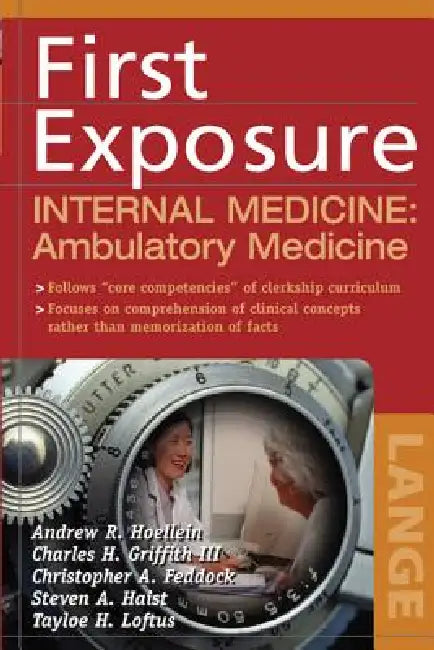
First Exposure to Internal Medicine | by Andrew R. Hoellein | Charles H. Griffith | McGraw Hill / Medical | by Andrew R. Hoellein | Charles H. Griffith | McGraw Hill / Medical | by Andrew R. Hoellein | Charles H. Griffith | McGraw Hill / Medical | by Andrew R. Hoellein | Charles H. Griffith | McGraw Hill / Medical | by Andrew R. Hoellein | Charles H. Griffith | McGraw Hill / Medical | by Andrew R. Hoellein | Charles H. Griffith | McGraw Hill / Medical | by Andrew R. Hoellein | Charles H. Griffit
Medicine & Health Sciences
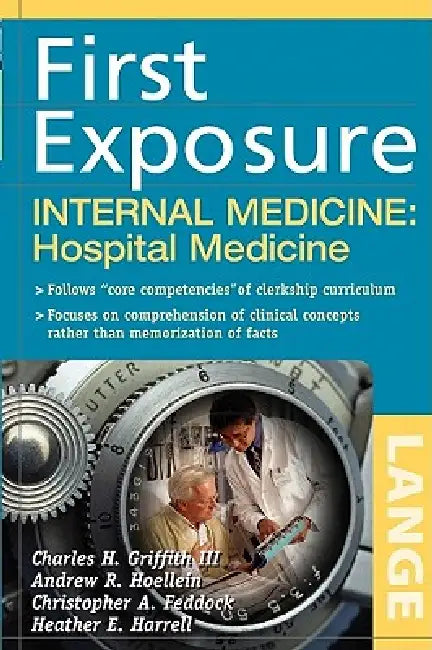
First Exposure to Internal Medicine | by Charles H. Griffith | Andrew R. Hoellein | McGraw Hill / Medical | by Charles H. Griffith | Andrew R. Hoellein | McGraw Hill / Medical | by Charles H. Griffith | Andrew R. Hoellein | McGraw Hill / Medical | by Charles H. Griffith | Andrew R. Hoellein | McGraw Hill / Medical | by Charles H. Griffith | Andrew R. Hoellein | McGraw Hill / Medical | by Charles H. Griffith | Andrew R. Hoellein | McGraw Hill / Medical | by Charles H. Griffith | Andrew R. Hoellei
Medicine & Health Sciences