

The Biology of Musical Performance and Performance-Related Injury by Alan H. D. Watson – A Comprehensive Guide for Music
Inclusive of all applicable taxes. FREE shipping on all orders.
Available Offers
- 🚚Free Delivery — Free shipping on all orders
- 💵Cash on Delivery — Pay when your order arrives
- ↩️15-Day Easy Returns — Hassle-free return policy
- 🔒Cash on Delivery — Pay safely when your order arrives
Check Delivery
Product Description
Introduction
For generations, the art of music performance has been taught primarily through intuition, imitation, and endless hours of practice. Yet the human body—the instrument behind every instrument—follows strict biological laws that can either elevate or hinder a musician's journey. The Biology of Musical Performance and Performance-Related Injury by Alan H. D. Watson bridges this gap with clarity and precision. This hardcover volume from Scarecrow Press is an essential read for Indian musicians, music educators, and healthcare professionals who work with performers. It demystifies the physical processes that govern singing and instrumental playing, offering a science-backed path to better technique and injury prevention.
Book Overview
This book is a comprehensive guide that translates complex biological principles into practical knowledge for musicians. Without assuming any prior scientific background, Watson walks readers through the mechanics of posture, movement, breathing, and vocal production. Each chapter connects anatomy directly to performance, explaining how the spine, arms, hands, lungs, larynx, and brain function during practice and performance. The text also addresses common performance-related injuries, helping readers understand their root causes and how to avoid them. Published in a sturdy hardcover format, this reference work is built to withstand years of use in studios, classrooms, and clinics.
Key Highlights
- No scientific background required: Complex topics are explained in clear, accessible language suitable for musicians and students.
- Practical focus: Every biological concept is tied directly to a real-world performance technique or common injury.
- Comprehensive coverage: From the spine to the brain, every system involved in music-making is examined in detail.
- Evidence-based approach: Draws on current research in physiology, biomechanics, and neuroscience to support recommendations.
- Durable hardcover edition: Ideal for repeated reference, whether in a library, teaching studio, or personal collection.
Inside the Book
The book is structured to guide the reader logically through the body's systems. It begins with foundational principles of posture and the back, explaining how alignment affects everything from breath support to hand movement. Subsequent chapters explore the arm and hand, detailing the intricate coordination required for instrumental technique and the strains that can lead to conditions like tendinitis and carpal tunnel syndrome. Breathing is examined in depth for both singers and wind players, with a focus on diaphragm control and lung capacity. The embouchure and respiratory tract receive special attention for wind instrumentalists, while singers benefit from a thorough look at the larynx and vocal tract. The final chapters delve into the brain's role in skill acquisition, motor learning, and aural perception—critical knowledge for anyone aiming to master their craft.
Key Topics
- Posture and spinal mechanics in seated and standing performance
- Biomechanics of arm, wrist, and hand movements for instrumentalists
- Breathing techniques for singers and wind players: anatomy and practice
- The embouchure: muscle function, fatigue, and common issues
- Vocal fold physiology and resonance in the singing voice
- Neural pathways for motor skill learning and memory
- Performance-related injuries: causes, prevention, and recovery strategies
Reader Benefits
By reading this book, musicians will gain a deeper understanding of their own bodies, enabling them to practice more efficiently and perform with less risk of injury. Teachers will find a reliable resource to explain why certain techniques work and how to correct faulty habits. Health professionals—physiotherapists, occupational therapists, and doctors—will acquire specialised knowledge to better treat performing artists. Students preparing for competitive exams or auditions will learn how to optimise their physical training for long-term success. Ultimately, this book empowers every reader to make informed decisions about their practice routines, posture, and overall well-being.
Learning Outcomes
- Identify the anatomical structures involved in singing and playing an instrument
- Apply principles of biomechanics to improve posture and reduce strain
- Understand the mechanics of efficient breathing and breath support
- Recognise early signs of performance-related injuries and take preventive action
- Implement evidence-based practice strategies that enhance skill acquisition
- Explain the neural basis of muscle memory and deliberate practice
Who Should Read
This book is ideal for classical and contemporary musicians—vocalists, pianists, string players, wind instrumentalists, and percussionists alike. Music educators at schools, colleges, and private studios will find it invaluable for curriculum development. Students pursuing degrees in music performance or music education in Indian universities will benefit from its scientific grounding. Additionally, physiotherapists, chiropractors, and sports medicine practitioners who treat musicians will gain a specialised perspective. Anyone who has ever experienced pain, fatigue, or frustration during practice will discover practical solutions rooted in biology.
About the Author
Alan H. D. Watson is a respected biologist and educator with extensive experience in the anatomy and physiology of human movement. His research focuses on the biomechanics of fine motor skills, particularly those used in music performance. Watson has taught at universities and worked closely with performing artists, giving him a unique vantage point to translate complex science into actionable advice. His writing is known for its clarity, empathy, and respect for the musician's craft.
About the Publisher
Scarecrow Press, an imprint of Rowman & Littlefield, has a long-standing reputation for publishing authoritative works in music education, performance, and research. Their catalogue includes titles that serve both academic and professional communities, with a commitment to rigorous scholarship and practical utility. This hardcover edition reflects their dedication to producing durable, well-edited reference books that stand the test of time.
Conclusion
The Biology of Musical Performance and Performance-Related Injury is more than a textbook—it is a lifelong companion for any serious musician. By understanding the biological foundation of their art, performers can unlock new levels of technical freedom, artistic expression, and physical health. Whether you are a student beginning your journey or a seasoned professional seeking to prevent injury, this book offers the knowledge you need to play and sing with confidence, for years to come. Order your hardcover copy today from Bookshops.in and invest in the most important instrument you will ever own—your body.
Quick Summary
The Biology of Musical Performance and Performance-Related Injury by Alan H. D. Watson is a groundbreaking guide that bridges the gap between music and biology. Designed for musicians, teachers, and health professionals, it demystifies the physical processes behind playing instruments and singing. The book covers essential topics like posture, back mechanics, arm and hand movements, and vocal physiology, all explained without requiring a scientific background. Readers will learn how to prevent common injuries such as repetitive strain, back pain, and tendonitis, and develop healthier practice habits that enhance performance longevity. This book is particularly valuable for Indian music students and educators who seek a deeper understanding of the body's role in music-making. By combining clear explanations with practical insights, Watson empowers performers to take charge of their physical well-being. At Bookshops.in, we offer this hardcover edition at a competitive price, ensuring that Indian readers have access to this essential resource for musical excellence and injury prevention.
Book Highlights
Book Specifications
| ISBN-13 | 9780810863583 |
| ISBN-10 | 0810863588 |
| Publisher | Scarecrow Press |
| Language | English |
| Dimensions | 22.23 x 3.05 x 26.16 cm |
| Weight | 907 g |
| Category | Basic Sciences › Physiology |
| Genre | Science & Mathematics |
| Original Language | English |
Frequently Asked Questions
What is The Biology of Musical Performance about?
Who is the author?
Do I need a science background to understand this book?
Is this book useful for Indian classical musicians?
What specific topics does it cover?
Can music teachers benefit from this book?
Is this book only for instrumentalists?
Does it include exercises or practical advice?
How is this book different from other music health books?
Is this book used in music colleges?
Is it available in hardcover?
Can physiotherapists use this book?
Does it address performance anxiety?
Where can I buy this book in India?
Readers Also Search For
Customers Also Bought

Anatomy
Ultrastructure of the Digestive Tract: 4 (Electron Microscopy in Biology and Medicine)

Anatomy
Ultrastructure of the Connective Tissue Matrix: 3 (Electron Microscopy in Biology and Medicine)

Anatomy
Reproductive Genetics (Royal College of Obstetricians and Gynaecologists Study Group)

Anatomy
Human Gross Anatomy: An Outline Text by Robert J. Leonard – Medical Anatomy

Pharmacology
Mathematical Modeling and Simulation in Enteric Neurobiology

Anatomy
Nature’s Patterns and the Fractional Calculus: 2 (Fractional Calculus in Applied Sciences and Engineering, 2)
Related Products
View All
Medicine & Health Sciences
Pediatrics on Call | by Charles A. Pohl | Kathleen Bradford | Clara Callahan | McGraw Hill / Medical | by Charles A. Pohl | Kathleen Bradford | Clara Callahan | McGraw Hill / Medical | by Charles A. Pohl | Kathleen Bradford | Clara Callahan | McGraw Hill / Medical | by Charles A. Pohl | Kathleen Bradford | Clara Callahan | McGraw Hill / Medical | by Charles A. Pohl | Kathleen Bradford | Clara Callahan | McGraw Hill / Medical | by Charles A. Pohl | Kathleen Bradford | Clara Callahan | McGraw Hill

Medicine & Health Sciences
The Physician's Guide to Depression and Bipolar Disorders | by Dwight L. Evans | Dennis S. Charney | Lydia Lewis | McGraw Hill / Medical | by Dwight L. Evans | Dennis S. Charney | Lydia Lewis | McGraw Hill / Medical | by Dwight L. Evans | Dennis S. Charney | Lydia Lewis | McGraw Hill / Medical | by Dwight L. Evans | Dennis S. Charney | Lydia Lewis | McGraw Hill / Medical | by Dwight L. Evans | Dennis S. Charney | Lydia Lewis | McGraw Hill / Medical | by Dwight L. Evans | Dennis S. Charney | Lydi
Medicine & Health Sciences
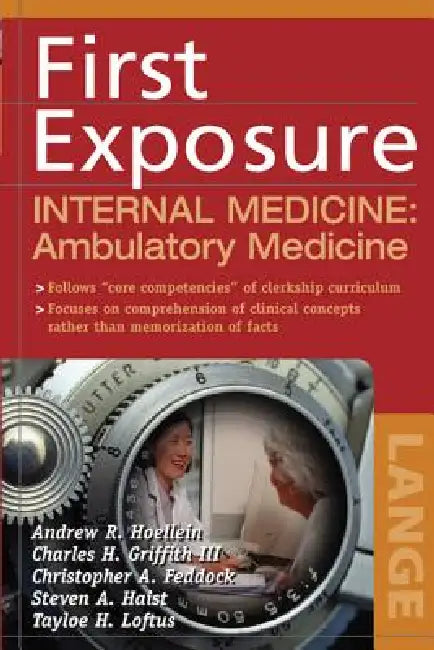
First Exposure to Internal Medicine | by Andrew R. Hoellein | Charles H. Griffith | McGraw Hill / Medical | by Andrew R. Hoellein | Charles H. Griffith | McGraw Hill / Medical | by Andrew R. Hoellein | Charles H. Griffith | McGraw Hill / Medical | by Andrew R. Hoellein | Charles H. Griffith | McGraw Hill / Medical | by Andrew R. Hoellein | Charles H. Griffith | McGraw Hill / Medical | by Andrew R. Hoellein | Charles H. Griffith | McGraw Hill / Medical | by Andrew R. Hoellein | Charles H. Griffit

Medicine & Health Sciences
First Exposure to Internal Medicine | by Charles H. Griffith | Andrew R. Hoellein | McGraw Hill / Medical | by Charles H. Griffith | Andrew R. Hoellein | McGraw Hill / Medical | by Charles H. Griffith | Andrew R. Hoellein | McGraw Hill / Medical | by Charles H. Griffith | Andrew R. Hoellein | McGraw Hill / Medical | by Charles H. Griffith | Andrew R. Hoellein | McGraw Hill / Medical | by Charles H. Griffith | Andrew R. Hoellein | McGraw Hill / Medical | by Charles H. Griffith | Andrew R. Hoellei
Medicine & Health Sciences
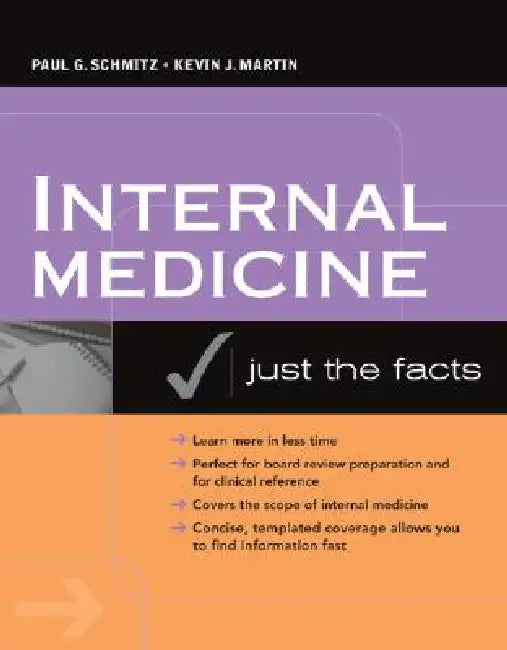
Internal Medicine | by Paul G. Schmitz | Kevin J. Martin | McGraw Hill / Medical | by Paul G. Schmitz | Kevin J. Martin | McGraw Hill / Medical | by Paul G. Schmitz | Kevin J. Martin | McGraw Hill / Medical | by Paul G. Schmitz | Kevin J. Martin | McGraw Hill / Medical | by Paul G. Schmitz | Kevin J. Martin | McGraw Hill / Medical | by Paul G. Schmitz | Kevin J. Martin | McGraw Hill / Medical | by Paul G. Schmitz | Kevin J. Martin | McGraw Hill / Medical | by Paul G. Schmitz | Kevin J. Martin |

Medicine & Health Sciences