

The Culture of the Mathematics Classroom by Falk Seeger – Understanding Social Dynamics in Math Education
Inclusive of all applicable taxes. FREE shipping on all orders.
Available Offers
- 🚚Free Delivery — Free shipping on all orders
- 💵Cash on Delivery — Pay when your order arrives
- ↩️15-Day Easy Returns — Hassle-free return policy
- 🔒Cash on Delivery — Pay safely when your order arrives
Check Delivery
Product Description
Introduction
Mathematics is often seen as a subject of rigid rules and abstract numbers, but the classroom where it is taught is a living, breathing social space. The Culture of the Mathematics Classroom by Falk Seeger invites educators, researchers, and students to look beyond the blackboard and explore how classroom interactions, teacher-student relationships, and shared practices shape mathematical understanding. This hardcover edition from Cambridge University Press is an essential read for anyone passionate about transforming how mathematics is taught and learned in India and around the world.
Book Overview
Published by the prestigious Cambridge University Press, this book delves deep into the social and cultural dimensions of mathematics education. It challenges the traditional view of the classroom as a mere delivery system for facts and instead presents it as a dynamic community where knowledge is co-constructed. Through a blend of research findings and practical insights, Falk Seeger and contributing experts examine how changing classroom culture can lead to more effective and meaningful learning experiences. The book is structured into three comprehensive sections, each addressing a critical aspect of classroom life: teacher development, interactive learning processes, and the construction of mathematical knowledge.
Key Highlights
- Research-Driven Insights: Based on real classroom studies, offering evidence-based strategies for improving mathematics education.
- Teacher-Researcher Collaboration: Highlights successful models where teachers and researchers work together to reshape classroom culture.
- Focus on Social Learning: Emphasizes the communal nature of mathematical understanding, moving away from isolated problem-solving.
- Practical Applications: Provides actionable ideas for educators to implement in their own classrooms, from primary school to university level.
- Global Perspective: While rooted in international research, the concepts are highly relevant to the Indian educational context.
Inside the Book
The volume is divided into three distinct yet interconnected sections. The first section explores attempts to change classroom culture by focusing on the education of mathematics teachers and the power of teacher-researcher collaboration. The second section shifts attention to the interactive processes of the mathematics classroom, examining how dialogue, group work, and peer interactions foster a communal approach to learning. The third section investigates how mathematical knowledge is constructed, filtered, and established within the unique culture of the classroom. Each chapter is rich with case studies, theoretical frameworks, and reflective questions that encourage readers to rethink their own teaching practices.
Key Topics
- The social character of mathematical pedagogy
- Teacher professional development and collaboration
- Classroom discourse and interaction patterns
- Building a community of mathematical learners
- Cultural influences on teaching and learning mathematics
- Constructing and validating mathematical knowledge in the classroom
- Bridging theory and practice in mathematics education
Reader Benefits
This book empowers readers to see the mathematics classroom not as a static environment but as a vibrant culture that can be nurtured and transformed. Teachers will gain fresh perspectives on how to engage students, foster curiosity, and create a supportive atmosphere where mistakes are seen as learning opportunities. Researchers will find a rich source of theoretical grounding and methodological approaches for studying classroom dynamics. Students of education will appreciate the clear connections between theory and real-world practice. Ultimately, this book helps every reader become a more thoughtful and effective participant in the world of mathematics education.
Learning Outcomes
- Understand the role of culture in shaping mathematical learning experiences.
- Identify strategies for fostering collaborative and inclusive mathematics classrooms.
- Analyze the impact of teacher-student interactions on knowledge construction.
- Apply research-based approaches to enhance student engagement and understanding.
- Evaluate different models of teacher-researcher collaboration for classroom improvement.
Who Should Read
This book is ideal for mathematics teachers at all levels, from primary school to higher secondary and college. It is also a valuable resource for teacher educators, curriculum developers, and educational researchers. Students pursuing B.Ed., M.Ed., or postgraduate degrees in mathematics education will find it an indispensable reference. School principals, academic coordinators, and policymakers looking to improve mathematics outcomes will benefit from the insights offered. Anyone curious about the social dynamics of learning and the hidden forces that shape a classroom will be captivated by this thought-provoking work.
About the Author
Falk Seeger is a respected scholar in the field of mathematics education, known for his deep research into the cultural and social aspects of teaching and learning. With years of experience working with teachers and researchers across different countries, Seeger brings a nuanced understanding of how classroom environments influence mathematical thinking. His work emphasizes the importance of collaboration, dialogue, and shared meaning-making in education. This book reflects his commitment to bridging the gap between academic research and everyday classroom practice.
About the Publisher
Cambridge University Press is one of the world's oldest and most prestigious academic publishers, known for producing high-quality educational and research materials. With a legacy spanning over four centuries, Cambridge University Press is synonymous with scholarly excellence and rigorous peer review. This hardcover edition is a testament to their commitment to advancing knowledge in mathematics education and supporting educators worldwide.
Conclusion
The Culture of the Mathematics Classroom is more than a book—it is an invitation to rethink the very fabric of how mathematics is taught and learned. By focusing on the social and cultural dimensions of the classroom, Falk Seeger offers a roadmap for creating more engaging, equitable, and effective learning environments. Whether you are a teacher looking to inspire your students, a researcher seeking new perspectives, or a student preparing for a career in education, this book will transform your understanding of mathematics education. Order your copy today from Bookshops.in and join the movement to change the culture of the mathematics classroom.
Quick Summary
The Culture of the Mathematics Classroom by Falk Seeger is a seminal work that delves into the social and cultural dynamics shaping mathematics education. Published by Cambridge University Press, this hardcover volume is divided into three sections: the first focuses on teacher education and collaborative efforts to transform classroom culture; the second examines interactive processes and the communal nature of learning; the third discusses how mathematical knowledge is constructed, filtered, and established within the classroom. Drawing on both research and practical experience, the book offers educators and researchers a nuanced understanding of why classroom culture matters and how it can be positively influenced. For Indian mathematics teachers, teacher trainers, and education researchers, this book provides valuable insights into creating more engaging, inclusive, and effective learning environments. By purchasing from Bookshops.in, Indian readers get a trusted source for academic books with reliable delivery.
Book Highlights
Book Specifications
| ISBN-13 | 9780521571074 |
| ISBN-10 | 0521571073 |
| Publisher | Cambridge University Press |
| Language | English |
| Dimensions | 15.88 x 2.54 x 23.5 cm |
| Weight | 745 g |
| Country | India |
| Category | Teaching & Education › Elementary Education |
| Genre | Non-fiction |
| Original Language | English |
Frequently Asked Questions
What is the main focus of this book?
Who is the author of The Culture of the Mathematics Classroom?
Is this book suitable for Indian mathematics teachers?
What are the three sections of the book?
Does the book include practical classroom examples?
Is this book a hardcover or paperback?
What is the ISBN of this book?
What language is the book in?
How can this book help a math teacher?
Is this book part of a series?
Does the book discuss technology in the classroom?
Can this book be used for teacher training programs?
Where can I buy this book in India?
Readers Also Search For
Customers Also Bought
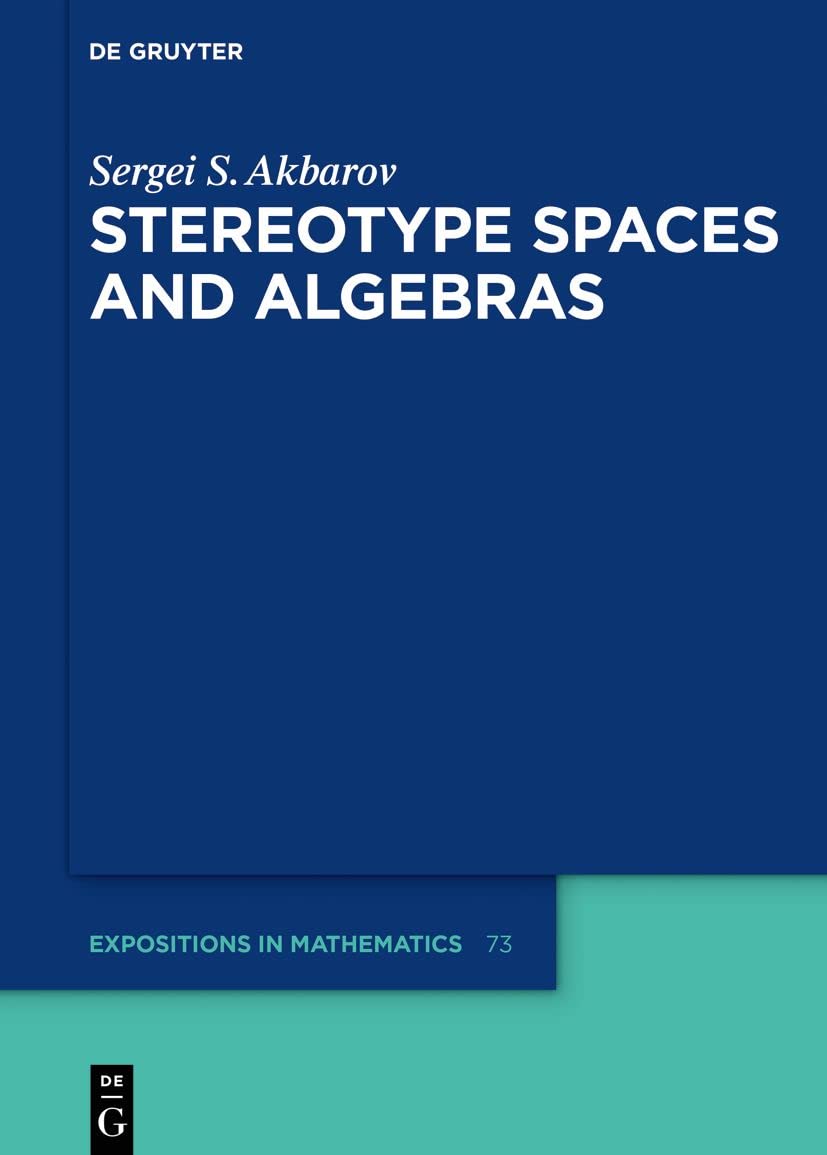
Mathematics
Stereotype Spaces and Algebras: 73 (De Gruyter Expositions in Mathematics, 73)

Mathematics
Semigroups in Algebra, Geometry and Analysis: 20 (De Gruyter Expositions in Mathematics, 20)

Mathematics
Geometry from the Pacific Rim: Proceedings of the Pacific Rim Geometry Conference held at National University of Singapore, Republic of Singapore, ... 1994 (De Gruyter Proceedings in Mathematics)

Mathematics
First International Tainan-Moscow Algebra Workshop: Proceedings of the International Conference held at National Cheng Kung University Tainan, Taiwan, ... 1994 (De Gruyter Proceedings in Mathematics)

Mathematics
Differential Geometry - Proceedings of the VIII International Colloquium (English, Jesus A. Alvarez Lopez | Eduardo Garcia-Rio)

Mathematics
Mathematical Theory of Optimal Processes (Classics of Soviet Mathematics)
Related Products
View All
Science & Mathematics
Squid - Superconducting Quantum Interference Devices and Their Applications: Proceedings of the International Conference on Superconducting Quantum Devices, Berlin-west, October 4-8, 1976

Science & Mathematics
Thermodynamics and Pattern Formation in Biology
Science & Mathematics
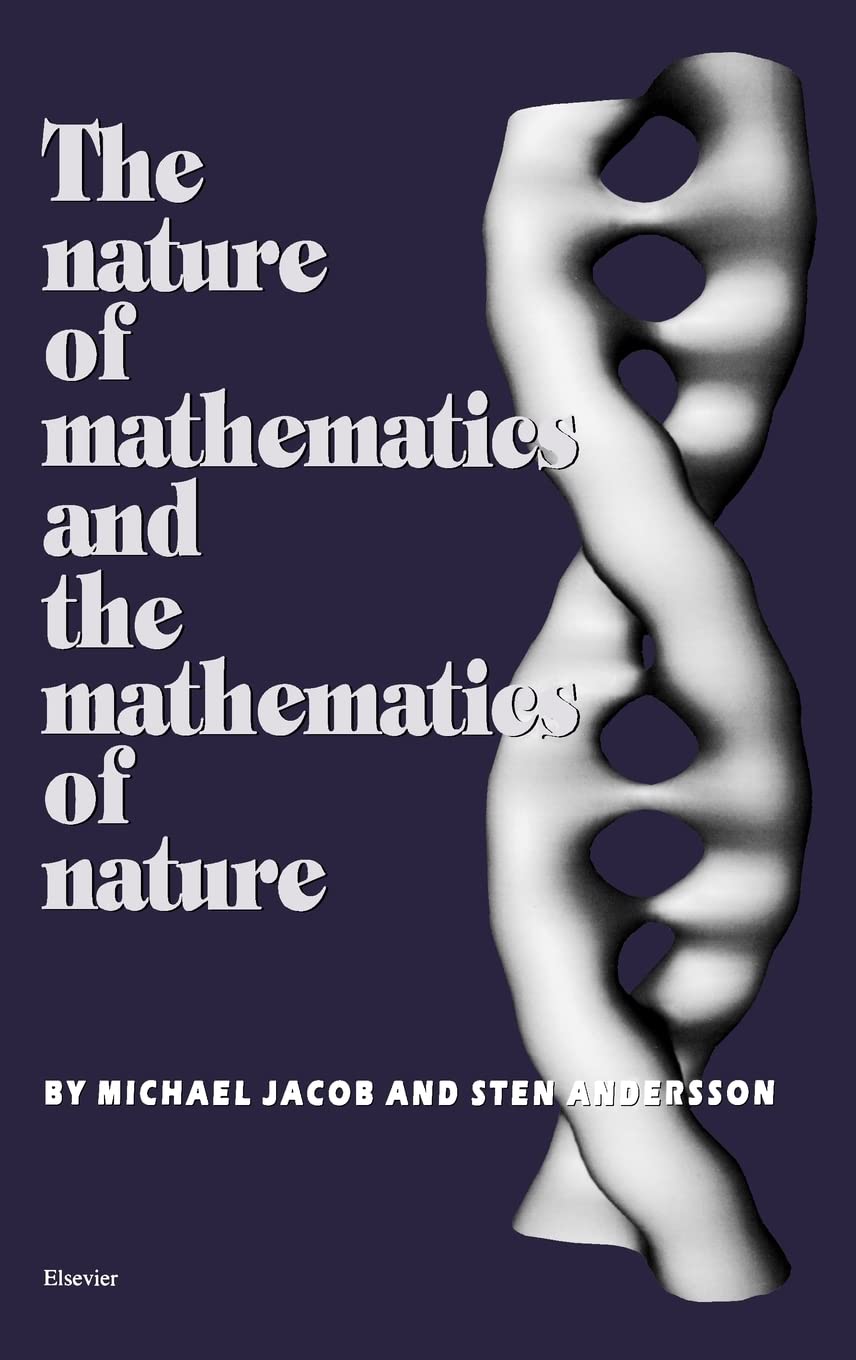
The Nature of Mathematics and the Mathematics of Nature by S. Andersson – Mathematics & Science

Science & Mathematics
Linear Algebra | by Stephen Friedberg | Arnold Insel | Lawrence Spence | Pearson | by Stephen Friedberg | Arnold Insel | Lawrence Spence | Pearson | by Stephen Friedberg | Arnold Insel | Lawrence Spence | Pearson | by Stephen Friedberg | Arnold Insel | Lawrence Spence | Pearson | by Stephen Friedberg | Arnold Insel | Lawrence Spence | Pearson | by Stephen Friedberg | Arnold Insel | Lawrence Spence | Pearson | by Stephen Friedberg | Arnold Insel | Lawrence Spence | Pearson | by Stephen Friedberg

Science & Mathematics
University Calculus | by Joel Hass | Christopher Heil | Maurice Weir | Pearson | by Joel Hass | Christopher Heil | Maurice Weir | Pearson | by Joel Hass | Christopher Heil | Maurice Weir | Pearson | by Joel Hass | Christopher Heil | Maurice Weir | Pearson | by Joel Hass | Christopher Heil | Maurice Weir | Pearson | by Joel Hass | Christopher Heil | Maurice Weir | Pearson | by Joel Hass | Christopher Heil | Maurice Weir | Pearson | by Joel Hass | Christopher Heil | Maurice Weir | Pearson | by Joe

Science & Mathematics