
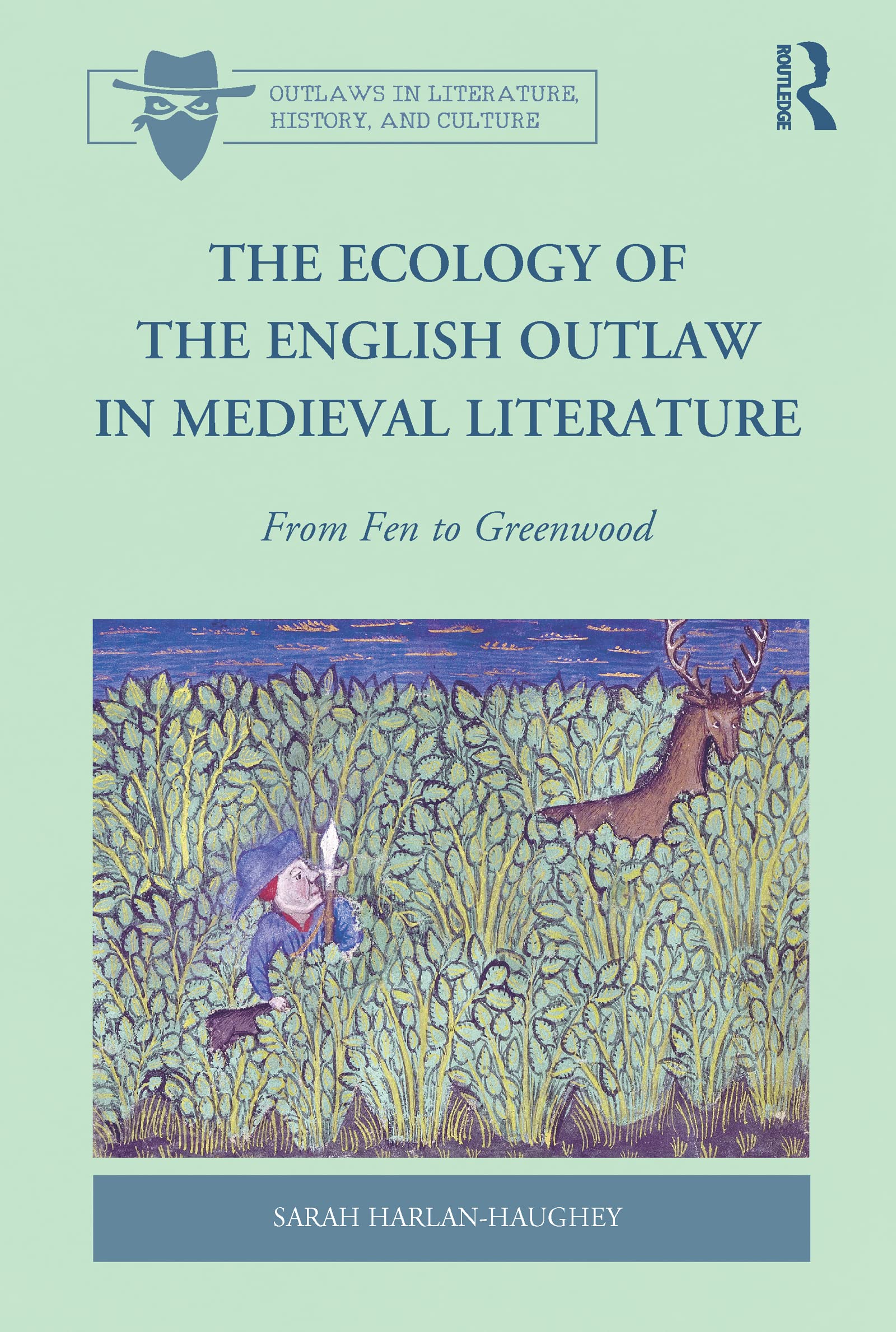
The Ecology of the English Outlaw in Medieval Literature: From Fen to Greenwood by Sarah Harlan-Haughey – A Study of Wil
Inclusive of all applicable taxes. FREE shipping on all orders.
Available Offers
- 🚚Free Delivery — Free shipping on all orders
- 💵Cash on Delivery — Pay when your order arrives
- ↩️15-Day Easy Returns — Hassle-free return policy
- 🔒Cash on Delivery — Pay safely when your order arrives
Check Delivery
Product Description
Introduction
In a world where environmental anxieties and political upheavals shape our collective imagination, The Ecology of the English Outlaw in Medieval Literature: From Fen to Greenwood by Sarah Harlan-Haughey offers a groundbreaking exploration of how medieval English outlaws mirrored the ecological and political crises of their times. This meticulously researched volume, published by Routledge, bridges literary criticism with ecocritical theory, revealing the deep connections between wilderness, lawlessness, and national identity in medieval England. For students, scholars, and curious readers in India, this book provides a fresh lens through which to understand how literature responds to environmental change and social disorder.
Book Overview
Sarah Harlan-Haughey traces the evolution of the outlaw figure from the treacherous fens of Anglo-Saxon England to the idealized greenwood of later medieval romances and ballads. By examining texts such as Beowulf, the Old English exile lyrics, the life of Hereward the Wake, the Anglo-Norman romance of Fulk Fitz Waryn, the Robin Hood ballads, and the Tale of Gamelyn, the author argues that outlaw narratives gain urgency during moments of ecological and political crisis. The book demonstrates how the outlaw remains a liminal, animalistic figure—both brutal and courtly—who embodies humanity's ambivalence toward wilderness and the natural world.
Key Highlights
- Ecocritical Approach: A rare integration of medieval literature with modern ecological thought, examining how landscapes shape outlaw identities.
- Comprehensive Textual Analysis: Covers a wide range of texts from the Anglo-Saxon period to the late Middle Ages, including lesser-known works like the Gesta Herewardi.
- Political and Ecological Nexus: Connects outlaw narratives to historical crises such as Norman conquest, deforestation, and shifting land-use patterns.
- Animality and Liminality: Explores how outlaws are portrayed as animalistic, other, and existing on the margins of human society.
- Lost England: Discusses the nostalgic imagining of a pristine, forested England that outlaws like Robin Hood come to represent.
Inside the Book
The book is structured around key outlaw figures and their environments. Harlan-Haughey begins with the fenlands of Beowulf and the exile lyrics, where the wilderness is menacing and unknown. She then moves to the Anglo-Saxon resistance fighter Hereward, who uses the fens as a refuge against Norman invaders. The Anglo-Norman romance of Fulk Fitz Waryn presents a hybrid outlaw who straddles two cultures. The later chapters focus on the Robin Hood ballads and the Tale of Gamelyn, where the greenwood becomes a bright, mapped, and idealized space. Throughout, the author reveals how these narratives reflect changing attitudes toward nature, law, and community.
Key Topics
- Ecocriticism and medieval literature
- Outlawry and political resistance in Anglo-Saxon England
- The symbolism of fens, forests, and greenwood in medieval texts
- Animality and the human-animal boundary in outlaw narratives
- Nostalgia for a lost, pristine landscape
- The intersection of law, violence, and ecology
- Comparative analysis of Hereward, Fulk Fitz Waryn, Robin Hood, and Gamelyn
Reader Benefits
This book offers Indian readers a unique opportunity to engage with medieval English literature from an ecocritical perspective—a field that is gaining traction in Indian academia. It provides tools to analyze how literature reflects environmental concerns, making it relevant to contemporary debates on climate change, deforestation, and displacement. The accessible writing style and clear argumentation make it suitable for both advanced students and general readers interested in the intersection of literature and ecology.
Learning Outcomes
- Understand the role of landscape and ecology in shaping medieval outlaw narratives.
- Analyze how political crises influence literary representations of wilderness.
- Identify key themes such as liminality, animality, and nostalgia in medieval texts.
- Compare different outlaw figures across centuries and genres.
- Apply ecocritical frameworks to other literary works.
Who Should Read
This book is ideal for students and researchers in English literature, medieval studies, ecocriticism, and environmental humanities. It will also appeal to historians interested in medieval English society and its relationship with the natural world. Indian readers pursuing postgraduate studies in literature or environmental studies will find it a valuable addition to their library. Additionally, anyone fascinated by the Robin Hood legend and its deeper cultural meanings will enjoy this scholarly yet engaging work.
About the Author
Sarah Harlan-Haughey is a scholar of medieval English literature with a specialization in ecocriticism and animal studies. She has published widely on Old English poetry, outlaw narratives, and the representation of wilderness in medieval texts. Her work brings together literary analysis with environmental history, offering fresh insights into how medieval people understood their natural surroundings. She teaches at the University of Maine, where she continues to explore the intersections of literature, ecology, and culture.
About the Publisher
Routledge is a leading global academic publisher known for its rigorous scholarship in the humanities and social sciences. With a strong focus on interdisciplinary studies, Routledge publishes works that push the boundaries of traditional disciplines. This book is part of their series on medieval literature and ecocriticism, reflecting the publisher's commitment to innovative and timely research.
Conclusion
The Ecology of the English Outlaw in Medieval Literature: From Fen to Greenwood is a thought-provoking and timely work that redefines how we understand medieval outlaw tales. By placing ecology at the center of literary analysis, Sarah Harlan-Haughey reveals the enduring relevance of these narratives in an age of environmental crisis. For Indian readers, this book opens up new avenues for thinking about the relationship between literature, landscape, and political resistance. Whether you are a student, scholar, or lifelong learner, this hardcover edition from Routledge deserves a place on your bookshelf.
Quick Summary
The Ecology of the English Outlaw in Medieval Literature: From Fen to Greenwood by Sarah Harlan-Haughey is a groundbreaking academic study that examines outlaw narratives in medieval English texts through an ecocritical lens. The book traces the evolution of the outlaw figure from the menacing fens of Anglo-Saxon poetry—including Beowulf and Old English exile lyrics—to the idealized greenwood of later romances and ballads such as Robin Hood, Fulk Fitz Waryn, and the Tale of Gamelyn. Harlan-Haughey argues that these narratives gain prominence during moments of ecological and political crisis, revealing a deep cultural ambivalence toward wilderness and the animal. Readers will learn how medieval writers used the outlaw's animalistic, liminal nature to comment on society, nature, and otherness. This book is ideal for students and scholars of medieval literature, ecocriticism, and environmental humanities. By purchasing from Bookshops.in, Indian readers gain access to a premium hardcover edition that supports local book culture and ensures fast, reliable delivery.
Book Highlights
Book Specifications
| ISBN-13 | 9781472465504 |
| ISBN-10 | 1472465504 |
| Publisher | Routledge |
| Language | English |
| Dimensions | 15.75 x 2.03 x 23.37 cm |
| Weight | 590 g |
| Country | India |
| Category | Literature › English Literature |
| Genre | Academic / Literary Criticism |
| Original Language | English |
Frequently Asked Questions
What is the main argument of The Ecology of the English Outlaw?
Which texts does Sarah Harlan-Haughey analyze?
How does this book approach medieval literature?
Is this book suitable for undergraduate students?
What is the significance of the fen in the book?
Does the book cover Robin Hood extensively?
What is the author's background?
Why is the book priced at ₹3707?
How does the book connect to modern ecological issues?
Can I use this book for a course on medieval literature?
Does the book include primary source quotations?
Is this book part of a series?
What makes this book different from other studies on outlaws?
Where can I buy this book in India?
Readers Also Search For
Customers Also Bought

Mathematics
Stereotype Spaces and Algebras: 73 (De Gruyter Expositions in Mathematics, 73)

Mathematics
Semigroups in Algebra, Geometry and Analysis: 20 (De Gruyter Expositions in Mathematics, 20)

Mathematics
Geometry from the Pacific Rim: Proceedings of the Pacific Rim Geometry Conference held at National University of Singapore, Republic of Singapore, ... 1994 (De Gruyter Proceedings in Mathematics)

Mathematics
First International Tainan-Moscow Algebra Workshop: Proceedings of the International Conference held at National Cheng Kung University Tainan, Taiwan, ... 1994 (De Gruyter Proceedings in Mathematics)

Mathematics
Differential Geometry - Proceedings of the VIII International Colloquium (English, Jesus A. Alvarez Lopez | Eduardo Garcia-Rio)
Mathematics
Mathematical Theory of Optimal Processes (Classics of Soviet Mathematics)
Related Products
View All
Science & Mathematics
Squid - Superconducting Quantum Interference Devices and Their Applications: Proceedings of the International Conference on Superconducting Quantum Devices, Berlin-west, October 4-8, 1976

Science & Mathematics
Thermodynamics and Pattern Formation in Biology
Science & Mathematics
The Nature of Mathematics and the Mathematics of Nature by S. Andersson – Mathematics & Science

Science & Mathematics
Linear Algebra | by Stephen Friedberg | Arnold Insel | Lawrence Spence | Pearson | by Stephen Friedberg | Arnold Insel | Lawrence Spence | Pearson | by Stephen Friedberg | Arnold Insel | Lawrence Spence | Pearson | by Stephen Friedberg | Arnold Insel | Lawrence Spence | Pearson | by Stephen Friedberg | Arnold Insel | Lawrence Spence | Pearson | by Stephen Friedberg | Arnold Insel | Lawrence Spence | Pearson | by Stephen Friedberg | Arnold Insel | Lawrence Spence | Pearson | by Stephen Friedberg
Science & Mathematics
University Calculus | by Joel Hass | Christopher Heil | Maurice Weir | Pearson | by Joel Hass | Christopher Heil | Maurice Weir | Pearson | by Joel Hass | Christopher Heil | Maurice Weir | Pearson | by Joel Hass | Christopher Heil | Maurice Weir | Pearson | by Joel Hass | Christopher Heil | Maurice Weir | Pearson | by Joel Hass | Christopher Heil | Maurice Weir | Pearson | by Joel Hass | Christopher Heil | Maurice Weir | Pearson | by Joel Hass | Christopher Heil | Maurice Weir | Pearson | by Joe
Science & Mathematics