
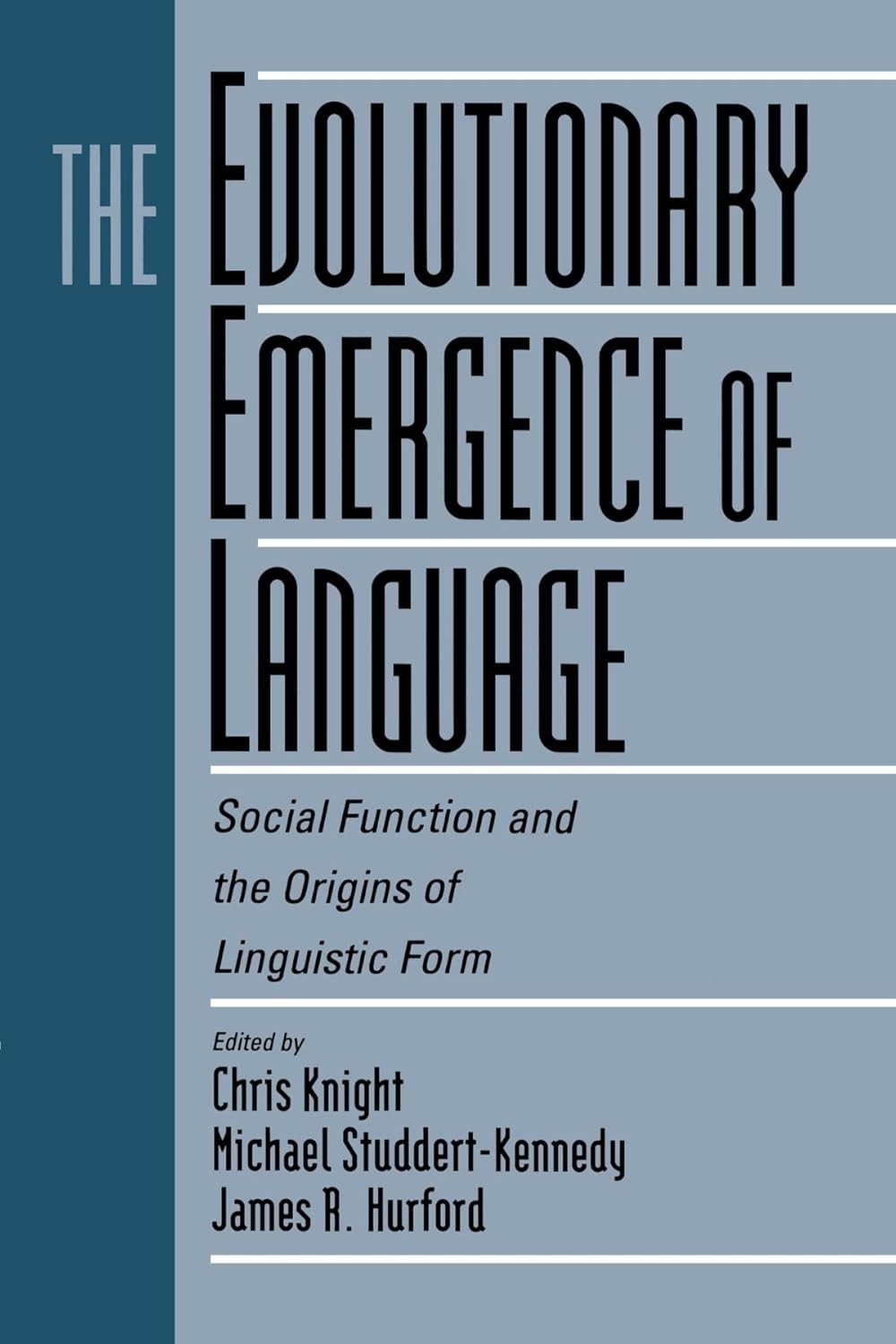
The Evolutionary Emergence of Language: Social Function and the Origins of Linguistic Form by Chris Knight – A Cambridge
Inclusive of all applicable taxes. FREE shipping on all orders.
Available Offers
- 🚚Free Delivery — Free shipping on all orders
- 💵Cash on Delivery — Pay when your order arrives
- ↩️15-Day Easy Returns — Hassle-free return policy
- 🔒Cash on Delivery — Pay safely when your order arrives
Check Delivery
Product Description
Introduction
Language is the hallmark of what it means to be human. It separates us from every other species on the planet, yet its origins remain one of the most profound puzzles in science. The Evolutionary Emergence of Language: Social Function and the Origins of Linguistic Form, edited by Chris Knight and published by Cambridge University Press, offers a bold, interdisciplinary exploration of how language arose. This hardcover volume brings together linguists, anthropologists, cognitive scientists, and evolutionary biologists to present a modern Darwinian perspective. For Indian readers and students fascinated by human evolution, linguistics, or the social sciences, this book provides a rigorous yet accessible journey into the deep past of our most defining trait.
Book Overview
At its core, this book argues that language is not a mere biological accident but a remarkable social adaptation. Unlike the communication systems of other animals, human language is built on extraordinary levels of social cooperation and trust. The contributors contend that the evolution of language was driven by social pressures—the need for coordination, shared intention, and cultural transmission. The book synthesizes insights from evolutionary psychology, linguistic anthropology, and theoretical linguistics to show how phonetic competence and complex syntax emerged from distinctively human social strategies. It is a work that bridges the natural and human sciences, offering a unified framework for understanding how and why language became unique to Homo sapiens.
Key Highlights
- Interdisciplinary collaboration: Features contributions from leading experts in linguistics, anthropology, cognitive science, and evolutionary biology.
- Social cooperation as the driver: Proposes that language evolved because of biologically anomalous levels of cooperation among early humans.
- Modern Darwinian perspective: Applies evolutionary theory to explain the emergence of phonetic, syntactic, and semantic structures.
- Focus on cultural transmission: Explores how social learning and vocal imitation shaped linguistic form.
- Critical for Indian academia: Ideal for students and researchers in linguistics, anthropology, and evolutionary psychology programs across India.
Inside the Book
The volume is structured around several core themes. It begins by examining the biological foundations of language, including the cognitive and neural prerequisites. Subsequent chapters delve into the role of social intelligence, arguing that language could only emerge in a species capable of shared goals and mutual trust. The book then explores phonetic evolution—how pressures for vocal learning and imitation gave rise to the sounds of speech. Syntactic complexity is treated as a product of social and cultural strategies, not just innate grammar. Each chapter builds a coherent narrative, supported by empirical evidence from primate studies, archaeology, and comparative linguistics. The writing is scholarly yet engaging, making complex ideas accessible to advanced undergraduates and graduate students.
Key Topics
- Evolutionary origins of human language
- Social cooperation and its role in linguistic emergence
- Phonetic competence and vocal learning
- Syntax as a social adaptation
- Darwinian approaches to language evolution
- Cultural transmission and imitation
- Comparative animal communication
- Human social intelligence and cognition
Reader Benefits
- Deepen your understanding: Gain a comprehensive, research-backed perspective on one of science's biggest questions.
- Interdisciplinary insights: Learn how multiple fields converge to explain language—perfect for students of linguistics, psychology, anthropology, and biology.
- Critical thinking: Engage with debates and hypotheses that challenge conventional views on language origins.
- Academic enrichment: A valuable resource for seminars, thesis work, or personal study in Indian universities and research institutes.
Learning Outcomes
- Understand the key theories of language evolution from a Darwinian standpoint.
- Analyze the relationship between social cooperation and linguistic structure.
- Evaluate evidence from comparative primatology, archaeology, and linguistics.
- Recognize the unique role of cultural transmission in shaping human language.
- Critically assess contemporary debates in evolutionary linguistics.
Who Should Read
This book is essential for advanced undergraduate and postgraduate students in linguistics, anthropology, cognitive science, and evolutionary biology. It is equally valuable for researchers and faculty members in Indian universities who seek a cutting-edge synthesis of language origins. Enthusiasts of human evolution, psychology, and philosophy of mind will also find it deeply rewarding. Anyone curious about what makes us uniquely human—and how language emerged from our social nature—will benefit from this volume.
About the Author
Chris Knight is a prominent anthropologist and evolutionary theorist. He is known for his work on the social origins of language and human cooperation. Knight has held academic positions at the University of East London and has contributed extensively to the field of evolutionary linguistics. His research emphasizes the role of social bonds, ritual, and cooperation in the emergence of symbolic culture. As the editor of this volume, he brings together a diverse set of voices to create a cohesive, groundbreaking argument.
About the Publisher
Cambridge University Press is one of the world's oldest and most prestigious academic publishers. Founded in 1534, it is renowned for its rigorous peer-review process and high-quality scholarly works. This hardcover edition reflects the press's commitment to advancing knowledge across the sciences and humanities. For Indian readers, Cambridge University Press titles are widely available through Bookshops.in, ensuring authentic, well-produced copies.
Conclusion
The Evolutionary Emergence of Language is not just a book—it is a landmark contribution to our understanding of human origins. By placing social cooperation at the heart of language evolution, it challenges readers to rethink what language is and where it comes from. Whether you are a student in Delhi, a researcher in Bengaluru, or a curious reader in Kolkata, this volume will expand your horizons. Pick up your hardcover copy from Bookshops.in today and embark on a journey into the evolutionary roots of speech.
Quick Summary
The Evolutionary Emergence of Language: Social Function and the Origins of Linguistic Form by Chris Knight is a seminal work that redefines the study of language origins through a Darwinian lens. Published by Cambridge University Press, this hardcover volume brings together linguists, anthropologists, and cognitive scientists to argue that language is a unique social adaptation of Homo sapiens, driven by extraordinary levels of social cooperation. The book explores how phonetic competence emerged from social pressures for vocal imitation and learning, and how complex syntactical structures arose from distinctively human social strategies. Readers will gain a comprehensive understanding of language as a product of evolutionary biology and social intelligence. This book is ideal for Indian postgraduate students, researchers, and academics in linguistics, anthropology, and cognitive science. By purchasing from Bookshops.in, you receive an authentic, high-quality hardcover edition delivered across India, backed by trusted customer service.
Book Highlights
Book Specifications
| ISBN-13 | 9780521786966 |
| ISBN-10 | 0521786967 |
| Publisher | Cambridge University Press |
| Language | English |
| Dimensions | 15.24 x 2.82 x 22.86 cm |
| Weight | 640 g |
| Country | India |
| Category | Humanities › Language & Linguistics |
| Genre | Nonfiction |
| Original Language | English |
Frequently Asked Questions
What is The Evolutionary Emergence of Language about?
Who is the author of this book?
Is this book suitable for Indian students?
Does the book cover syntax evolution?
What is the ISBN-13 of this book?
Is this book part of a series?
What language is the book written in?
What is the price of this book?
Can I buy this book from Bookshops.in?
Who should read this book?
What makes this book unique?
Is there a digital edition available?
Readers Also Search For
Customers Also Bought
Mathematics
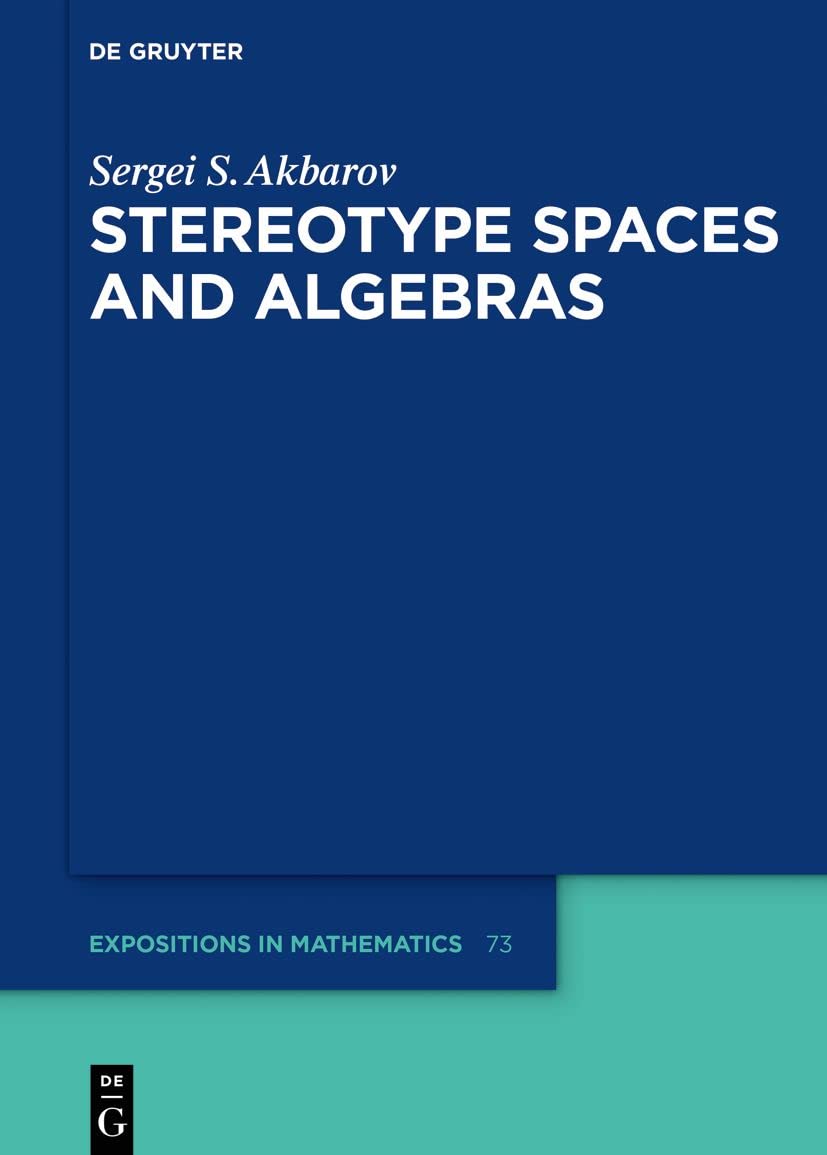
Stereotype Spaces and Algebras: 73 (De Gruyter Expositions in Mathematics, 73)

Mathematics
Semigroups in Algebra, Geometry and Analysis: 20 (De Gruyter Expositions in Mathematics, 20)

Mathematics
Geometry from the Pacific Rim: Proceedings of the Pacific Rim Geometry Conference held at National University of Singapore, Republic of Singapore, ... 1994 (De Gruyter Proceedings in Mathematics)

Mathematics
First International Tainan-Moscow Algebra Workshop: Proceedings of the International Conference held at National Cheng Kung University Tainan, Taiwan, ... 1994 (De Gruyter Proceedings in Mathematics)

Mathematics
Differential Geometry - Proceedings of the VIII International Colloquium (English, Jesus A. Alvarez Lopez | Eduardo Garcia-Rio)

Mathematics
Mathematical Theory of Optimal Processes (Classics of Soviet Mathematics)
Related Products
View All
Science & Mathematics
Squid - Superconducting Quantum Interference Devices and Their Applications: Proceedings of the International Conference on Superconducting Quantum Devices, Berlin-west, October 4-8, 1976

Science & Mathematics
Thermodynamics and Pattern Formation in Biology

Science & Mathematics
The Nature of Mathematics and the Mathematics of Nature by S. Andersson – Mathematics & Science

Science & Mathematics
Linear Algebra | by Stephen Friedberg | Arnold Insel | Lawrence Spence | Pearson | by Stephen Friedberg | Arnold Insel | Lawrence Spence | Pearson | by Stephen Friedberg | Arnold Insel | Lawrence Spence | Pearson | by Stephen Friedberg | Arnold Insel | Lawrence Spence | Pearson | by Stephen Friedberg | Arnold Insel | Lawrence Spence | Pearson | by Stephen Friedberg | Arnold Insel | Lawrence Spence | Pearson | by Stephen Friedberg | Arnold Insel | Lawrence Spence | Pearson | by Stephen Friedberg

Science & Mathematics
University Calculus | by Joel Hass | Christopher Heil | Maurice Weir | Pearson | by Joel Hass | Christopher Heil | Maurice Weir | Pearson | by Joel Hass | Christopher Heil | Maurice Weir | Pearson | by Joel Hass | Christopher Heil | Maurice Weir | Pearson | by Joel Hass | Christopher Heil | Maurice Weir | Pearson | by Joel Hass | Christopher Heil | Maurice Weir | Pearson | by Joel Hass | Christopher Heil | Maurice Weir | Pearson | by Joel Hass | Christopher Heil | Maurice Weir | Pearson | by Joe

Science & Mathematics