
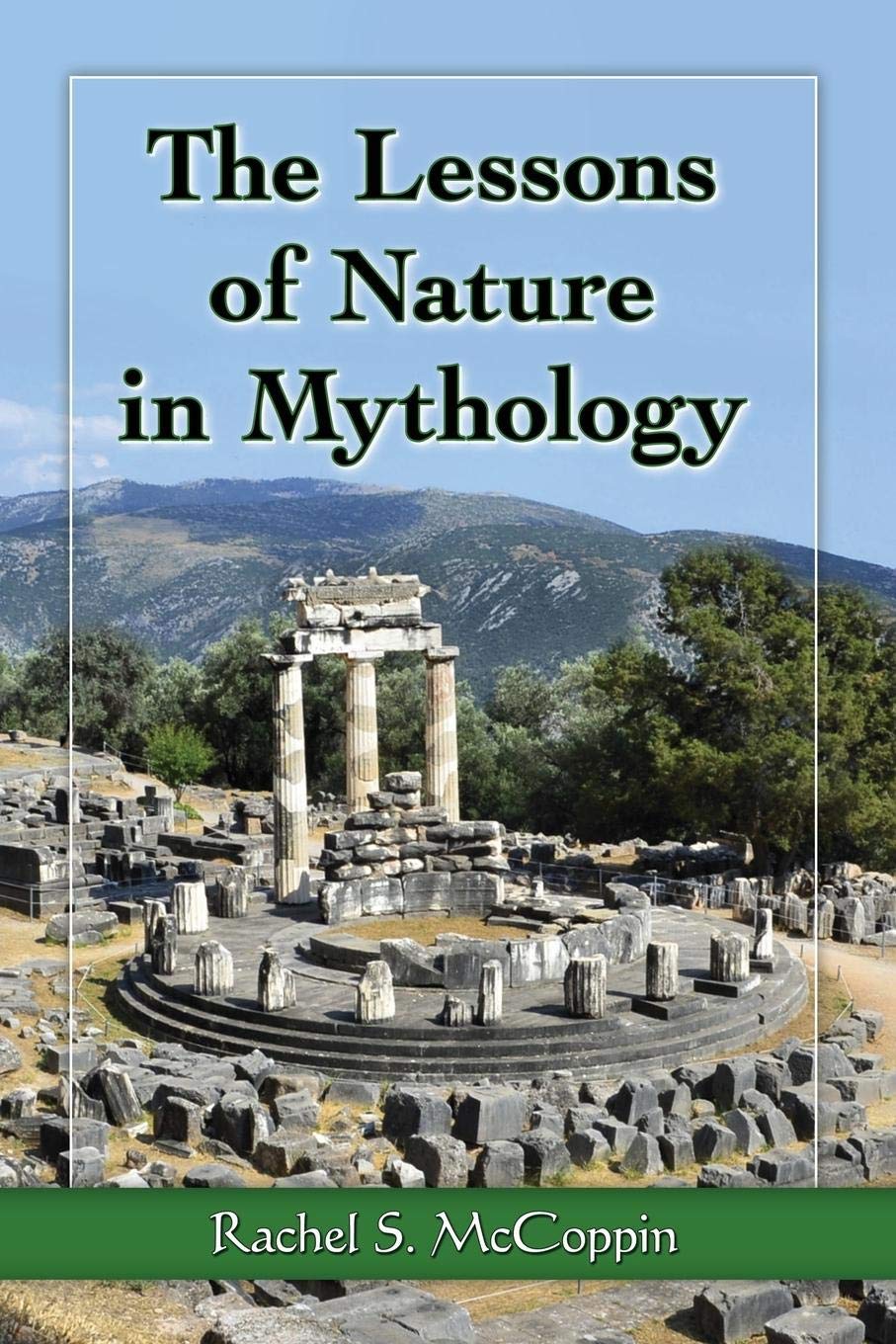
The Lessons of Nature in Mythology by Rachel S. McCoppin – Understanding Ancient Cosmologies and Seasonal Symbolism
Inclusive of all applicable taxes. FREE shipping on all orders.
Available Offers
- 🚚Free Delivery — Free shipping on all orders
- 💵Cash on Delivery — Pay when your order arrives
- ↩️15-Day Easy Returns — Hassle-free return policy
- 🔒Cash on Delivery — Pay safely when your order arrives
Check Delivery
Product Description
Introduction
In a world increasingly disconnected from the rhythms of the earth, The Lessons of Nature in Mythology by Rachel S. McCoppin offers a profound journey back to our roots. This scholarly yet accessible hardcover explores how ancient cultures across the globe used the natural world as a mirror for human existence. For Indian readers, who grow up surrounded by stories of the sun, moon, rivers, and forests in our own epics, this book provides a fascinating comparative lens. It reveals the universal language of nature that binds all mythologies, from the Vedas to the Norse sagas, reminding us that the earth has always been humanity's first teacher.
Book Overview
Rachel S. McCoppin delves deep into the intricate relationship between mythology and the environment. The book systematically examines how myths from diverse civilizations—spanning continents and millennia—personify natural phenomena. It traces the human life cycle as it is reflected in the changing seasons, from birth and growth to decay and rebirth. The author identifies divine figures who are not merely rulers of nature but are nature itself: gods of the storm, goddesses of the harvest, and spirits of the forest. Moving from the Paleolithic to the Neolithic era, the book shows how our ancestors' understanding of the wild shaped their stories, rituals, and ultimately, their societies. This is not just a collection of tales; it is a study of how nature writes the script for human culture.
Key Highlights
- Global Perspective: Covers mythology from Native American, African, European, Asian, and Indian traditions, offering a truly comparative study.
- Seasonal Cycles: Explains how the human journey—birth, adolescence, adulthood, and death—mirrors the agricultural and seasonal calendar.
- Divine Personifications: Identifies gods and goddesses who embody specific natural elements like the sun, moon, rivers, mountains, and storms.
- Historical Transition: Analyzes the shift in mythological representation as humans moved from hunter-gatherer lifestyles to settled agricultural communities.
- Academic Rigor: Written by a scholar but presented in clear, engaging prose suitable for both students and general readers.
Inside the Book
This hardcover volume is structured to guide the reader through a thematic exploration of nature's role in myth. Each chapter focuses on a specific natural element or phenomenon—such as the sky, water, or the forest—and examines its symbolic representation across different cultures. The book includes detailed analyses of creation myths, flood legends, and fertility rites. McCoppin draws connections between seemingly unrelated stories, showing how a drought in one culture's myth parallels a flood in another's. The text is enriched with references to primary sources and scholarly interpretations, making it a valuable resource for anyone studying religion, anthropology, or literature. It also touches upon the ecological wisdom embedded in these ancient narratives, offering lessons that are startlingly relevant today.
Key Topics
- The human life cycle as a reflection of the seasons
- Nature deities and their cultural variations
- Paleolithic vs. Neolithic mythological shifts
- Symbolism of natural phenomena in world myths
- Ecological and environmental themes in ancient stories
- The role of agriculture in shaping religious thought
- Comparative mythology across continents
Reader Benefits
Reading The Lessons of Nature in Mythology will deepen your appreciation for the stories that have shaped human civilization. You will learn to see beyond the surface of myths and recognize the profound environmental truths they carry. For students of Indian literature, this book provides a framework to compare our own nature-rich epics—like the Ramayana and Mahabharata—with global traditions. It encourages a more mindful connection with the natural world, highlighting how ancient peoples revered and respected the earth. The book also enhances critical thinking by showing how mythology evolves with human society, making it a valuable addition to any personal or academic library.
Learning Outcomes
- Understand the universal patterns linking nature and human mythology
- Identify key nature deities and their symbolic meanings across cultures
- Analyze the transition of mythological themes from prehistoric to agricultural societies
- Recognize the ecological wisdom embedded in ancient narratives
- Develop a comparative framework for studying world mythologies
- Apply mythological insights to contemporary environmental discussions
Who Should Read
This book is ideal for students of mythology, anthropology, and religious studies who seek a comprehensive and comparative analysis. It is also perfect for nature enthusiasts, storytellers, and educators who want to understand the deep roots of our relationship with the environment. Indian readers with a passion for our own mythological traditions—from the tales of Varuna and Indra to the forest stories of the Puranas—will find this book an enriching companion. Additionally, anyone interested in ecology, history, or cultural studies will discover valuable perspectives. Whether you are a university student or a curious reader, this book offers a rewarding intellectual journey.
About the Author
Rachel S. McCoppin is a noted scholar and professor whose work focuses on comparative mythology and the intersection of nature and culture. With years of academic research and teaching experience, she brings a rigorous yet accessible approach to ancient stories. Her passion for uncovering the universal truths hidden within myths is evident on every page of this book. McCoppin’s writing is known for its clarity and depth, making complex ideas understandable without losing scholarly integrity. She has contributed significantly to the field of mythology studies, and The Lessons of Nature in Mythology stands as a testament to her expertise and dedication.
About the Publisher
McFarland & Company is a respected independent publisher based in the United States, known for its high-quality academic and reference works. With a focus on niche subjects including mythology, history, and popular culture, McFarland has built a reputation for producing meticulously researched and well-crafted books. This hardcover edition reflects their commitment to durability and scholarly excellence. For readers in India, a McFarland title signifies a reliable source of in-depth knowledge, making this book a trustworthy addition to any serious collection.
Conclusion
The Lessons of Nature in Mythology is more than a book; it is a bridge between ancient wisdom and modern understanding. It reminds us that before science explained the world, mythology gave it meaning—and that meaning was rooted in the earth, the sky, and the seasons. For the Indian reader, this book offers a chance to see our own rich mythological heritage in a new light, while also connecting with the shared human story. Whether you are a student, a teacher, or a lifelong learner, this hardcover volume will inspire a deeper reverence for both nature and the timeless stories it has inspired. Add it to your library and rediscover the world through the eyes of our ancestors.
Quick Summary
The Lessons of Nature in Mythology by Rachel S. McCoppin is a scholarly exploration of how ancient myths from around the world draw upon natural phenomena to explain human existence. The book reveals that mythology is deeply rooted in the observation of seasonal cycles, weather patterns, and the landscape, with divinities often personifying elements like the sun, rain, earth, and sky. McCoppin traces the evolution of mythic thought from the Paleolithic hunting era to the Neolithic agricultural period, showing how human understanding of nature shaped religious and cultural narratives. This work is ideal for Indian students and readers interested in comparative mythology, anthropology, and the history of religion. It covers traditions including Greek, Norse, Egyptian, Hindu, and Native American myths, offering a global perspective. By reading this book, you will gain insights into how ancient peoples viewed their environment and how those views continue to influence modern thought. Purchase your copy from Bookshops.in, India's trusted source for quality academic and literary books.
Book Highlights
Book Specifications
| ISBN-13 | 9781476662008 |
| ISBN-10 | 1476662002 |
| Publisher | McFarland Publishing |
| Language | English |
| Dimensions | 15.24 x 1.14 x 22.86 cm |
| Weight | 318 g |
| Country | India |
| Category | Biology & Life Sciences › Ecology |
| Genre | Nonfiction |
| Original Language | English |
Frequently Asked Questions
What is The Lessons of Nature in Mythology about?
Who is the author Rachel S. McCoppin?
Which cultures are covered in the book?
Is this book suitable for Indian students?
What is the ISBN?
How does the book connect nature and mythology?
Does the book discuss the Paleolithic and Neolithic periods?
What can readers learn about divinities?
Is this a scholarly book?
What language is the book in?
Who is the publisher?
What is the price in India?
Where can I buy this book in India?
Readers Also Search For
Customers Also Bought

Mathematics
Stereotype Spaces and Algebras: 73 (De Gruyter Expositions in Mathematics, 73)

Mathematics
Semigroups in Algebra, Geometry and Analysis: 20 (De Gruyter Expositions in Mathematics, 20)

Mathematics
Geometry from the Pacific Rim: Proceedings of the Pacific Rim Geometry Conference held at National University of Singapore, Republic of Singapore, ... 1994 (De Gruyter Proceedings in Mathematics)

Mathematics
First International Tainan-Moscow Algebra Workshop: Proceedings of the International Conference held at National Cheng Kung University Tainan, Taiwan, ... 1994 (De Gruyter Proceedings in Mathematics)

Mathematics
Differential Geometry - Proceedings of the VIII International Colloquium (English, Jesus A. Alvarez Lopez | Eduardo Garcia-Rio)

Mathematics
Mathematical Theory of Optimal Processes (Classics of Soviet Mathematics)
Related Products
View All
Science & Mathematics
Elements of Pelagos Biology: With Focus on the Mediterranean Sea

Science & Mathematics
Squid - Superconducting Quantum Interference Devices and Their Applications: Proceedings of the International Conference on Superconducting Quantum Devices, Berlin-west, October 4-8, 1976

Science & Mathematics
Thermodynamics and Pattern Formation in Biology

Science & Mathematics
The Nature of Mathematics and the Mathematics of Nature by S. Andersson – Mathematics & Science

Science & Mathematics
Linear Algebra | by Stephen Friedberg | Arnold Insel | Lawrence Spence | Pearson | by Stephen Friedberg | Arnold Insel | Lawrence Spence | Pearson | by Stephen Friedberg | Arnold Insel | Lawrence Spence | Pearson | by Stephen Friedberg | Arnold Insel | Lawrence Spence | Pearson | by Stephen Friedberg | Arnold Insel | Lawrence Spence | Pearson | by Stephen Friedberg | Arnold Insel | Lawrence Spence | Pearson | by Stephen Friedberg | Arnold Insel | Lawrence Spence | Pearson | by Stephen Friedberg

Science & Mathematics