All Books
The Literary Lorgnette: Attending Opera in Imperial Russia
Literature & Fiction

The Literary Lorgnette: Attending Opera in Imperial Russia

5,431

Inclusive of all applicable taxes. FREE shipping on all orders.

Quantity:
1
Share:
Free DeliveryOn every order
15-Day ReturnEasy returns
Genuine BookPhysical copy only

Available Offers

  • 🚚Free DeliveryFree shipping on all orders
  • 💵Cash on DeliveryPay when your order arrives
  • ↩️15-Day Easy ReturnsHassle-free return policy
  • 🔒Cash on DeliveryPay safely when your order arrives

Check Delivery

Product Description

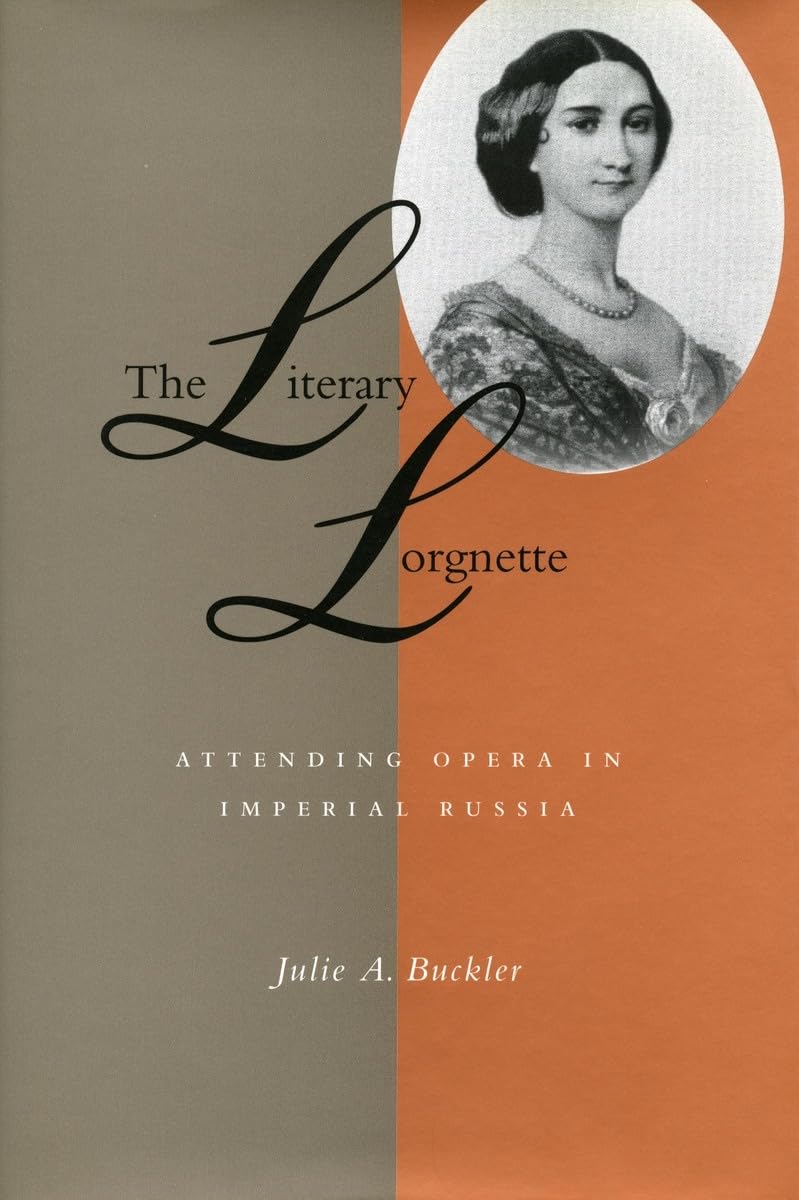
The "Golden Age" of opera-going in Russia, from the 1840s through the 1880s, coincided with the flourishing of Russian prose realism. During this period, opera and literature exerted a reciprocal influence on one another, each adopting and providing a new context for the other's artistic conventions. Opera permeated the culture of the drawing room so often depicted in literature, and literature simultaneously discovered the opera theater. The relationship between these two artistic genres inspired the use of performative models and conventions in Russian literary art, and led to the interpolation of specific operatic subtexts into literature and life.To many, these genres were antithetical, since opera historically aimed for the high stylistic register, and prose fiction experimented with the low. But the author shows that the attempt to translate opera into prosaic contemporary lives was characteristic of nineteenth-century Russia, since literature provided an alternative cultural theater in Russia to which the opera theater was analogous and parallel. As contested and self-regarding social space, the opera theater offered its visitors a rare public forum. The reception of opera as an art form in Russia resembles the impact of the early cinema on Russian audiences in the early twentieth century, since opera and film both brought about an aesthetic reconfiguring of social space.This book treats opera-going in imperial Russia from multiple perspectives, and discusses such canonical works as Tolstoy's Anna Karenina and Goncharov's Oblomov, major operatic works including Tchaikovsky's Eugene Onegin and Verdi's La Traviata, the impact of Western opera in Russia and the Russian-style prima donna. The book engages with poems, sketches, feuilletons, stories, and rarely-discussed Russian novels, as well as non-fictional reminiscences, reviews, and visual images. Throughout, the book is enriched with examples and anecdotes about performers, spectators, and critics, and reception histories of specific operatic works.

Product description Review "Buckler's book is the first serious English-language scholarship on Russian opera to be published since the Gorbachev/Yeltsin thaw. . . . The strengths of the book are twofold: revelation of new evidence discovered in archives in St. Petersburg and Moscow and exegesis of the process by which texts circulated between opera and prose literature. . . . Buckler is to be commended for her keen analyses of meta-theatrical novels and stories by lesser-known nineteenth-century authors. . . ."--The Russian Review"The greatest attribute of The Literary Lorgnette . . . .is its wealth of information. Thanks to diligent research, Julie A. Buckler . . . .paints a detailed picture of nineteenth-century Russian opera culture. By the end of the book, the reader has learned about seminal Western and Russian operas; the custom of opera-going; major personalities; and how opera permeated literature."--Canadian Slavonic Papers"This monograph should be of interest to anyone concerned with nineteenth century Russian cultural life. . . . Readers of this monograph can only hope that [Buckler] will continue further research . . . and produce more work as rewarding as this book."--Slavic and East European Journal From the Inside Flap The Golden Age of opera-going in Russia, from the 1840s through the 1880s, coincided with the flourishing of Russian prose realism. During this period, opera and literature exerted a reciprocal influence on one another, each adopting and providing a new context for the other s artistic conventions. Opera permeated the culture of the drawing room so often depicted in literature, and literature simultaneously discovered the opera theater. The relationship between these two artistic genres inspired the use of performative models and conventions in Russian literary art, and led to the interpolation of specific operatic subtexts into literature and life.To many, these genres were antithetical, since opera historically aimed for the high stylistic register, and prose fiction experimented with the low. But the author shows that the attempt to translate opera into prosaic contemporary lives was characteristic of nineteenth-century Russia, since literature provided an alternative cultural theater in Russia to which the opera theater was analogous and parallel. As contested and self-regarding social space, the opera theater offered its visitors a rare public forum. The reception of opera as an art form in Russia resembles the impact of the early cinema on Russian audiences in the early twentieth century, since opera and film both brought about an aesthetic reconfiguring of social space.This book treats opera-going in imperial Russia from multiple perspectives, and discusses such canonical works as Tolstoy s Anna Karenina and Goncharov s Oblomov, major operatic works including Tchaikovsky s Eugene Onegin and Verdi s La Traviata, the impact of Western opera in Russia and the Russian-style prima donna. The book engages with poems, sketches, feuilletons, stories, and rarely-discussed Russian novels, as well as non-fictional reminiscences, reviews, and visual images. Throughout, the book is enriched with examples and anecdotes about performers, spectators, and critics, and reception histories of specific operatic works. From the Back Cover The “Golden Age” of opera-going in Russia, from the 1840s through the 1880s, coincided with the flourishing of Russian prose realism. During this period, opera and literature exerted a reciprocal influence on one another, each adopting and providing a new context for the other’s artistic conventions. Opera permeated the culture of the drawing room so often depicted in literature, and literature simultaneously discovered the opera theater. The relationship between these two artistic genres inspired the use of performative models and conventions in Russian literary art, and led to the interpolation of specific operatic subtexts into literature and life.To many, these genres were antithetical, since opera historically aimed for the high stylistic register, and prose fiction experimented with the low. But the author shows that the attempt to translate opera into prosaic contemporary lives was characteristic of nineteenth-century Russia, since literature provided an alternative cultural theater in Russia to which the opera theater was analogous and parallel. As contested and self-regarding social space, the opera theater offered its visitors a rare public forum. The reception of opera as an art form in Russia resembles the impact of the early cinema on Russian audiences in the early twentieth century, since opera and film both brought about an aesthetic reconfiguring of social space.This book treats opera-going in imperial Russia from multiple perspectives, and discusses such canonical works as Tolstoy’s Anna Karenina and Goncharov’s Oblomov, major operatic works including Tchaikovsky’s Eugene Onegin and Verdi’s La Traviata, the impact of Western opera in Russi

Book Specifications

ISBN-139780804732475
ISBN-100804732477
Publisher‎ Stanford Univ Pr
Language‎ English
Dimensions‎ 15.24 x 2.46 x 22.86 cm
Weight‎ 590 g
CategoryWorld Literature › European

Frequently Asked Questions

What is the price of The Literary Lorgnette: Attending Opera in Imperial Russia?
The Literary Lorgnette: Attending Opera in Imperial Russia is available at ₹5,431 on BookShops.in.
Does BookShops.in offer free delivery for The Literary Lorgnette: Attending Opera in Imperial Russia?
FREE delivery on all orders for The Literary Lorgnette: Attending Opera in Imperial Russia.
Is Cash on Delivery available for The Literary Lorgnette: Attending Opera in Imperial Russia?
Yes, Cash on Delivery (COD) is available for The Literary Lorgnette: Attending Opera in Imperial Russia on BookShops.in. Pay when your order arrives.
What is the return policy for The Literary Lorgnette: Attending Opera in Imperial Russia?
BookShops.in offers a 15-day hassle-free return policy for The Literary Lorgnette: Attending Opera in Imperial Russia. Contact us at [email protected] or call +91 81899 68108.
Is The Literary Lorgnette: Attending Opera in Imperial Russia authentic?
The Literary Lorgnette: Attending Opera in Imperial Russia is listed on BookShops.in after verification of product details including ISBN, title, and availability information.
Get In Touch

Contact BookShops.in

Find our bookstore in Madurai on the map below, or let us know about your reading experience by leaving a review.

Phone+91 81899 68108
Address12, Rajan Street, Main Road, KK Nagar, Madurai — 625020, Tamil Nadu, India
Support HoursMon–Sat, 10:00 AM – 6:00 PM (IST)

Value your feedback

Enjoyed the books you ordered from us? Your review helps fellow readers discover our store and helps us improve.

Leave a Google Review

Your Cart

Your cart is empty

Add books to get started