
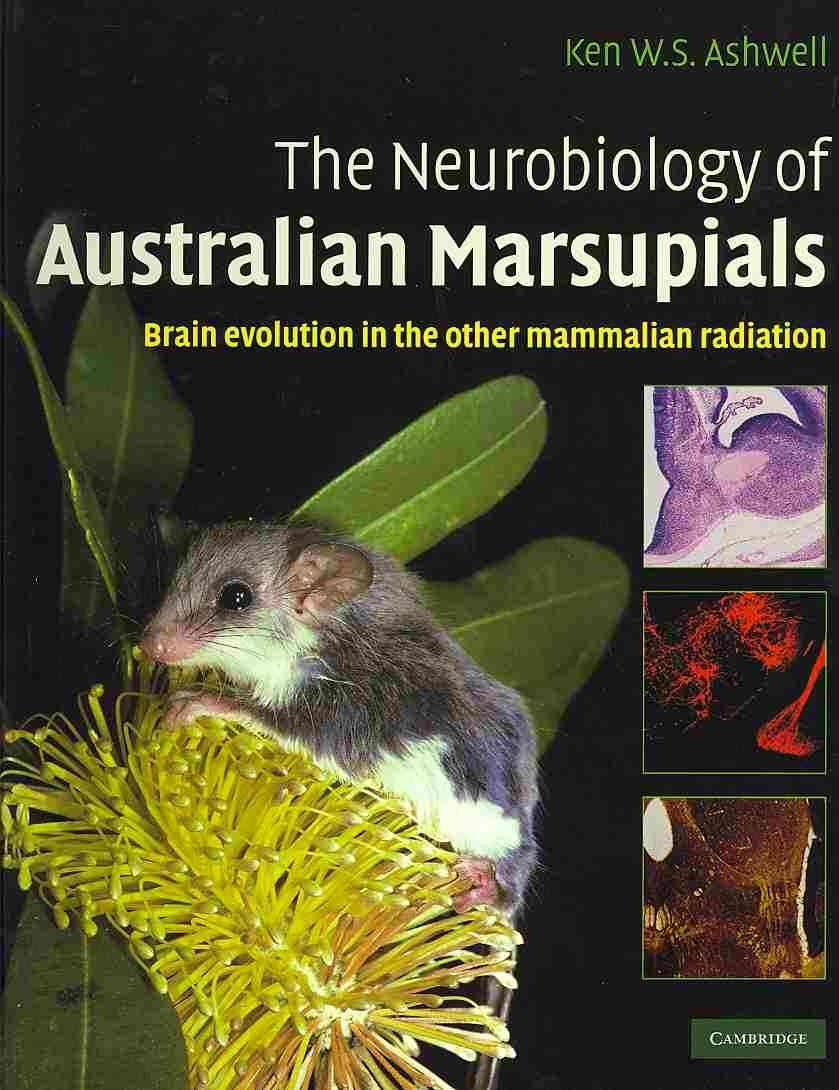
The Neurobiology of Australian Marsupials: Brain Evolution in the Other Mammalian Radiation by Ken Ashwell – A Definitiv
Inclusive of all applicable taxes. FREE shipping on all orders.
Available Offers
- 🚚Free Delivery — Free shipping on all orders
- 💵Cash on Delivery — Pay when your order arrives
- ↩️15-Day Easy Returns — Hassle-free return policy
- 🔒Cash on Delivery — Pay safely when your order arrives
Check Delivery
Product Description
Introduction
Australia’s unique wildlife has long fascinated scientists and nature enthusiasts alike. Among its most remarkable inhabitants are marsupials—creatures that evolved in splendid isolation, developing brains and behaviours that mirror those of placental mammals across the globe. The Neurobiology of Australian Marsupials: Brain Evolution in the Other Mammalian Radiation by Ken Ashwell is a landmark scientific work that delves deep into the nervous system of these extraordinary animals. For Indian students, researchers, and wildlife biologists, this book offers a rare window into an alternative evolutionary pathway, enriching our understanding of brain development, adaptation, and the diversity of life on Earth.
Book Overview
This hardcover volume from Cambridge University Press presents the first comprehensive synthesis of research on the structure and function of the nervous system in Australian marsupials. It explores how these mammals—from the iconic kangaroo to the tiny stripe-faced dunnart—have adapted their brains to suit their environments, much like placental mammals did on other continents. The book is not merely a review; it includes detailed atlases of brain anatomy for two key species: the tammar wallaby (a diprotodont) and the stripe-faced dunnart (a polyprotodont). It also provides a unique atlas of brain development in a diprotodont marsupial, making it an invaluable resource for developmental neurobiologists.
Key Highlights
- First comprehensive review of the neurobiology of Australian marsupials, covering decades of scientific literature.
- Original brain atlases for the tammar wallaby and stripe-faced dunnart, with detailed delineations of brain regions.
- Developmental atlas of the diprotodont marsupial brain, offering insights into neural growth and maturation.
- Comparative perspective that highlights parallel evolution between marsupials and placental mammals.
- Richly illustrated with diagrams, micrographs, and anatomical plates to aid visual learning.
Inside the Book
The book is structured to guide readers from basic anatomy to complex functional systems. Early chapters introduce the evolutionary context of Australian marsupials, explaining how their isolation shaped unique neural features. Subsequent sections examine the sensory systems—vision, hearing, touch, and smell—and how they differ between species. The motor systems, including the control of hopping and climbing, are analysed in detail. Later chapters focus on the cerebral cortex, thalamus, and brainstem, with comparisons to placental mammals. The atlases form the core of the book, providing labelled coronal and sagittal sections that serve as reference maps for researchers. A final section discusses brain development, from embryonic stages to adulthood, using the tammar wallaby as a model.
Key Topics
- Evolutionary neurobiology and marsupial radiation
- Comparative anatomy of the marsupial brain
- Sensory and motor system adaptations
- Brain development and neurogenesis
- Neural plasticity and behavioural ecology
- Atlas-based neuroanatomy of diprotodonts and polyprotodonts
- Parallel evolution with placental mammals
Reader Benefits
- Deep scientific insight into an often-overlooked group of mammals.
- Practical reference for laboratory work with marsupial brain sections.
- Enhanced understanding of evolutionary principles through real-world examples.
- Career development for students in neuroscience, zoology, and veterinary science.
- Comprehensive data compiled from scattered sources into one authoritative volume.
Learning Outcomes
By studying this book, readers will be able to: identify major brain structures in Australian marsupials using the provided atlases; compare neural adaptations across marsupial and placental lineages; explain how evolutionary pressures shape brain morphology; analyse developmental processes in the marsupial nervous system; and apply this knowledge to broader questions in evolutionary biology and comparative neuroscience. The book equips advanced undergraduate and postgraduate students with the tools to conduct independent research in neuroanatomy.
Who Should Read
This book is essential for neuroscientists and evolutionary biologists seeking a comprehensive reference on marsupial neurobiology. Zoology and wildlife biology students in Indian universities will find it invaluable for understanding Australia’s unique fauna. Veterinary anatomists and comparative morphologists will benefit from the detailed atlases. Developmental biologists interested in alternative models of brain growth will appreciate the developmental atlas. Finally, academic libraries and research institutions should add this work to their collections to support advanced studies.
About the Author
Ken Ashwell is a professor of anatomy at the University of New South Wales, Australia, with decades of experience in comparative neurobiology. He has published extensively on the nervous systems of marsupials, monotremes, and other vertebrates. His meticulous research and passion for evolutionary anatomy have made him a leading authority in the field. This book represents the culmination of his lifelong work, bringing together original data and a vast body of literature into a single, coherent volume.
About the Publisher
Cambridge University Press is one of the world’s oldest and most respected academic publishers, known for producing high-quality scientific and scholarly works. Their commitment to rigorous peer review and excellence in production ensures that this book meets the highest standards of accuracy and durability. For Indian readers, Cambridge University Press titles are widely available through Bookshops.in, offering reliable access to cutting-edge research.
Conclusion
The Neurobiology of Australian Marsupials is more than a reference—it is a journey into an alternative mammalian world. It reveals how evolution can craft similar solutions from different starting materials, deepening our appreciation for the complexity of life. For anyone fascinated by brains, evolution, or Australia’s remarkable wildlife, this book is an indispensable addition to their library. Order your copy from Bookshops.in today and explore the brain evolution of the other mammalian radiation.
Quick Summary
The Neurobiology of Australian Marsupials by Ken Ashwell is a landmark reference that explores the brain evolution of Australia's unique marsupial fauna as a parallel adaptive radiation to placental mammals. This comprehensive volume covers the structure and function of the nervous system across multiple species, including the first detailed brain atlases of a diprotodont marsupial, the tammar wallaby. Written for neuroscience researchers, zoologists, and advanced students, the book delves into evolutionary adaptations in sensory systems, motor control, and behaviour. Readers will gain a deep understanding of how marsupial brains have evolved in isolation, offering insights into convergent and divergent evolutionary pathways. Published by Cambridge University Press, this hardbound edition is essential for academic libraries and research institutions in India. Bookshops.in provides this authoritative text at ₹5263, ensuring Indian students and professionals have access to cutting-edge neurobiological research.
Book Highlights
Book Specifications
| ISBN-13 | 9780521519458 |
| ISBN-10 | 0521519454 |
| Publisher | Cambridge University Press |
| Language | English |
| Dimensions | 21.59 x 1.91 x 27.31 cm |
| Weight | 1 kg 560 g |
| Category | Basic Sciences › Neuroscience |
| Genre | Science & Mathematics |
| Original Language | English |
Frequently Asked Questions
What is the main focus of this book?
Who is the author?
Is this book suitable for undergraduate students?
Does the book include brain atlases?
How does this book compare to placental mammal neurobiology texts?
What species are covered?
Is the book illustrated?
Can I use this book for my PhD research?
Is this book available in Indian bookstores?
What makes this book unique?
Does the book discuss behaviour?
Is the language technical?
Why should I buy from Bookshops.in?
Readers Also Search For
Customers Also Bought

Anatomy
Ultrastructure of the Digestive Tract: 4 (Electron Microscopy in Biology and Medicine)

Anatomy
Ultrastructure of the Connective Tissue Matrix: 3 (Electron Microscopy in Biology and Medicine)

Anatomy
Reproductive Genetics (Royal College of Obstetricians and Gynaecologists Study Group)

Anatomy
Human Gross Anatomy: An Outline Text by Robert J. Leonard – Medical Anatomy

Pharmacology
Mathematical Modeling and Simulation in Enteric Neurobiology

Anatomy
Nature’s Patterns and the Fractional Calculus: 2 (Fractional Calculus in Applied Sciences and Engineering, 2)
Related Products
View All
Medicine & Health Sciences
Handbook of Hospitality Strategic Management | by Olsen Michael | Taylor & Francis Ltd | by Olsen Michael | Taylor & Francis Ltd | by Olsen Michael | Taylor & Francis Ltd | by Olsen Michael | Taylor & Francis Ltd | by Olsen Michael | Taylor & Francis Ltd | by Olsen Michael | Taylor & Francis Ltd | by Olsen Michael | Taylor & Francis Ltd | by Olsen Michael | Taylor & Francis Ltd | by Olsen Michael | Taylor & Francis Ltd | by Olsen Michael | Taylor & Francis

Medicine & Health Sciences
Pediatrics on Call | by Charles A. Pohl | Kathleen Bradford | Clara Callahan | McGraw Hill / Medical | by Charles A. Pohl | Kathleen Bradford | Clara Callahan | McGraw Hill / Medical | by Charles A. Pohl | Kathleen Bradford | Clara Callahan | McGraw Hill / Medical | by Charles A. Pohl | Kathleen Bradford | Clara Callahan | McGraw Hill / Medical | by Charles A. Pohl | Kathleen Bradford | Clara Callahan | McGraw Hill / Medical | by Charles A. Pohl | Kathleen Bradford | Clara Callahan | McGraw Hill

Medicine & Health Sciences
The Physician's Guide to Depression and Bipolar Disorders | by Dwight L. Evans | Dennis S. Charney | Lydia Lewis | McGraw Hill / Medical | by Dwight L. Evans | Dennis S. Charney | Lydia Lewis | McGraw Hill / Medical | by Dwight L. Evans | Dennis S. Charney | Lydia Lewis | McGraw Hill / Medical | by Dwight L. Evans | Dennis S. Charney | Lydia Lewis | McGraw Hill / Medical | by Dwight L. Evans | Dennis S. Charney | Lydia Lewis | McGraw Hill / Medical | by Dwight L. Evans | Dennis S. Charney | Lydi
Medicine & Health Sciences
First Exposure to Internal Medicine | by Andrew R. Hoellein | Charles H. Griffith | McGraw Hill / Medical | by Andrew R. Hoellein | Charles H. Griffith | McGraw Hill / Medical | by Andrew R. Hoellein | Charles H. Griffith | McGraw Hill / Medical | by Andrew R. Hoellein | Charles H. Griffith | McGraw Hill / Medical | by Andrew R. Hoellein | Charles H. Griffith | McGraw Hill / Medical | by Andrew R. Hoellein | Charles H. Griffith | McGraw Hill / Medical | by Andrew R. Hoellein | Charles H. Griffit

Medicine & Health Sciences
First Exposure to Internal Medicine | by Charles H. Griffith | Andrew R. Hoellein | McGraw Hill / Medical | by Charles H. Griffith | Andrew R. Hoellein | McGraw Hill / Medical | by Charles H. Griffith | Andrew R. Hoellein | McGraw Hill / Medical | by Charles H. Griffith | Andrew R. Hoellein | McGraw Hill / Medical | by Charles H. Griffith | Andrew R. Hoellein | McGraw Hill / Medical | by Charles H. Griffith | Andrew R. Hoellein | McGraw Hill / Medical | by Charles H. Griffith | Andrew R. Hoellei

Medicine & Health Sciences