
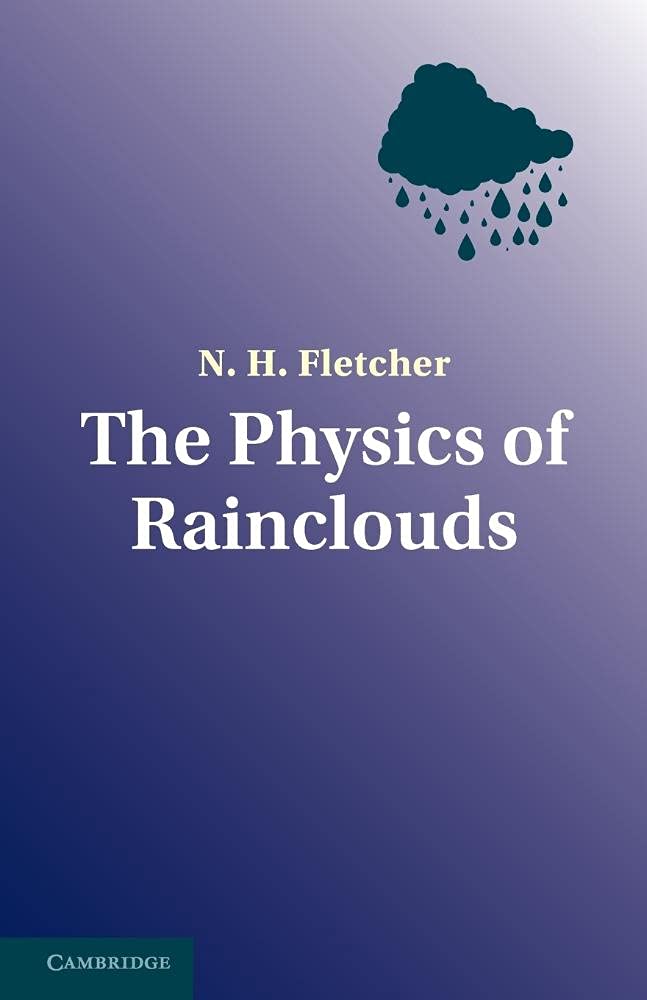
The Physics of Rainclouds by Neville H. Fletcher – A Foundational Text on Cloud Microphysics and Precipitation Processes
Inclusive of all applicable taxes. FREE shipping on all orders.
Available Offers
- 🚚Free Delivery — Free shipping on all orders
- 💵Cash on Delivery — Pay when your order arrives
- ↩️15-Day Easy Returns — Hassle-free return policy
- 🔒Cash on Delivery — Pay safely when your order arrives
Check Delivery
Product Description
Introduction
In the vast and often unpredictable theatre of the Indian monsoon, the formation of rainclouds remains one of nature’s most fascinating and vital phenomena. The Physics of Rainclouds by Neville H. Fletcher offers a timeless journey into the scientific principles that govern these atmospheric marvels. Originally published in 1962 by Cambridge University Press, this hardbound classic brings together rigorous physics and accessible explanation, making it an indispensable resource for students, researchers, and weather enthusiasts across India. Whether you are preparing for competitive exams, pursuing a career in atmospheric science, or simply curious about how clouds turn into rain, this book provides the foundational knowledge you need.
Book Overview
This volume is a carefully crafted introduction to the microphysical processes that drive cloud development and precipitation. Professor Fletcher wrote with the dual purpose of guiding the less experienced reader through the emerging field of cloud physics while also assembling a comprehensive reference for seasoned scientists. The book covers the dynamics and microstructure of non-freezing clouds, the intricate mechanisms of ice formation, and the artificial modification of clouds—a topic of increasing relevance in India’s cloud-seeding experiments. By focusing on the fundamental physics rather than mere observation, Fletcher ensures that every reader gains a deep understanding of how rainclouds behave.
Key Highlights
- Pioneering Content: One of the first comprehensive texts to systematically explain the microphysics of clouds and precipitation.
- Timeless Relevance: Though first published in 1962, the core principles remain essential for modern atmospheric science and meteorology.
- Hardcover Quality: A durable edition from Cambridge University Press, perfect for libraries, academic institutions, and personal collections.
- Clear Explanations: Written in an engaging style that demystifies complex topics without oversimplifying the science.
- Indian Context: Directly applicable to understanding monsoon dynamics, cloud-seeding initiatives, and climate studies in the Indian subcontinent.
Inside the Book
The text is structured to build knowledge progressively. Early chapters introduce the thermodynamics and dynamics of cloud systems, followed by a detailed examination of the microstructure of warm clouds. Fletcher then delves into the physics of ice nucleation, the growth of ice crystals, and the formation of hail and snow. The final chapters explore the artificial modification of clouds—a subject that sparked significant research in India during the 1960s and continues to inform contemporary weather modification programs. Each chapter is supported by mathematical formulations, diagrams, and references to experimental studies, making the book both a teaching tool and a research companion.
Key Topics
- Cloud Dynamics and Microphysics: Understanding the forces that shape cloud formation and evolution.
- Microstructure of Non-Freezing Clouds: How water droplets form, grow, and interact within warm clouds.
- Ice Formation Processes: Nucleation, crystal growth, and the role of ice in precipitation.
- Precipitation Mechanisms: From tiny droplets to raindrops, and the physics of snowfall.
- Artificial Cloud Modification: The science behind cloud seeding and its practical applications.
Reader Benefits
- Build Strong Foundations: Gain a clear understanding of the physical laws that govern cloud behavior.
- Enhance Academic Performance: Ideal for students of physics, atmospheric science, and environmental studies.
- Practical Insights: Learn how theoretical principles translate into real-world weather prediction and modification.
- Historical Perspective: Appreciate how early researchers used limited technology to draw profound conclusions about the atmosphere.
- Reference Value: A lasting addition to any science library, with references that still hold significance today.
Learning Outcomes
By reading this book, you will be able to explain the microphysical processes that lead to rain formation, analyze the factors influencing ice nucleation, and evaluate the scientific basis of cloud-seeding techniques. You will also develop a deeper appreciation for the interplay between thermodynamics, fluid dynamics, and phase changes in the atmosphere. These outcomes are directly applicable to careers in meteorology, climate research, agriculture, and disaster management—fields critical to India’s development.
Who Should Read
- Physics Students: Especially those specializing in atmospheric physics, geophysics, or environmental science.
- Meteorology Enthusiasts: Anyone fascinated by weather patterns, monsoons, and cloud behavior.
- Researchers and Academics: Scientists seeking a classic reference on cloud microphysics.
- Competitive Exam Aspirants: Those preparing for JAM, GATE, NET, or civil services with a science or geography component.
- Curious Minds: Readers who want to understand the science behind the clouds that bring life-giving rain to India.
About the Author
Neville H. (Neville Horner) Fletcher was a distinguished physicist and professor renowned for his contributions to cloud physics and atmospheric science. His research at the University of New England and later at the Australian National University laid the groundwork for modern understanding of ice nucleation and precipitation processes. Fletcher’s ability to communicate complex ideas with clarity made his works highly respected among both students and fellow scientists. The Physics of Rainclouds remains one of his most celebrated achievements, reflecting his passion for unraveling the mysteries of the natural world.
About the Publisher
Cambridge University Press is one of the oldest and most prestigious academic publishers in the world, with a legacy of producing authoritative works in science, mathematics, and the humanities. Their commitment to rigorous scholarship and high-quality production ensures that every book—including this hardcover edition—meets the highest standards of accuracy and durability. For Indian readers, Cambridge University Press titles are synonymous with trust and academic excellence, making this volume a reliable addition to any serious library.
Conclusion
The Physics of Rainclouds is more than a textbook—it is a gateway to understanding the very essence of precipitation that sustains life in India. With its clear exposition, foundational insights, and enduring relevance, this book deserves a place on the shelf of every student, researcher, and weather enthusiast. Order your copy today from Bookshops.in and explore the science behind the clouds that shape our world.
Quick Summary
The Physics of Rainclouds by Neville H. Fletcher is a classic introduction to cloud microphysics and precipitation processes. Originally published in 1962, the book explains how clouds form, how ice crystals develop, and how rain and snow are produced. It covers both the dynamics and microphysics of clouds, with special attention to non-freezing clouds, ice nucleation, and artificial cloud modification. Written in an engaging style, it is ideal for students new to atmospheric science as well as researchers needing a reliable reference. Indian students pursuing meteorology, geography, or environmental science will find it invaluable for coursework and competitive exams. The hardcover edition from Cambridge University Press ensures durability for repeated use. By purchasing from Bookshops.in, readers get a genuine imported edition at a competitive price, with fast delivery across India.
Book Highlights
Book Specifications
| ISBN-13 | 9780521154796 |
| ISBN-10 | 0521154790 |
| Publisher | Cambridge University Press |
| Language | English |
| Dimensions | 14 x 2.62 x 21.59 cm |
| Weight | 520 g |
| Country | India |
| Category | Science & Mathematics › Earth Sciences |
| Genre | Non-fiction |
| Original Language | English |
Frequently Asked Questions
What is The Physics of Rainclouds about?
Who is the author of this book?
Is this book suitable for beginners?
What topics are covered in the book?
Is this book relevant for Indian students?
What is the ISBN for this edition?
Does the book include modern research?
Is this a hardcover or paperback?
Can I use this book for UPSC preparation?
What is the price of this book?
Does the book cover cloud seeding?
Is the language easy to understand?
Where can I buy this book in India?
Readers Also Search For
Customers Also Bought
Mathematics
Stereotype Spaces and Algebras: 73 (De Gruyter Expositions in Mathematics, 73)

Mathematics
Semigroups in Algebra, Geometry and Analysis: 20 (De Gruyter Expositions in Mathematics, 20)

Mathematics
Geometry from the Pacific Rim: Proceedings of the Pacific Rim Geometry Conference held at National University of Singapore, Republic of Singapore, ... 1994 (De Gruyter Proceedings in Mathematics)

Mathematics
First International Tainan-Moscow Algebra Workshop: Proceedings of the International Conference held at National Cheng Kung University Tainan, Taiwan, ... 1994 (De Gruyter Proceedings in Mathematics)

Mathematics
Differential Geometry - Proceedings of the VIII International Colloquium (English, Jesus A. Alvarez Lopez | Eduardo Garcia-Rio)
Mathematics
Mathematical Theory of Optimal Processes (Classics of Soviet Mathematics)
Related Products
View All
Science & Mathematics
Squid - Superconducting Quantum Interference Devices and Their Applications: Proceedings of the International Conference on Superconducting Quantum Devices, Berlin-west, October 4-8, 1976

Science & Mathematics
Thermodynamics and Pattern Formation in Biology
Science & Mathematics
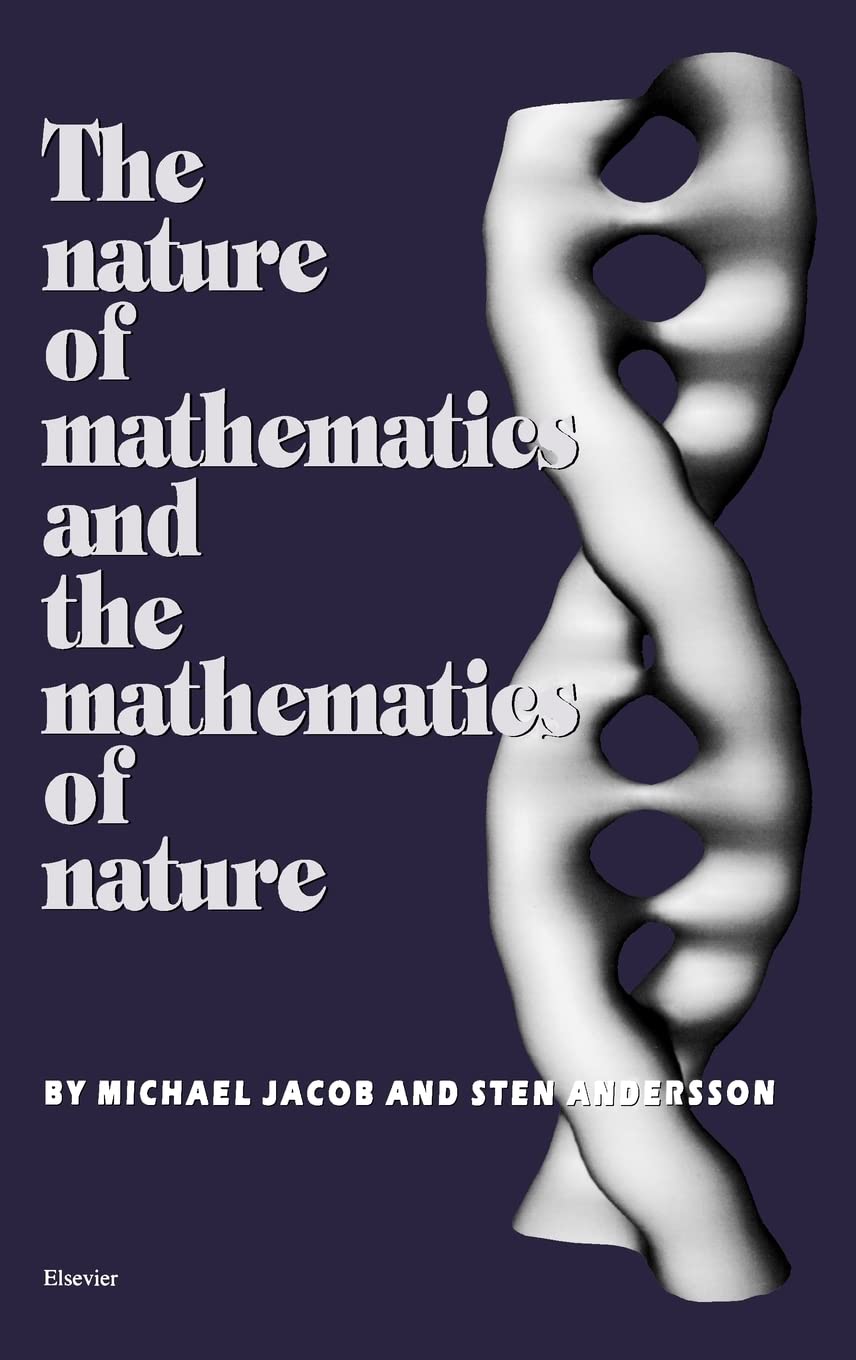
The Nature of Mathematics and the Mathematics of Nature by S. Andersson – Mathematics & Science

Science & Mathematics
Linear Algebra | by Stephen Friedberg | Arnold Insel | Lawrence Spence | Pearson | by Stephen Friedberg | Arnold Insel | Lawrence Spence | Pearson | by Stephen Friedberg | Arnold Insel | Lawrence Spence | Pearson | by Stephen Friedberg | Arnold Insel | Lawrence Spence | Pearson | by Stephen Friedberg | Arnold Insel | Lawrence Spence | Pearson | by Stephen Friedberg | Arnold Insel | Lawrence Spence | Pearson | by Stephen Friedberg | Arnold Insel | Lawrence Spence | Pearson | by Stephen Friedberg

Science & Mathematics
University Calculus | by Joel Hass | Christopher Heil | Maurice Weir | Pearson | by Joel Hass | Christopher Heil | Maurice Weir | Pearson | by Joel Hass | Christopher Heil | Maurice Weir | Pearson | by Joel Hass | Christopher Heil | Maurice Weir | Pearson | by Joel Hass | Christopher Heil | Maurice Weir | Pearson | by Joel Hass | Christopher Heil | Maurice Weir | Pearson | by Joel Hass | Christopher Heil | Maurice Weir | Pearson | by Joel Hass | Christopher Heil | Maurice Weir | Pearson | by Joe

Science & Mathematics