

The Quiet Revolution In American Psychoanalysis: Selected Papers Of Arnold M. Cooper – A Deep Dive into the Transformati
Inclusive of all applicable taxes. FREE shipping on all orders.
Available Offers
- 🚚Free Delivery — Free shipping on all orders
- 💵Cash on Delivery — Pay when your order arrives
- ↩️15-Day Easy Returns — Hassle-free return policy
- 🔒Cash on Delivery — Pay safely when your order arrives
Check Delivery
Product Description
Introduction
In the ever-evolving landscape of psychoanalysis, few voices have been as incisive and transformative as that of Arnold M. Cooper. The Quiet Revolution In American Psychoanalysis: Selected Papers Of Arnold M. Cooper is a landmark collection that chronicles the subtle yet profound shifts that have reshaped the field since Freud's era. Published by Routledge, this hardcover volume is an essential resource for Indian students, clinicians, and scholars who seek to understand how psychoanalysis has adapted to modern clinical realities and intellectual currents.
Book Overview
This meticulously curated anthology brings together Arnold M. Cooper's most influential papers, spanning decades of his career. Cooper, a towering figure in American psychoanalysis, examines what he terms a 'quiet revolution'—a gradual but decisive rethinking of psychoanalytic theory, practice, and institutional life. The book explores how psychoanalysis has moved from a rigid, drive-based model to a more relational, intersubjective, and clinically nuanced discipline. Each chapter offers a window into Cooper's evolving thought, making this a vital text for anyone tracing the intellectual history of modern psychoanalysis.
Key Highlights
- First comprehensive collection of Arnold M. Cooper's selected papers in one volume.
- Offers a critical analysis of the post-Freudian transformation in psychoanalytic theory and practice.
- Bridges clinical work, education, research, and the interface with neighbouring disciplines like neuroscience and developmental psychology.
- Highlights Cooper's pioneering contributions to understanding narcissistic and pre-oedipal themes in development.
- Emphasises the human encounter within the psychoanalytic situation, reshaping therapeutic technique.
Inside the Book
The book is organised thematically, covering foundational concepts such as the nature of psychoanalytic science, the evolution of clinical theory, and the challenges of psychoanalytic education. Cooper critiques traditional dogmas while proposing innovative frameworks. Readers will encounter essays on the changing role of the analyst, the integration of attachment theory, and the cultural contexts that influence mental life. Each paper is prefaced by contextual notes that help the reader appreciate its significance.
Key Topics
- The quiet revolution: from Freudian orthodoxy to contemporary pluralism.
- Narcissism, pre-oedipal development, and their clinical implications.
- The analyst as participant-observer: relational and intersubjective turns.
- Psychoanalysis as a science: epistemology, methodology, and evidence.
- Education and institutional dynamics in the psychoanalytic profession.
- Interdisciplinary dialogues: linking psychoanalysis with neuroscience, culture, and philosophy.
Reader Benefits
Indian readers, especially those training in psychiatry, clinical psychology, or psychotherapy, will find this book invaluable. It provides a clear map of how psychoanalytic thought has matured, helping practitioners move beyond outdated models. The essays are intellectually rigorous yet accessible, offering practical insights for clinical work. Students will gain a deeper appreciation of the field's history and its current debates, while educators can use the material to enrich their teaching.
Learning Outcomes
By engaging with this collection, readers will be able to: understand the key theoretical shifts that define contemporary psychoanalysis; apply Cooper's concepts of narcissism and pre-oedipal dynamics to clinical cases; critically evaluate the scientific status of psychoanalytic claims; and appreciate the ethical and relational dimensions of therapeutic practice. The book also fosters a nuanced view of how cultural and institutional factors shape mental health disciplines.
Who Should Read
- Psychoanalysts and psychotherapists seeking to update their theoretical foundations.
- Psychiatry and clinical psychology students in Indian universities exploring depth psychology.
- Academics and researchers in the humanities and social sciences interested in psychoanalytic thought.
- Mental health professionals aiming to integrate relational and developmental perspectives into their work.
- Anyone curious about the intellectual history of psychoanalysis and its quiet revolutions.
About the Author
Arnold M. Cooper, M.D., was a pre-eminent American psychoanalyst, educator, and clinical theorist. A professor of psychiatry at Weill Cornell Medical College and a training analyst at the Columbia University Center for Psychoanalytic Training and Research, Cooper served as president of the American Psychoanalytic Association. His work profoundly influenced the move toward a more relational, intersubjective psychoanalysis. He was known for his incisive critiques of institutional orthodoxy and his commitment to integrating psychoanalysis with other scientific disciplines.
About the Publisher
Routledge, a global leader in academic publishing, is renowned for its extensive catalogue in the behavioural and social sciences. With a legacy spanning over 150 years, Routledge is committed to disseminating cutting-edge scholarship that shapes disciplines worldwide. This hardcover edition reflects their dedication to producing high-quality, durable texts that serve students, clinicians, and researchers alike.
Conclusion
The Quiet Revolution In American Psychoanalysis is more than a collection of papers—it is a testament to the enduring vitality of psychoanalytic thought. Arnold M. Cooper's lucid prose and penetrating insights challenge readers to rethink long-held assumptions and embrace the evolving nature of the field. For Indian mental health professionals and students, this book offers a rare opportunity to engage with the mind of a master clinician and theorist. Add this essential volume to your library and witness the revolution unfold.
Quick Summary
The Quiet Revolution In American Psychoanalysis: Selected Papers Of Arnold M. Cooper is a landmark collection that brings together the seminal writings of one of the most influential figures in contemporary psychoanalysis. Arnold M. Cooper, M.D., has shaped every facet of American psychoanalytic life—from theory and clinical work to education, research, and the profession's institutional dynamics. This volume documents and critiques what Cooper calls the 'Quiet Revolution' that followed Freud's death, exploring how psychoanalysis has been reconceived as a science, a theory of mental life, a treatment modality, and a profession. Readers will gain deep insights into Cooper's original contributions to clinical theory, including a changed understanding of work with patients. This book is essential for psychoanalysis students, practitioners, academics, and anyone interested in the evolution of mental health disciplines. By purchasing from Bookshops.in, you receive a genuine hardcover edition from Routledge, delivered with care across India.
Book Highlights
Book Specifications
| ISBN-13 | 9781583918920 |
| ISBN-10 | 1583918922 |
| Publisher | Routledge |
| Language | English |
| Dimensions | 15.6 x 1.65 x 23.39 cm |
| Weight | 454 g |
| Country | India |
| Category | Clinical › Psychiatry |
| Genre | Non-fiction |
| Original Language | English |
Frequently Asked Questions
What is 'The Quiet Revolution In American Psychoanalysis' about?
Who is Arnold M. Cooper?
Is this book suitable for beginners in psychoanalysis?
Does the book cover Freud's work?
What topics are included in the selected papers?
Is this book available in hardcover?
Can Indian students benefit from this book?
Does the book include case studies?
Is this book part of a series?
What is the price of this book?
Where can I buy this book in India?
What is the ISBN of this book?
Readers Also Search For
Customers Also Bought

Anatomy
Ultrastructure of the Digestive Tract: 4 (Electron Microscopy in Biology and Medicine)

Anatomy
Ultrastructure of the Connective Tissue Matrix: 3 (Electron Microscopy in Biology and Medicine)

Anatomy
Reproductive Genetics (Royal College of Obstetricians and Gynaecologists Study Group)

Anatomy
Human Gross Anatomy: An Outline Text by Robert J. Leonard – Medical Anatomy

Pharmacology
Mathematical Modeling and Simulation in Enteric Neurobiology

Anatomy
Nature’s Patterns and the Fractional Calculus: 2 (Fractional Calculus in Applied Sciences and Engineering, 2)
Related Products
View All
Medicine & Health Sciences
Pediatrics on Call | by Charles A. Pohl | Kathleen Bradford | Clara Callahan | McGraw Hill / Medical | by Charles A. Pohl | Kathleen Bradford | Clara Callahan | McGraw Hill / Medical | by Charles A. Pohl | Kathleen Bradford | Clara Callahan | McGraw Hill / Medical | by Charles A. Pohl | Kathleen Bradford | Clara Callahan | McGraw Hill / Medical | by Charles A. Pohl | Kathleen Bradford | Clara Callahan | McGraw Hill / Medical | by Charles A. Pohl | Kathleen Bradford | Clara Callahan | McGraw Hill

Medicine & Health Sciences
The Physician's Guide to Depression and Bipolar Disorders | by Dwight L. Evans | Dennis S. Charney | Lydia Lewis | McGraw Hill / Medical | by Dwight L. Evans | Dennis S. Charney | Lydia Lewis | McGraw Hill / Medical | by Dwight L. Evans | Dennis S. Charney | Lydia Lewis | McGraw Hill / Medical | by Dwight L. Evans | Dennis S. Charney | Lydia Lewis | McGraw Hill / Medical | by Dwight L. Evans | Dennis S. Charney | Lydia Lewis | McGraw Hill / Medical | by Dwight L. Evans | Dennis S. Charney | Lydi
Medicine & Health Sciences
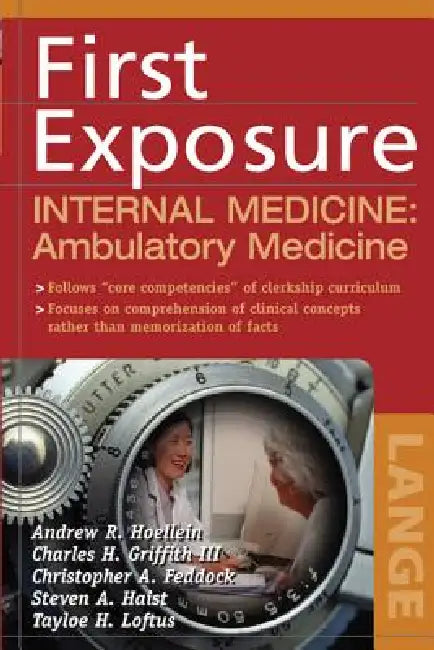
First Exposure to Internal Medicine | by Andrew R. Hoellein | Charles H. Griffith | McGraw Hill / Medical | by Andrew R. Hoellein | Charles H. Griffith | McGraw Hill / Medical | by Andrew R. Hoellein | Charles H. Griffith | McGraw Hill / Medical | by Andrew R. Hoellein | Charles H. Griffith | McGraw Hill / Medical | by Andrew R. Hoellein | Charles H. Griffith | McGraw Hill / Medical | by Andrew R. Hoellein | Charles H. Griffith | McGraw Hill / Medical | by Andrew R. Hoellein | Charles H. Griffit
Medicine & Health Sciences
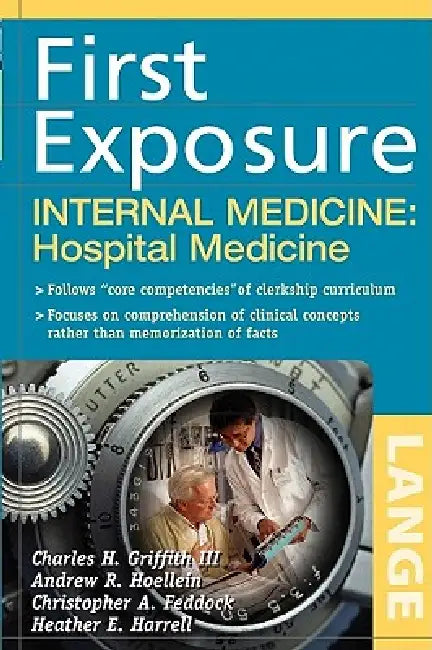
First Exposure to Internal Medicine | by Charles H. Griffith | Andrew R. Hoellein | McGraw Hill / Medical | by Charles H. Griffith | Andrew R. Hoellein | McGraw Hill / Medical | by Charles H. Griffith | Andrew R. Hoellein | McGraw Hill / Medical | by Charles H. Griffith | Andrew R. Hoellein | McGraw Hill / Medical | by Charles H. Griffith | Andrew R. Hoellein | McGraw Hill / Medical | by Charles H. Griffith | Andrew R. Hoellein | McGraw Hill / Medical | by Charles H. Griffith | Andrew R. Hoellei
Medicine & Health Sciences
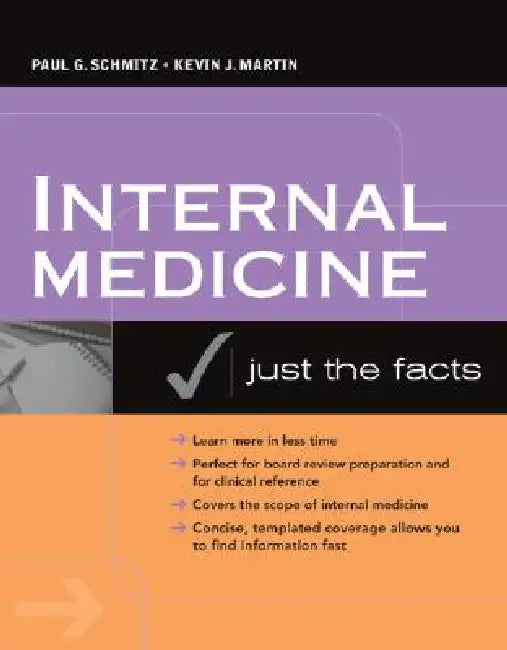
Internal Medicine | by Paul G. Schmitz | Kevin J. Martin | McGraw Hill / Medical | by Paul G. Schmitz | Kevin J. Martin | McGraw Hill / Medical | by Paul G. Schmitz | Kevin J. Martin | McGraw Hill / Medical | by Paul G. Schmitz | Kevin J. Martin | McGraw Hill / Medical | by Paul G. Schmitz | Kevin J. Martin | McGraw Hill / Medical | by Paul G. Schmitz | Kevin J. Martin | McGraw Hill / Medical | by Paul G. Schmitz | Kevin J. Martin | McGraw Hill / Medical | by Paul G. Schmitz | Kevin J. Martin |

Medicine & Health Sciences