
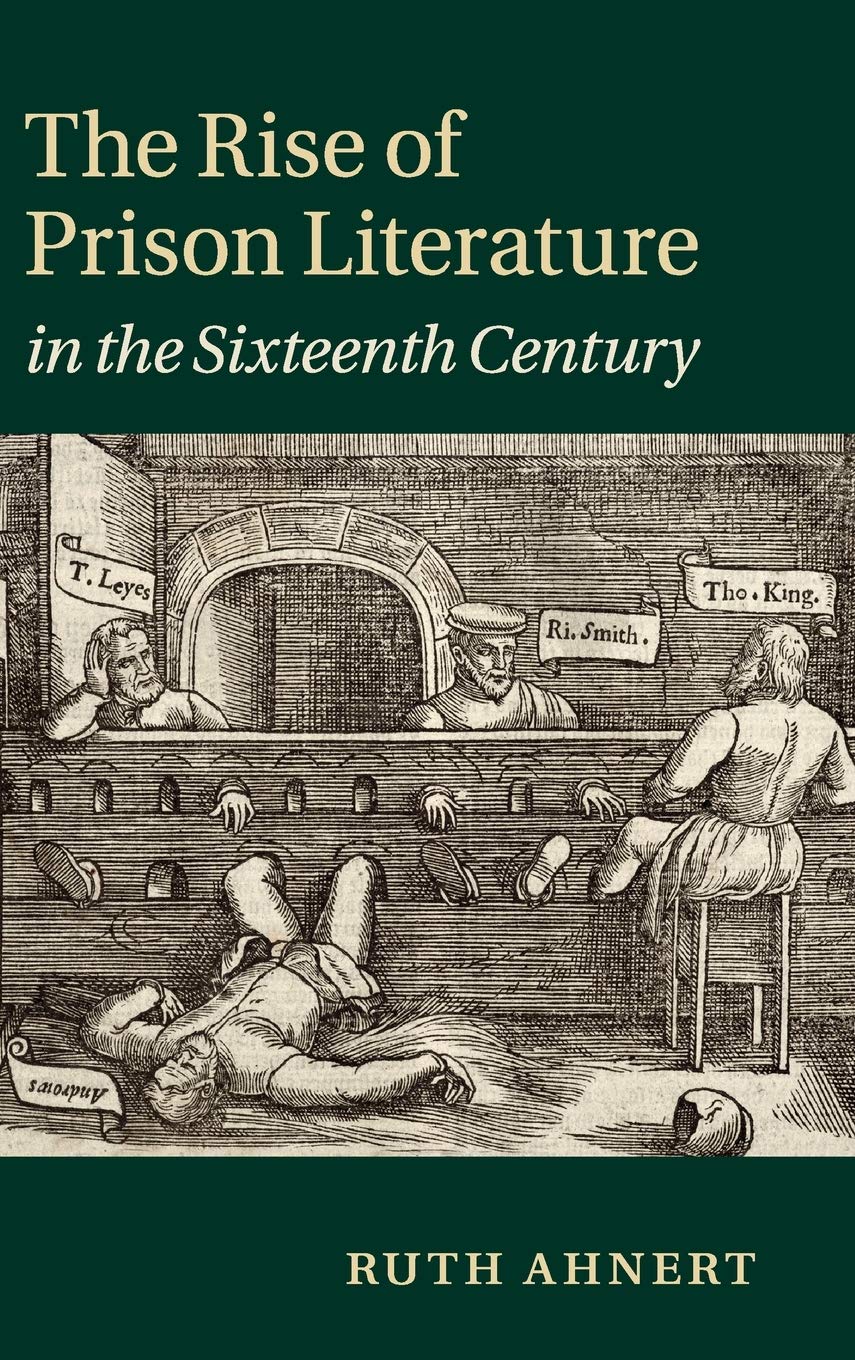
Rise of Prison Literature in the Sixteenth Century by Ruth Ahnert – A Cambridge University Press Study of Tudor Prison W
Inclusive of all applicable taxes. FREE shipping on all orders.
Available Offers
- 🚚Free Delivery — Free shipping on all orders
- 💵Cash on Delivery — Pay when your order arrives
- ↩️15-Day Easy Returns — Hassle-free return policy
- 🔒Cash on Delivery — Pay safely when your order arrives
Check Delivery
Product Description
Introduction
In the turbulent landscape of sixteenth-century England, prison was not merely a place of punishment—it became an unexpected crucible for literary genius. Ruth Ahnert's Rise of Prison Literature in the Sixteenth Century is a groundbreaking study that uncovers how the English Reformation transformed the prison cell into a vibrant literary sphere. Published by Cambridge University Press, this hardcover edition offers Indian readers and students a fresh perspective on the power of writing under duress.
Book Overview
This meticulously researched work examines the writings of some of the most famous prisoners of the early modern period, including Sir Thomas More, Lady Jane Grey, and Sir Thomas Wyatt. Ahnert reveals how the religious and political upheavals of the Tudor reigns created conditions for a remarkable outpouring of literary activity behind bars. From poetry and letters to dialogues and meditations, prisoners used their confinement to produce works that would influence generations. The book traces how these texts were smuggled out, copied by hand, and eventually printed, building textual communities that extended far beyond the prison walls.
Key Highlights
- First major study of sixteenth-century prison literature, offering a comprehensive analysis of the genre
- Focus on the English Reformation as a catalyst for literary production in prisons
- Examination of diverse genres including poetry, letters, dialogues, and devotional writings
- Insights into smuggling and dissemination of clandestine manuscripts and printed works
- Interdisciplinary approach combining literary criticism, history, and book history
Story Themes
The book explores profound themes such as resistance against authority, the search for spiritual solace, and the appropriation of physical confinement for creative expression. Ahnert shows how prisoners used subtle rhetorical tricks to subvert their captors' intentions and assert their own agendas. The theme of community building through shared texts emerges strongly, as does the idea of the prison as a liminal space where identity, faith, and politics intersect. The struggle between state power and individual conscience runs throughout, making this study deeply relevant to contemporary discussions about censorship and freedom of expression.
Reader Benefits
For Indian students of English literature, history, and cultural studies, this book offers a rich understanding of how literature functions in times of crisis. It provides tools for analyzing texts produced under constraint and illuminates the historical roots of prison writing as a global phenomenon. The book also enhances appreciation of canonical figures like Thomas More and Lady Jane Grey by revealing their lesser-known literary contributions. Scholars will benefit from Ahnert's meticulous archival research and her innovative theoretical framework.
Who Should Read
This book is ideal for postgraduate and advanced undergraduate students in English literature, early modern history, and book history. It will also appeal to researchers interested in the intersection of religion, politics, and literature. General readers with a passion for Tudor history or the power of writing in adversity will find it equally compelling. The accessible yet rigorous style makes it suitable for anyone curious about how creativity flourishes even in the most restrictive environments.
About the Author
Ruth Ahnert is a distinguished scholar of early modern literature and culture. Her expertise lies in the study of prison writings, textual networks, and the history of the book. She has published extensively on sixteenth-century literature and is known for her innovative use of digital humanities tools to map the dissemination of manuscripts. Her work has reshaped how we understand the literary culture of the Tudor period.
About the Publisher
Cambridge University Press is one of the world's oldest and most respected academic publishers. With a legacy spanning over four centuries, it is renowned for producing authoritative scholarly works across all disciplines. This hardcover edition reflects the Press's commitment to rigorous research and elegant production, making it a valuable addition to any library.
Conclusion
Rise of Prison Literature in the Sixteenth Century is an essential read for anyone interested in the resilience of the human spirit and the transformative power of writing. Ruth Ahnert's masterful study not only illuminates a neglected chapter of literary history but also offers timeless insights into how creativity can thrive in the darkest of circumstances. Order your copy from Bookshops.in today and delve into this fascinating world where the prison cell became a stage for literary brilliance.
Quick Summary
Rise of Prison Literature in the Sixteenth Century by Ruth Ahnert is a landmark academic study published by Cambridge University Press. It investigates how the English Reformation transformed prisons into fertile grounds for literary creation. Focusing on iconic prisoners like Thomas More, Lady Jane Grey, and Thomas Wyatt, Ahnert reveals the diverse genres—from poetry to political dialogues—that emerged from captivity. The book argues that these writings were not mere expressions of suffering but strategic acts of self-representation and influence. Readers will learn how prisoners appropriated the confined space to shape public opinion and religious discourse. This work is ideal for students and scholars of early modern English literature, history, and cultural studies. It offers fresh insights into authorship, censorship, and the power of writing under duress. Buying from Bookshops.in ensures you receive a genuine hardcover edition with reliable delivery across India. Whether for academic research or personal enrichment, this book is an essential addition to any library on Renaissance literature and prison studies.
Book Highlights
Book Specifications
| ISBN-13 | 9781107040304 |
| ISBN-10 | 1107040302 |
| Publisher | Cambridge University Press |
| Language | English |
| Dimensions | 16.51 x 2.54 x 24.13 cm |
| Weight | 480 g |
| Category | Literature › English Literature |
| Genre | Literary Criticism |
| Original Language | English |
Frequently Asked Questions
What is the main argument of this book?
Which prisoners are discussed in detail?
Is this book suitable for undergraduate students?
Does the book cover non-English prison literature?
What genres of prison writing are analyzed?
How does the author use archival sources?
What makes this book different from other studies of prison literature?
Does the book include illustrations?
Can I use this for a research paper?
What is the price in India?
Is the book available in paperback?
What is the ISBN?
Does the book discuss women prisoners?
Readers Also Search For
Customers Also Bought
Contemporary Fiction
Stepladder Junction and Other Stories

Contemporary Fiction
Fabrications by Pamela Painter – Short Story Collection

Contemporary Fiction
The Double Life of an Alaskan Sled Dog (English, Andrea Finney Aufder Heyde)

Contemporary Fiction
The Alabaster Girl by Zan Perrion

Contemporary Fiction
Grimm and Grimmer: Classic Fairy Tales Rebooted by Mark Russell
Classic Literature
The Prose Works of Andrew Marvell: 1676-1678 by Andrew Marvell – Restoration Literature
Related Products
View All
Literature & Fiction
Shakespeare, Madness, and Music: Scoring Insanity in Cinematic Adaptations

Literature & Fiction
Literary Research and Canadian Literature: Strategies and Sources: 10 (Literary Research: Strategies and Sources, 10)

Literature & Fiction
Crime Fiction and National Identities in the Global Age | by Julie H. Kim | McFarland & Company | by Julie H. Kim | McFarland & Company | by Julie H. Kim | McFarland & Company | by Julie H. Kim | McFarland & Company | by Julie H. Kim | McFarland & Company | by Julie H. Kim | McFarland & Company | by Julie H. Kim | McFarland & Company | by Julie H. Kim | McFarland & Company | by Julie H. Kim | McFarland & Company | by Julie H. Kim | McFarland & Company | by
Literature & Fiction
Greek Literature in the Classical Period: The Poetics of Drama in Athens: 4 (Greek Literature Vol. 4)
Literature & Fiction
Greek Literature and Philosophy (Greek Literature, Volume 6)

Literature & Fiction