
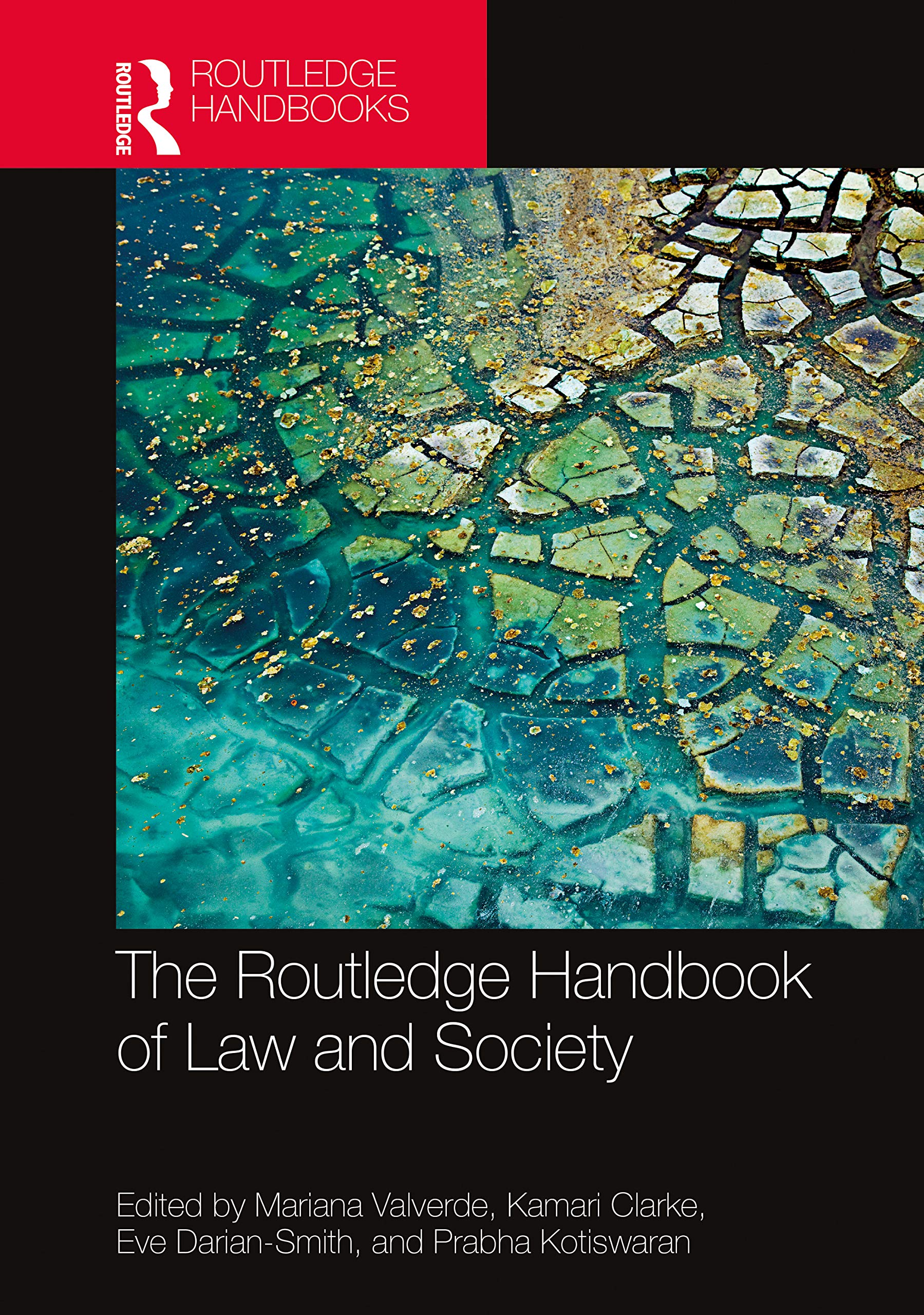
The Routledge Handbook of Law and Society by Valverde Mariana – A Comprehensive Overview of Socio-Legal Studies for Indi
Inclusive of all applicable taxes. FREE shipping on all orders.
Available Offers
- 🚚Free Delivery — Free shipping on all orders
- 💵Cash on Delivery — Pay when your order arrives
- ↩️15-Day Easy Returns — Hassle-free return policy
- 🔒Cash on Delivery — Pay safely when your order arrives
Check Delivery
Product Description
Introduction
In a rapidly changing world where law touches every facet of human life—from climate action to digital rights—understanding the dynamic interplay between legal systems and social structures has never been more critical. The Routledge Handbook of Law and Society, edited by the distinguished scholar Mariana Valverde, offers Indian students, researchers, and legal professionals a comprehensive and intellectually rigorous gateway into the vibrant field of socio-legal studies. This hardbound volume brings together diverse perspectives from across the globe, making it an indispensable resource for those seeking to grasp how law both shapes and is shaped by society, culture, politics, and economics.
Book Overview
This handbook is not merely a collection of essays; it is a thoughtfully curated exploration of the most pressing issues at the intersection of law and social life. Divided into two major sections, the book first lays out foundational and contemporary theoretical frameworks—ranging from legal pluralism and critical race theory to feminist jurisprudence and postcolonial approaches—before diving into forty-two concise yet profound pieces that apply these frameworks to real-world challenges. Topics such as reproductive justice, food security, water conflicts, artificial intelligence governance, and global financial transactions are examined through a socio-legal lens, offering readers a toolkit to analyse and engage with complex legal problems in India and beyond.
Key Highlights
- Global yet Contextual: While the handbook takes a worldwide view, its emphasis on social justice and lived experiences makes it highly relevant for Indian readers grappling with issues like caste, land rights, and digital privacy.
- Accessible Scholarship: Each chapter is written in clear, jargon-conscious language, making advanced socio-legal concepts approachable for students new to the field.
- Contemporary Focus: The book covers emerging topics such as artificial intelligence, climate justice, and food security, ensuring readers stay ahead of evolving legal debates.
- Practical Relevance: Conceptual tools are rooted in real-world struggles, bridging theory with activism, policy-making, and legal practice.
Inside the Book
The first section, ‘Perspectives and Approaches’, introduces readers to a range of analytical lenses—including legal consciousness, governmentality, and socio-legal studies of race and gender—that help decode the relationship between law and society. The second and larger section comprises forty-two short, well-crafted pieces that apply these lenses to specific domains. From the regulation of water resources to the legal dimensions of artificial intelligence, each entry is a self-contained insight that can be read individually or as part of the larger narrative. The book also includes reflections on methodology, making it a valuable guide for designing socio-legal research projects.
Key Topics
- Reproductive justice and bodily autonomy
- Climate justice and environmental law
- Food security and agricultural policy
- Water conflicts and resource governance
- Artificial intelligence and digital regulation
- Global financial transactions and economic inequality
- Legal pluralism and customary law in postcolonial contexts
- Critical race theory and caste-based discrimination
- Feminist legal theory and gender justice
- Law and social movements
Reader Benefits
For Indian readers, this handbook serves as a bridge between Western-centric legal theory and the unique socio-legal realities of the subcontinent. It equips students with the analytical vocabulary to critique laws related to reservations, religious personal laws, and environmental degradation. Researchers will find a wealth of comparative perspectives that can enrich their own work on Indian legal institutions. Legal practitioners and activists will gain a deeper understanding of how law operates in everyday life, enabling more effective advocacy and litigation. The book also fosters critical thinking by encouraging readers to question the neutrality of law and its role in perpetuating or challenging inequality.
Learning Outcomes
- Develop a nuanced understanding of major socio-legal theories and their application to contemporary issues.
- Analyse how legal systems interact with social hierarchies such as caste, class, gender, and race.
- Evaluate the role of law in addressing global challenges like climate change and technological disruption.
- Design research projects using socio-legal methodologies and frameworks.
- Critically assess legal reforms and policy interventions from a justice-oriented perspective.
Who Should Read
This handbook is ideal for undergraduate and postgraduate students of law, sociology, political science, and criminology. It is equally valuable for PhD scholars and academics seeking a comprehensive reference work. Legal professionals, judges, and policy-makers who wish to understand the social context of law will find it deeply insightful. Activists and civil society organisations working on issues of social justice, human rights, and governance will also benefit from its accessible yet rigorous treatment of key themes.
About the Author
Mariana Valverde is a globally recognised scholar in the field of law and society. A professor at the University of Toronto, she has written extensively on legal theory, governance, and urban regulation. Her work is known for its interdisciplinary breadth and its commitment to making complex ideas accessible. Valverde’s editorial vision for this handbook reflects her belief that socio-legal studies must remain grounded in real-world struggles for justice.
About the Publisher
Routledge is a leading academic publisher known for its high-quality handbooks, textbooks, and journals in the social sciences and humanities. With a legacy spanning over 150 years, Routledge is committed to disseminating cutting-edge research that informs scholarship and public debate worldwide. This handbook continues that tradition, offering a resource that is both intellectually rigorous and practically relevant.
Conclusion
The Routledge Handbook of Law and Society is more than a reference book—it is an invitation to think critically about the law’s role in shaping our world. For Indian readers, it provides the conceptual tools to engage with pressing issues from caste discrimination to digital rights, all within a global framework. Whether you are a student beginning your journey in socio-legal studies or a seasoned professional seeking fresh perspectives, this handbook will enrich your understanding and inspire action. Order your hardcover copy today from Bookshops.in and join a global conversation on law, justice, and social change.
Quick Summary
The Routledge Handbook of Law and Society by Valverde Mariana is a comprehensive, globally oriented introduction to socio-legal studies. This hardcover volume is designed for students, researchers, and professionals who seek a deep understanding of the relationship between law and society. The book is divided into two sections: the first explains various theoretical perspectives and approaches, while the second delves into contemporary social justice issues such as reproductive justice, climate justice, food security, water conflicts, artificial intelligence, and global financial transactions. Readers will learn to critically analyze legal systems through interdisciplinary lenses, including critical legal theory, legal pluralism, and comparative frameworks. This handbook is particularly valuable for Indian readers because it addresses global challenges that resonate locally, such as environmental regulation and technological governance. By purchasing from Bookshops.in, customers gain access to an authentic hardcover edition with reliable delivery and competitive pricing, making it an essential addition to any academic library or personal collection focused on law and social change.
Book Highlights
Book Specifications
| ISBN-13 | 9780367234249 |
| ISBN-10 | 0367234246 |
| Publisher | Routledge |
| Language | English |
| Dimensions | 17.78 x 1.91 x 24.77 cm |
| Weight | 590 g |
| Category | Political Science › Political History |
| Series | Routledge Handbooks |
| Genre | Non-fiction |
| Original Language | English |
Frequently Asked Questions
What is The Routledge Handbook of Law and Society about?
Who is the author of this handbook?
Is this book suitable for Indian students?
What topics are covered in the book?
How is the book structured?
Is this a hardcover or paperback edition?
Can this book be used for competitive exams in India?
Does the book include Indian legal examples?
What is the price of this book in India?
Is this book available at Bookshops.in?
What is the ISBN-13 of this handbook?
Who should read this book?
What makes this handbook different from other law books?
Readers Also Search For
Related Products
View All
Law
Autopoietic Law: A New Approach To Law And Society: 8 (European University Institute: Series A)

Law
Xenophon's Spartan Constitution: Introduction. Text. Commentary: 24 (Texte und Kommentare)

Law
ENVIRONMENTAL LAW P

Law
Leading Cases in the Common Law by A. W. Brian Simpson – Legal History

Law
New Technologies and Law of the Marine Environment: Nouvelles Technologies Et Droit De L'Environment Marin: 55 (International Enviornmental Law and Policy, 55)
Law