
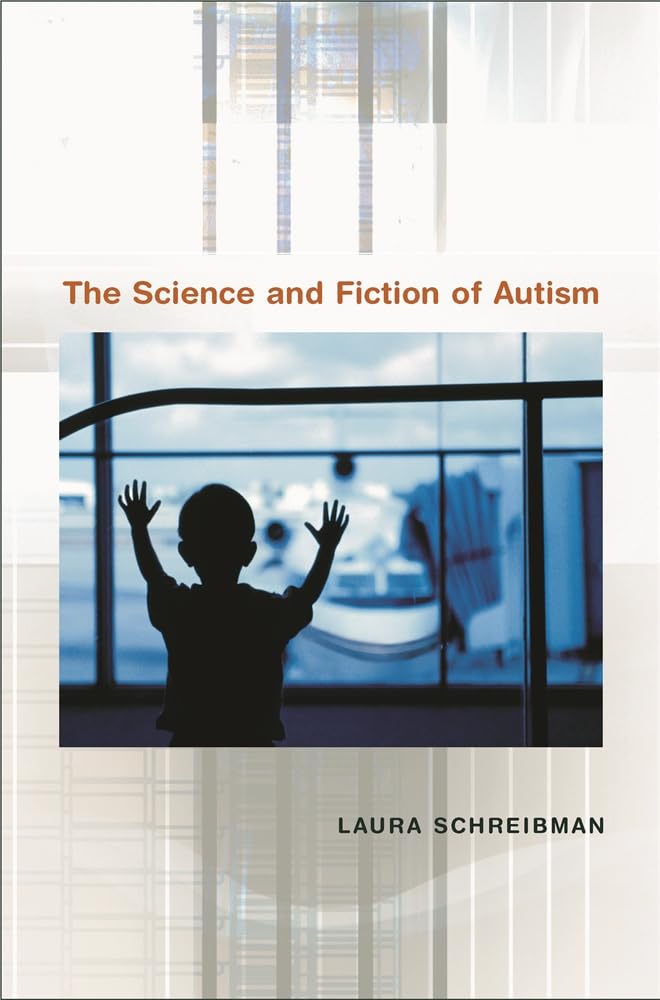
The Science and Fiction of Autism: Debunking Myths and Understanding Evidence-Based Treatments by Laura Schreibman
Inclusive of all applicable taxes. FREE shipping on all orders.
Available Offers
- 🚚Free Delivery — Free shipping on all orders
- 💵Cash on Delivery — Pay when your order arrives
- ↩️15-Day Easy Returns — Hassle-free return policy
- 🔒Cash on Delivery — Pay safely when your order arrives
Check Delivery
Product Description
Introduction
In a country where conversations around neurodiversity and mental health are gaining momentum, The Science and Fiction of Autism by Laura Schreibman stands as a beacon of clarity. This hardcover edition, published by Harvard University Press, offers Indian readers—students, educators, parents, and professionals—a rigorous yet accessible journey into the heart of one of the most misunderstood conditions of our time. Schreibman, a leading behavioral scientist, separates fact from folklore, helping us navigate the noise of unverified claims and sensationalist headlines.
Book Overview
This book is not just another academic text; it is a deeply human exploration of autism as a biological reality. Schreibman draws on decades of clinical experience to dismantle myths—from the long-debunked “refrigerator mother” theory to the persistent false link between vaccines and autism. She presents autism as a complex neurological disorder, not a product of parenting or environmental toxins. The narrative is grounded in science but told with empathy, making it a vital resource for anyone who wants to understand the condition beyond the stereotypes.
Key Highlights
- Evidence-Based Debunking: A thorough, scientific takedown of popular but false causes and cures, including dietary interventions, chelation therapy, and facilitated communication.
- Real-World Clinical Insights: Schreibman shares stories from her own practice, offering a rare window into the lives of autistic children and their families.
- Focus on Behavioral Treatments: An in-depth look at applied behavior analysis (ABA) and other proven interventions, with practical guidance for parents and educators.
- Historical Context: Traces the evolution of autism research from the 1940s to the present, showing how social and cultural biases have shaped—and often distorted—our understanding.
Story Themes
At its core, this book is about the tension between hope and hype. Schreibman explores how desperate parents, hungry for a cure, are often preyed upon by charlatans offering miracle treatments. She also examines the theme of responsibility—how researchers, clinicians, and the media must communicate findings honestly, without oversimplifying or overpromising. The narrative is a call for critical thinking, urging readers to question extraordinary claims and demand rigorous evidence. Above all, it is a story of resilience: of children who learn, grow, and connect in their own unique ways, and of families who navigate a world that often fails to understand them.
Reader Benefits
- For Students: A clear, well-structured introduction to autism research, perfect for psychology, neuroscience, or education courses.
- For Parents: Practical advice on evaluating treatments, communicating with professionals, and advocating for your child.
- For Educators: Insights into classroom strategies and behavioral interventions that can make a real difference.
- For General Readers: A fascinating, myth-busting read that challenges assumptions and deepens empathy.
Who Should Read
This book is essential for anyone touched by autism—whether as a parent, teacher, therapist, or curious reader. It is particularly valuable for Indian students and professionals in psychology, special education, and child development, who often encounter a mix of traditional beliefs and modern science. Schreibman’s work equips them to separate wheat from chaff in a field rife with misinformation. It is also a must-read for journalists and policymakers seeking a balanced, evidence-based perspective.
About the Author
Laura Schreibman is a distinguished professor of psychology at the University of California, San Diego, and a pioneer in behavioral interventions for autism. With over four decades of clinical and research experience, she has authored numerous scientific papers and books. Her work has shaped how we understand and treat autism, and she is widely respected for her commitment to rigorous science and compassionate care.
About the Publisher
Harvard University Press is one of the oldest and most prestigious academic publishers in the world. Known for its commitment to scholarship and intellectual rigor, the press brings readers works that are both authoritative and accessible. This hardcover edition reflects their dedication to quality, making it a lasting addition to any library.
Conclusion
The Science and Fiction of Autism is more than a book—it is a guide to thinking clearly about a condition that affects millions. In an age of misinformation, Laura Schreibman offers a steady hand, leading us through the noise with evidence, empathy, and integrity. For Indian readers who want to understand autism not as a mystery or a tragedy, but as a human reality, this book is indispensable. Add it to your shelf, and let it change how you see the world.
Quick Summary
The Science and Fiction of Autism by Laura Schreibman is a definitive guide that separates fact from fiction in the often contentious field of autism research and treatment. Written by a leading authority on behavioral interventions, the book systematically dismantles long-standing myths—including the discredited refrigerator mother theory and the false link between MMR vaccines and autism—while presenting autism as a complex biological disorder. Schreibman reviews decades of scientific evidence to highlight what truly works: early, intensive behavioral therapies grounded in applied behavior analysis. She also critically examines popular but unproven treatments, urging readers to rely on data rather than hype. This book is ideal for parents, educators, clinicians, and students who want a clear, evidence-based understanding of autism. Readers will learn to identify pseudoscience, understand the neurological underpinnings of autism, and make informed decisions about interventions. By purchasing from Bookshops.in, Indian customers receive a high-quality hardcover edition with reliable delivery and excellent customer service, making this essential resource easily accessible.
Book Highlights
Book Specifications
| ISBN-13 | 9780674025691 |
| ISBN-10 | 0674025695 |
| Publisher | Harvard Univ Pr |
| Language | English |
| Dimensions | 14.17 x 2.03 x 20.96 cm |
| Weight | 1 kg 50 g |
| Category | Clinical › Neurology |
| Genre | Nonfiction |
| Original Language | English |
Frequently Asked Questions
What is The Science and Fiction of Autism about?
Who is Laura Schreibman?
Does this book support the MMR vaccine theory?
Is this book suitable for parents?
What treatment approaches does it discuss?
Does the book cover autism diagnosis?
Is this book only for professionals?
How does the book address the refrigerator mother theory?
Does it include case studies?
What makes this book different from other autism books?
Is the book relevant for Indian readers?
Does the book discuss alternative therapies?
Is this a textbook?
Where can I buy this book in India?
Readers Also Search For
Customers Also Bought

Anatomy
Ultrastructure of the Digestive Tract: 4 (Electron Microscopy in Biology and Medicine)

Anatomy
Ultrastructure of the Connective Tissue Matrix: 3 (Electron Microscopy in Biology and Medicine)

Anatomy
Reproductive Genetics (Royal College of Obstetricians and Gynaecologists Study Group)

Anatomy
Human Gross Anatomy: An Outline Text by Robert J. Leonard – Medical Anatomy

Pharmacology
Mathematical Modeling and Simulation in Enteric Neurobiology

Anatomy
Nature’s Patterns and the Fractional Calculus: 2 (Fractional Calculus in Applied Sciences and Engineering, 2)
Related Products
View All
Medicine & Health Sciences
Handbook of Hospitality Strategic Management | by Olsen Michael | Taylor & Francis Ltd | by Olsen Michael | Taylor & Francis Ltd | by Olsen Michael | Taylor & Francis Ltd | by Olsen Michael | Taylor & Francis Ltd | by Olsen Michael | Taylor & Francis Ltd | by Olsen Michael | Taylor & Francis Ltd | by Olsen Michael | Taylor & Francis Ltd | by Olsen Michael | Taylor & Francis Ltd | by Olsen Michael | Taylor & Francis Ltd | by Olsen Michael | Taylor & Francis
Medicine & Health Sciences
Pediatrics on Call | by Charles A. Pohl | Kathleen Bradford | Clara Callahan | McGraw Hill / Medical | by Charles A. Pohl | Kathleen Bradford | Clara Callahan | McGraw Hill / Medical | by Charles A. Pohl | Kathleen Bradford | Clara Callahan | McGraw Hill / Medical | by Charles A. Pohl | Kathleen Bradford | Clara Callahan | McGraw Hill / Medical | by Charles A. Pohl | Kathleen Bradford | Clara Callahan | McGraw Hill / Medical | by Charles A. Pohl | Kathleen Bradford | Clara Callahan | McGraw Hill
Medicine & Health Sciences
The Physician's Guide to Depression and Bipolar Disorders | by Dwight L. Evans | Dennis S. Charney | Lydia Lewis | McGraw Hill / Medical | by Dwight L. Evans | Dennis S. Charney | Lydia Lewis | McGraw Hill / Medical | by Dwight L. Evans | Dennis S. Charney | Lydia Lewis | McGraw Hill / Medical | by Dwight L. Evans | Dennis S. Charney | Lydia Lewis | McGraw Hill / Medical | by Dwight L. Evans | Dennis S. Charney | Lydia Lewis | McGraw Hill / Medical | by Dwight L. Evans | Dennis S. Charney | Lydi
Medicine & Health Sciences
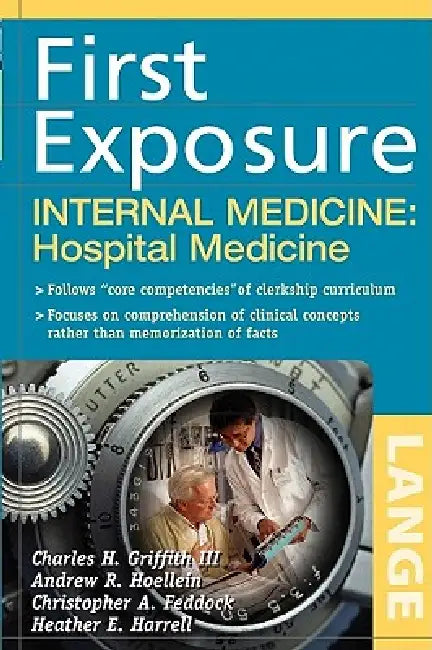
First Exposure to Internal Medicine | by Andrew R. Hoellein | Charles H. Griffith | McGraw Hill / Medical | by Andrew R. Hoellein | Charles H. Griffith | McGraw Hill / Medical | by Andrew R. Hoellein | Charles H. Griffith | McGraw Hill / Medical | by Andrew R. Hoellein | Charles H. Griffith | McGraw Hill / Medical | by Andrew R. Hoellein | Charles H. Griffith | McGraw Hill / Medical | by Andrew R. Hoellein | Charles H. Griffith | McGraw Hill / Medical | by Andrew R. Hoellein | Charles H. Griffit
Medicine & Health Sciences
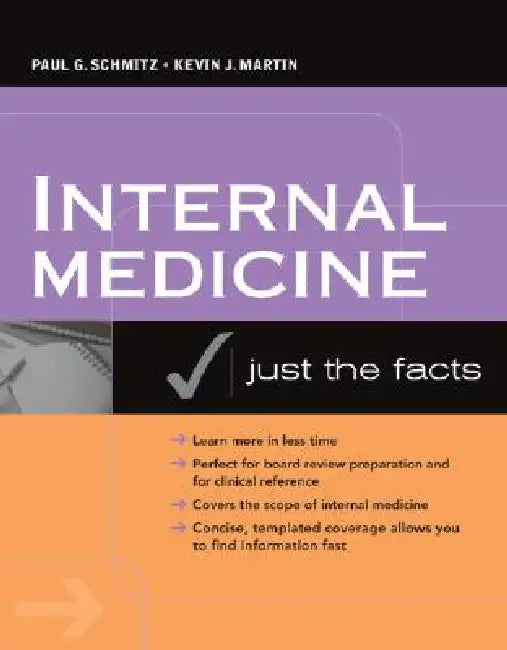
First Exposure to Internal Medicine | by Charles H. Griffith | Andrew R. Hoellein | McGraw Hill / Medical | by Charles H. Griffith | Andrew R. Hoellein | McGraw Hill / Medical | by Charles H. Griffith | Andrew R. Hoellein | McGraw Hill / Medical | by Charles H. Griffith | Andrew R. Hoellein | McGraw Hill / Medical | by Charles H. Griffith | Andrew R. Hoellein | McGraw Hill / Medical | by Charles H. Griffith | Andrew R. Hoellein | McGraw Hill / Medical | by Charles H. Griffith | Andrew R. Hoellei
Medicine & Health Sciences