
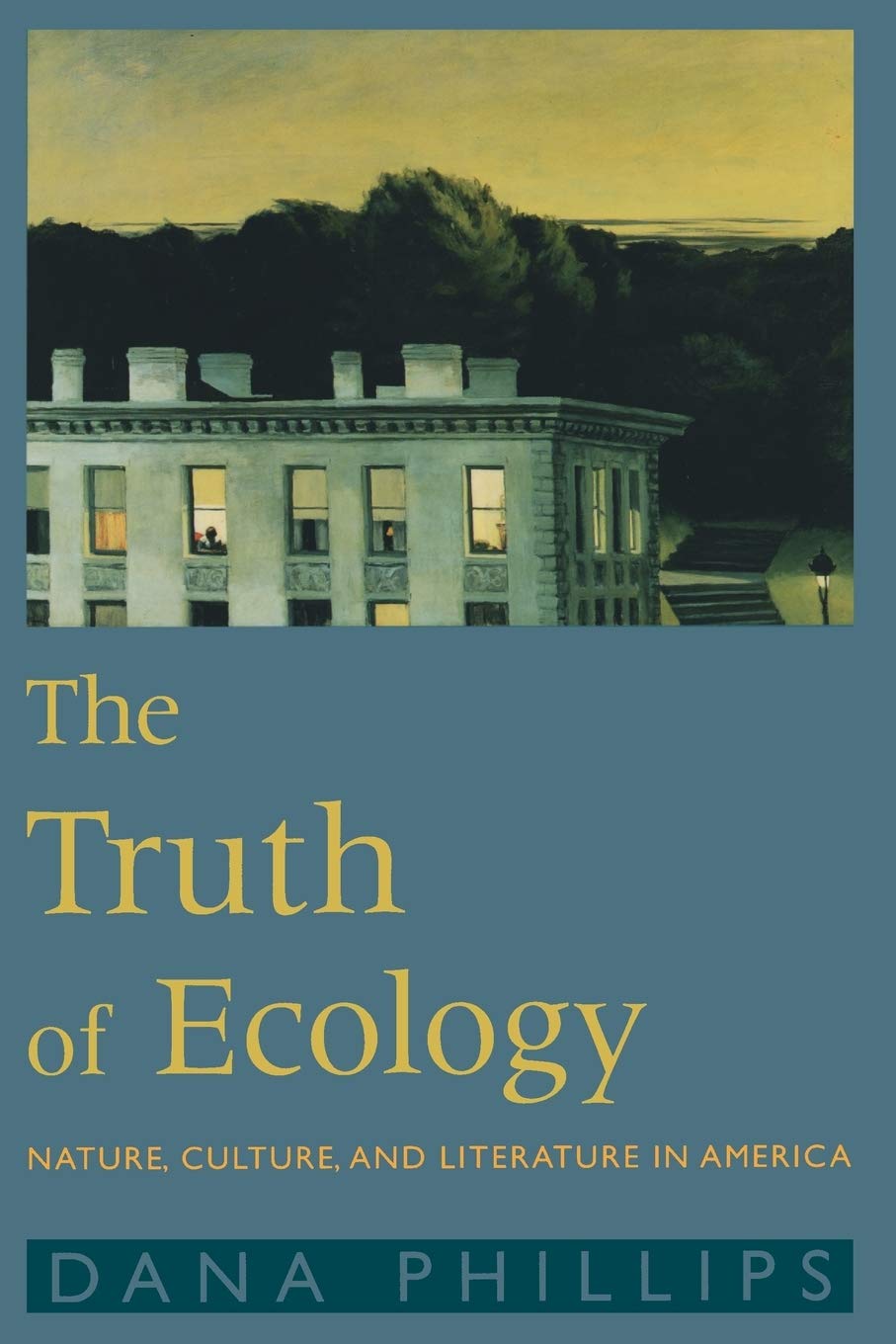
The Truth of Ecology: Nature, Culture, and Literature in America by Dana Phillips – A Critical Examination of Environmen
Inclusive of all applicable taxes. FREE shipping on all orders.
Available Offers
- 🚚Free Delivery — Free shipping on all orders
- 💵Cash on Delivery — Pay when your order arrives
- ↩️15-Day Easy Returns — Hassle-free return policy
- 🔒Cash on Delivery — Pay safely when your order arrives
Check Delivery
Product Description
Introduction
In an age where environmental debates are often polarised between romantic idealism and hard-nosed scientific pragmatism, Dana Phillips' The Truth of Ecology: Nature, Culture, and Literature in America offers a refreshingly critical and deeply interdisciplinary exploration of how we think about nature, culture, and the stories we tell about the environment. Published by Oxford University Press, this hardcover volume is an essential read for students, scholars, and anyone curious about the intersections of ecology, literature, and philosophy.
Book Overview
The Truth of Ecology is a wide-ranging, polemical appraisal of contemporary environmental thought. Phillips takes a bold, unflinching look at the field of ecocriticism—the study of literature and the environment—and subjects it to rigorous scrutiny. Rather than simply celebrating nature writing, he challenges readers to reconsider the assumptions that underpin environmental discourse. Drawing on thinkers as diverse as Henry David Thoreau, Ludwig Wittgenstein, Bruno Latour, and Stephen Jay Gould, Phillips crafts a narrative that is as intellectually demanding as it is rewarding. This is not a book that offers easy answers; instead, it invites you to think more critically about the relationship between language, culture, and the natural world.
Key Highlights
- Interdisciplinary Approach: Blends insights from ecology, literary criticism, philosophy, and science studies to create a holistic understanding of environmental thought.
- Critical of Romanticism: Challenges the sentimental and often simplistic portrayals of nature in popular environmentalism and nature writing.
- Engages with Major Thinkers: Features discussions on Wittgenstein, Barthes, Eco, Bruno Latour, Michel Serres, Richard Rorty, Ian Hacking, Daniel Dennett, Ernst Mayr, and Stephen Jay Gould.
- Focus on American Context: Explores the history of ecology in the United States and its influence on American literature and culture.
- Polemical Yet Accessible: Written in a lively, engaging style that makes complex ideas understandable without sacrificing depth.
Inside the Book
Phillips begins by tracing the history of ecology as a scientific discipline in America, showing how it has been shaped by cultural and philosophical currents. He then turns to ecocriticism, arguing that the field has often been too devotional and insufficiently theoretical. The book delves into the contradictions of American nature writing, from Thoreau to contemporary authors, and proposes a 'wilder' approach that embraces uncertainty, complexity, and a more pragmatic engagement with the environment. Along the way, Phillips tackles topics such as the distortions of popular environmental thought, the influence of Critical Theory on radical ecology, and the need for greater theoretical sophistication in environmental humanities.
Key Topics
- History of ecology in the United States
- Critical analysis of ecocriticism as a discipline
- Nature writing and its cultural contradictions
- The role of language and narrative in shaping environmental perception
- Philosophical underpinnings of environmentalism
- Pragmatism and realism in ecological thought
- Scientific versus literary representations of nature
Reader Benefits
This book equips readers with the tools to think more critically about environmental issues and the stories we tell about them. It helps you move beyond simple dichotomies of 'good' and 'bad' nature, and instead appreciate the messy, complex reality of ecological systems. For students, it provides a solid grounding in ecocritical theory and its critiques. For scholars, it offers fresh perspectives that challenge established norms. For general readers, it is an intellectually stimulating journey that will change how you read nature writing and think about the environment.
Learning Outcomes
By reading The Truth of Ecology, you will gain a deeper understanding of the philosophical and cultural dimensions of ecology. You will learn to identify and question the assumptions behind environmental rhetoric, and to appreciate the value of interdisciplinary thinking. You will also become familiar with key debates in ecocriticism and the work of major thinkers who have shaped environmental humanities. Ultimately, you will develop a more nuanced and critical perspective on the relationship between nature, culture, and literature.
Who Should Read
- Students of environmental studies, literature, and philosophy
- Scholars and researchers in ecocriticism and the environmental humanities
- Writers and readers of nature writing
- Environmental activists and thinkers seeking a more critical framework
- Anyone interested in the intersections of science, culture, and literature
About the Author
Dana Phillips is a scholar known for his incisive and interdisciplinary work in environmental literature and ecocriticism. He has taught at various universities and brings a wealth of knowledge from fields as diverse as literary theory, ecology, and philosophy. His writing is characterised by a willingness to challenge orthodoxies and a commitment to intellectual rigour, making him a distinctive voice in contemporary environmental thought.
About the Publisher
Oxford University Press is one of the world's most prestigious academic publishers, known for producing authoritative and high-quality books across all disciplines. With a history stretching back centuries, Oxford University Press ensures that each title meets the highest standards of scholarship and production. This hardcover edition is built to last, making it a valuable addition to any personal or institutional library.
Conclusion
The Truth of Ecology: Nature, Culture, and Literature in America is not just a book; it is an invitation to rethink everything you thought you knew about the environment and the stories we tell about it. Dana Phillips' sharp analysis and wide-ranging scholarship make this an indispensable resource for anyone serious about understanding the complexities of ecological thought. Whether you are a student, a teacher, a writer, or simply a curious reader, this book will challenge, inspire, and ultimately enrich your perspective on the natural world. Order your copy today from Bookshops.in and embark on a journey that is as intellectually adventurous as it is timely.
Quick Summary
The Truth of Ecology by Dana Phillips is a critical and interdisciplinary examination of environmental thought, focusing on the field of ecocriticism. The book traces the history of ecology in America, critiques popular environmental narratives, and explores the contradictions within American nature writing from Thoreau to contemporary authors. Phillips draws on a wide range of thinkers—including Wittgenstein, Barthes, Latour, and Serres—to argue for a more theoretically sophisticated and less devotional approach to nature and culture. This book is ideal for advanced students, scholars, and anyone interested in environmental humanities, literary criticism, or philosophy. Readers will gain a deeper understanding of how literature and culture shape our perception of the natural world, and how critical theory can enrich environmental discourse. By purchasing from Bookshops.in, Indian readers receive a high-quality hardcover edition from Oxford University Press, ensuring a durable and valuable addition to their academic library.
Book Highlights
Book Specifications
| ISBN-13 | 9780195137699 |
| ISBN-10 | 0195137698 |
| Publisher | Oxford Univ Pr on Demand |
| Language | English |
| Dimensions | 15.24 x 1.85 x 23.5 cm |
| Weight | 454 g |
| Category | Literature › North American Literature Textbooks |
| Genre | Non-fiction |
| Original Language | English |
Frequently Asked Questions
What is the main argument of The Truth of Ecology?
Who is Dana Phillips?
Is this book suitable for undergraduate students?
Does the book cover Indian environmental thought?
What is ecocriticism?
Which authors are discussed in the book?
How does the book engage with philosophy?
What is the price of the book?
Can I use this book for a course on environmental literature?
Does the book offer practical solutions for environmental issues?
What is the binding of this book?
Is the book available in Indian bookstores?
What is the ISBN-13 of this book?
Readers Also Search For
Customers Also Bought
Mathematics
Stereotype Spaces and Algebras: 73 (De Gruyter Expositions in Mathematics, 73)
Mathematics
Semigroups in Algebra, Geometry and Analysis: 20 (De Gruyter Expositions in Mathematics, 20)
Mathematics
Geometry from the Pacific Rim: Proceedings of the Pacific Rim Geometry Conference held at National University of Singapore, Republic of Singapore, ... 1994 (De Gruyter Proceedings in Mathematics)
Mathematics
First International Tainan-Moscow Algebra Workshop: Proceedings of the International Conference held at National Cheng Kung University Tainan, Taiwan, ... 1994 (De Gruyter Proceedings in Mathematics)
Mathematics
Differential Geometry - Proceedings of the VIII International Colloquium (English, Jesus A. Alvarez Lopez | Eduardo Garcia-Rio)
Mathematics
Mathematical Theory of Optimal Processes (Classics of Soviet Mathematics)
Related Products
View All
Science & Mathematics
Elements of Pelagos Biology: With Focus on the Mediterranean Sea

Science & Mathematics
Squid - Superconducting Quantum Interference Devices and Their Applications: Proceedings of the International Conference on Superconducting Quantum Devices, Berlin-west, October 4-8, 1976
Science & Mathematics
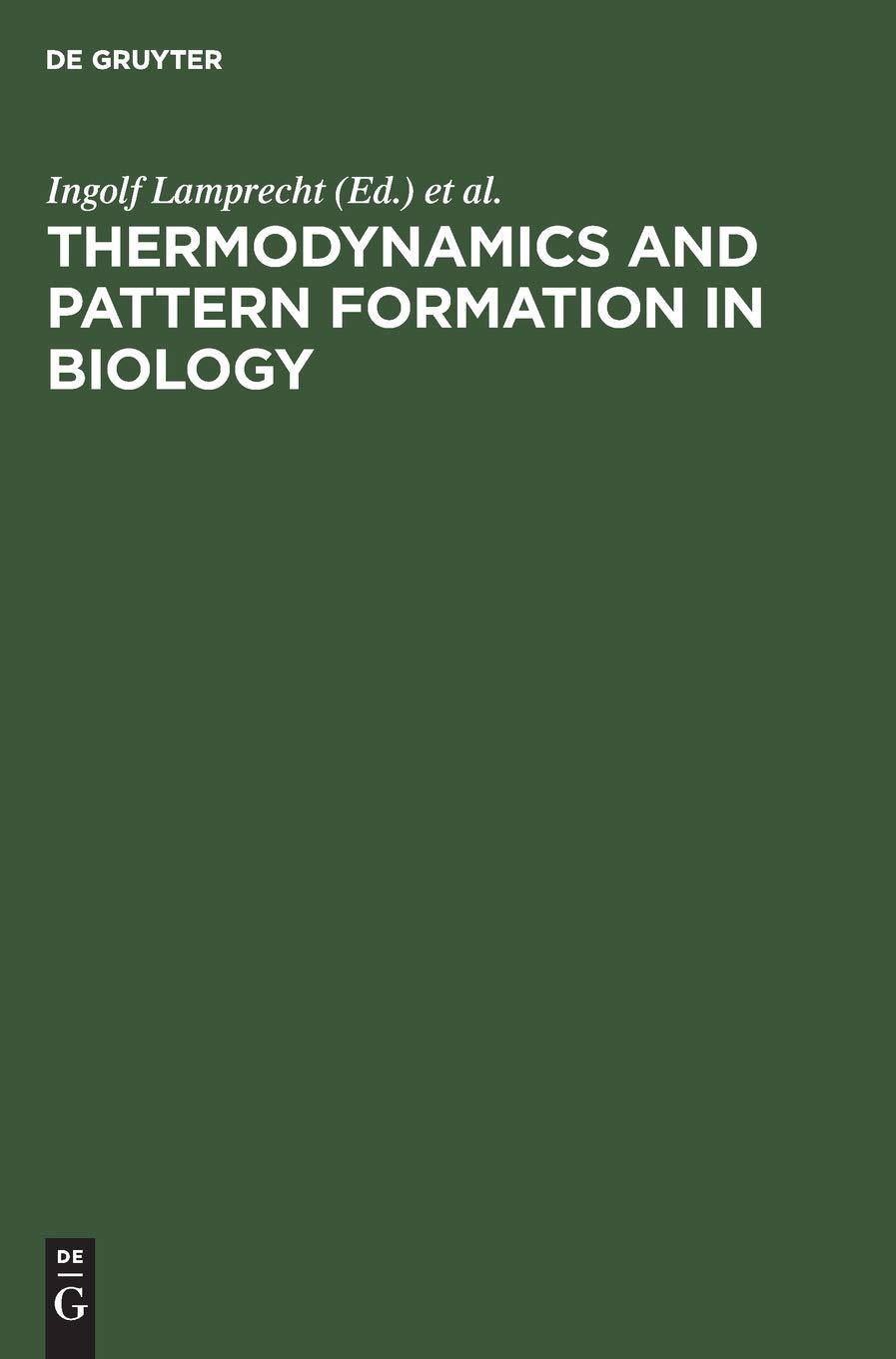
Thermodynamics and Pattern Formation in Biology
Science & Mathematics
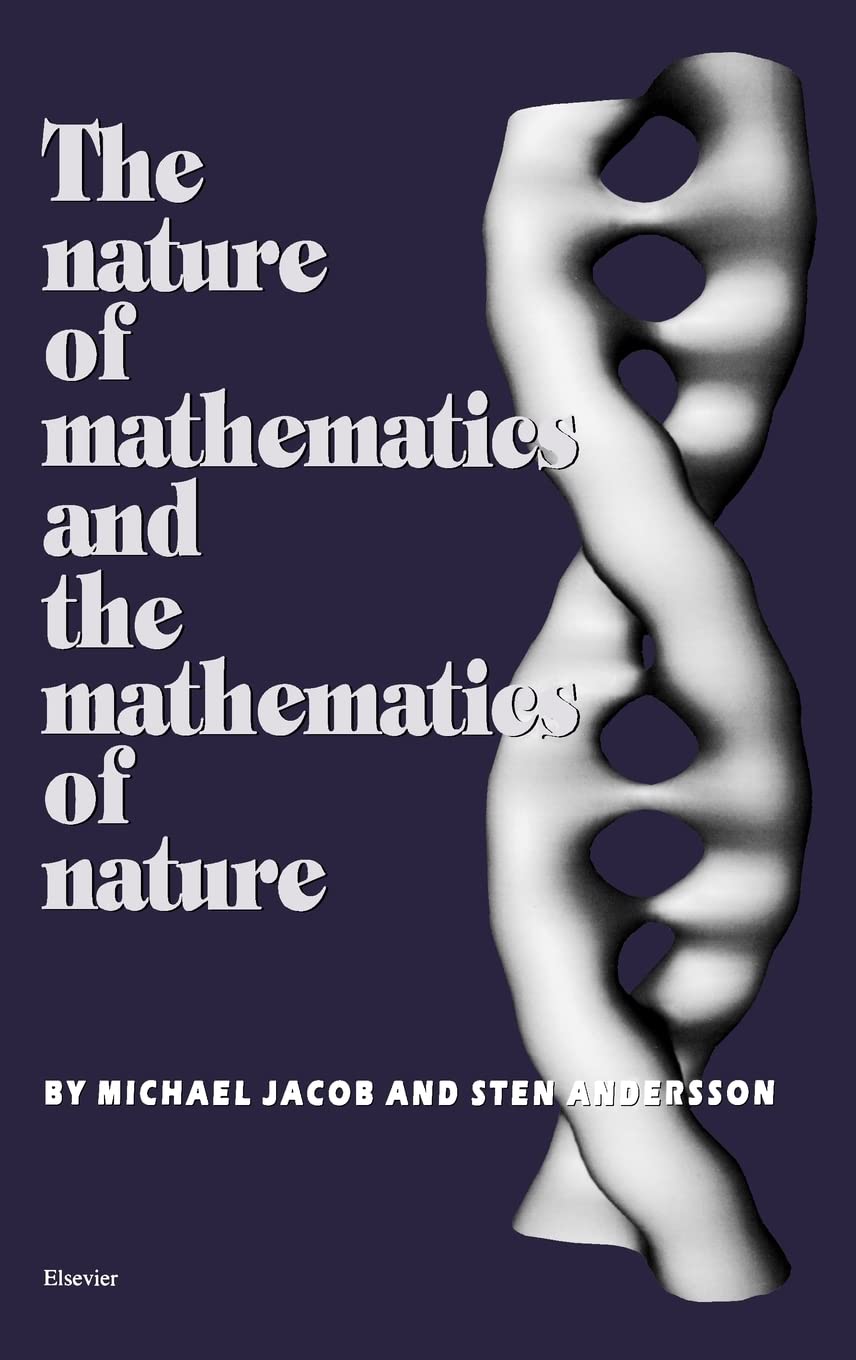
The Nature of Mathematics and the Mathematics of Nature by S. Andersson – Mathematics & Science

Science & Mathematics
Linear Algebra | by Stephen Friedberg | Arnold Insel | Lawrence Spence | Pearson | by Stephen Friedberg | Arnold Insel | Lawrence Spence | Pearson | by Stephen Friedberg | Arnold Insel | Lawrence Spence | Pearson | by Stephen Friedberg | Arnold Insel | Lawrence Spence | Pearson | by Stephen Friedberg | Arnold Insel | Lawrence Spence | Pearson | by Stephen Friedberg | Arnold Insel | Lawrence Spence | Pearson | by Stephen Friedberg | Arnold Insel | Lawrence Spence | Pearson | by Stephen Friedberg
Science & Mathematics