
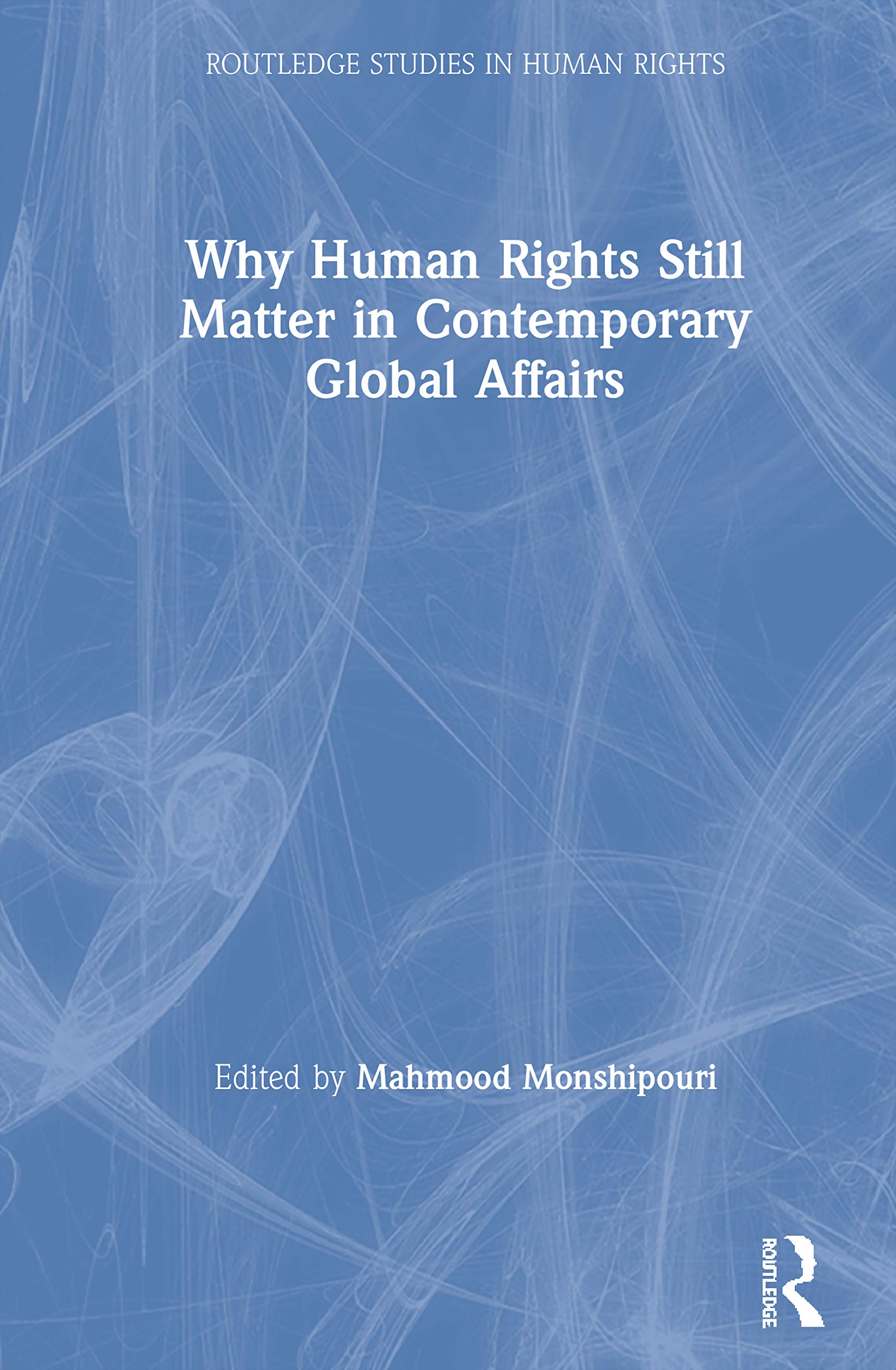
Why Human Rights Still Matter in Contemporary Global Affairs by Monshipouri Mahmood – A Critical Analysis of Human Digni
Inclusive of all applicable taxes. FREE shipping on all orders.
Available Offers
- 🚚Free Delivery — Free shipping on all orders
- 💵Cash on Delivery — Pay when your order arrives
- ↩️15-Day Easy Returns — Hassle-free return policy
- 🔒Cash on Delivery — Pay safely when your order arrives
Check Delivery
Product Description
Introduction
In an era marked by rising populism, authoritarian backsliding, and geopolitical turbulence, the question of whether human rights still hold relevance in global affairs has never been more urgent. Why Human Rights Still Matter in Contemporary Global Affairs, authored by Monshipouri Mahmood and published by Routledge, offers a compelling and timely examination of the enduring significance of human rights in a post-liberal world order. This hardbound volume is an essential resource for Indian students, scholars, and practitioners who seek to understand the complexities of human dignity, justice, and international law amid rapid change.
Book Overview
This incisive work systematically integrates theoretical, empirical, and normative perspectives to argue that human rights remain a vital framework for addressing contemporary global challenges. Rather than treating human rights as a relic of a bygone liberal era, the author demonstrates how they continue to shape debates around governance, security, and development. The book provides a nuanced analysis of the perils posed by toxic nationalism and authoritarianism, while also highlighting the aspirations of people worldwide who look to human rights as a beacon of hope in the new millennium. Through a blend of interdisciplinary theory and real-world case studies, it explores the domestic conditions that can either foster or hinder the protection of fundamental freedoms.
Key Highlights
- Timely Relevance: Addresses the pressing question of human rights in an age of populism and geopolitical uncertainty.
- Interdisciplinary Approach: Combines insights from political science, law, sociology, and international relations.
- Case Study Rich: Features numerous examples from different regions, including the Global South, making it highly relevant for Indian readers.
- Critical yet Hopeful: Balances a sober assessment of threats with a constructive vision for preserving human dignity.
- Routledge Quality: Published by one of the world's leading academic publishers, ensuring rigorous scholarship.
Inside the Book
The book is structured to guide readers from foundational concepts to advanced debates. Early chapters lay the theoretical groundwork, examining the evolution of human rights norms and their contestation in contemporary politics. Subsequent sections delve into specific thematic areas, such as economic justice, migration, climate change, and the role of international institutions. Each chapter combines theoretical exposition with empirical evidence, drawn from both developed and developing countries. The author pays particular attention to the ways in which economic and geopolitical shifts may challenge or reinforce human rights protections, offering a balanced perspective that avoids both naive optimism and cynical defeatism.
Key Topics
- The post-liberal order and its implications for human rights
- Populism, authoritarianism, and toxic nationalism
- Human dignity in times of crisis and uncertainty
- Domestic conditions for human rights protection
- Economic globalization and its impact on rights
- Migration, refugees, and border politics
- Climate change as a human rights challenge
- The role of international law and institutions
- Case studies from India, South Asia, and beyond
- Strategies for preserving rights in a shifting global landscape
Reader Benefits
- Gain a deep understanding of why human rights remain indispensable in contemporary global affairs.
- Learn how to critically evaluate the promises and pitfalls of human rights discourse.
- Access a wealth of case studies that connect theory to real-world situations.
- Develop analytical skills to assess the interplay between domestic politics and international norms.
- Acquire a nuanced perspective on the challenges facing democracies and rights-based governance.
Learning Outcomes
By engaging with this book, readers will be able to: articulate the main theoretical debates surrounding human rights in a post-liberal era; identify the key drivers of human rights violations in contemporary contexts; analyze the conditions under which human rights can be effectively promoted and protected; evaluate the role of state and non-state actors in shaping human rights outcomes; and apply interdisciplinary frameworks to assess emerging global challenges such as climate-induced displacement and digital surveillance. The book equips readers not only with knowledge but also with the critical thinking tools needed to navigate an increasingly complex world.
Who Should Read
This book is ideal for undergraduate and postgraduate students of political science, international relations, law, sociology, and human rights studies. It is also highly valuable for researchers, policy analysts, diplomats, civil society activists, and journalists who seek a rigorous yet accessible treatment of human rights in global affairs. Indian readers, in particular, will find the discussions on democracy, development, and identity politics especially pertinent, given the country's vibrant democratic traditions and its engagement with international human rights frameworks.
About the Author
Monshipouri Mahmood is a distinguished scholar and professor of international relations, whose research spans human rights, Middle East politics, and globalization. He has authored and edited numerous books and articles that have shaped contemporary debates in the field. His work is known for its interdisciplinary rigor and its commitment to bridging theory and practice. With decades of teaching and research experience, Mahmood brings both depth and clarity to complex issues, making his writing accessible to students and professionals alike.
About the Publisher
Routledge is a globally renowned academic publisher, part of the Taylor & Francis Group, with a legacy of publishing cutting-edge scholarship in the social sciences and humanities. Known for its commitment to intellectual excellence and editorial integrity, Routledge produces works that are widely used in universities and research institutions around the world. This hardcover edition reflects the publisher's dedication to producing durable, high-quality books that serve as lasting resources for learning and reference.
Conclusion
Why Human Rights Still Matter in Contemporary Global Affairs is more than a book—it is an essential guide for anyone seeking to understand the enduring power and relevance of human rights in a world fraught with challenges. By blending theoretical insight with practical case studies, Monshipouri Mahmood offers a balanced, hopeful, and critical perspective that will resonate with Indian readers and global audiences alike. Whether you are a student, a scholar, or a concerned citizen, this volume will deepen your appreciation of the struggles and triumphs that define the human rights movement today.
Quick Summary
Why Human Rights Still Matter in Contemporary Global Affairs by Monshipouri Mahmood is a compelling exploration of the enduring significance of human rights in today's turbulent world. Written for students, scholars, and practitioners, the book systematically blends theoretical frameworks with empirical case studies to examine how human rights can be protected amidst rising populism, authoritarianism, and toxic nationalism. It offers a nuanced understanding of the domestic and international conditions that shape rights outcomes, and provides hope for preserving human dignity during periods of rapid change. Readers will gain critical insights into the post-liberal order and the strategies needed to advance justice. This Routledge hardcover is an essential resource for anyone studying international law, political science, or global affairs. By choosing Bookshops.in, you support a trusted Indian bookstore committed to delivering quality academic titles with reliable service.
Book Highlights
Book Specifications
| ISBN-13 | 9780367901479 |
| ISBN-10 | 0367901471 |
| Publisher | Routledge |
| Language | English |
| Dimensions | 16.2 x 2.77 x 23.99 cm |
| Weight | 703 g |
| Country | India |
| Category | Philosophy › History & Surveys |
| Genre | Non-fiction |
| Original Language | English |
Frequently Asked Questions
What is the main argument of this book?
Who is the author of Why Human Rights Still Matter in Contemporary Global Affairs?
Is this book suitable for Indian readers?
What disciplines does this book cover?
Does the book include case studies?
Is this a hardcover or paperback edition?
What is the ISBN-13 of this book?
Can I use this book for my university course?
Does the book address contemporary issues like populism?
What does 'post-liberal order' mean in this context?
Is this book only for academics?
How does this book differ from other human rights texts?
What language is the book in?
Where can I buy this book in India?
Readers Also Search For
Related Products
View All
Law
Xenophon's Spartan Constitution: Introduction. Text. Commentary: 24 (Texte und Kommentare)
Law
Wurzel, Wandel und Wert der strafrechtlichen Legalordnung: 1 (Mnsterische Beitrge Zur Rechts- Und Staatswissenschaft)
Law
Le Droit de Reprise Du Bailleur Rural Travers La Loi Et La Jurisprudence de la Cour de Cassation de 1945 1963 (Publications de la Facult de Droit Et Des Sciences Economiq)

Law
ENVIRONMENTAL LAW P

Law
Leading Cases in the Common Law by A. W. Brian Simpson – Legal History
Law