
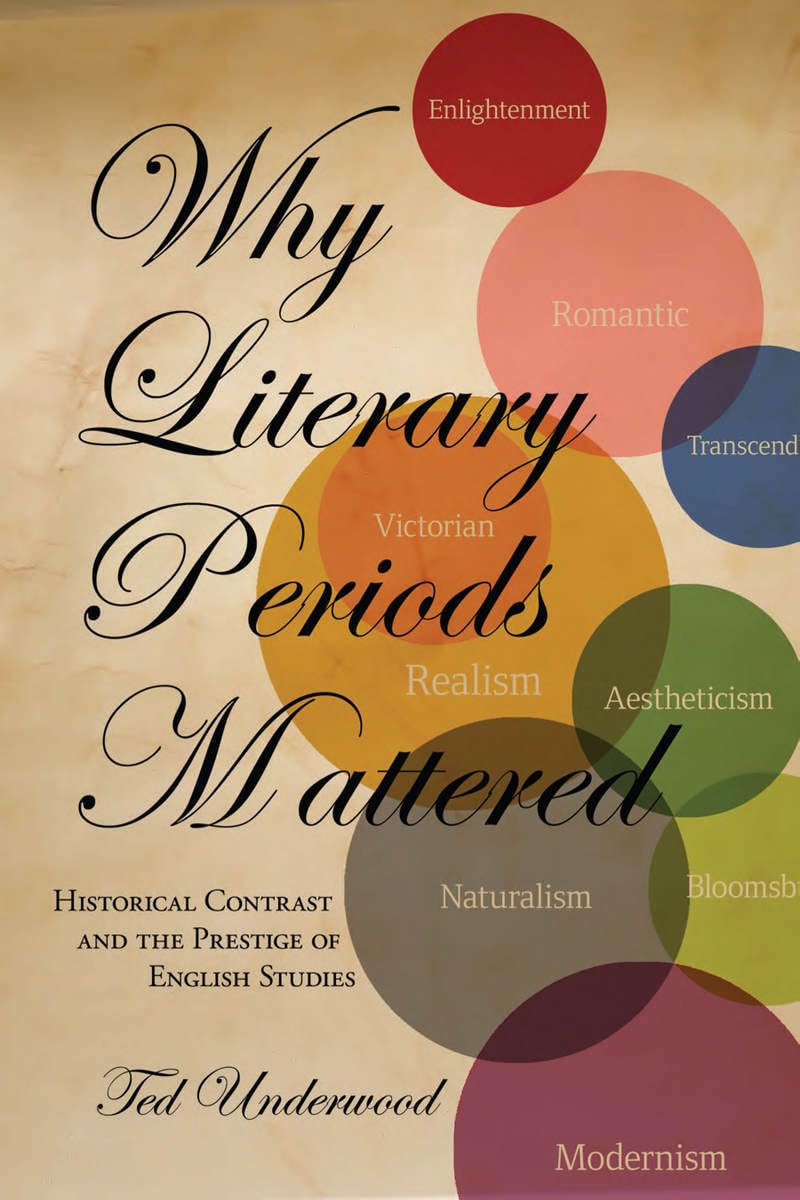
Why Literary Periods Mattered: Historical Contrast and the Prestige of English Studies by Ted Underwood – A Deep Dive in
Inclusive of all applicable taxes. FREE shipping on all orders.
Available Offers
- 🚚Free Delivery — Free shipping on all orders
- 💵Cash on Delivery — Pay when your order arrives
- ↩️15-Day Easy Returns — Hassle-free return policy
- 🔒Cash on Delivery — Pay safely when your order arrives
Check Delivery
Product Description
Introduction
Why do we study literature by dividing it into neat historical periods like the Renaissance, Romanticism, or Modernism? In Why Literary Periods Mattered: Historical Contrast and the Prestige of English Studies, author Ted Underwood takes readers on a compelling intellectual journey to uncover the origins and enduring power of this practice. This thought-provoking book, published by Stanford University Press, is an essential read for students, teachers, and anyone curious about how English literature became a disciplined academic field. It challenges us to rethink the very frameworks through which we understand literary history.
Book Overview
This hardcover edition explores how the division of English literature into discrete periods emerged in the mid-nineteenth century and why this structure has persisted despite radical shifts in critical theory. Underwood argues that the practice of contrasting one literary era with another—rather than tracing causal continuity—helped English departments establish their unique identity, separate from history departments. The book reveals that this reliance on contrast and dramatic turning points has shaped not only how we teach literature but also what we value in it. In the twenty-first century, Underwood calls for a more nuanced understanding of literary change, urging readers to recognize the blind spots created by this long-standing tradition.
Key Highlights
- Original Thesis: Challenges the assumption that literary periods are natural or neutral categories, showing how they were deliberately constructed to give English studies academic prestige.
- Historical Depth: Traces the evolution of periodization from the 1800s to the present, using concrete examples from British and American literary scholarship.
- Interdisciplinary Approach: Bridges literary theory, historiography, and the sociology of knowledge to explain why periodization remains institutionally central.
- Critical Reflection: Offers a balanced critique of how contrast-based thinking has limited our understanding of literary continuity and change.
Story Themes
At its core, this book is about the politics of knowledge and the construction of academic disciplines. It examines how the desire for prestige and institutional autonomy shaped the way we study literature. Themes of identity, tradition, and innovation run throughout, as Underwood shows how scholars have used historical contrast to define what is 'modern' versus 'ancient,' 'radical' versus 'conservative.' The book also explores the tension between continuity and rupture in literary history, asking whether our love for clear-cut periods has made us overlook the messy, interconnected nature of cultural change.
Reader Benefits
- Deepen Your Understanding: Gain fresh insights into why your English syllabus is organized the way it is, and how that structure influences what you read and value.
- Critical Thinking Skills: Learn to question the assumptions behind literary categories and develop a more sophisticated approach to literary analysis.
- Academic Edge: Perfect for students writing essays or dissertations on literary history, periodization, or the history of the discipline.
- Engaging Prose: Underwood writes with clarity and wit, making complex theoretical ideas accessible without oversimplifying them.
Who Should Read
This book is ideal for undergraduate and postgraduate students of English literature, especially those specializing in literary theory, criticism, or the history of the discipline. It will also appeal to professors and researchers looking to revisit foundational questions about their field. General readers with a keen interest in how academic knowledge is produced—and how it shapes our cultural understanding—will find this book both enlightening and provocative.
About the Author
Ted Underwood is a professor of English at the University of Illinois, Urbana-Champaign, where he specializes in eighteenth- and nineteenth-century British literature, digital humanities, and literary history. He is the author of several influential books, including The Work of the Sun: Literature, Science, and Economy, 1760–1860. Underwood is known for his rigorous yet accessible scholarship, and his work has helped reshape conversations about literary change and periodization.
About the Publisher
Stanford University Press is one of the world’s leading academic publishers, known for its distinguished list of titles in the humanities and social sciences. Based in Stanford, California, the press has been at the forefront of publishing innovative scholarship since 1892. This book reflects their commitment to advancing critical thought and fostering intellectual debate.
Conclusion
Why Literary Periods Mattered is not just a history of an academic practice—it is a call to reimagine how we engage with literature itself. By uncovering the hidden assumptions behind the way we study literary history, Ted Underwood gives readers the tools to think more critically about the stories we tell about culture and change. Whether you are a student, teacher, or lifelong learner, this book will transform the way you see the literary past, present, and future. Add it to your collection today from Bookshops.in, your trusted destination for premium books in India.
Quick Summary
Why Literary Periods Mattered by Ted Underwood is a thought-provoking academic work that unravels the historical development of period-based literary study. The book traces how, from the mid-19th century, English literature curricula began to be organized around discrete periods such as Romantic, Victorian, and Modern. Underwood argues that this structure was not merely a convenient way to divide content but served a deeper institutional purpose: it allowed English departments to claim academic prestige by contrasting literary eras. Despite dramatic shifts in literary theory and definitions of literature, the periodized curriculum has remained remarkably stable. The book explores why historical contrast became so central and how it helped literature departments differentiate themselves from other disciplines. Written for scholars and advanced students, it offers a fresh perspective on the sociology of knowledge and the history of education. Readers will gain a critical understanding of how academic structures shape the way literature is taught and valued. By purchasing from Bookshops.in, Indian readers receive a genuine hardcover edition with prompt service.
Book Highlights
Book Specifications
| ISBN-13 | 9780804784467 |
| ISBN-10 | 0804784469 |
| Publisher | Stanford Univ Pr |
| Language | English |
| Dimensions | 15.24 x 2.29 x 22.86 cm |
| Weight | 431 g |
| Category | Literature › English Literature |
| Genre | Literary Criticism |
| Original Language | English |
Frequently Asked Questions
What is the main argument of Why Literary Periods Mattered?
Who is Ted Underwood?
Is this book suitable for Indian students?
What time period does the book cover?
Does the book discuss specific literary periods?
What makes this book different from other literary histories?
Is the book written in an accessible style?
What are the key themes explored?
Does the book address non-Western literatures?
How does this book relate to digital humanities?
Can this book help me understand literary theory?
Is there a paperback edition available?
What is the ISBN of this book?
Why should I buy from Bookshops.in?
Readers Also Search For
Customers Also Bought
Contemporary Fiction
Stepladder Junction and Other Stories

Contemporary Fiction
Fabrications by Pamela Painter – Short Story Collection

Contemporary Fiction
The Double Life of an Alaskan Sled Dog (English, Andrea Finney Aufder Heyde)

Contemporary Fiction
The Alabaster Girl by Zan Perrion

Contemporary Fiction
Grimm and Grimmer: Classic Fairy Tales Rebooted by Mark Russell
Classic Literature
The Prose Works of Andrew Marvell: 1676-1678 by Andrew Marvell – Restoration Literature
Related Products
View All
Literature & Fiction
Shakespeare, Madness, and Music: Scoring Insanity in Cinematic Adaptations
Literature & Fiction
Literary Research and Canadian Literature: Strategies and Sources: 10 (Literary Research: Strategies and Sources, 10)

Literature & Fiction
Crime Fiction and National Identities in the Global Age | by Julie H. Kim | McFarland & Company | by Julie H. Kim | McFarland & Company | by Julie H. Kim | McFarland & Company | by Julie H. Kim | McFarland & Company | by Julie H. Kim | McFarland & Company | by Julie H. Kim | McFarland & Company | by Julie H. Kim | McFarland & Company | by Julie H. Kim | McFarland & Company | by Julie H. Kim | McFarland & Company | by Julie H. Kim | McFarland & Company | by
Literature & Fiction
Greek Literature in the Classical Period: The Poetics of Drama in Athens: 4 (Greek Literature Vol. 4)
Literature & Fiction
Greek Literature and Philosophy (Greek Literature, Volume 6)
Literature & Fiction