
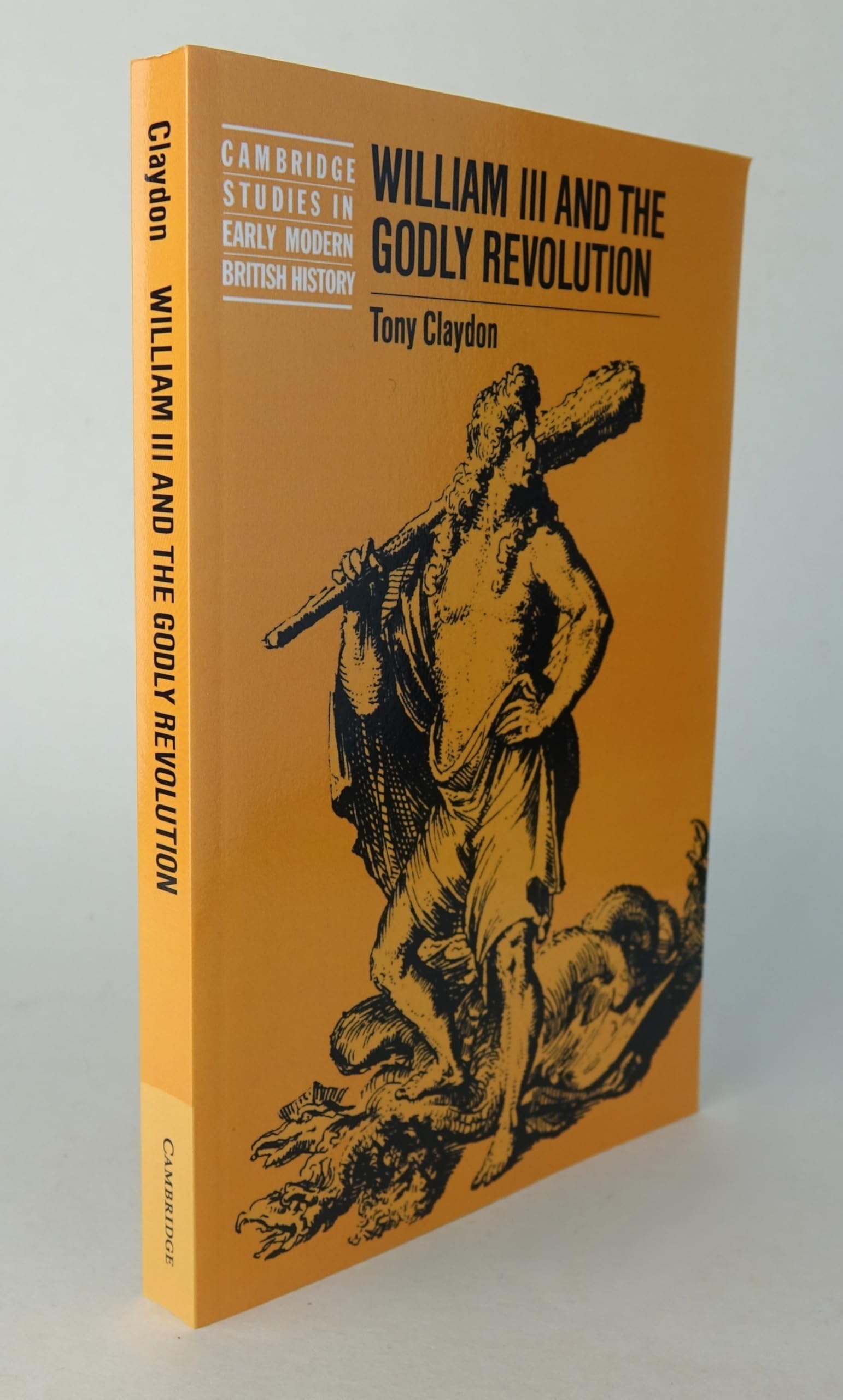
William III and the Godly Revolution: Royal Propaganda and the Protestant Reformation in Post-1689 England by Tony Clayd
Inclusive of all applicable taxes. FREE shipping on all orders.
Available Offers
- 🚚Free Delivery — Free shipping on all orders
- 💵Cash on Delivery — Pay when your order arrives
- ↩️15-Day Easy Returns — Hassle-free return policy
- 🔒Cash on Delivery — Pay safely when your order arrives
Check Delivery
Product Description
Introduction
In the annals of British history, few monarchs have been as misunderstood as William III. Often remembered solely for the Glorious Revolution of 1688, his reign was a period of profound transformation—politically, religiously, and culturally. William III and the Godly Revolution by Tony Claydon offers a groundbreaking re-examination of how the king and his supporters crafted a unique language of legitimacy. This is not a dry constitutional history; it is a vivid exploration of how sermons, prayers, and public rituals were used to present William as a divinely appointed reformer. For Indian readers interested in the intersection of religion, politics, and propaganda, this book provides a compelling case study of how power is narrated and sustained.
Book Overview
Published by Cambridge University Press, this hardcover volume is the first extensive account of royal propaganda in England between 1689 and 1702. Tony Claydon argues that William’s regime did not rely on legal or constitutional rhetoric alone. Instead, it employed a protestant, providential, and biblically based language of 'courtly reformation'. The king was portrayed as a godly magistrate, protected by divine will, who would defend the true church from popish enemies and restore the piety of the English nation. By examining understudied sources—especially sermons and public prayers—the book reveals the vigour with which these ideas were broadcast. It shows how this propaganda helped William attract support for costly wars with France and navigate his relationship with Parliament.
Key Highlights
- Original Research: Based on a wide range of previously ignored sources, including royal sermons, official prayers, and courtly literature.
- Fresh Perspective: Challenges the traditional view that the Glorious Revolution was primarily a constitutional event, highlighting its religious and providential dimensions.
- Engaging Narrative: Written in an accessible style that balances scholarly depth with readability, making it ideal for students and history enthusiasts alike.
- Contextual Analysis: Places William’s propaganda within the broader context of European Reformation thought and English political culture.
Inside the Book
The book is structured into thematic chapters that trace the evolution of Williamite propaganda. It begins by setting the stage: the crisis of 1688 and the need for a new royal image. Subsequent chapters delve into the language of godly magistracy, the use of biblical typology, and the role of the clergy as propagandists. Claydon also examines how these ideas were disseminated through print, pulpit, and prayer. Each chapter is rich with examples, from the wording of official thanksgivings to the imagery in court sermons. The final section explores the limits of this propaganda, showing how it eventually gave way to more secular discourses by the early eighteenth century.
Key Topics
- Glorious Revolution and its aftermath
- Providentialism and divine right in Protestant thought
- Royal propaganda and the public sphere in early modern England
- The role of sermons and prayers in shaping political opinion
- William III’s foreign policy and the Nine Years’ War
- Church-state relations and the idea of a 'godly nation'
- Comparative perspectives on Reformation political culture
Reader Benefits
This book offers more than historical facts. It equips readers with a deeper understanding of how political legitimacy is constructed and maintained. For students of history, political science, or religious studies, it provides a model for analysing propaganda in any era. The focus on understudied sources encourages critical thinking about what constitutes 'evidence' in historical research. Moreover, the book’s clear prose and logical structure make it easy to follow, even for those new to seventeenth-century British history. Indian readers will find parallels in how religious language has been used in various political contexts, from Mughal court chronicles to modern Indian nationalism.
Learning Outcomes
- Understand the religious and ideological foundations of William III’s reign.
- Analyse how propaganda functions in a pre-modern society.
- Evaluate the role of the clergy in shaping public opinion.
- Trace the evolution of political language from providential to constitutional.
- Apply critical methods to primary sources such as sermons and state prayers.
Who Should Read
This book is ideal for undergraduate and postgraduate students of British history, early modern Europe, political theology, and propaganda studies. It will also appeal to scholars of religion and politics, as well as general readers with an interest in the Glorious Revolution. Indian readers who enjoy comparative history—especially those curious about how empires and kingdoms used divine sanction—will find this work enlightening. Additionally, teachers and lecturers looking for a rigorous yet accessible text for their courses will appreciate its depth and clarity.
About the Author
Tony Claydon is a Professor of Early Modern History at Bangor University, Wales. He is a leading authority on seventeenth-century British political culture and religion. His previous works include Europe and the Making of England, 1660–1760 and numerous articles on royal propaganda, the Reformation, and Anglo-Dutch relations. Claydon’s research is known for its meticulous archival work and its ability to connect detailed case studies to broader historical questions. In William III and the Godly Revolution, he brings his expertise to bear on one of the most pivotal yet understudied aspects of William’s reign.
About the Publisher
Cambridge University Press is one of the world’s oldest and most prestigious academic publishers. Founded in 1534, it has a long tradition of publishing works that advance knowledge across disciplines. Its history list includes landmark titles from leading scholars, and its commitment to rigorous peer review ensures that each book meets the highest standards of scholarship. For Indian readers, Cambridge University Press offers a trusted source of authoritative texts that are widely used in universities and libraries across the country.
Conclusion
William III and the Godly Revolution is a vital addition to the historiography of the Glorious Revolution. It rescues from obscurity a rich vein of religious propaganda that shaped how contemporaries understood their king and their nation. Tony Claydon’s clear argument and careful use of sources make this book both a pleasure to read and a valuable reference. Whether you are a student, a scholar, or a curious reader, this hardcover edition deserves a place on your shelf. Order your copy from Bookshops.in today and discover the providential language that defined an age.
Quick Summary
'William III and the Godly Revolution' by Tony Claydon is a groundbreaking study of royal propaganda in England between 1689 and 1702. The book argues that William III's regime did not rely primarily on legal or constitutional arguments to legitimise its rule after the Glorious Revolution. Instead, it employed a Protestant, providential, and biblically based language of 'courtly reformation'. This rhetoric presented the king as a divinely protected godly magistrate who would defend the true church against Catholic enemies and restore the original piety and virtue of the English nation. Claydon draws on a range of understudied sources, especially sermons and public prayers, to show how a creative group of propagandists broadcast these ideas. The book is ideal for history students, scholars of early modern Britain, and anyone interested in the intersection of religion, monarchy, and political communication. Readers will learn how religious language shaped political legitimacy and national identity. By purchasing from Bookshops.in, Indian readers receive a genuine hardcover edition with fast, reliable delivery.
Book Highlights
Book Specifications
| ISBN-13 | 9780521544016 |
| ISBN-10 | 0521544017 |
| Publisher | Cambridge University Press |
| Language | English |
| Dimensions | 15.24 x 1.85 x 22.86 cm |
| Weight | 450 g |
| Country | India |
| Category | Region & Countries › Europe |
| Genre | History |
| Reading Age | Adult |
| Original Language | English |
Frequently Asked Questions
What is 'William III and the Godly Revolution' about?
Who is the author of this book?
What period does the book cover?
What sources does the book analyse?
Is this book suitable for undergraduate students?
Does the book cover legal or constitutional arguments?
What is 'courtly reformation'?
How does the book relate to the Glorious Revolution?
Is the book based on primary sources?
What is the main argument of the book?
Does the book discuss the role of the Church of England?
Can Indian readers benefit from this book?
What is the binding of this book?
Why buy from Bookshops.in?
Readers Also Search For
Customers Also Bought
Related Products
View All
History
Human Nature and the French Revolution: From the Enlightenment to the Napoleonic Code: 3 (Polygons: Cultural Diversities and Intersections, 3)
History
The Unmaking of Home in Contemporary Art (Cultural Spaces)

History
Handbook to Life in Medieval and Early Modern Japan | by William E. Deal | Oxford University Press | by William E. Deal | Oxford University Press | by William E. Deal | Oxford University Press | by William E. Deal | Oxford University Press | by William E. Deal | Oxford University Press | by William E. Deal | Oxford University Press | by William E. Deal | Oxford University Press | by William E. Deal | Oxford University Press | by William E. Deal | Oxford University Press | by William E. Deal | Ox

History
The Narrators of Barbarian History (A.D. 550-800) | by Walter Goffart | University of Notre Dame Press | by Walter Goffart | University of Notre Dame Press | by Walter Goffart | University of Notre Dame Press | by Walter Goffart | University of Notre Dame Press | by Walter Goffart | University of Notre Dame Press | by Walter Goffart | University of Notre Dame Press | by Walter Goffart | University of Notre Dame Press | by Walter Goffart | University of Notre Dame Press | by Walter Goffart | Univ
History
The Collected Mathematical Papers of Arthur Cayley.Vol. 12

History