
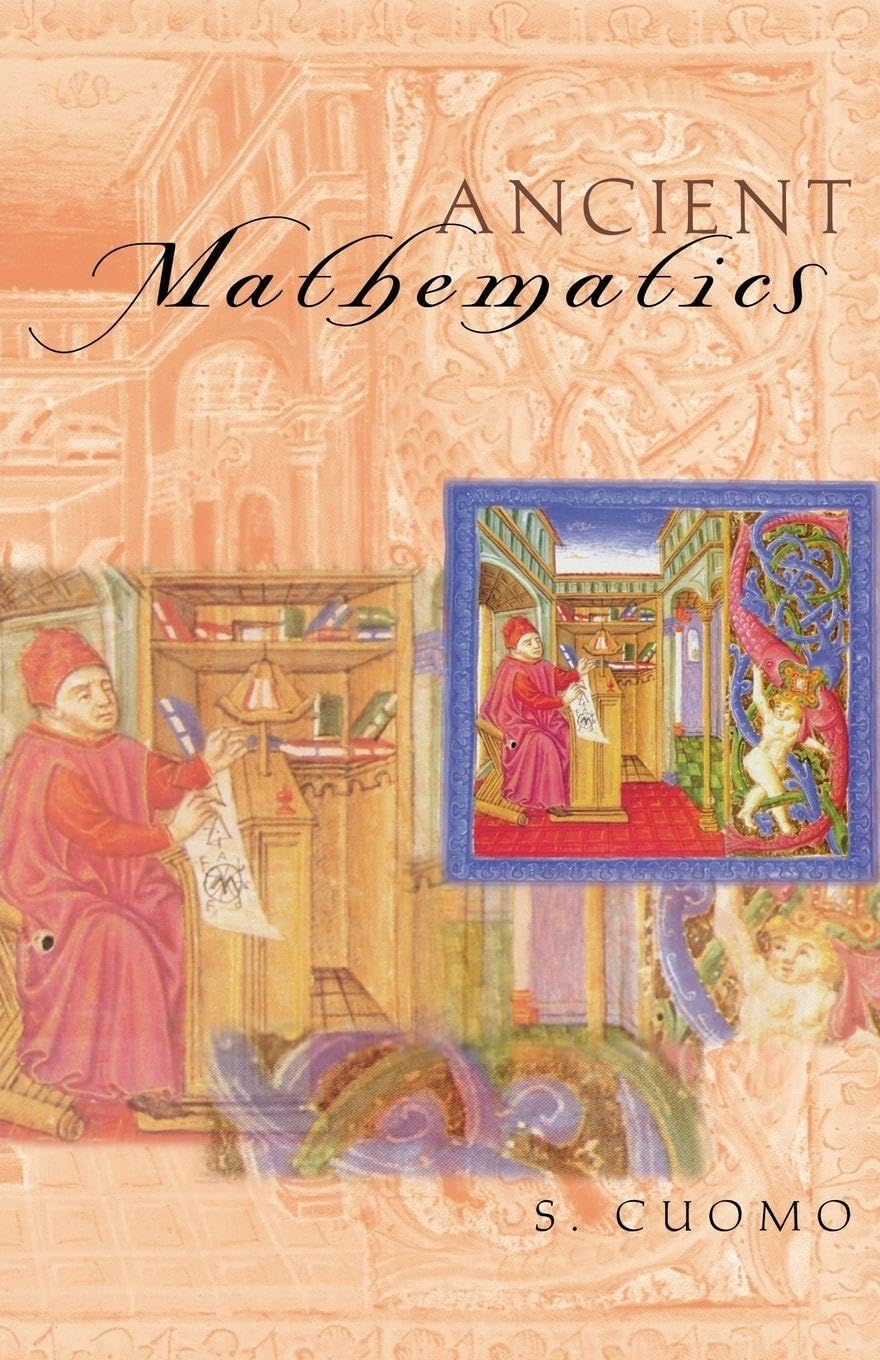
Ancient Mathematics: A Comprehensive Survey of Greek and Roman Mathematical Practices by Serafina Cuomo
Inclusive of all applicable taxes. FREE shipping on all orders.
Available Offers
- 🚚Free Delivery — Free shipping on all orders
- 💵Cash on Delivery — Pay when your order arrives
- ↩️15-Day Easy Returns — Hassle-free return policy
- 🔒Cash on Delivery — Pay safely when your order arrives
Check Delivery
Product Description
Introduction
Ancient mathematics is often reduced to a handful of famous names and theorems, but its true story is far richer and more human. In Ancient Mathematics, Serafina Cuomo takes readers beyond the familiar tales of Pythagoras and Euclid to reveal a living, breathing discipline that shaped politics, religion, and daily life across the Mediterranean world. This hardcover edition from Routledge is an essential addition to any serious student's library, offering a clear and engaging narrative that connects the dots between counting boards, geometric proofs, and the mystical allure of numbers.
Book Overview
Spanning from the fifth century BC to the sixth century AD, this volume surveys the full spectrum of mathematical practice in ancient Greece and Rome. Cuomo does not simply list discoveries; she explores how mathematics was embedded in culture—from land surveying and taxation to philosophical debates and Christian theology. The book challenges the modern separation between pure and applied mathematics, showing that ancient thinkers saw no such divide. Whether you are a mathematics enthusiast or a history buff, this work provides a fresh perspective on how numbers and shapes were understood, used, and revered in antiquity.
Key Highlights
- Comprehensive scope: Covers over a thousand years of mathematical development across the Mediterranean.
- Interdisciplinary approach: Connects mathematics with politics, religion, and everyday life.
- Accessible style: Written for both scholars and general readers, with minimal technical jargon.
- Original insights: Examines the self-image of mathematicians and the role of mathematical traditions.
- Contextual depth: Explores how Christianity and late antique culture reshaped mathematical thought.
Inside the Book
The book is organised thematically rather than chronologically, allowing readers to trace ideas across centuries. Early chapters focus on mathematics in classical Greece, where numbers were tied to citizenship and civic identity. Later sections delve into the formation of mathematical schools, the professional identity of mathematicians, and the surprising influence of Christian doctrine on arithmetic and geometry. Cuomo draws on a wide range of sources—from papyri and inscriptions to literary texts—to reconstruct a world where mathematics was as much about power and belief as it was about truth.
Key Topics
- Mathematics and politics in classical Greece
- The formation of mathematical traditions in the Hellenistic period
- The self-image and social status of mathematicians
- Mathematics and Christianity: conflicts and accommodations
- Use of the mathematical past in late antiquity
- Practical mathematics: surveying, commerce, and calendrical calculations
Reader Benefits
This book demystifies ancient mathematics without oversimplifying it. You will come away with a deeper appreciation for how mathematical knowledge was created, transmitted, and transformed. The narrative is grounded in real-world contexts—how did a Roman surveyor use geometry? Why did early Christians argue about the number six?—making abstract concepts feel immediate and relevant. For Indian readers, the Mediterranean focus offers a valuable comparative perspective, especially when considering the parallel developments in Indian mathematics during the same period.
Learning Outcomes
- Understand the cultural and political dimensions of ancient mathematics.
- Identify key figures and schools beyond the standard canon.
- Analyse how mathematical practices evolved in response to social change.
- Evaluate the relationship between mathematics and religion in antiquity.
- Recognise the legacy of ancient mathematics in later European and Islamic traditions.
Who Should Read
This book is ideal for undergraduate and postgraduate students of history, philosophy, or mathematics who want a nuanced introduction to the subject. It also appeals to curious general readers who enjoy intellectual history. Teachers and scholars looking for a fresh, accessible resource for courses on ancient science will find it invaluable. If you have ever wondered how mathematics was lived, not just learned, in the ancient world, this is the book for you.
About the Author
Serafina Cuomo is a renowned historian of ancient science and mathematics. She has taught at prestigious institutions including Imperial College London and Birkbeck, University of London. Her research focuses on the social and cultural history of mathematics, and she has published extensively on Greek and Roman technical knowledge. Cuomo's writing is admired for its clarity, depth, and ability to make specialised topics accessible to a broad audience.
About the Publisher
Routledge is a leading academic publisher with a distinguished history in the humanities and social sciences. Founded in 1836, the publisher is known for producing high-quality scholarly works that set the standard in their fields. This hardcover edition reflects Routledge's commitment to durable, well-produced books that will last for years on your shelf.
Conclusion
Ancient Mathematics is more than a history of formulas—it is a window into the minds and societies that shaped our mathematical heritage. Serafina Cuomo's engaging narrative and rigorous scholarship make this book a rewarding read for anyone curious about the roots of a discipline that continues to define our world. Order your copy today from Bookshops.in and add a vital volume to your collection.
Quick Summary
Ancient Mathematics by Serafina Cuomo is a comprehensive and accessible survey of mathematical practices in the Mediterranean world from the fifth century BC to the sixth century AD. The book goes beyond famous theorems like Pythagoras' theorem and Euclid's Elements to explore the everyday uses of mathematics in counting, measuring, and land surveying, as well as the mystical and philosophical significance attributed to numbers. Cuomo examines how mathematics intersected with politics in classical Greece, how mathematical traditions were formed and transmitted, and how mathematicians viewed themselves and their work during the Graeco-Roman period. The book also delves into the complex relationship between mathematics and Christianity in late antiquity, and how the mathematical past was used and reinterpreted by later scholars. This volume is ideal for Indian students of history, classics, or mathematics who want a well-rounded understanding of ancient mathematical culture. Written in clear, engaging prose, it requires no advanced mathematical background. By purchasing from Bookshops.in, readers get a high-quality hardcover edition delivered across India, supporting a trusted local bookstore that values academic and intellectual growth.
Book Highlights
Book Specifications
| ISBN-13 | 9780415164955 |
| ISBN-10 | 0415164958 |
| Publisher | Routledge |
| Language | English |
| Dimensions | 13.79 x 1.75 x 21.59 cm |
| Weight | 386 g |
| Country | India |
| Category | Humanities › Philosophy |
| Genre | Non-fiction |
| Original Language | English |
Frequently Asked Questions
What is the main focus of Ancient Mathematics?
Who is the author of this book?
Is this book suitable for beginners?
Does the book cover Indian mathematics?
What time period does the book cover?
Are there illustrations or diagrams?
Is this a textbook or a general read?
Does the book discuss Euclid's Elements?
What about Archimedes?
How does the book relate mathematics to politics?
Is there a chapter on mathematics and Christianity?
What is the language of the book?
Where can I buy this book in India?
Readers Also Search For
Customers Also Bought
Islam
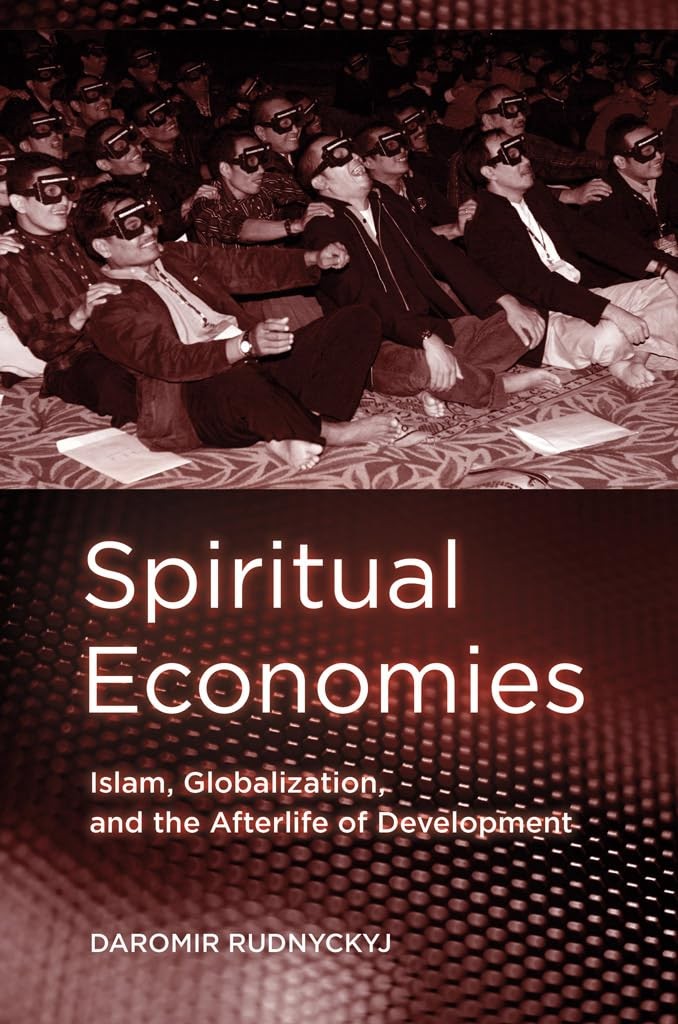
Spiritual Economies (English, Daromir Rudnyckyj)

Islam
Who Is Allah? (English, Bruce B. Lawrence)
Islam
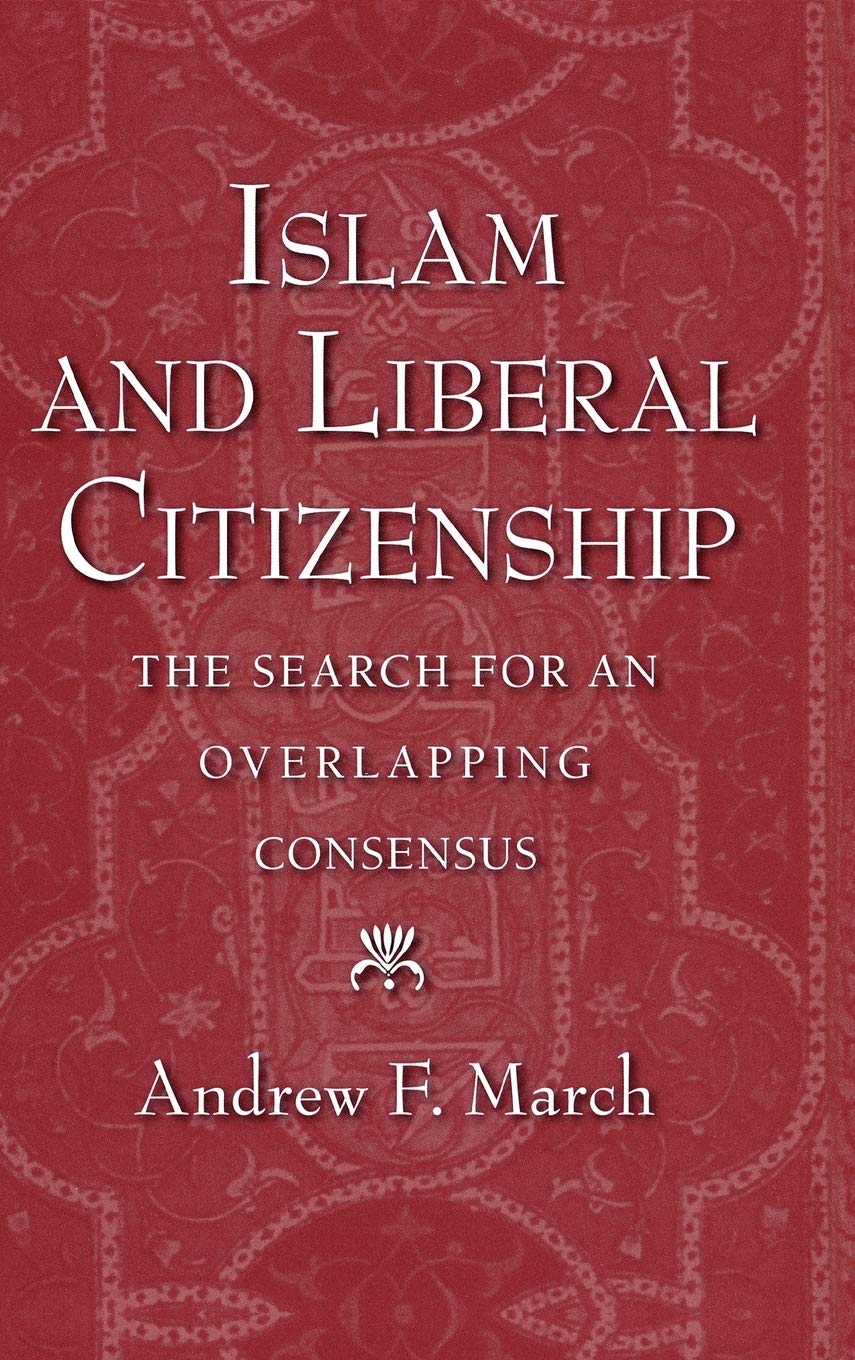
Islam and Liberal Citizenship: The Search for an Overlapping Consensus by Andrew F. March

Islam
Fiqh Us-Sunnah: Funerals and Diggers by Al-Sayyid Sabiq – Islamic Funeral Guide

Christianity
Genetics (English, Thomas a. Shannon | Mark P. Aulisio | Françoise Baylis)

Hinduism
Karma and Creativity by Christopher Key Chapple – Indian Philosophy
Related Products
View All
Philosophy
Latin American Philosophy: Currents, Issues, Debates by Eduardo Mendieta

Philosophy
Al-Farabi's Short Commentary on Aristotle's Prior Analytics by Nicholas Rescher – Philosophy
Philosophy
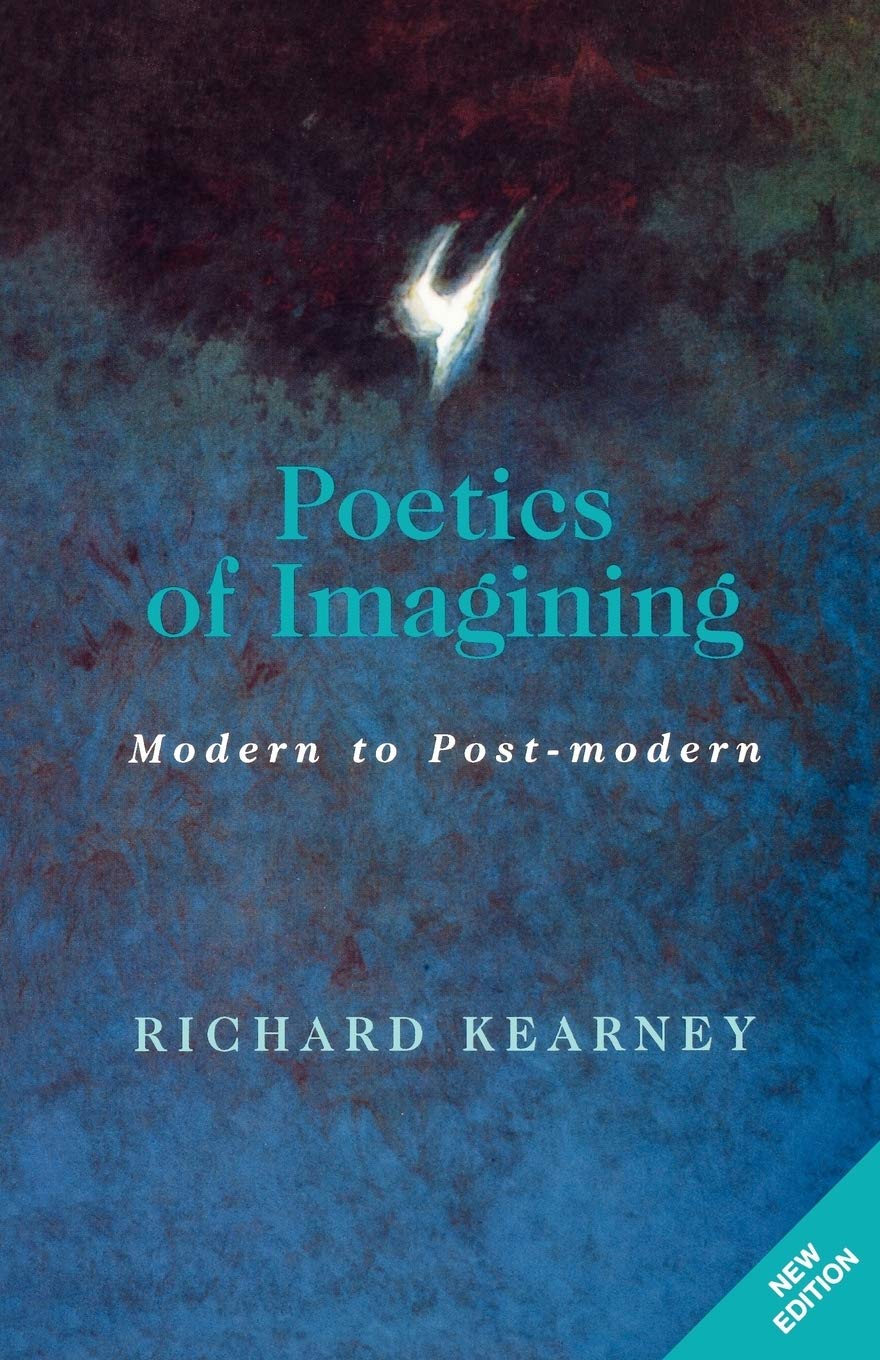
Poetics of Imagining: Modern to Post-modern by Richard Kearney
Philosophy
The Metaphysics of Extrinsic Properties: 11 (Metaphysical Research, 11)
Philosophy
Dialogues on Metaphysics and on Religion by Nicolas Malebranche – Philosophy
Philosophy