
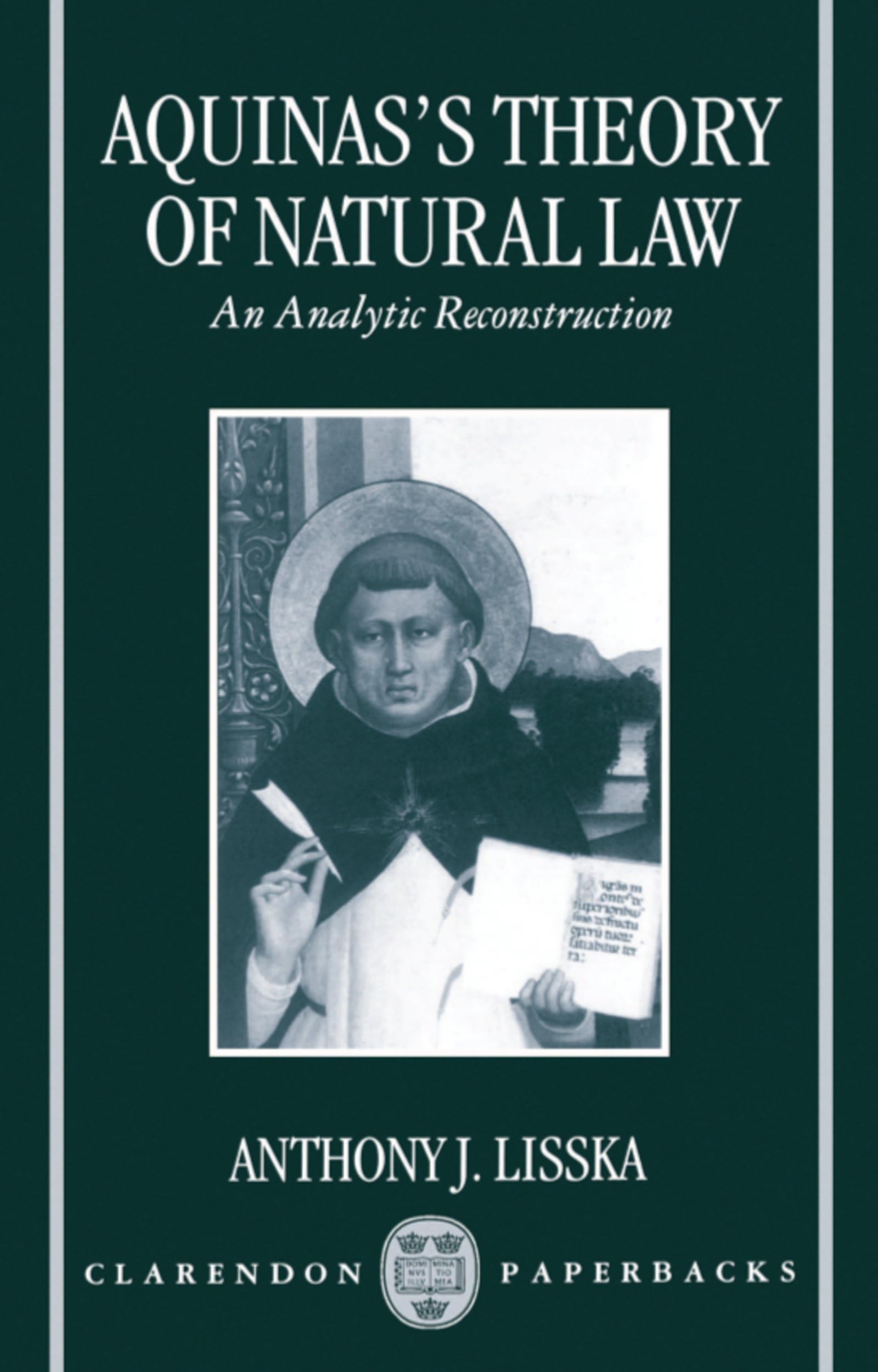
Aquinas's Theory of Natural Law: An Analytical Reconstruction by Anthony Lisska – A Scholarly Exploration of Thomistic E
Inclusive of all applicable taxes. FREE shipping on all orders.
Available Offers
- 🚚Free Delivery — Free shipping on all orders
- 💵Cash on Delivery — Pay when your order arrives
- ↩️15-Day Easy Returns — Hassle-free return policy
- 🔒Cash on Delivery — Pay safely when your order arrives
Check Delivery
Product Description
Introduction
In the landscape of Indian jurisprudence and moral philosophy, few works have endured with the intellectual gravitas of Thomas Aquinas's natural law theory. For students, scholars, and legal practitioners seeking a rigorous yet accessible engagement with this foundational doctrine, Aquinas's Theory of Natural Law: An Analytical Reconstruction by Anthony Lisska offers a definitive contemporary interpretation. Published by OUP Oxford, this hardcover volume is an indispensable resource for anyone exploring the intersections of ethics, law, and Aristotelian thought within the Indian academic context.
Book Overview
This book presents a meticulous and original reconstruction of Aquinas's natural law theory as articulated in the Summa Theologiae. Anthony Lisska moves beyond conventional readings to argue that Aquinas's moral philosophy is fundamentally rooted in Aristotelian ethical naturalism. By situating Aquinas within the twentieth-century revival of Aristotelian ethics, Lisska demonstrates how the Angelic Doctor's insights remain vitally relevant to contemporary legal philosophy. The work is not merely a historical exposition but a dynamic analytical engagement that bridges medieval scholasticism with modern jurisprudential debates.
Key Highlights
- Original Analytical Framework: Lisska provides a fresh, incisive reading of Aquinas's central texts, challenging long-held interpretations.
- Aristotelian Foundations: The book systematically establishes Aquinas's debt to Aristotle, showing how natural law emerges from a robust theory of human nature and flourishing.
- Contemporary Relevance: It draws explicit connections between Aquinas and modern legal philosophers, making the theory applicable to current debates in Indian and global jurisprudence.
- Critical Engagement: Lisska engages with twentieth-century natural law thinkers, offering a balanced critique that enriches the reader's understanding.
- Scholarly Rigour: The work is grounded in meticulous textual analysis, making it a reliable reference for advanced study.
Inside the Book
The volume is structured to guide the reader through Aquinas's moral universe with clarity and depth. Lisska begins by examining the metaphysical and epistemological foundations of natural law, then proceeds to dissect the key components of Aquinas's ethical system, including the role of practical reason, the concept of synderesis, and the natural inclinations. Each chapter builds upon the last, culminating in a powerful synthesis that reveals the coherence and explanatory power of Aquinas's theory. The book also includes extensive references to the Summa Theologiae, allowing readers to verify arguments against primary sources.
Key Topics
- The philosophical foundations of natural law in Aristotle and Aquinas
- The role of human nature and teleology in moral reasoning
- Practical reason and the structure of moral judgment
- The relationship between natural law and positive law
- Twentieth-century natural law revival and its critics
- Aquinas's theory of virtue and the common good
- Comparative analysis with contemporary legal philosophers
Reader Benefits
For Indian readers, this book offers a robust intellectual toolkit for understanding the ethical underpinnings of legal systems. It clarifies how natural law thinking can inform debates on constitutional morality, human rights, and social justice. Lisska's analytical approach helps readers critically evaluate legal positivism and other modern theories, fostering a deeper appreciation of the moral dimensions of law. The clear prose and systematic argumentation make complex ideas accessible, while the scholarly depth ensures lasting value for academic work.
Learning Outcomes
- Gain a comprehensive understanding of Aquinas's natural law theory in its original context
- Develop the ability to analyse and critique contemporary legal theories through a natural law lens
- Learn to connect Aristotelian ethics with modern moral philosophy
- Acquire skills in textual interpretation and philosophical argumentation
- Understand the relevance of natural law to Indian legal and ethical discourse
Who Should Read
This book is essential for postgraduate and doctoral students in law, philosophy, and political science. It is equally valuable for legal academics, judges, and practitioners interested in the philosophical foundations of law. Indian civil services aspirants and scholars of jurisprudence will find it a rich resource for understanding the moral dimensions of legal reasoning. Anyone engaged in ethical theory, whether in university settings or independent study, will benefit from Lisska's clear and penetrating analysis.
About the Author
Anthony Lisska is a distinguished philosopher and scholar of medieval thought, with a career dedicated to the study of Aquinas and Aristotelian ethics. His work is known for its analytical precision and its ability to make historical ideas speak to contemporary philosophical problems. Lisska's expertise ensures that this reconstruction is both faithful to Aquinas's texts and responsive to modern intellectual concerns.
About the Publisher
OUP Oxford is one of the world's most respected academic publishers, known for its rigorous editorial standards and commitment to scholarly excellence. This hardcover edition reflects the publisher's dedication to producing works that endure as authoritative references in their fields.
Conclusion
Aquinas's Theory of Natural Law: An Analytical Reconstruction is more than a scholarly treatise; it is a vital contribution to the ongoing conversation about law, ethics, and human nature. For Indian readers navigating the complexities of legal philosophy and moral reasoning, this book provides a solid foundation and a stimulating challenge. Order your copy from Bookshops.in today and add this essential work to your library.
Quick Summary
Aquinas's Theory of Natural Law: An Analytical Reconstruction by Anthony Lisska is a rigorous philosophical work that re-examines Thomas Aquinas's natural law theory through an Aristotelian lens. Lisska argues that Aquinas's moral philosophy is fundamentally grounded in ethical naturalism, drawing from the Summa Theologiae to build a coherent framework. The book traces the historical development of natural law in the twentieth century and highlights its relevance for contemporary legal philosophy. This hardcover edition from OUP Oxford is ideal for scholars of jurisprudence, philosophy, and theology. Readers will gain a deep analytical understanding of how natural law functions as a moral theory, its connection to virtue ethics, and its implications for modern legal systems. Perfect for Indian academic libraries and postgraduate courses, this book offers a premium scholarly resource. Buy from Bookshops.in for reliable delivery and authentic copies.
Book Highlights
Book Specifications
| ISBN-13 | 9780198269670 |
| ISBN-10 | 0198269676 |
| Publisher | Clarendon Pr |
| Language | English |
| Dimensions | 13.34 x 1.93 x 21.59 cm |
| Weight | 408 g |
| Country | India |
| Category | Philosophy › Ethics |
| Genre | Non-fiction |
| Reading Age | Adult |
| Original Language | English |
Frequently Asked Questions
What is the main argument of Aquinas's Theory of Natural Law?
Who is the author of this book?
Is this book suitable for undergraduate students?
Does the book cover the Summa Theologiae?
How does this book relate to modern legal philosophy?
Is this book available in paperback?
What is the ISBN?
Can Indian law students use this book?
Does the book discuss Aristotle?
Is this a beginner-friendly introduction?
What is the price in India?
How many reviews does it have?
What is the language of the book?
Readers Also Search For
Customers Also Bought
Islam
Spiritual Economies (English, Daromir Rudnyckyj)

Islam
Who Is Allah? (English, Bruce B. Lawrence)
Islam
Islam and Liberal Citizenship: The Search for an Overlapping Consensus by Andrew F. March

Islam
Fiqh Us-Sunnah: Funerals and Diggers by Al-Sayyid Sabiq – Islamic Funeral Guide

Christianity
Genetics (English, Thomas a. Shannon | Mark P. Aulisio | Françoise Baylis)

Hinduism
Karma and Creativity by Christopher Key Chapple – Indian Philosophy
Related Products
View All
Philosophy
Latin American Philosophy: Currents, Issues, Debates by Eduardo Mendieta

Philosophy
Al-Farabi's Short Commentary on Aristotle's Prior Analytics by Nicholas Rescher – Philosophy
Philosophy
Poetics of Imagining: Modern to Post-modern by Richard Kearney
Philosophy
The Metaphysics of Extrinsic Properties: 11 (Metaphysical Research, 11)
Philosophy
Dialogues on Metaphysics and on Religion by Nicolas Malebranche – Philosophy
Philosophy